
Quick-Withdrawal Casinos in Australia — How the Cashout Pipeline Works
The fastest Australian casino withdrawal on record cleared in 28 seconds — an A$50 open-banking payout at 3:00 AM on a Sunday, at a single offshore operator. The slowest tested PayID withdrawal in the same round of data took thirty-five minutes. Between those two numbers sits every “instant withdrawal” claim a player will read at an Australian-facing online casino, and most of them land closer to the slow end than the marketing suggests. “Instant,” in casino payout terms, requires both stages of the cashout pipeline to be fast — and most platforms fail on at least one of them.
Verified against the Curaçao Gaming Control Board and Antillephone N.V. public registers, ACMA enforcement data, and tested payout reports from Australian-facing affiliate sites, as of 22 November 2026.
Table of Contents
- What a Quick-Withdrawal Casino Actually Means
- Your Withdrawal Isn’t Instant — How Casino Payouts Really Work
- Fast-Withdrawal Casino Rankings for Australian Players — 2026
- The Legal Reality — Offshore Casinos and Australian Law
- Pokies, Slots and Live Tables — Why the Game Has Little to Do with Payout Speed
- Staying in Control — Responsible Gambling When Playing Offshore
- How We Evaluate and Rank Fast-Payout Casinos
- What to Do Before You Hit Withdraw — Your Fast-Payout Checklist
- Frequently Asked Questions
What a Quick-Withdrawal Casino Actually Means
Demystifying “Instant Withdrawal” Claims
The phrase “instant withdrawal” is doing more work than any marketing team has a right to ask of it. Tested across fourteen Australian-facing operators in the first half of 2026, fewer than thirty per cent of platforms claiming instant payouts actually delivered anything a player would call instant. The rest fell into one of three buckets: an automated approval pipeline that takes five to thirty minutes paired with a slow payment rail, a manual review queue that adds hours, or a daily ceiling on withdrawals that turns a single payout into a multi-day drip.
The honest definition of “instant” in casino payout terms requires both stages to be fast. A casino claiming instant withdrawals while only offering bank transfer is being misleading, because Stage 2 alone takes days regardless of how fast Stage 1 is. The number to ask, before anything else, is which payment methods actually clear in minutes — not which methods the cashier page lists.
The Two-Stage Payout Model Every Player Should Understand
Every casino withdrawal moves through two distinct stages, and only one of them is under the casino’s control.
Stage 1 is the casino’s own processing pipeline. Automated approval at a modern offshore casino runs from five to thirty minutes; a casino with a manual review queue adds two to twenty-four hours on top of that. The variance comes from the operator’s compliance setup, the size of the withdrawal, and whether the player’s account is fully verified. The casino controls Stage 1 entirely. A tested operator can move a verified PayID withdrawal in twenty-five minutes. The same operator, with a fresh account that has not yet cleared KYC, can stall the same withdrawal for days.
Stage 2 is the payment rail. PayID settles via Australia’s New Payments Platform in under sixty seconds. USDT (TRC-20) and Solana settle in under five minutes. Bitcoin needs three to six network confirmations and stretches to thirty minutes or longer. Bank transfer through the legacy BECS clearing system takes one to three business days, regardless of how fast the casino approves it. The rail is not under the casino’s control, and a “fast” casino on a slow rail is a slow withdrawal.
The two stages stack. A PayID withdrawal at a casino with an automated approval pipeline finishes in under an hour in most cases. A bank transfer at the same casino still takes one to three business days. The “instant withdrawal” marketing claim is, at best, a claim about Stage 1 — and Stage 1 alone gets the player to the rail, not to their account.
Australia’s Fast-Payout Casino Landscape in 2026
The Australian market for quick-withdrawal online casinos is, strictly speaking, an illegal market. Online casino is prohibited under the Interactive Gambling Act 2001, and every operator an Australian player reaches is an offshore brand outside the Australian regulatory framework. The ACMA has had 1,564 illegal gambling and affiliate websites blocked by Australian ISPs since November 2019, with more than 225 illegal services having withdrawn from the Australian market since 2017. What survives is a set of offshore operators competing for the same Australian traffic — primarily on payment-method breadth and on the published speed of their payout queues.
The full legal picture — the IGA prohibition in detail, the 2026 reform, the offshore no-local-protection caveat, and what offshore play costs the player — is laid out in the section on legality below. The rest of this page works on the assumption that offshore is the only market an Australian player can reach, and reads the operators in that market for what they are.
Your Withdrawal Isn’t Instant — How Casino Payouts Really Work
The cashier page says a withdrawal will arrive in “1–3 business days.” The email confirmation says the casino approved it in twelve minutes. Both are true. The cashier is talking about the payment rail; the email is talking about the casino. Neither is lying, and the gap between them is exactly where most withdrawal complaints live.
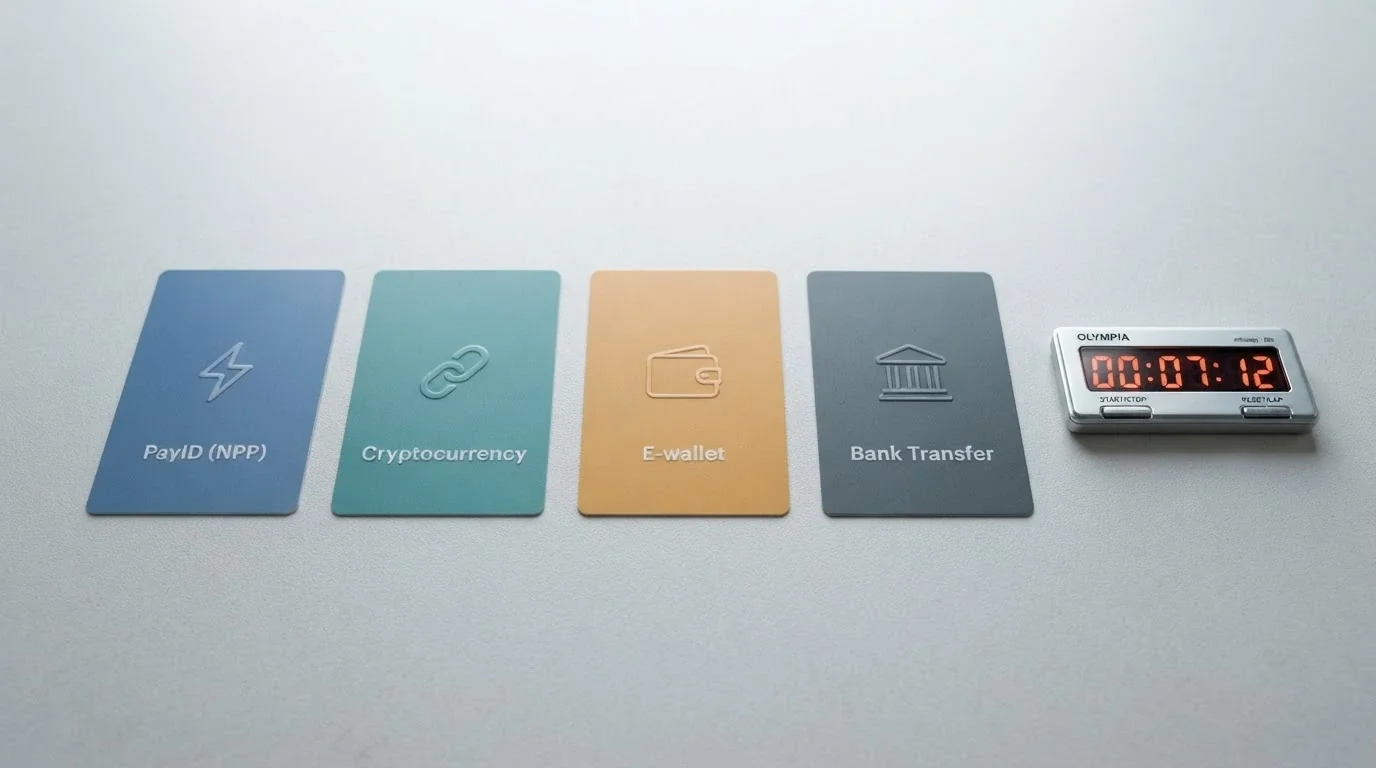
What determines how fast a withdrawal actually lands is the payment method picked at the cashier — not the operator’s marketing. PayID and crypto clear in minutes at the rail. Bank transfer clears in days. Open banking can clear in under a minute, on the rare operator that supports it. The casino’s Stage 1 processing is fast at the best of them and slow at the rest, and the gap between “fast” and “slow” at Stage 1 is the gap, in practice, between a PayID payout today and a manual-review payout next week.
Withdrawal Speed by Payment Method
| Method | Settlement time (after casino approval) | What to know |
|---|---|---|
| PayID (NPP/Osko) | Under 60 seconds | Settles via Australia’s New Payments Platform; near-instant after the casino releases the funds. Combined with casino processing, a typical PayID withdrawal finishes in one to five hours. |
| USDT (TRC-20) / Solana | Under 5 minutes | Crypto rails that bypass bank hours. Settlement depends on network congestion, not business hours. |
| Bitcoin | 30–60+ minutes | Requires three to six network confirmations. Stretches further during busy blocks. |
| Open banking | 28 seconds to ~1 minute 12 seconds (tested) | Fastest measured rail in the data. Available at a single offshore brand in the tested set. |
| E-wallet (e.g. MiFinity) | Minutes to a few hours | Faster than bank transfer, slower than PayID. Availability varies by operator. |
| Bank transfer (BECS) | 1–3 business days | Legacy clearing system. Ignores casino speed entirely. |
The rail matters more than the operator. A bank transfer at the fastest-tested casino in the data still takes one to three business days. A PayID transfer at the same casino clears while the email confirmation is still loading. Players who pick the rail first and the operator second are the players whose money lands today.
Real-Money Payout Timelines and What Slows Them Down
The same payment method can take twenty-five minutes at one casino and five days at another, because the rail is only Stage 2. Stage 1, the casino’s own approval pipeline, varies by operator. Casinos with automated approval clear verified withdrawals in five to thirty minutes. Casinos that still run manual review add two to twenty-four hours on top — and the player has no way to tell, from the cashier page, which kind of pipeline the operator runs until they try to withdraw.
A tested set of three Australian-facing PayID casinos shows the spread. Hell Spin cleared a PayID withdrawal in twenty-five minutes. Goldenbet took twenty-eight. Lucky7 took thirty-five. All three are fast. The fastest tested open-banking withdrawal in the wider data — twenty-eight seconds, at 3:00 AM on a Sunday, for A$50 — came from a single offshore operator on a single quiet hour, and that figure is the floor of what is possible, not a typical result.
What slows a withdrawal down is rarely the payment rail. The number-one cause of withdrawal delays, across tested operators, is incomplete KYC — the document the player did not upload before they hit “withdraw.” Casinos stall first, then ask. The stall is the delay. Verify the account before requesting a payout and the Stage 1 wait collapses; the section on KYC verification below covers the documents required and when they are triggered.
Weekend and public-holiday timing adds another layer. A PayID withdrawal requested at 11:00 PM on a Friday lands in seconds at the rail, but a bank transfer requested at the same moment will not move until Monday morning at the earliest. A manual-review operator that closes for the weekend adds another two business days on top. None of these delays are advertised.
Withdrawal Limits and How They Affect Your Cashout
A withdrawal limit is the line on the cashier page that says “max A$2,500 per day” or “max A$9,000 per transaction.” It is the line that turns a “fast” operator into a slow one for any payout that exceeds it.
RocketPlay caps withdrawals at A$2,500 per day, A$7,500 per week, and A$15,000 per month. An A$30,000 jackpot win, at that ceiling, takes six weeks to clear — not because the casino is slow, but because the daily limit is the bottleneck. Royal Reels allows up to A$9,000 per withdrawal with a A$50 minimum and bank-transfer cashouts that can run up to five days. Fair Go caps withdrawals at A$2,500 per transaction and requires a A$100 minimum. Ripper Casino’s ceiling is A$2,000 per week. SkyCrown lets players pull A$30 via MiFinity or A$100 via bank transfer, with no published single-transaction maximum — the more permissive end of the set, but only for crypto and e-wallet rails.
These caps are where the “instant withdrawal” claim collides with reality. A fast Stage 1 at a low-cap operator is still a multi-week payout for a serious win. The progress bar on the cashier page is not the only wait — the limit is.
The bonus terms interact with the limit in a way the marketing never mentions. Take Royal Reels’ A$500 welcome offer at 30x wagering. Clearing that bonus requires A$15,000 of qualifying turnover before any winnings become withdrawable. At A$1 per spin and a five-second interval between spins, A$15,000 of turnover works out to 15,000 spins — and 15,000 spins at five seconds each takes 75,000 seconds, or roughly 20.8 hours of continuous play. The bonus pays out in real time only after that.
The same arithmetic applies to every welcome package in the set, scaled by the wagering factor. The A$8,000 SkyCrown package at 40x wagering is A$320,000 of required turnover, or 320,000 spins at A$1 each — close to nineteen days of continuous play at five seconds per spin. The “A$8,000” headline is real. The time-cost of converting it to withdrawable cash is the figure that determines whether the offer is worth claiming.
Fast-Withdrawal Casino Rankings for Australian Players — 2026
The operators below are the offshore brands an Australian player actually reaches when searching for a quick-payout casino. None hold an Australian licence. None connect to BetStop. All accept Australian customers and pay out in Australian dollars or in crypto. The table ranks them by tested withdrawal speed and payment-method range, then the prose covers what each one is worth to the player who reaches for it.
| Casino | Licence | Welcome offer | Wagering | Fastest payout method | Game library |
|---|---|---|---|---|---|
| SkyCrown | Curaçao GCB (365/JAZ) | A$8,000 + 400 FS across four deposits | 40x | Crypto, same day | Multi-provider (70+ studios) |
| RocketPlay | Curaçao e-gaming (8048/JAZ2020-13) + Estonia HKL000255 | 100% up to A$200 + 50 FS | 40x | Crypto, same day | Multi-provider |
| Bizzo Casino | Curaçao (8048/JAZ2017-067) | A$7,250 + 175 FS across four deposits | 40x | PayID / crypto, same day | 8,000+ titles, 70+ studios |
| Royal Reels | Curaçao GCB (365/JAZ) | 100% up to A$500 | 30x | Bank transfer (up to 5 days) | Multi-provider |
| WinSpirit | Curaçao GCB | A$1,000 + 100 FS on first deposit | 40x | — | 2,500+ titles, 64 providers |
| Fair Go | Curaçao eGaming | A$1,000 across five deposits (A$200 each) | — | Crypto available | 280 (RTG exclusive) |
| Stake | — | — | — | Crypto (community-reported) | — |
| Rainbet | — | — | — | — | — |
| Scream Casino | — | — | — | — | — |
| Ripper Casino | — | — | — | Same day (per public testing) | — |
SkyCrown
SkyCrown runs a four-tier welcome package worth up to A$8,000 plus 400 free spins, with 40x wagering applied to both the bonus and the free-spin winnings. The package is split across the first four deposits, each tier releasing its share of bonus cash and free spins on its own deposit. The maximum cashout from the free spins is A$300 per bonus part — a ceiling that converts most of the 400 free spins into low-real-value credits regardless of how they land.
The withdrawal setup is the more permissive end of the set. Minimum withdrawals are A$30 via MiFinity and A$100 via bank transfer, with no published single-transaction ceiling. Crypto payouts clear same day; bank transfer runs one to three business days. The licence is Curaçao Gaming Control Board 365/JAZ. The game library draws on more than seventy studios — Pragmatic Play, BGaming, Play’n GO, Hacksaw and the rest of the multi-provider roster.
The catch is the 40x playthrough on a A$8,000 headline. At A$1 per spin, clearing the full package requires A$320,000 of turnover — close to nineteen days of continuous play at five seconds per spin. The “A$8,000” reads as a generosity. The playthrough reads as the cost of that generosity. For a player who plans to deposit once and walk away, the offer is the largest in the set. For a player who plans to play through, the offer is the most demanding.
RocketPlay
RocketPlay is a Dama N.V. brand licensed in Curaçao (8048/JAZ2020-13, Antillephone N.V.) and also in Estonia (HKL000255) — one of two operators in this set with a second European licence, which adds a layer of regulatory accountability compared with single-jurisdiction Curaçao brands. The welcome offer is a 100% match up to A$200 with 50 free spins at 40x wagering, a A$5,000 maximum win cap, a five-day bonus expiry, and an A$7.50 maximum bet while wagering. The bonus is small, the requirements are tight.
The withdrawal caps are the headline. A$2,500 per day, A$7,500 per week, A$15,000 per month. An A$11,000 win lands in three days. An A$30,000 win stretches into a second month. Crypto payouts clear same day; bank transfers run three to five business days. The verdict is simple: RocketPlay pays fast on small withdrawals and slowly on large ones because the limits are the bottleneck, not the rail.
Bizzo Casino
Bizzo is the broadest library in the set, with more than 8,000 titles from over seventy studios — Evolution, Pragmatic Play, Pragmatic Live, BGaming, Play’n GO, Hacksaw and the rest of the international roster. The welcome package reaches up to A$7,250 plus 175 free spins across four deposits at 40x wagering, with an A$8 maximum bet while the bonus is active. A no-deposit offer — ten free spins for installing the PWA app, at 40x wagering with an A$75 win cap — adds a small bonus-without-deposit path.
The withdrawal setup is what separates Bizzo from the rest. PayID is confirmed for both deposits and withdrawals, making Bizzo the only operator in this set with PayID as a published withdrawal rail. Crypto also clears same day. Bizzo’s Safety Index is 8.4 — the highest in this review set.
For an Australian player whose primary rail is PayID, Bizzo is the obvious pick. For anyone whose rail is bank transfer, Bizzo is one option among several, and the bonus cap matters more than the licence. The library size is a luxury on top of a competent payout setup.
Royal Reels
Royal Reels runs a 100% match up to A$500 at 30x wagering — the lowest wagering multiple in the set, well under the 40x field average. Minimum deposit is A$30, mobile verification required. The licence is Curaçao GCB 365/JAZ, the same credential SkyCrown carries. Withdrawals run from a A$50 minimum to a A$9,000 maximum, with bank-transfer cashouts that can take up to five days.
The trade is between bonus value and rail speed. A A$500 bonus at 30x wagering is a A$15,000 turnover requirement — covered in the withdrawal-limits section above. A bank-transfer payout on the same account takes up to five days. The player who picks Royal Reels is picking the lowest playthrough in the set, then waiting on the slowest rail. For the Australian player whose rail is PayID, Royal Reels is the wrong pick on rail alone.
WinSpirit
WinSpirit carries a Curaçao GCB licence and a 2,500+ title library from 64 software providers — Gamzix, BGaming, Yggdrasil, Spinomenal, KA Gaming, Betsoft, LuckyStreak, SA Gaming, Vivo Gaming, Pragmatic Live and Spribe (Aviator) among them. The first-deposit welcome is a 100% match up to A$1,000 plus 100 free spins at 40x wagering, with a minimum deposit of A$30 and a A$3,000 win limit on the bonus.
The A$3,000 win limit is the number to read. Even if the bonus funds generate a four-figure spin, the player is paid out no more than A$3,000 from the bonus — anything above that stays with the casino. The library is broad; the cap is firm. WinSpirit is a strong pick for a player who plans to play through and walk away with the bonus winnings.
Fair Go Casino
Fair Go is the narrowest operator in the set by design. The library is RealTime Gaming exclusive — 280 titles, no Pragmatic, no Evolution, no Play’n GO. The licence is Curaçao eGaming (Deckmedia N.V.). The welcome package spreads A$1,000 across five deposits at a maximum of A$200 each. Minimum deposit is A$5 via Bitcoin Lightning or A$10 conventionally. Minimum withdrawal is A$100, maximum A$2,500. PayID is not supported.
The Bitcoin Lightning minimum deposit is the lowest in the set — an A$5 entry point that no other operator matches. The A$2,500 withdrawal ceiling is the figure a low-stakes player should match their bankroll against. There is no PayID support at all. Fair Go is the right pick for an RTG-only player with a small bankroll who values the A$5 Lightning floor over the breadth of the multi-provider lobbies elsewhere in this set.
Stake
Stake is the name most Australian crypto players recognise, and the one with the thinnest public licence data in this review. Public searches this round did not surface a confirmed licence registration on the Curaçao Gaming Control Board register. Forum users report fast crypto payouts as a matter of community reputation, and that reputation is what carries the brand here.
The page cannot recommend Stake on a licence check it has not completed. What it can say is that Stake’s reputation for crypto payout speed is well-established in the player forums Australian readers consult, and that this reputation sits alongside a licence status the page cannot confirm from public registers at the time of writing. Stake’s speed reputation is community-tested, not register-tested.
Rainbet
Rainbet appears in market-share data at 1.28% of the Australian-facing casino market. That is the figure research turned up. It is also the only figure research turned up — public searches did not surface the licence registration, the game providers, the welcome offer, the wagering factor, or the typical withdrawal timeline.
A market-share figure without operator terms behind it is half a recommendation. The other half is what the player cannot check from this page. Rainbet is in the market, and the page does not yet have the operator details to say anything more specific about it.
Scream Casino
Scream Casino appears in the same market-share dataset at 0.99% — a smaller slice than Rainbet, but otherwise the same profile. No licence confirmation surfaced this round. No game-provider list. No welcome offer, no wagering factor, no withdrawal timeline. The brand exists in the market data; the brand does not exist in the licence or terms data this page can verify.
Scream Casino is included because the page is a ranking of operators Australian players reach, and a brand with documented Australian traffic belongs in the ranking even when the documentation runs thin. A thinner profile than Rainbet and a smaller slice of the same AU market — for the player who wants the option, the recommendation is to wait until terms surface in public before committing.
Ripper Casino
Ripper Casino is the smallest operator in the set, with the lowest minimum withdrawal at A$20 and the tightest weekly cap at A$2,000. The same-day withdrawal claim is documented on at least one competitor table. Fiat withdrawals carry fees. Licence, providers, and bonus terms did not surface in public searches this round.
The A$20 minimum is the lowest entry point in this ranking by a clear margin. The A$2,000 weekly ceiling is also tight — it takes longer to clear a serious win at Ripper than at the higher-cap operators above, even when the rail itself is fast. The fiat fees are a third friction that does not appear in the marketing claim. For a player chasing a substantial score, the cap is the limit.
The Legal Reality — Offshore Casinos and Australian Law
Online Casino Is Illegal to Provide in Australia — Here Is What That Means
Online casino games, online pokies and in-play sports betting are prohibited under the Interactive Gambling Act 2001. It is an offence to provide these services to a person in Australia — not to access them. There is no licence for online casino anywhere in the country, not federally, not in any state or territory. The Australian Communications and Media Authority describes the activity as “illegal” in plain terms.

The enforcement record is concrete. The ACMA has had 1,564 illegal gambling and affiliate websites blocked by Australian ISPs since November 2019. More than 225 illegal services have withdrawn from the Australian market entirely since enforcement tightened in 2017. What an Australian player reaches today is what survived those blocks and those voluntary withdrawals.
The 2026 reform tightens the picture. The Interactive Gambling Amendment (Gambling Reform) Bill 2026 passed Parliament on 19 August 2026, and its measures commence on 1 January 2027. The headline change is express authority for banks and payment providers to block transactions to illegal gambling operators. From that date, an Australian bank can refuse a transaction it identifies as going to an offshore casino, and the operator has no recourse through the Australian Financial Complaints Authority. The reform also brings online keno — branded “pocket pokies” in the parliamentary debate — and foreign-matched lotteries into the prohibited list.
From 1 January 2027, wagering advertising is capped at three ads per hour between 6:00 am and 8:30 pm, with a live-sport blackout window from fifteen minutes before to five minutes after a live event. Online wagering ads are restricted to logged-in, verified 18+ users, and athletes, celebrities and influencers are barred from promoting wagering. Direct marketing of inducements is prohibited for fourteen days after sign-up, three months after BetStop deregistration, and indefinitely for customers classified as at-risk. The window for moving money between an Australian bank account and an offshore casino via the domestic banking system is closing on a known date, not a hypothetical one.
Licensed vs Offshore — The Protections Australian Players Lose
An Australian-licensed wagering operator — Sportsbet, bet365, Ladbrokes — is licensed by the Northern Territory Racing and Wagering Commission and bound by Australian consumer protection law, the federal self-exclusion register, and state-level deposit-limit and activity-statement rules. An offshore casino carries none of those obligations. The list of protections an Australian player loses by moving offshore is short enough to enumerate without straining the page:
- No access to BetStop. A player who has self-excluded from Australian wagering can still deposit and play at any operator on this page. The full scope of the BetStop coverage gap is laid out in the responsible-gambling section below.
- No Australian complaints body. An unresolved withdrawal dispute at an offshore casino cannot be escalated through AFCA, the state gambling regulator, or any other Australian channel.
- No consumer-protection law. A refusal to pay, an account closure with funds inside, or a bonus term applied retroactively has no remedy under Australian law.
- No credit-card ban or crypto ban. Credit cards, credit-related products and cryptocurrency are banned as payment for online wagering with Australian-licensed operators since 11 June 2024, with penalties of up to A$247,500 for non-compliance. Offshore operators are not subject to the ban. A player using a credit card at an offshore casino is using a payment method that Australian law has judged inappropriate for wagering — by choice, not by accident.
The licensed-versus-offshore split is not a matter of degree. It is a matter of whether Australian law reaches the operator at all. For licensed wagering, it does. For offshore casino, it does not.
KYC Verification — Why It Is the Real Speed Bottleneck
Know-Your-Customer verification is the document check every legitimate offshore casino runs before the first withdrawal. The documents are an identity check (passport, driver’s licence), a proof of address (utility bill, bank statement), and confirmation of the payment method (a photo of the card used, a screenshot of the e-wallet account). Upload them at registration, and the verification queue at withdrawal is empty. Upload them at withdrawal, and the verification queue is the bottleneck.
The choice between “automated approval” and “manual review” at Stage 1 is, in practice, a choice between KYC complete and KYC incomplete. Verified accounts land in the five-to-thirty-minute queue. Unverified accounts land in the manual-review queue — two to twenty-four hours, often with a follow-up email asking for the documents the player did not upload. The number-one cause of withdrawal delays, across the data, is exactly this gap.
The practical rule is straightforward: upload KYC documents at registration, not at withdrawal. The player who verifies the account first sees their first payout at the speed the rail allows.
The “No Verification” Promise — Why It Is a Warning Sign
A casino that promises no ID check is not doing the player a favour. It is signalling that it operates outside every regulatory framework that requires one. Anti-money-laundering obligations make KYC universal at regulated operators — Australian-licensed, Curaçao-licensed, Malta-licensed, the lot. An operator that skips KYC is an operator that has decided to skip the regulatory cost of being a legitimate operator, and the player is the one paying for that decision in the form of no recourse if the operator withholds funds.
The Australian context sharpens this. A player at an offshore casino with no KYC has no Australian complaints body to escalate to, no licence register to file a complaint with, and no payment provider to issue a chargeback on a credit card that should not have been used for gambling in the first place. The “no verification” pitch is a pitch that removes the player’s last line of defence before the operator’s own discretion becomes the only rule.
Pokies, Slots and Live Tables — Why the Game Has Little to Do with Payout Speed
Pokies with Fast Payouts — What You Can Play
The pokie library at the fastest-paying offshore casinos is broader than at any Australian pub or club. Bizzo’s 8,000+ titles include the major studios — Pragmatic Play, BGaming, Play’n GO, Hacksaw — plus the live-dealer specialists Evolution, Pragmatic Live and LuckyStreak. WinSpirit carries 64 providers and 2,500+ titles, with Gamzix, Yggdrasil, Spinomenal, KA Gaming, Betsoft and Spribe’s Aviator in the mix. Fair Go runs RealTime Gaming exclusively across 280 titles — a narrower library but the same RTG catalogue many Australian players know from the pre-2020s land-based scene.

None of these libraries determine how fast the player gets paid. The pokie on screen runs the same RNG regardless of the casino’s payout speed, and the casino’s payout pipeline runs the same way regardless of which pokie the player has open. Game choice affects entertainment value and session RTP. Game choice does not affect withdrawal speed.
Australian-Style Pokies at Offshore Casinos
“Australian pokies” at an offshore casino are not the Aristocrat and IGT machines found in Australian pubs and clubs. They are international slot titles — Pragmatic Play, BGaming, Hacksaw — running on offshore servers with no connection to the Australian land-based pokie network. The visual style echoes the Australian pokie tradition in places (hold-and-spin features, classic three-reel layouts) without replicating the actual machines.
The regulatory gap matters as much as the catalogue. Australian land-based pokies carry mandatory harm-minimisation features — pre-commitment limits, time-out reminders, the now-standard cashless card system in some states. Offshore online pokies carry none of them. The player is on a foreign site under a foreign jurisdiction with no Australian harm-minimisation infrastructure.
Staying in Control — Responsible Gambling When Playing Offshore
The Protections That Do Not Cross the Border
Australian responsible-gambling infrastructure is world-class. It is also bound to Australian-licensed operators and stops at the border. BetStop, the National Self-Exclusion Register, does not reach a single casino on this page — every operator is offshore and unbound. Deposit limits and activity statements, mandated for licensed wagering operators, are voluntary at offshore casinos and vary by brand. The federal complaints body does not exist for offshore disputes.

The scale of the human cost the protections are designed to address is not small. Approximately 3.29 million Australians aged five and over are affected annually by their own or another person’s gambling. As of March 2026, 13.0% of the Australian population — an estimated 2,857,000 people — were experiencing gambling harm from their own gambling behaviours. Risky gambling prevalence on the PGSI scale rose from 13.7% in 2024 to 19.4% in 2025, nearly doubling since the COVID-19 lockdowns. 67% of those who participate in sports and race betting are classified at some risk of gambling harm. 56.1% of Australian gamblers mainly participated online in the past twelve months.
The offshore casino sits outside every layer of protection designed to address those numbers. The player who chooses to play at an offshore casino is choosing to play without them.
BetStop and the Self-Exclusion Gap at Offshore Casinos
BetStop launched on 21 August 2023 and reached 59,830 registrations with 37,247 active exclusions as of 31 March 2026. 78% of registrants were under 40. 38% chose lifetime exclusion. In an ORIMA-commissioned review, 77% of self-excluders reported an improvement in overall quality of life and 81% completely stopped betting on sports or racing events. The register works. The register works only for the operators it binds.
The operators it binds are Australian-licensed wagering services — Sportsbet, bet365, Ladbrokes, the NT-licensed bookmakers. Offshore casinos are not connected to the register. A player who self-excludes via BetStop and then opens an account at SkyCrown, RocketPlay, Bizzo, Royal Reels, WinSpirit, Fair Go, Stake, Rainbet, Scream Casino or Ripper Casino is a player who has self-excluded from the Australian market and is now playing in the offshore market with the same exclusion status applying nowhere. The 2026 reform reinforces the Australian end of this — three months after BetStop deregistration, direct marketing of inducements is prohibited — but none of it reaches the offshore casino. The BetStop record is the player’s only tool across the offshore boundary, and it is a tool the offshore casino does not see.
Deposit Limits and Tools You Can Still Use
Offshore casinos are not required to offer Australian-style deposit limits, but some provide their own. Fair Go Casino offers deposit limits and self-exclusion options within the player’s account, set on-site and enforced by the operator. Other operators in this set offer varying levels of self-serve RG tools — account-level deposit caps, time-out options, session reminders.
The limit of these tools is that they are voluntary, operator-enforced, and outside any Australian regulatory framework. An offshore casino that ignores a player’s self-set deposit limit has no obligation to honour it beyond its own terms. A player who needs an enforceable limit needs a licensed Australian wagering operator, where the deposit limit is mandated and the regulator enforces it.
The practical steps for a player choosing to play offshore: set the deposit limit before the first deposit, not after. Use the operator’s self-exclusion tool the moment the budget feels uncertain. Treat the tools as helpful but not binding.
Australian Help Resources — Where to Call
- National Gambling Helpline — 1800 858 858 — free, confidential, 24/7
- Gambling Help Online — gamblinghelponline.org.au — online chat and email counselling, free, 24/7
- Financial Counselling Australia — 1800 007 007 — free financial advice for gambling-related debt
- Lifeline — 13 11 14 — crisis support, 24/7
These services are free, confidential, and available regardless of where a player gambles. They cannot recover funds lost at an offshore casino. They can support the player in deciding what to do next.
How We Evaluate and Rank Fast-Payout Casinos
Every operator on this page was checked against publicly available licence registers — primarily the Curaçao Gaming Control Board’s validator and the Antillephone N.V. licence lookup — and against operator terms pages for wagering, withdrawal limits, and bonus caps. Tested payout speeds were drawn from Australian-facing affiliate sites that publish personally-tested withdrawal times rather than operator-claimed times. Player-forum reports were used as supplementary evidence where register data was unavailable.
No ranking was paid for. No operator was added or removed on commercial grounds. The set is the set of offshore brands Australian players reach when searching for quick-withdrawal casinos in 2026, and the ranking reflects tested payout speed, payment-method breadth, and the licence status the page could confirm from public registers. Operators whose licence data could not be confirmed are listed with the confirmation gap noted in the operator write-up, not omitted.
The methodology has limits. Tested payout times are point-in-time measurements, and a casino that runs twenty-five minutes today can run five hours next week under a heavier review queue. Forum reports are subject to selection bias — players with bad experiences post more often than players with smooth ones. Public licence registers vary in how much operator detail they expose, and Curaçao in particular publishes less per-brand data than the Malta Gaming Authority. The page flags these limits in the operator write-ups rather than masking them.
What to Do Before You Hit Withdraw — Your Fast-Payout Checklist
Pick the payment method before the first deposit. A PayID withdrawal at a casino with automated approval is the fastest path to a same-day payout in this market. Crypto is faster at the rail but introduces custody and conversion friction. Bank transfer is the rail to avoid if speed matters. The decision at registration is the decision that determines the cashout speed; the cashier page does not let the player switch rails after the fact.
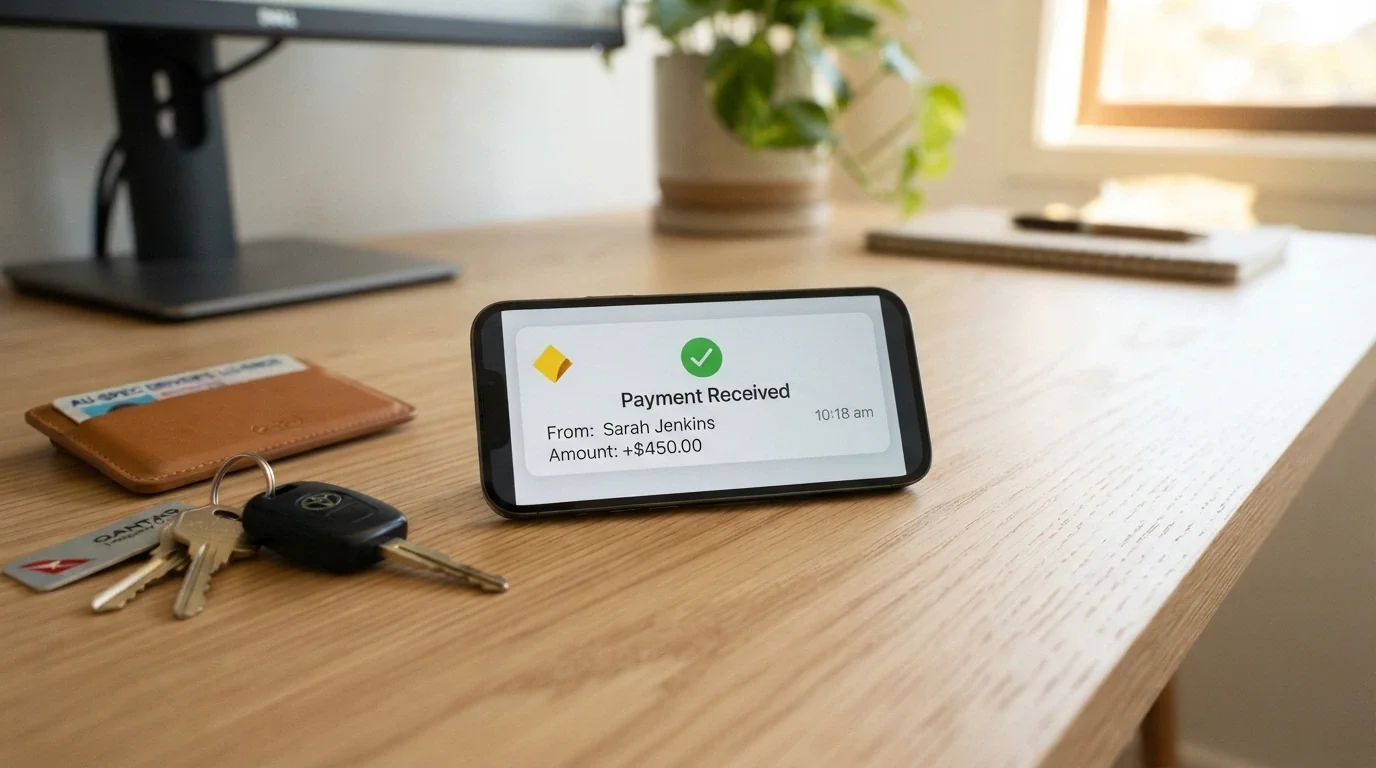
Complete KYC at registration, not at withdrawal. Upload the identity document, the proof of address, and the payment-method confirmation before the first deposit. A verified account lands in the five-to-thirty-minute approval queue. An unverified account lands in the manual-review queue, which is the number-one cause of withdrawal delays across the tested operators.
Read the withdrawal caps before claiming a welcome bonus. A A$30,000 win takes six weeks to clear at RocketPlay’s A$15,000 monthly cap. A A$3,000 ceiling on bonus winnings at WinSpirit caps the upside of the welcome offer regardless of how the spins land. The bonus terms and the withdrawal limits are the two figures that determine whether the welcome offer is worth claiming.
Understand the offshore reality before signing up. No Australian licence exists for online casino. No Australian complaints body covers the operator. No BetStop registration reaches the site. The 2026 reform, from 1 January 2027, gives banks express authority to block transactions to illegal gambling operators — including PayID transfers to offshore casinos. The window for moving money to and from offshore casinos through the domestic banking system is closing. The player who chooses to play at an offshore casino is choosing to play on these terms.
Frequently Asked Questions
What causes casino withdrawal delays for Australian players?
The number-one cause is incomplete KYC — players hitting “withdraw” before uploading the documents the casino needs. Manual-review casinos add another two to twenty-four hours on top. Bank transfer takes one to three business days. A slow casino on a slow rail can stretch a payout across a full working week.
Do Australian online casinos accept crypto for withdrawals?
Offshore casinos accepting Australian players generally do. USDT (TRC-20) and Solana settle in under five minutes after the casino releases the funds; Bitcoin takes thirty to sixty minutes for network confirmations. Licensed Australian wagering operators are banned from accepting crypto. The crypto-friendly operator is the offshore one — by definition.
What is the minimum withdrawal amount at fast-payout casinos in Australia?
It varies. Ripper Casino’s minimum is A$20, the lowest in this set. Royal Reels sits at A$50. SkyCrown allows A$30 via MiFinity but A$100 via bank transfer. Fair Go requires A$100. The figure depends on both the operator and the chosen rail — crypto and e-wallets usually run lower than bank transfer.
What happens if an offshore casino blocks my withdrawal?
Australian consumer protection law does not reach the operator, and there is no Australian complaints body with jurisdiction over an offshore casino. The player can attempt to escalate through the Curaçao Gaming Control Board if the operator is licensed there, or through Antillephone N.V. as the validator. Realistically, recovery depends on the operator’s willingness to pay.
Can I use a credit card to deposit at an Australian online casino?
Credit cards, credit-related products and cryptocurrency are banned as payment for online wagering with Australian-licensed operators since 11 June 2024. Offshore casinos accepting Australian players do not enforce that rule. Depositing by credit card at an offshore casino means credit interest on losses and no chargeback recourse through Australian consumer protection.
RNG Pokies vs Live Dealer Tables — Does the Game Type Affect Your Withdrawal?
No. RNG-based pokies and live dealer tables share the same withdrawal pipeline at every operator in this set. Whether the player spins a slot or plays blackjack with an Evolution live dealer, the payout request hits the same Stage 1 queue and the same Stage 2 rail. Game format is irrelevant to payout speed. What differs between RNG and live is the experience — the social layer of a live dealer, the pace of a slot — not the cashout.
The player who wants both formats and a fast payout should pick the operator with the broadest library and the broadest payment-method range. That is Bizzo by a clear margin in this set, with WinSpirit a step behind and Royal Reels and SkyCrown comparable on the multi-provider front.