A$2 Deposit Casinos for Australian Players — The Complete 2026 Breakdown
A$2 is among the lowest deposit thresholds any AU-facing casino still seriously markets. That sentence carries two facts at once: the marketing floor has fallen as far as it can go without breaking the payment rails, and every site that meets a player at A$2 does so from outside Australia. The pages that follow lay out what an A$2 deposit actually buys — the few methods that clear it, the handful of bonuses that fire at it, the games the bankroll reaches, and the offshore structure every operator on this list shares. No brand is recommended; the decision sits with the punter.

Data current as of 29 October 2026 and verified against the Australian Communications and Media Authority register.
Table of Contents
- Why a A$2 Deposit Is a Test Drive, Not a Bankroll
- Every A$2 Deposit Casino Is Offshore — Here Is What That Actually Means
- 10 $2 Deposit Casinos Australian Players Can Access in 2026
- The A$2 Deposit Gap — Why Most Payment Methods Start at A$10
- Your A$2 Bonus Is Probably Not a Bonus — What Actually Triggers at This Level
- How to Pick a $2 Deposit Casino Without Walking Into a Trap
- Mobile $2 Deposits — Same Minimums, Different Flow
- What You Can Actually Play With A$2 — Pokies, Live Games and the Demo Safety Net
- When A$2 Is Not Just A$2 — Low-Deposit Gambling and Harm Prevention
- How We Selected and Ranked These $2 Deposit Casinos
- A$2 Is a Sampling Tool, Not a Strategy — What to Actually Do
- Frequently Asked Questions
Why a A$2 Deposit Is a Test Drive, Not a Bankroll
The “test drive” framing is not editorial caution. It is the structural fact the rest of this page is built on. A$2 buys access, not a session. It clears the cashier and lands in a real-money account, and a handful of spins later the bankroll is gone.
What a $2 Minimum Deposit Casino Actually Promises
The marketing pitch is that a casino lets a player in for A$2. The reality is more layered. Australian-facing minimum deposits range from A$1 to A$20, with the common brackets at A$1, A$2, A$5, A$10, A$15 and A$20. A$2 sits in the middle of that band — not the lowest possible (a single A$1 operator holds that), not the practical entry point for most players (A$10 is), but the floor that attracts the most marketing airtime.
The reason A$2 exists as a category is competition. Every operator wants to rank on the “$2 deposit casino” search because the term converts — players searching for a low entry point expect to find an honest answer, and the sites that return one in their marketing tend to win the click. The cost of competing on this term is small, because the actual amount rarely reaches the casino: the bonus trigger — the amount a punter must deposit before the welcome fires — sits above the deposit floor at most operators. The headline number is the door. The bonus terms carry a different threshold.
Of the casinos that genuinely accept A$2, only six do so as a real deposit. The rest round up at the cashier, restrict the floor to crypto, or quietly bump the minimum. The phrase “from A$2” is doing a lot of work in this market.
Casino vs Pokies — Why the Wording Matters in Australia
A small thing worth clearing up before anything else: in Australia, “pokies” is the everyday word for slot machines. A punter walking into a TAB and asking for the pokies is asking for the same product an international audience calls slots, fruit machines or one-armed bandits. The distinction matters because Australian search behaviour mixes the terms — players type “pokies” as readily as “casino games” — and a useful page speaks both without treating them as separate products. Same library, different name.
The other word worth knowing is “punter.” It means gambler or bettor, with the same breadth the British “punter” carries in betting-shop language. The word is everywhere on AU-facing casino reviews. The word “bookie” covers the licensed wagering side; a “TAB” is a Totalisator Agency Board outlet. None of these terms changes the product; they change the surface the punter reads.
This is the structural reason a $2 deposit casino page for Australia reads as a $2 deposit pokies page at the same time — and the structural reason a page that splits them into separate categories fails the search. They are not separate categories. They are one category with two names.
Real-Money Play at the A$2 Level — What It Buys and What It Does Not
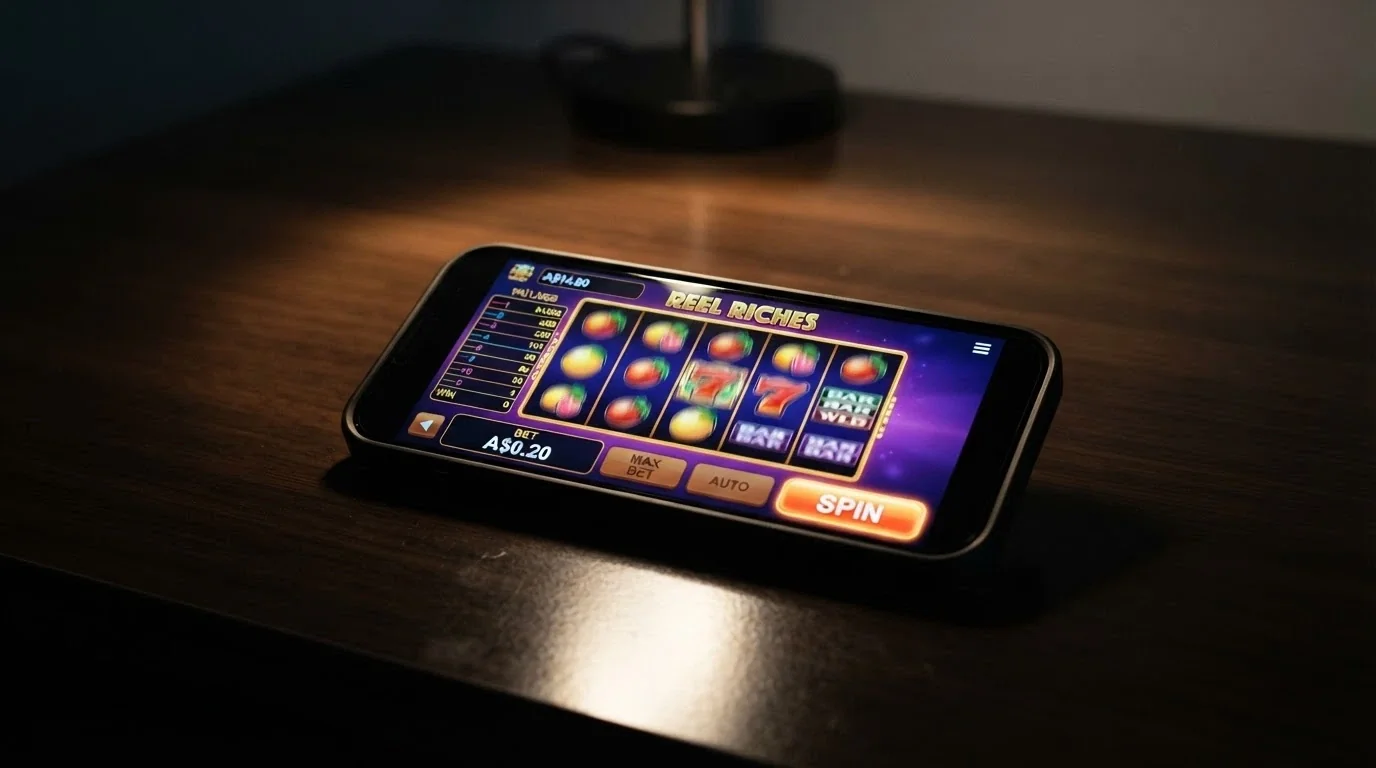
A$2 in real money buys a handful of spins at minimum stakes and nothing at a live-dealer table. At A$0.20 per spin, a A$2 deposit returns ten spins on most pokies — enough to sample a game’s bonus round once, not enough to ride its variance. At a A$1 per spin minimum, the same deposit returns two spins. At A$0.10, twenty. The economics at the A$2 tier are stake multiplied by patience, not bankroll extended by the deposit.
The expectation that needs deflating is the marketing implication that A$2 is “real money” in the same way a A$200 deposit is real money. It is real money — every cent counts as a cash wager and every cent won is a cash win — but the structural difference is the buffer. A A$2 bankroll does not absorb variance. Two losing spins at A$1 end the session. A A$20 bankroll runs through a hundred spins at A$0.20 and survives a cold streak without the punter reloading.
Of the six operators that genuinely accept A$2, only three trigger their welcome bonus at that level. The other three lock the welcome behind a A$10 to A$30 threshold or run a no-bonus cashback model that pays back a percentage of losses rather than a deposit match. A A$2 deposit at one of the locked operators is, functionally, a deposit without the welcome. A A$2 deposit at one of the three unlocked sites is a sample of the welcome.
That asymmetry is the structural fact this page is built around. The next sections explain why.
Every A$2 Deposit Casino Is Offshore — Here Is What That Actually Means
A$2 deposit casinos exist for Australian players, but none of them are Australian. Every operator that accepts a punter at A$2 does so from outside the country, under a licence issued somewhere else. The legal context is not a sidebar — it is the structural fact this entire page rests on.

The Interactive Gambling Act 2001 — What It Prohibits and What It Does Not
The Interactive Gambling Act 2001 makes it an offence to provide online casino games, online pokies and in-play sports betting to a person in Australia. The verb that does the work is “provide” — the law targets the operator offering the service, not the player using it. No licence exists for online casino anywhere in the country, not federally and not in any state or territory.
What the Act does permit is narrower than most players assume. Wagering on horse races, harness races and greyhound races is licensable. Wagering on sport is licensable, but only when placed before the event begins — once play starts, the market is in-play and the wager becomes prohibited. Lotteries and keno are licensable, through state or territory frameworks. None of these licensed products is a casino game, and a casino offering pokies or blackjack over the internet to an Australian customer is offering a service that, by statute, no Australian licence can authorise.
The practical effect is that the player is not prosecuted for using an offshore casino — the IGA targets the provider, and ACMA’s enforcement runs in that direction. But “not illegal for you” is not “protected.” The legal decriminalisation of the player does not come with consumer rights, recourse, or any of the infrastructure that surrounds a licensed product. Freedom from prosecution, not freedom from risk.
ACMA Enforcement — Site Blocking, Fines and the 1,564 Blocked Domains
The Australian Communications and Media Authority has been directing Australian ISPs to block illegal gambling sites since November 2019. As at March 2026, the count of blocked domains sits at 1,564 — gambling sites and affiliate sites that marketed them. More than 225 illegal services have withdrawn from the Australian market entirely since enforcement strengthened in 2017. The direction of travel is one-way.
The financial instrument arrived in 2024. From 11 June 2024, credit cards, credit-related products and digital currency (crypto) are banned as payment for licensed online wagering, with penalties for non-compliance running up to A$247,500. The ban covers licensed operators only — offshore casinos continue to take both rails — but it tells a punter that credit cards and crypto, asked of an Australian-facing gambling site, are a sign the operator sits outside Australian rules.
The 2026 reform tightens further. The Interactive Gambling Amendment (Gambling Reform) Bill 2026 passed Parliament on 19 August 2026, and its measures commence 1 January 2027. From that date, banks and payment providers gain express authority to block transactions to illegal gambling operators. Wagering advertising on broadcast television is capped at three ads per hour between 6am and 8:30pm. A blackout applies from 15 minutes before a live sporting event to 5 minutes after. Athletes, celebrities and influencers are barred from promoting wagering, and the broadcasting of sporting odds is banned outright. Inducements cannot be direct-marketed for 14 days after sign-up, for three months after BetStop deregistration, and indefinitely for customers flagged as at risk.
These are not measures aimed at the licensed bookmakers in the Australian market — those operators already comply with most of them. They are measures aimed at the offshore casino that has spent the last decade advertising on the same channels. The compliance cost of being offshore is rising, and the bank-blocking authority that arrives in 2026 is the most concrete instrument yet.
What Australian Players Give Up at an Offshore Casino
A licensed Australian wagering operator offers a defined package of player protections: a national self-exclusion register, customer-set deposit limits, activity statements, a state-based complaints body, and ACMA’s enforcement backstop. An offshore casino offers none of these.
BetStop is the clearest gap. The National Self-Exclusion Register, live since 21 August 2023, lets a person exclude themselves from every Australian-licensed online and phone wagering service in a single registration. To the end of Q3 FY 2025–2026, 59,830 people had registered; as at 31 March 2026, 37,247 had active exclusions. The register binds licensed operators only — an offshore casino is not connected to it and will keep taking a self-excluded person’s money. That is the protection gap, expressed in one concrete mechanism.
The other gaps are less dramatic and equally real. There is no Australian consumer protection body that will pursue a withdrawal dispute on behalf of a punter at an offshore site. There is no Australian regulator that will investigate a frozen account or a voided bonus. There is no insurance scheme. The site itself can be blocked at any time — ACMA’s 1,564 blockings did not compensate players with balances — and Curaçao licensing, the regime under which most of the operators on this page sit, provides some regulatory oversight but does not equal Australian-grade recourse. A complaint to a Curaçao licence holder, in practice, runs through the operator’s own complaints process with limited external escalation.
The point is not that every offshore casino is dishonest. The point is that the punter who uses one is outside every safety net the Australian framework offers, and the protection gap is structural, not anecdotal.
10 $2 Deposit Casinos Australian Players Can Access in 2026
These ten operators accept Australian players at a A$2 deposit threshold or near it. Every one of them is offshore. None is licensed in Australia. The table compares what they advertise; the profiles that follow say what is not in any column.
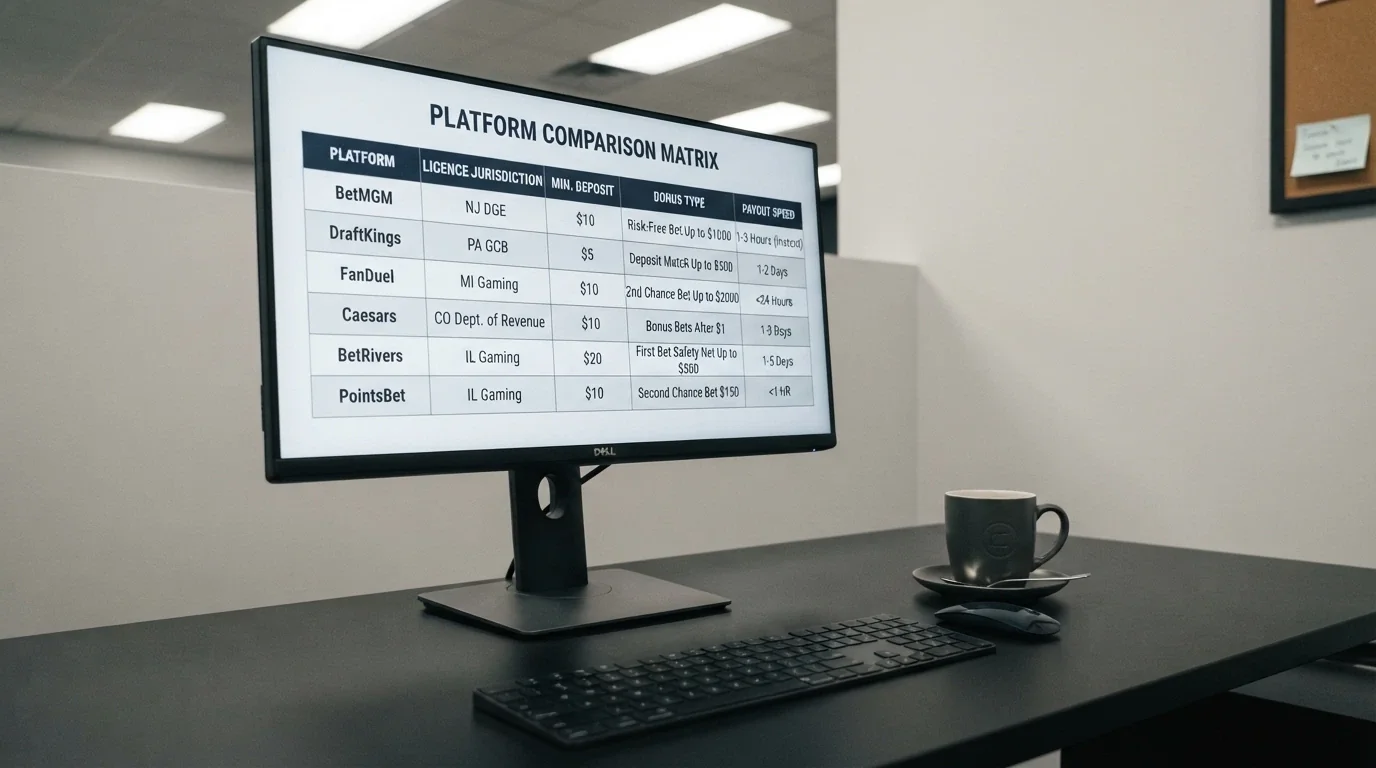
| Casino | Licence Jurisdiction | Min Deposit (A$) | Bonus Type | Payout Speed | Game Library |
|---|---|---|---|---|---|
| SkyCrown | Curaçao | A$2 (crypto); A$20 (cards) | Welcome package + cashback | Under 1 hour (crypto) | 6,000+ games |
| RocketPlay | Curaçao | A$2 | Deposit match + free spins | Instant (crypto) | Large library |
| Fair Go | — | A$2 | Welcome package with free spins | — | RTG focused |
| Ricky | Curaçao | A$2 | Welcome package + free spins | Up to 48 hours | 3,000+ games |
| Ozwin | Curaçao | A$2 | Welcome bonus + cashback | 1–3 days | RTG pokies |
| King Billy | Curaçao | A$2 | Multi-deposit welcome + free spins | 1–2 days | Huge selection |
| PlayCroco | — | A$2 | Deposit match welcome bonus | — | — |
| Uptown Pokies | — | A$2 | Welcome package + cashback | — | AU pokies focus |
| Ripper | — | A$2 | Welcome bonus with free spins | — | — |
| Woo | — | A$2 | Welcome package with free spins | — | — |
SkyCrown Casino
SkyCrown takes a A$2 deposit via crypto and pays out in under an hour on the same rail. The library sits above 6,000 games from multiple providers, the broadest in this set, and the Curaçao licence is the most common permit on this list. The catch is the bonus. SkyCrown’s welcome package does not fire at A$2 — it triggers at A$30, the widest gap between deposit minimum and bonus threshold on this page. Card and e-wallet deposits start at A$20; withdrawals start at A$50. For a crypto-first punter, SkyCrown is fast. If you are a A$2 tester chasing the welcome, you will need to look elsewhere.
RocketPlay Casino
RocketPlay accepts A$2, runs a Curaçao licence, and combines a deposit match with free spins at the welcome tier. The standout line on its spec sheet is instant crypto payouts — SkyCrown beats the one-hour mark, but RocketPlay matches it and offers it as the default rather than the exception. The library is large, though no specific title count was surfaced this round. What did not surface is the bonus wagering terms at the A$2 level — the small print that tells a player how many times the bonus must be turned over before it pays out. Treat the welcome as a starting point and read the terms page before you trust the marketing. Fast rails, decent library, unverified bonus terms.
Fair Go Casino
Fair Go is the veteran of this list. Long-running RTG casino with AUD support, PayID and POLi routed through familiar Australian payment rails, Visa and Mastercard at the cashier, crypto and e-wallets for the rest. The minimum deposit is A$2. The welcome package comes with free spins. The payout speed was not surfaced in this round of research, and the licence jurisdiction sits unverified — Fair Go is offshore, but the specific permit was not located. The calling card is the age. The trade-off is the licence paper trail.
Ricky Casino
Ricky is one of the three operators in this set that triggers its welcome at A$2. The free-spin welcome package is one of the few in this market that a A$2 depositor actually receives, which makes Ricky the rare fit for the page’s headline pitch. The library runs to 3,000+ games, the Curaçao licence is published, and the bonus terms sit at the clearer end of the small-print spectrum. The drawback is patience. Payouts run up to 48 hours, longer than several of the crypto-first operators on this list, and a A$2 winner waiting two days for a dollar will feel that delay more sharply than a A$200 winner. The polished mobile site is real, not marketing. For a A$2 tester who values the welcome over the wait, Ricky is the standout.
Ozwin Casino
Ozwin accepts A$2, runs Curaçao licensing, and stacks RTG pokies as the core of the game library. The welcome bonus sits at the standard tier; the structural differentiator is the cashback program. Cashback pays back a percentage of net losses, and the percentage scales with the loss, not the deposit. That matters at A$2: a deposit-match bonus fires once and stops, while a cashback program returns a slice of whatever the session cost the player. The payout window runs 1–3 days, which sits at the slow end of this set but inside the band a patient offshore punter expects. A small deposit earns a small rebate, but the rebate is automatic.
King Billy Casino
King Billy accepts A$2, runs a Curaçao licence, and spreads its welcome across multiple deposits with free spins attached to each tier. The game selection is large, the VIP program exists for the player who plans to come back, and payout speed runs 1–2 days. The structural trade-off is the welcome’s spread. A welcome that rewards deposits two, three and four does little for the punter who stops at A$2. The bonus the marketing page shows is real, but most of it sits on the wrong side of a four-deposit commitment. King Billy is built for the reload pattern. A one-off A$2 depositor will read the headline and walk away with a fraction of it.
PlayCroco Casino
PlayCroco takes A$2, runs offshore outside Australia, and covers the broadest payment mix in this set: Visa, Mastercard, PayID, Neosurf and Bitcoin. The deposit match welcome bonus is conventional for the offshore category. Daily promotions run on top of the welcome, which is a structural feature the rest of the list treats as a paid add-on rather than a built-in. What did not surface this round is the game-provider specifics — no studio count, no title count, no library shape beyond the croco-themed platform the brand markets. For a punter who values payment breadth over game count and wants to fund a A$2 deposit through any of five rails, PlayCroco covers the bases.
Uptown Pokies
Uptown Pokies is the most locally tuned operator on this list. AUD is the default currency. PayID, POLi, Visa, Mastercard and crypto all reach the cashier. The welcome package comes with cashback, and the platform is built around the Australian pokies player — the word “pokies” in the name is not a translation choice but a category focus. The licence jurisdiction is unverified, which is the trade-off a brand accepting POLi and PayID sometimes pays. For a punter who wants the surface area of an Australian-facing product with the AUD convenience that comes with it, Uptown Pokies is the closest fit in the set. The cashback is the structural perk; the local rails are the structural convenience.
Ripper Casino
Ripper takes A$2, runs offshore, and the differentiator on the welcome bonus is the wagering requirement. Most deposit-match offers in this set carry a standard multiplier — a figure research did not surface this round — but Ripper markets lower wagering on selected offers, which is a rare position at the minimum deposit tier. The maths matters at A$2: a high wagering multiplier turns a small bonus into a clearance exercise that exceeds the bankroll, while a low multiplier lets a small depositor actually complete the requirement before the session ends. The payment mix runs Visa, Mastercard, PayID, Bitcoin and Litecoin. For a A$2 tester who prioritises achievable bonus terms, Ripper’s model is worth your time.
Woo Casino
Woo Casino puts crypto at the front of its payment stack and accepts A$2 on the way in. The welcome package spreads across multiple deposits with free spins, similar in shape to King Billy’s, and the payment mix covers Visa, Mastercard, PayID and e-wallets alongside crypto. The Curaçao licence is published. Crypto users will likely find it fast, as the brand’s positioning suggests; fiat users should ask at the cashier. For a punter who plans to fund through USDT and is comfortable with a multi-deposit welcome, Woo is a reasonable fit. For a one-off A$2 punter, the welcome is spread too thin to land.
The A$2 Deposit Gap — Why Most Payment Methods Start at A$10
A$2 is a marketing floor. The payment-method reality is closer to A$10. The gap matters because it changes which players can actually reach the A$2 tier and which ones only think they can.
| Payment Method | Minimum Possible Deposit | Deposit Speed | Withdrawal Speed | Key Limitation for A$2 Depositors |
|---|---|---|---|---|
| USDT (TRC-20) | A$2 (1 USDT ≈ A$1.55) | Minutes | Under 1 hour at crypto-first sites | Banned for licensed AU wagering since June 2024 — only available at offshore sites |
| PayID | A$10–A$20 | Instant | 5–40 minutes at well-run sites | Most casinos enforce an A$10 floor — A$2 not reachable via PayID |
| Neosurf | A$10 (smallest voucher) | Instant | Not applicable (voucher is deposit-only) | No A$2 voucher exists |
| Credit card | A$10–A$20 | Instant | 1–3 days | Banned for licensed wagering since June 2024; offshore operators may still accept |
| Debit card | A$10–A$20 | Instant | 1–3 days | Most operators enforce an A$10 minimum |
| Bank transfer | A$10–A$20 | 1–3 days | 1–3 days | Slow and floored above A$2 |
PayID at the A$2 Level — The A$10–A$20 Floor Most Casinos Actually Enforce
PayID is the dominant Australian casino payment rail in 2026. It is instant on the way in, with withdrawals clearing in 5 to 40 minutes at well-run sites — faster than cards, faster than bank transfer, and tied directly to the punter’s own bank account rather than to a card network. For an Australian player, PayID is the rail of first resort.
It is also a rail that cannot reach A$2 at most casinos. PayID minimums at AU-facing operators sit at A$10 or A$20, even when the casino’s advertised minimum deposit is lower. NeoSpin’s A$10 floor is the lowest tested. The reason is operational: PayID is processed by the casino’s payment provider, and the provider’s processing minimums sit above what the casino’s marketing would prefer. The advertised A$2 floor is the deposit floor; the PayID floor is the rail floor. They are different numbers, and the larger one wins.
A A$2 PayID deposit, in practice, does not exist at the operators on this page. A A$10 PayID deposit exists at the cheapest of them. For an Australian player who values PayID speed, the practical entry point is A$10 — not A$2.
Crypto and USDT — The Only Rail That Delivers a Genuine A$2 Deposit
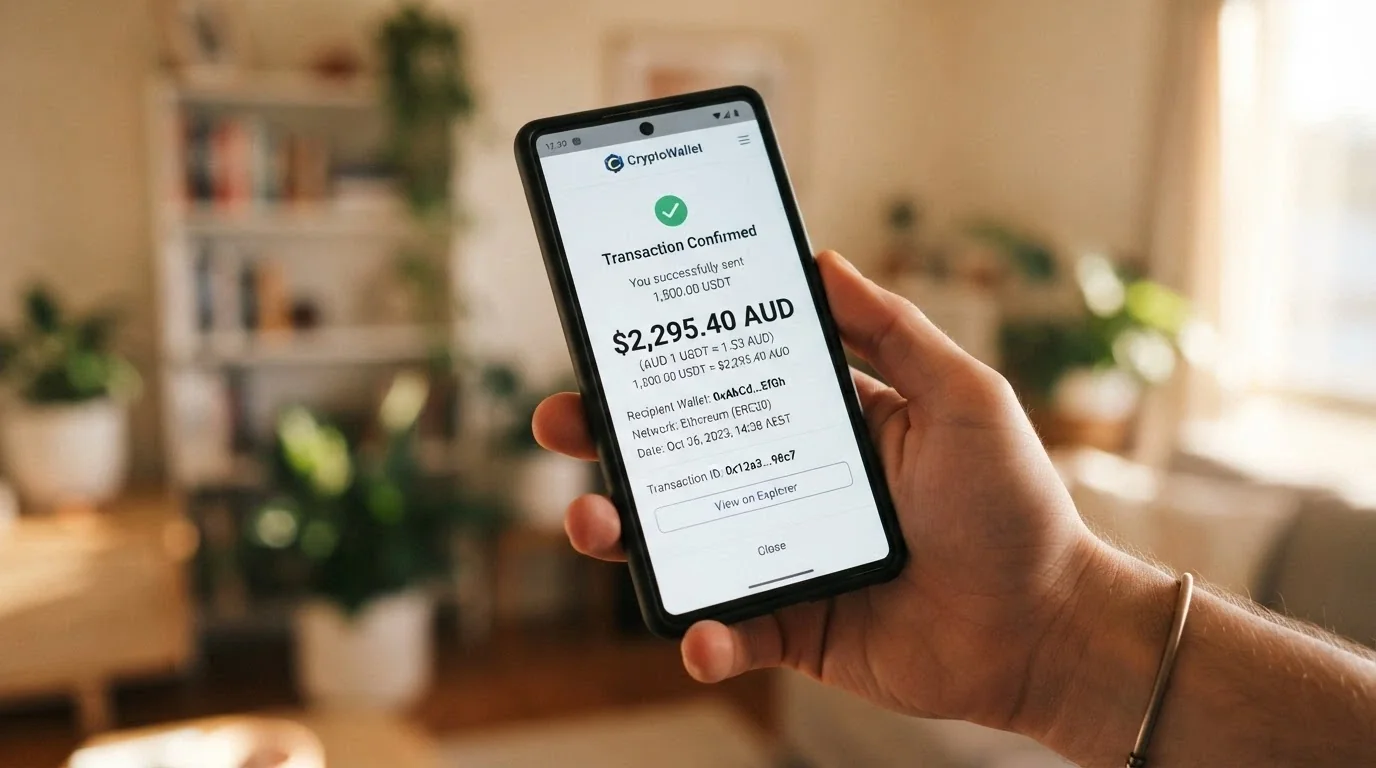
USDT on the TRC-20 network is the only payment method confirmed to deposit exactly A$2 across multiple casinos in this set. Operators set crypto minimums in coin terms — typically 1 USDT, which at recent exchange rates sits around A$1.55 — and the rail delivers the deposit in minutes rather than days. Bitcoin and Litecoin reach the cashier at most of the same operators but with higher minimums and slower confirmations.
The irony is structural. Credit cards and digital currency (including USDT) are banned as payment for licensed online wagering in Australia since 11 June 2024. An Australian punter who tries to deposit via USDT at an Australian-licensed bookmaker is told no; the same player depositing USDT at one of the operators on this page is being served by a brand outside Australian rules. The rail that delivers a genuine A$2 deposit is the rail that confirms the operator is offshore. Different number, same tell.
Payouts follow the same shape. SkyCrown pays crypto withdrawals in under one hour; RocketPlay markets instant crypto payouts. The crypto-first operators on this list turn the bonus-trap and the payment-floor trap into a single solve: fund through USDT, withdraw through USDT, and the A$2 ceiling becomes a real number. The cost is the offshore reality laid out in the section above.
Neosurf, Cards and Bank Transfers — Why the Voucher Denomination Sets the Floor
Neosurf is sold in fixed denominations: A$10, A$20, A$50, A$100 and A$500. There is no A$2 Neosurf voucher. The smallest amount a punter can put on a Neosurf card is A$10, which makes the smallest possible Neosurf deposit A$10 — even at an operator whose marketing says A$2 is the floor. The denomination is the rail.
Credit and debit cards carry processing minimums of their own. Standard card networks enforce a floor of A$10 to A$20 on most gambling transactions, which puts cards in the same practical bracket as PayID. Bank transfers sit higher still, with both deposit and withdrawal running one to three days and minimums typically at A$10 to A$20. Cards and bank transfers cannot deliver a A$2 deposit at any AU-facing casino this round found.
The bracket that emerges is structural: USDT TRC-20 reaches A$2 and only A$2; every other rail starts at A$10. The advertised A$2 minimum is true for one method, on one network, at one denomination. A A$10 minimum is the real entry point for every other punter — and A$10 is also the bracket where bonuses are most likely to trigger.
Your A$2 Bonus Is Probably Not a Bonus — What Actually Triggers at This Level
The welcome bonus and the A$2 deposit are two different products at most of the casinos on this list. The bonus terms set a separate entry threshold, and the threshold is almost always above A$2.

The Bonus Trigger Gap — When A$2 Does Not Qualify for the Welcome Offer
Of the six casinos that genuinely accept A$2, only three trigger their welcome bonus at that level. The rest require A$10 to A$30 to qualify. The bonus trigger threshold — the amount the punter must deposit before the welcome activates — is a separate setting on the operator’s terms page, independent of the deposit floor.
SkyCrown’s welcome package is the clearest example of the gap. The deposit minimum is A$2 via crypto; the bonus threshold is A$30. A A$2 deposit at SkyCrown clears the cashier and lands in the player’s account, but the welcome offer stays locked. The punter has made a real-money deposit at a real-money casino, and the marketing headline does not apply to them.
The reason operators structure it this way is operational. A welcome bonus paid on a A$2 deposit is a bonus paid on a bankroll too small to clear the wagering requirement. The bonus value is calibrated against the expected deposit size, not the floor — and the floor is below the calibration point. The marketing page advertises the floor; the bonus terms calculate on the assumption the punter will deposit more.
The three operators that do trigger at A$2 — Ricky Casino’s free-spin welcome being the clearest example — are an exception worth naming. Most of the rest are not.
Free Spins, Cashback and the Few Offers That Do Work at A$2
Free spins and cashback are the two offer types that survive at the A$2 tier. A free-spin welcome fires on the smallest qualifying deposit and pays back in spins rather than matched funds; a cashback program pays back a slice of losses regardless of how small the deposit was. Both structures are insensitive to the deposit floor in the way a deposit match is not.
Ricky’s free-spin welcome at A$2 is the clearest example. The welcome package awards free spins on top of a matched deposit, and the threshold is the same A$2 minimum that the cashier enforces. For a punter with a A$2 bankroll, that is the offer — a handful of spins at minimum stakes, paid back at the casino’s stake value, with whatever the wagering requirement turns them into. The exact wagering multiplier on the A$2 tier was not surfaced this round, which is the small print worth reading before the spin.
Ozwin’s cashback program is the structural equivalent. Cashback scales with what the player loses, not what they put in, which means a A$2 depositor who loses their stake earns a small rebate on the loss. The rebate is automatic; the player’s only decision is to keep playing or to withdraw.
Deposit-match bonuses are the third category and the worst fit for a A$2 depositor. A 100% match on A$2 returns A$2 in bonus funds — small in absolute terms and tied to a wagering requirement that may exceed the bankroll before it is cleared. The structural answer to a A$2 deposit is a free-spin or cashback offer, not a match. The operators that offer one of those two are the ones worth the headline; the rest are selling a bonus that does not fit the deposit.
How to Pick a $2 Deposit Casino Without Walking Into a Trap
Standard casino-review criteria break at A$2. The metrics that matter at the minimum tier are payment-method floors, bonus trigger thresholds and withdrawal minimums, not game count or VIP status. A A$2 punter choosing between two operators is making a different decision than a A$200 punter choosing between the same two.
The Criteria That Actually Matter at the A$2 Level
Five filters cut the operator set down to a shortlist that the A$2 deposit actually reaches.
- Payment-method floor: only USDT TRC-20 reaches A$2; every other rail starts at A$10. Confirm the rail works at A$2 before trusting the headline.
- Bonus trigger threshold: three of six A$2 casinos fire the welcome at A$2; the rest lock it behind A$10 to A$30. Read the terms before the deposit.
- Withdrawal minimum: SkyCrown’s A$50 floor is the clearest example — a small win that does not clear the threshold stays in the account. Check the withdrawal floor before funding.
- Licence jurisdiction: Curaçao provides some oversight; an unverified jurisdiction provides less. A published licence is a better starting point than an opaque one.
- Payout speed for the rail: crypto-first operators pay under an hour; fiat routes sit at one to three days. Match the rail to the method you will actually use.
The order matters too. Payment-method floor is the first filter, because a A$2 deposit that cannot actually clear the cashier is not a deposit at all. Bonus trigger threshold is the second, because a A$2 deposit that misses the welcome is a deposit at half the headline price. Withdrawal minimum is the third, because a win that cannot be withdrawn is a number on a screen. Game count, VIP status and brand age are useful at the A$200 tier and largely irrelevant at the A$2 tier.
Mobile $2 Deposits — Same Minimums, Different Flow
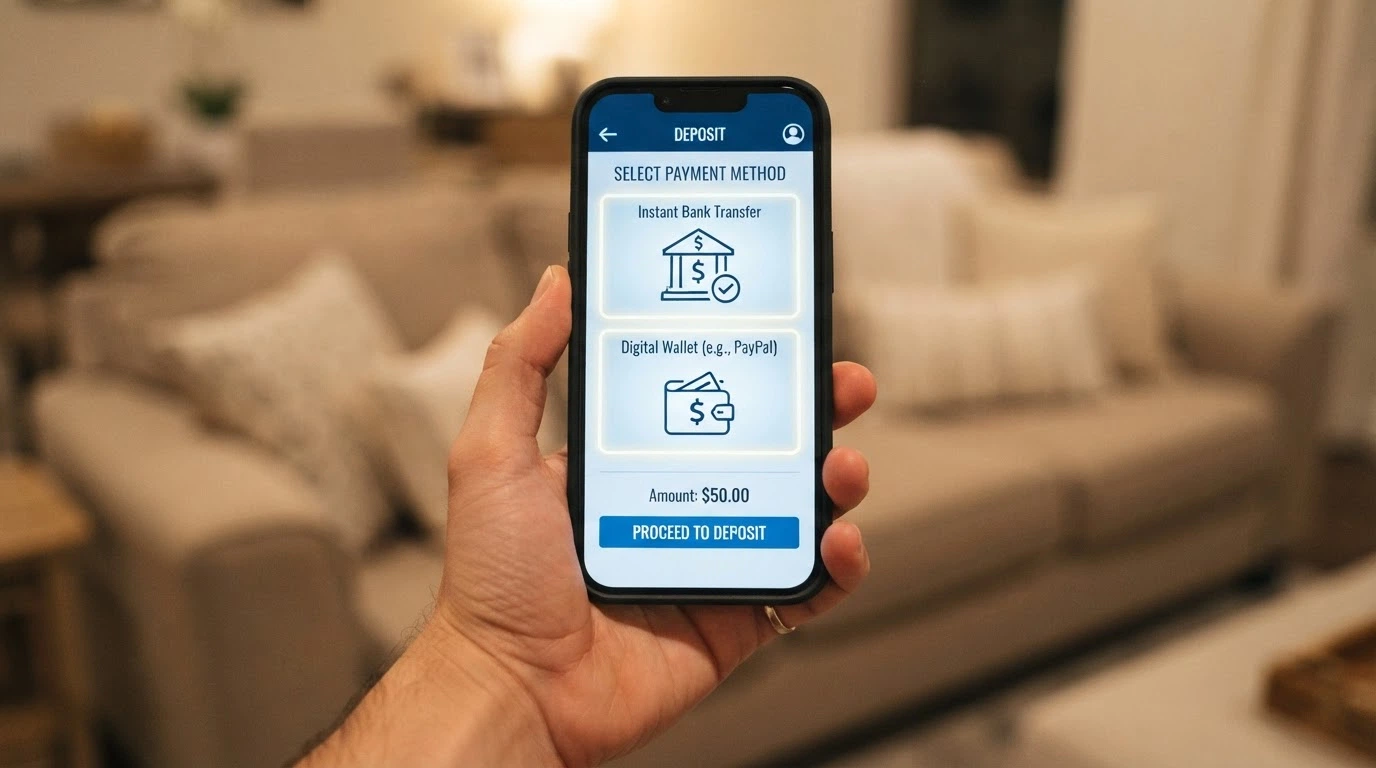
Mobile casinos do not lower the A$2 minimum. The minimum is a payment-method setting, and it does not change between browser and app. What does change is the deposit flow, the PayID routing and the patience cost of typing card details into a phone screen.
Mobile Site vs App — Which One Handles a A$2 Deposit Better
Most AU-facing offshore casinos run browser-based mobile sites rather than native apps. Native casino apps are scarce in the AU offshore market, partly because the ACMA blocks app-distribution channels for gambling services and partly because the offshore operators themselves prefer not to maintain an app that gets pulled. The mobile casino experience, in practice, is a phone browser pointed at the same site as a desktop.
The deposit screen on a phone browser mirrors the desktop screen with a narrower layout. PayID on mobile works the same as PayID on desktop — the rail is the same, the processing is the same, the minimum is the same. Crypto on mobile requires a wallet app on the same device; the punter scans a QR code or copies an address, the transaction confirms on the wallet, and the casino credits the deposit in minutes. Ricky Casino’s polished mobile site is the clearest example of a brand that has invested in the browser experience; the rest of the set offers competent phone browsers without standing out.
The honest answer is that mobile and desktop hit the same A$2 ceiling and clear it through the same rails. The difference is screen real estate and patience — neither of which changes the deposit floor.
What You Can Actually Play With A$2 — Pokies, Live Games and the Demo Safety Net
A$2 buys a handful of spins on low-stake pokies and nothing at a live-dealer table. The game library at the operators on this page runs into the thousands, but the access window at A$2 is narrow.
Pokies You Can Spin at A$2 — Titles, Providers and the Per-Spin Maths
RTG pokies at Fair Go and Ozwin form the AU-player mainstay on this list. RTG (RealTime Gaming) has been powering Australian-facing casinos since the early 2000s, and the games are familiar: three-reel classics, five-reel video pokies, progressive jackpots with prize pools that accumulate across a network. SkyCrown’s 6,000+ library and Ricky’s 3,000+ library are multi-provider, mixing studios like Pragmatic Play, BGaming, Betsoft and Evolution’s slot catalogue alongside the RTG names. King Billy’s library sits at the high end of “huge” without a precise count surfaced.
At minimum stakes of A$0.20 per spin — a common floor across most pokies on this list — a A$2 deposit returns ten spins. At A$0.10, twenty spins. At A$1, two spins. The session length at A$2 is set by stake multiplied by the number of spins the punter can afford, not by the size of the deposit.
The variance at the A$2 tier is the structural problem. A A$2 bankroll does not absorb a cold streak — two or three losing spins at A$1 end the session before the punter has seen the bonus round on most five-reel pokies. The player’s only defence is stake selection: A$0.10 spins stretch the bankroll further than A$1 spins, at the cost of every win being smaller in absolute terms. The library is large; the access window at A$2 is small.
No per-title RTP figures were surfaced in this round of research, so the honest framing is provider-and-stake rather than title-by-title. The games exist; the maths at A$2 lives in the variance, not the RTP table. The house edge is constant across the session, and the A$2 bankroll pays for the privilege of watching it play out at minimum stakes.
Live Dealer, Table Games and the Demo-Mode Alternative
Live-dealer tables sit above the A$2 tier. Roulette, blackjack and baccarat at a live-dealer studio carry minimum stakes of A$1 to A$5 per round, and most tables on this list’s providers start at A$1 — the absolute floor, not the practical one. A A$2 deposit clears one or two live-dealer rounds and stops. Table games without a live dealer (digital blackjack, video poker, scratch-card variants) carry similar minimums at most operators, with the cheapest digital tables starting at A$0.10 to A$0.50 per round.
The real test-drive tool is demo mode. Every casino on this list runs a free-play version of its games — same mechanics, same paytables, no real money on the line. A player who wants to sample a pokie’s bonus round, a table game’s side bet or a scratch card’s hit frequency can do so without funding the account at all. Demo play is the genuine A$0 entry point, and the gap between demo outcomes and real-money outcomes is the one that matters most: real-money play carries the deposit risk and the variance that demo play smooths away.
The structural answer at the A$2 tier is to use demo mode to choose a game and reserve real money for the spin. A A$2 deposit that funds ten real-money spins on a game the player has already tested in demo is a more useful A$2 than one spent on the first pokies the lobby displays.
When A$2 Is Not Just A$2 — Low-Deposit Gambling and Harm Prevention
A A$2 deposit is marketed as harmless, and in absolute terms the dollar figure is small. The behavioural pattern of reloading small amounts is not harmless — it is the same psychology that drives harm at higher tiers, and the offshore casino sits outside every Australian safeguard.
Bankroll Discipline at the Lowest Deposit Tier
Small deposits can mask a cumulative-loss pattern. A punter who reloads A$2 four times in a session has spent A$8; a punter who reloads four times across a week has spent A$32; a punter who keeps the pattern across a month has spent more than they would have on a single A$100 deposit. The structural defence against that pattern is a hard limit the punter sets themselves, because the offshore casino does not offer one.
Licensed Australian wagering operators are required to offer customer-set deposit limits and activity statements as part of their state and territory conditions. An offshore casino offers neither. The player at an offshore site has no operator-imposed ceiling and no operator-generated statement of how much they have spent in a month — only the player’s own record-keeping. A self-imposed limit is the only brake available, and it has to be set before the first deposit rather than after the first reload.
The numbers worth carrying into the decision: 13.0% of Australian adults (an estimated 2,857,000 people) are experiencing gambling harm from their own behaviour as of March 2026, and 15.1% (3,320,000) are affected including harm from others. Risky gambling rose from 13.7% in 2024 to 19.4% in 2025 — almost double since the COVID-19 lockdowns. Online gambling accounts for close to two-thirds (64%) of all gambling losses in Australia. The smallest entry point is where the pattern starts; the offshore site removes the operator-side brakes. The player-side brake has to be self-imposed.
Where to Get Help — BetStop, the National Gambling Helpline and Gambling Help Online
Australia has one of the strongest gambling-help infrastructures in the world. It only reaches the punter who uses a licensed operator.
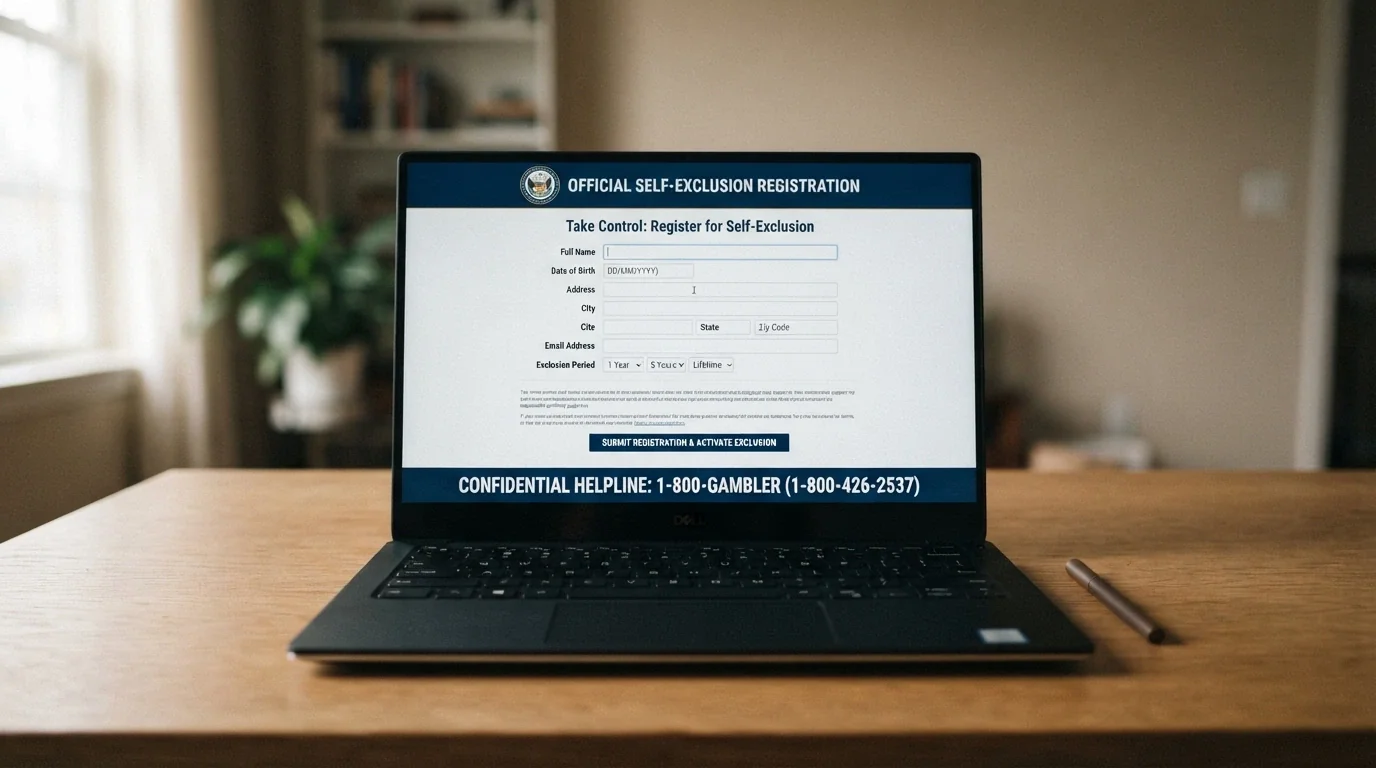
BetStop, the National Self-Exclusion Register, has been live since 21 August 2023. To the end of Q3 FY 2025–2026, 59,830 people had registered; as at 31 March 2026, 37,247 had active exclusions. A single registration excludes the person from every Australian-licensed online and phone wagering service. The register binds licensed operators only — an offshore casino is not connected to it and will keep taking a self-excluded person’s money. That is the protection gap, in one mechanism.
The National Gambling Helpline is 1800 858 858 — free, confidential, staffed 24 hours a day, seven days a week. Gambling Help Online offers online chat and counselling through gamblinghelponline.org.au. Both services work whether or not the punter is using a licensed operator; the help is independent of where the gambling happens.
The practical answer for someone who finds that an offshore casino is the problem is the same as for a licensed operator: contact the helpline, register on BetStop if the gambling is moving to Australian-licensed platforms, and use Gambling Help Online’s self-assessment tools. The offshore gap cannot be closed by an Australian regulator, but the help infrastructure exists for the punter regardless of where they have been playing.
How We Selected and Ranked These $2 Deposit Casinos
The ten operators on this page came from four sources across the affiliate set covering Australian-facing minimum-deposit casinos: SlotsPeak, SSSWheels, SolarPowerBendigo and supplementary AU-casino affiliate data. Each was checked against the Australian regulatory framework — the IGA prohibition, the ACMA enforcement record, the BetStop register, and the licence jurisdiction published on the operator’s own page.
Ranking was ordered by what genuinely reaches A$2 rather than by headline size. Operators that accept a A$2 deposit through a method that actually clears (USDT TRC-20 being the only one) rank above those whose A$2 floor is theoretical. Operators whose welcome fires at A$2 (the minority) rank above those that lock the bonus at A$10 to A$30. Payout speed, licence jurisdiction and game library are weighted below the deposit-authenticity check but above general marketing claims.
The evaluation did not test the operators end-to-end. Bonus-specific fields — wagering multiplier, max cashout, free-spin value, bonus validity — were not surfaced for most operators this round and have been left out where absent rather than estimated. The columns of the comparison table show only what research carries, with the no-data marker where research is silent. The same principle applies to the payment-method table — every cell is a fact from the source set, and the cells that are empty are empty because no fact surfaced.
A$2 Is a Sampling Tool, Not a Strategy — What to Actually Do
Three structural findings sit underneath the ten operators and the payment-method gap above them. Each one is the answer to a question a A$2 depositor should ask before clicking deposit.
First, only USDT on the TRC-20 network delivers a genuine A$2 deposit. Every other rail starts at A$10. The A$2 ceiling on the marketing page is true for one method, on one network, at one denomination.
Second, most bonuses do not trigger at A$2. Of the six operators that genuinely accept a A$2 deposit, three lock the welcome behind a higher threshold. The bonus the marketing page advertises is not the bonus the A$2 depositor receives.
Third, every operator on this page is offshore. Australia does not license online casino; the IGA prohibits it; the ACMA blocks the sites that offer it. The player is not prosecuted, but the punter is also outside every Australian safeguard — BetStop, deposit limits, complaints bodies, withdrawal recourse.
The honest conclusion is that A$2 is enough to test a casino’s cashier, its payment flow, its bonus terms and its payout behaviour. It is not enough to play a meaningful session on any game in any library. The house edge is constant and the A$2 bankroll pays for the privilege of watching it play out at minimum stakes. The punter who wants a real session should skip to A$10, where most payment rails clear, most bonuses fire, and the bonus maths actually works.
Demo mode is the more useful tool at the lowest budget. Every operator on this page offers free-play versions of its games; sampling them costs nothing and tells the punter more about a site’s library than a A$2 deposit will. The player who wants to spend A$2 should fund the deposit only after demoing the games.
No operator on this page is recommended. The decision sits inside the legal and safety framework this page has laid out — and the player who treats that framework as the boundary rather than the marketing is the one who walks away whole.
Frequently Asked Questions
Can you really deposit just A$2 at an online casino in Australia?
Yes, but only through one rail. USDT on the TRC-20 network is the only payment method confirmed to deposit exactly A$2 across multiple offshore casinos serving Australian players. Every other method — PayID, Neosurf, cards, bank transfer — starts at A$10 or A$20. The advertised A$2 minimum is real for crypto only.
What is the minimum withdrawal amount at a $2 deposit casino?
It varies by operator and by payment method. SkyCrown’s minimum withdrawal is A$50, one of the higher floors in this set. Most others sit between A$10 and A$100, with crypto withdrawals often allowing smaller amounts than fiat. Check the cashier before depositing — a small win below the threshold stays in the account.
Is it safe to play at a Curaçao-licensed casino from Australia?
Curaçao licensing provides some regulatory oversight, but it is not equivalent to Australian consumer protection. There is no Australian complaints body for a withdrawal dispute, no BetStop coverage, and no guarantee the ACMA will not block the site while a balance sits on it. Safe is a strong word; offshore-licensed is accurate.
Can you win real money with only a $2 deposit?
Yes. Every cent is a real wager and every win pays in cash. The structural limitation is the bankroll — at minimum stakes the deposit returns ten to twenty spins on most pokies, which is not enough to absorb variance. You can win. You can also lose the deposit in two spins. The deposit buys a session, not a bankroll.
What is the difference between a $2 and a $10 minimum deposit casino?
The functional difference is the payment-method floor. A$2 is reachable only via USDT TRC-20; A$10 clears PayID, Neosurf (the smallest voucher), cards and bank transfer at most operators. The secondary difference is the bonus — more operators trigger the welcome at A$10 than at A$2. A$10 is the practical entry point; A$2 is the marketing floor.
Do $2 deposit casinos accept Australian dollars?
Most do, and most set AUD as the default display currency. Fair Go and Uptown Pokies are AUD-native by design — PayID, POLi and cashback programs all run in Australian dollars. Crypto-first operators may default to USDT or USD, with AUD as a toggle. Check the currency setting before depositing, because exchange-rate conversions eat small deposits more than large ones.
New Casino vs Established Brand — Does It Matter for a A$2 Deposit?
The trade-off between a new casino and an established brand is sharper at the A$2 tier than at any other. The deposit risk is small — A$2 is not the amount a player loses sleep over — but the operator-choice risk is real. A new casino offers better bonuses because it needs customers; an established brand offers better payout reliability because it has survived enough cycles to know what works.
Fair Go is the clearest example of the established end. Long-running RTG casino, AUD support, PayID and POLi at the cashier, the same brand operating through three ACMA enforcement waves. The age is the calling card and the licence opacity is the trade-off — Fair Go’s specific jurisdiction was not surfaced this round. The brand is still here. The paperwork behind it is thinner than at the operators whose Curaçao licence is published prominently.
SkyCrown and RocketPlay sit at the new-casino end. Crypto-first, fast payouts, multi-provider libraries, the bonus structures of operators competing for share. The risk is longevity: ACMA has blocked 1,564 illegal gambling and affiliate sites since November 2019, and the next wave of blocks does not announce itself in advance. A A$2 deposit at a brand that gets blocked next month is not recoverable; the balance sits on a site the punter’s ISP cannot reach.
The honest answer is that the punter who treats the deposit as a test — A$2 in, see how the cashier behaves, see how the bonus terms read, see whether the payout clears — does not need to choose. The punter who plans to keep a balance across months should pick the established end of the spectrum and accept a thinner bonus for it.