Every Live Casino an Australian Can Reach Is Run from Offshore — Here Is What They Actually Offer
 Available in AU
There is no licensed online casino in Australia. The product is prohibited under the Interactive Gambling Act 2001, every site serving an Australian player holds an offshore licence, and the ACMA has blocked 1,564 of them since 2019. This page does not pretend otherwise. It compares the live-dealer experience those offshore sites deliver — the games, the providers, the bonuses and the real house edge — and then sets that against what a player forfeits by accessing it.

Data current as of 18 October 2026, verified against ACMA enforcement records, the Interactive Gambling Act 2001, the BetStop public register and operator terms pages.
Table of Contents
- Why Live Casino in Australia Is Run from Offshore
- What a Top-10 Live Casino Ranking Actually Measures
- Live Dealer Games Where the House Edge Actually Sits
- Why Your Live Casino Bonus Costs More Than the Welcome Page Says
- The Two Software Houses That Run the Live Casino Floor
- Is Live Casino Legal in Australia? The IGA, ACMA and Offshore Reality
- Staying in Control — BetStop, Deposit Limits and Real Help
- The Offshore Live Casinos Australian Players Are Using in 2026
- How We Selected and Evaluated Every Live Casino on This Page
- What Australian Punters Should Actually Do About Live Casino
- Frequently Asked Questions
Why Live Casino in Australia Is Run from Offshore
The Interactive Gambling Act 2001 makes it an offence to provide an online casino game — live dealer or otherwise — to a person in Australia. Online pokies, in-play sports betting and live table games all sit on the same prohibited list. No Australian licence exists for the product, in any state or territory, and no site an Australian can actually reach is licensed here. What that means in practice: the entire “Australian live casino” market is run from Curaçao, Malta or somewhere further afield, and every chip on the table is technically being wagered at an unauthorised venue.
This is not a grey area dressed up in marketing copy. The 2017 amendments to the IGA closed the offshore loopholes the early operators relied on, gave the ACMA its blocking powers and have, by March 2026, seen more than 225 illegal services withdraw from the Australian market on their own. A further 109 URLs were referred for blocking in the first quarter of 2026 alone. The ACMA cannot recover a player’s money, cannot compel a withdrawal and cannot stop an offshore site from disappearing overnight. What it can do is make the site unreachable on Australian ISPs, often with balances still sitting on it.
The player is not prosecuted. The IGA targets the provider, not the punter. That asymmetry is real and it is the first thing every affiliate review quietly omits. But “not illegal for you” is not the same as “safe.” There is no Australian consumer protection, no Australian complaints body, no recourse if a withdrawal stalls or a win is voided. Self-exclusion through BetStop does not reach these sites. The protections an AU-licensed bookmaker must provide — activity statements, deposit limits, take-a-break, customer-set caps — are absent or discretionary. What this page does is describe what those offshore sites actually offer: the games, the providers, the bonuses and the maths. What it does not do is recommend one as a place to play.
What a Live Casino Actually Is (and Isn’t)
A live casino is a real human dealer running a real table in a professional studio, streamed to a player’s screen over HD video with multiple camera angles, on-screen betting prompts and a chat window. Cards are dealt from a shoe. Roulette wheels spin under studio lights. The dealer interacts with the players by name. It is not an RNG simulation and it is not a recording — every hand, every spin, every card is happening in real time, and the player bets against that real outcome, not against a random number generator.
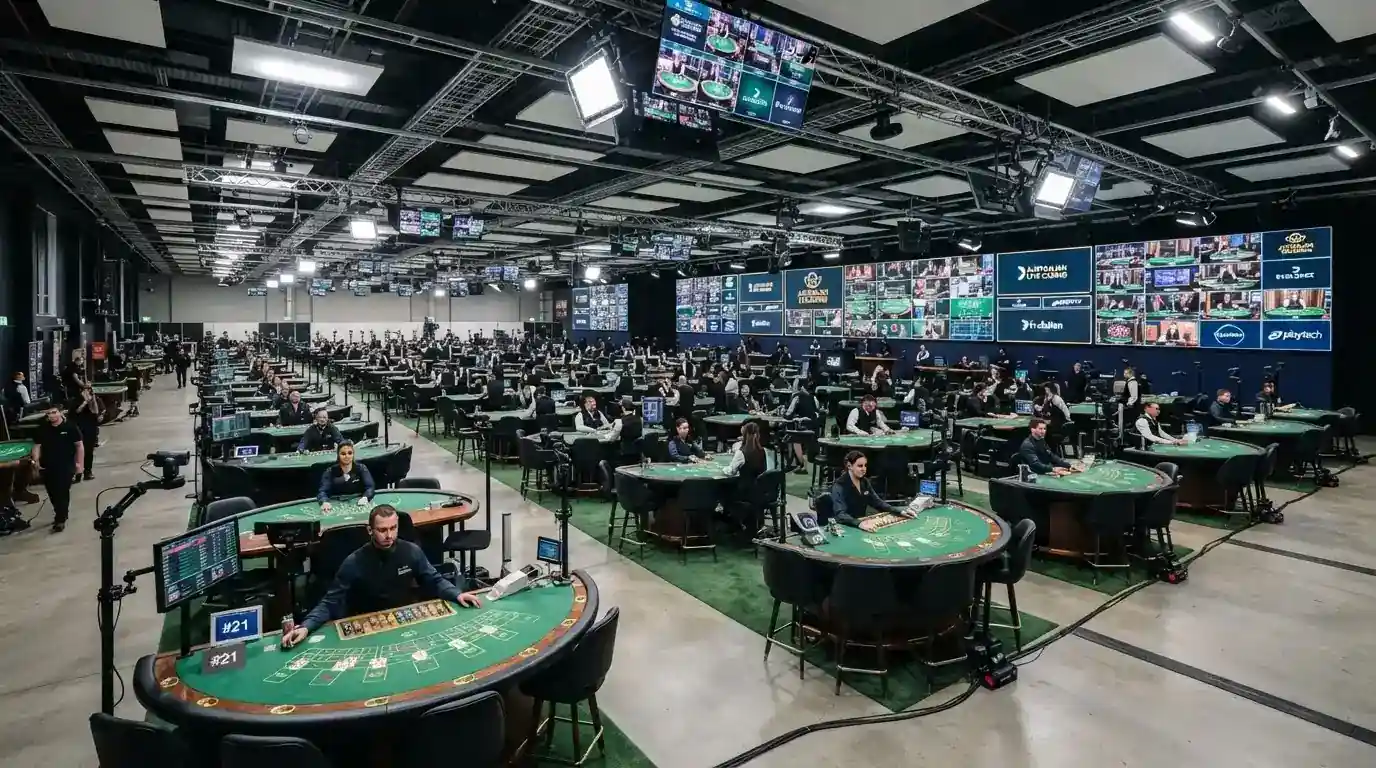
The studio is the product. A serious live-dealer operation runs dozens of tables simultaneously out of one or more purpose-built facilities — Evolution’s studios in Riga, Tbilisi, Bucharest and Malta, Pragmatic Play’s Bucharest base and a growing network of localised sites. Each table has its own cameras, its own game-control unit (the device that captures the result and pushes it to the software), its own dealer and its own audio. The dealer rotates. The tables do not close. The stream runs 24/7.
What it is not is a land-based casino floor. There is no chips-and-cocktails atmosphere, no second-floor poker room, no row of slot machines humming in the background. There is a studio, a dealer, a table and a stream. Players are watching that stream through a betting interface on their phone or laptop, and the only contact they have with the table is through the chips they place on the digital layout. The social layer — the chat window, the dealer greeting players by name, the banter — is real, but it is a software overlay on a one-way video feed.
Live Dealer vs RNG — Speed, Pace and the Stream
The single most important difference between live and RNG play is the hand rate. Live blackjack runs at 30 to 60 hands per hour; the same game online without a dealer runs 100 to 200 hands per hour. Live roulette settles roughly 40 to 60 spins an hour; the RNG version fires out a spin every few seconds. That gap is not a stylistic detail — it is the structural reason the live version costs a smaller bankroll per hour, simply because fewer decisions per hour means fewer opportunities to lose.
The slower pace is the live lobby’s quiet virtue. A punter betting A$10 a hand at a 50-hand-per-hour live blackjack table is exposing roughly A$500 an hour to the house edge; the same stake at an RNG table running 150 hands pushes that figure toward A$1,500. The maths compounds across a session. Live play does not change the house edge — it still sits around 0.5% on blackjack with correct basic strategy — but it slows the rate at which that edge is collected, and it does so without any input from the player.
The other difference is atmosphere. A live stream with a real dealer, real cards and chat feels closer to a casino floor than an RNG game ever does. That feel is part of what players pay for. It is also part of what makes the game harder to walk away from — the slower pace, the human element and the immersive format all nudge a player toward longer sessions. The maths says live play is cheaper per hour. The psychology says live play can last longer than a player intended. Both are true.
Real-Money Live Play for Australian Punters
Real-money live play at an offshore casino means an AUD deposit, an account in someone else’s name and stakes that range from A$0.10 on a standard roulette table to A$25,000 or more in a VIP blackjack room. The deposit side is where the picture gets complicated, because what an Australian-licensed wagering operator must accept (debit card, bank transfer, PayID/Osko and BPAY) is not necessarily what an offshore casino will offer. Many offshore sites accept credit cards or cryptocurrency, both of which are banned payment methods for licensed Australian wagering since 11 June 2024. An Australian asked for either is being served from outside Australian rules.
Once the deposit lands, the actual betting is straightforward. Live tables at the bigger studios publish their minimum and maximum stakes in the lobby; A$0.10 minimums are common on roulette, A$1 minimums on blackjack, with maximums climbing into the thousands on the standard floor and well beyond A$25,000 in the high-roller rooms. Pragmatic Play’s standard blackjack configuration caps higher than Evolution’s — typically A$5,000 to A$10,000 versus A$3,000 to A$5,000 — though both providers run VIP tables that lift the ceiling further.
The starting point for an Australian punter is an account with one of the offshore operators accepting AUD, a payment method the operator will accept (the credit card and crypto options are the strongest tell that the operator is outside Australian rules), and a clear understanding that the protections BetStop provides at home do not apply on the other side of the deposit.
What a Top-10 Live Casino Ranking Actually Measures
Every ranking of live casinos for Australian players is, at bottom, a ranking of offshore sites, because that is the only category that exists. The order itself depends entirely on the criteria: market share gives one ordering, licence prestige another, bonus generosity a third. This page ranks primarily by AU market share from the operators skill dataset, with the proviso that market share among offshore operators is a measure of brand recognition and trust among existing players, not a measure of how well the live lobby actually performs.
The comparison table further down captures three things — operator name, offshore licence status and market share — and only those three. It does not capture game selection (because the per-operator live lobby detail was not verified for most of the set this run), bonus terms (because they were not confirmed for most operators this run), or withdrawal reliability (because that data cannot be gathered without an account at each site). A reader who needs those details should treat this page as a starting point, not as a buying guide.
Best Live Dealer Casino vs Best Casino with Live Dealer
There is a meaningful distinction between an operator whose entire product is built around the live lobby and an operator that started as a slots site and bolted on a live dealer section. The first group — mostly the studios’ own-branded operations and a handful of live-first brands — designs the lobby first, builds the navigation around the tables, and treats slots as a secondary category. The second group treats the live section as a marketing checkbox, parks it under a tab called “Live Casino” and concentrates its promotional spend on free spins and slot tournaments.
For an Australian punter who specifically wants live dealer play, the difference matters. A live-first operator typically staffs more tables at peak AU evening hours, runs more localised studios and supports more live variants. A slots-first operator with a live tab tends to carry the same Evolution or Pragmatic Play feed anyone else carries, because the provider, not the casino, decides what fills those tables. The brand on the lobby matters less than the studio behind it.
The featured set on this page is mixed. Most of the operators reviewed here are generalist offshore casinos with live lobbies supplied by Evolution or Pragmatic Play; the live-first brands are a smaller subset. A player choosing on the live-dealer experience alone would do better to identify the provider feed first and the casino brand second.
Reviews, Shortlists and the Sites We Left Off
The shortlist behind this page draws on the AU market-share dataset for offshore operators, cross-referenced against search results for AU-facing live casino content. The result is ten brands: the most-visible names among offshore operators currently serving Australian players, ordered by market share at the top and tailing into single-digit shares at the bottom.
The sites that did not make the cut were excluded for two reasons. Some were excluded because their AU market share was below the threshold the dataset flags — small-share brands with thin coverage outside their own marketing. Others were excluded because their presence in the AU market is recent and unverified. The exclusion is not a quality judgment; it is a coverage one. A reader who has used a brand not on this list and found the live lobby acceptable is not wrong — the page simply did not have the data to rank it.
The deeper limitation is that no offshore operator’s live-dealer terms can be verified from outside an account. What this page knows about SkyCrown’s 10% weekly live cashback is what the operator publishes publicly; what it knows about the other nine operators’ live bonuses is mostly that the search run could not confirm them. Treat the table as a description of who is being accessed, not a buying recommendation.
Live Dealer Games Where the House Edge Actually Sits
Every live game carries a real mathematical edge. The figure varies by game, by bet type and by side bet, and the spread is wider than most players realise. The full live lobby at a major studio carries blackjack at roughly 0.5%, European roulette at 2.70%, baccarat banker at 1.06% and the baccarat tie bet at 14.4%. Game shows cluster around 95% to 97% RTP, which sounds close to blackjack until the player reads the volatility structure and sees that most bets lose. The numbers below are what each game costs the player over a long session, not over a single hand.
Blackjack — The Sub-1% Game the Right Rules Protect
Live blackjack with correct basic strategy carries a house edge near 0.5% and an RTP of approximately 99.5%. That is the lowest-cost game in the live lobby, and the only one a serious bankroll management plan would call acceptable. The edge holds because basic strategy collapses every decision to a fixed rule — hit, stand, double, split — and the rules of standard blackjack are tight enough that those decisions are nearly optimal.
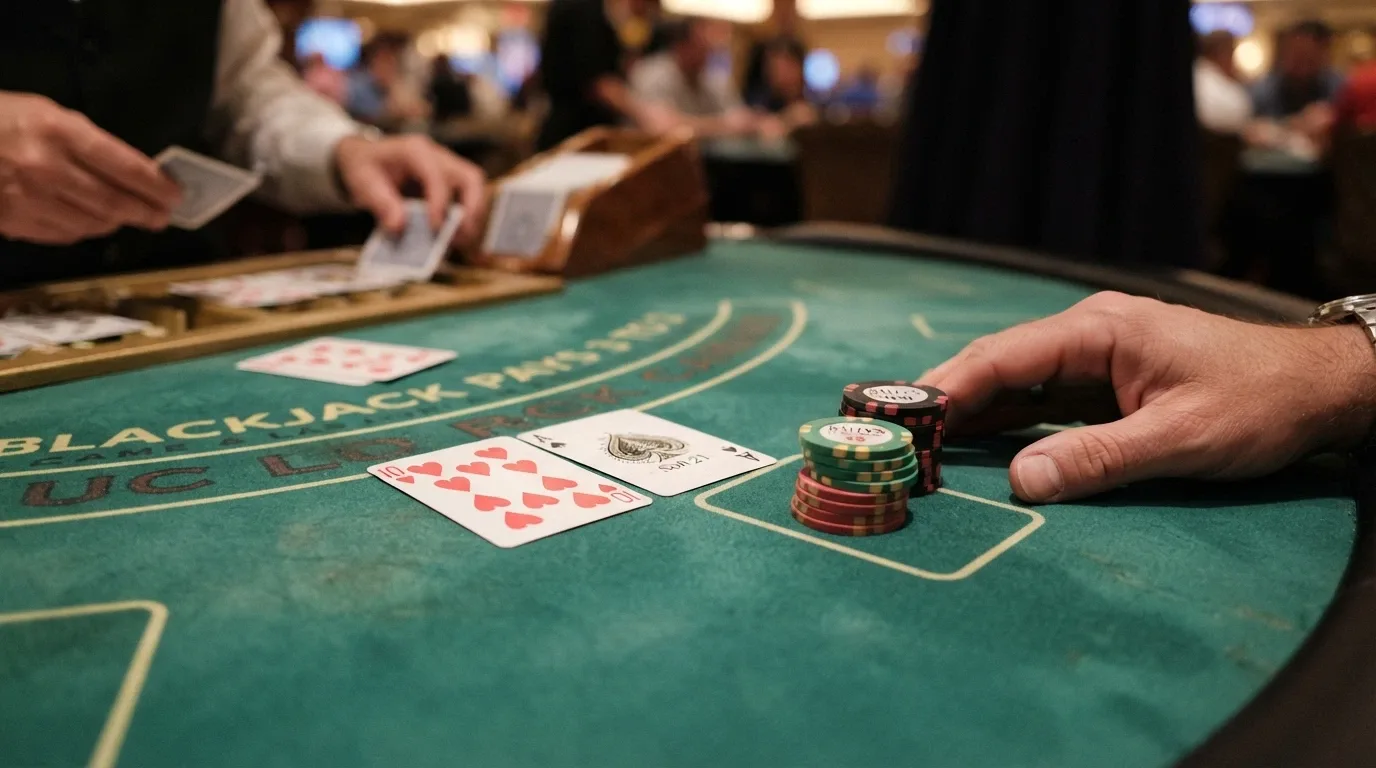
Side bets wreck the maths. Perfect Pairs, the side bet on the player’s first two cards being a pair, runs around 4.1% house edge on the common 25/12/6 paytable and climbs beyond 10% on shorter paytables. 21+3, the poker-derived side bet on the player’s first two cards plus the dealer’s upcard, sits between 3% and 6% depending on deck count. Both look like small add-ons because they pay out in occasional spikes. Both cost the player several multiples of the base game’s edge over a session. A punter who plays A$10 a hand on blackjack basic strategy and a concurrent A$2 side bet is paying the base game’s 0.5% on the A$10 and the side bet’s 4% to 10% on the A$2 — and the side bet’s higher edge dominates the combined loss rate.
Table limits on live blackjack run from A$1 minimums at standard tables up to A$5,000–A$10,000 maximums at the high end of Pragmatic Play’s range, with Evolution’s standard configuration typically capping lower. VIP rooms push past A$25,000 per hand. The floor is wide enough that a player can run a serious staking plan or a tight recreational one on the same lobby.
Roulette — European, Lightning and Why the Wheel Changes Everything
European roulette — single zero — returns approximately 97.30% and carries a 2.70% house edge. American roulette adds a double zero and lifts that edge to 5.26%, nearly double. The wheel is the entire game. A single zero on a 37-pocket wheel makes every bet proportionally more valuable than the same bet on a 38-pocket wheel with a double zero, and the difference shows up over a session faster than most casual players expect.

Lightning Roulette and its variants keep the single-zero European wheel but pay out “Lightning” multipliers on one to five straight-up numbers per spin, paying between 50x and 500x on those numbers while deducting a chunk from the standard 35x payout. The straight-up RTP on a Lightning spin sits around 97.1%, a touch below a standard European wheel’s 97.30%. The trade is real: players give up about 0.2% of expected value in exchange for the chance of a 50x or 500x spike. Across thousands of spins, that 0.2% compounds. The Lightning format is not a worse game than European roulette — it is a different game with a different volatility profile and a marginally worse long-run return on the affected bet.
Outside bets — red/black, odd/even, dozens, columns — keep the standard 2.70% house edge on a European wheel because they do not participate in the Lightning mechanic. A punter who wants the European edge without the Lightning trade stays on the outside bets. A punter chasing the 500x spike accepts the 97.1% RTP on the affected bet. Both are legitimate choices; neither changes the wheel.
Baccarat — Banker, Player and the Tie Bet That Costs 14%
Baccarat looks like a game of ritual — the squeeze, the player and banker hands, the scorecards — but the maths is dead simple. The banker bet holds a 1.06% house edge after the 5% commission, the player bet holds 1.24%, and the tie bet has a 14.4% house edge. Three bets, three edges, two worth playing and one that should not be touched by anyone who has done the arithmetic.
The banker bet wins slightly more often than the player bet and pays even money minus the commission, which is why its edge is lower. The player bet pays even money with no commission, which is why its edge is slightly higher. The tie bet pays 8 to 1 (or 9 to 1 at some studios) and wins about 9.5% of the time, which is why it carries the 14.4% edge — the payout does not match the probability. A punter betting the tie at every hand is donating roughly A$14.40 per A$100 wagered over a long session. The bet is there because it is exciting; it is not there because it is a sound wager.
Live baccarat tables run at a similar pace to live blackjack — 50 to 70 hands per hour at a typical squeeze table. Limits range from A$1 minimums at the standard floor to A$25,000-plus maximums at the VIP squeeze tables, where the ritual slows and the stakes climb. The pace is the live lobby’s quiet virtue again: a slower game costs less per hour at any given stake than a faster one.
Poker, Craps, Dragon Tiger and the Other Live-Table Games
Beyond the three big games, the live lobby carries a handful of smaller-stakes options: Casino Hold’em, Three Card Poker, Caribbean Stud, Ultimate Texas Hold’em on the poker side; live craps at a smaller subset of studios; dragon tiger and sic bo as the Asian-market favourites. Availability is patchier. Most major studios carry at least one poker variant; live craps is rarer and largely an Evolution exclusive; dragon tiger and sic bo are common at Pragmatic Play’s studios and at studios serving the Asian market.
RTP figures vary by variant. The reader should expect a higher house edge on these games than on the big three, partly because the variants are less standardised and partly because side bets dominate the betting surface. Casino Hold’em and Three Card Poker both carry primary-game edges in the 2% to 3% range when played with optimal strategy, climbing well past 5% on the more exotic side bets. Dragon tiger is closer to baccarat in structure (one card each, highest wins) with a banker edge around 3.7% on the main bet.
What the smaller live-table games offer is variety, not edge. A punter who wants a blackjack-class edge should stay at the blackjack table. A punter who wants a change of pace and accepts a higher cost per hand is the audience for the poker variants, the dice games and the dragon tiger tables.
Game Shows — Crazy Time, Mega Wheel and the Multiplier Trap
Live game shows are the lobby’s marketing showpiece. Crazy Time, Mega Wheel, Sweet Bonanza CandyLand, MONOPOLY Roll ’em, Bingo Spot, Money Time — each carries a headline multiplier that reads like a slot machine’s max win, and each is structured around a wheel or a draw with a few big payouts and many small or zero ones. Crazy Time’s top multiplier is 20,000x; Sweet Bonanza CandyLand reaches 20,000x; Money Time goes to 40,000x; Mega Wheel and Mega Roulette top out at 500x; MONOPOLY Roll ’em at 300x. The numbers look spectacular in a banner ad.
The RTP sits around 95% to 97% on most multiplier-driven shows, which is in the same neighbourhood as European roulette but below basic-strategy blackjack. The volatility is the actual story. A game show pays out in rare, large spikes rather than steady 1:1 returns, which means the median outcome is a loss and the long-run return comes from a small minority of sessions where the multiplier lands. A punter chasing the 20,000x is paying a premium in expected value for the chance at a payout that almost never arrives. That trade is not a bug — it is the structure of the product. The same trade exists in high-volatility slots; the game show simply dresses it in a presenter and a wheel.
Live Game RTP and House Edge Compared
| Game | RTP | House Edge |
|---|---|---|
| Blackjack (basic strategy) | ~99.5% | ~0.5% |
| European Roulette | n/a | 2.70% |
| Lightning Roulette (straight-up) | ~97.1% | ~2.9% |
| Baccarat — Banker | n/a | 1.06% |
| Baccarat — Player | n/a | 1.24% |
| Baccarat — Tie | n/a | 14.40% |
| Game Shows (multiplier-driven) | ~95–97% | ~3–5% |
The table shows the lowest-cost game in the live lobby at the top and the highest at the bottom. A punter who plays basic-strategy blackjack exclusively is paying roughly 5 cents per A$10 wagered to the house. A punter betting the baccarat tie on the same A$10 is paying A$1.44. Both numbers are small per hand. Over a session, the difference is the difference between a manageable bankroll and a wiped one.
Why Your Live Casino Bonus Costs More Than the Welcome Page Says
Live casino welcome bonuses are typically structured as a deposit match — a percentage of the player’s deposit credited as bonus funds, with the player then required to “wager” the bonus (and sometimes the deposit too) a fixed number of times before any winnings become withdrawable. The headline reads well: “Up to A$8,000 + 400 free spins” is a number that fits a banner. The real cost hides in the turnover requirement, the game contribution rates and the cap on winnings.
The single sharpest clause in most live welcome packages is the contribution table. Most operators’ deposit-match bonuses are written for slots, where 100% of every wager counts toward clearing the turnover. Live casino games frequently contribute 0% — meaning that not a single cent of live play counts toward the wagering requirement. A punter who deposits A$500, claims a A$500 bonus with a 40x wagering requirement (A$20,000 of slot turnover to clear) and then plays live blackjack for an evening has made no progress on the bonus at all. The bonus is, in effect, a slots offer wearing a live-casino label.
There is one common exception to the rule. Wager-free cashback — a percentage of net losses returned as cash with no playthrough requirement — does not have a contribution problem because there is no playthrough to contribute to. SkyCrown’s 10% weekly live cashback, returning up to A$1,500 every Wednesday with zero wagering, is the cleanest live-casino bonus structure in the offshore market. The player loses, the player gets a tenth of it back as withdrawable cash, and that is the end of the transaction. The maths is honest in a way most welcome bonuses are not.
Welcome Packages and Why Live Play Often Doesn’t Count
A welcome package worth A$8,000 plus 400 free spins is a serious number on a banner. SkyCrown’s offer — A$8,000 plus 400 free spins, the largest welcome package among the operators on this page — looks like a reason to deposit. The catch is in the small print: live casino play does not contribute to the wagering requirement. A punter who deposits to claim the bonus and then plays live blackjack is grinding against the house edge without making any progress toward clearing the bonus.
Bizzo Casino’s A$2,500 plus 300 free spins welcome is more modest on the headline but operates on the same structure: the bonus is for slots play, with live games excluded or heavily discounted from contribution. Most operators on this page did not have their live-game contribution rates confirmed in this research run, and the rates vary across the offshore market. The reader should treat any welcome package headline as a slots offer unless the terms explicitly state otherwise, and should check the contribution table before depositing.
What the welcome package really costs the player is the expected loss on the slots turnover required to clear it, plus the time spent grinding. A typical 40x wagering requirement on a A$500 bonus means A$20,000 of slots turnover at, say, a 4% house edge — an expected loss of A$800 to clear a A$500 bonus. The bonus is positive expected value in that case only if the player values the time and entertainment at more than the net cost. On live casino terms where live play contributes 0%, the bonus is, in practice, a slots product the player has to finish before touching the live lobby.
No-Deposit Offers and Free Spins on Live-Dealer Tables
No-deposit offers — a small bonus credited without a deposit, usually A$5 to A$50 — are the most-searched-for live casino promotion and the rarest on live tables specifically. Slots no-deposit offers are common; live-dealer no-deposit offers are scarce, because the studio costs of running a live table are higher than the cost of running an RNG game, and operators do not subsidise table time without a deposit behind it.
Free spins on live-dealer tables are rarer still. The free-spins promotion is a slots product: the operator credits a fixed number of spins at a fixed stake on a named slot. Live tables do not have a spin mechanic, so the format does not translate. The closest equivalent is the wager-free cashback offer — money back on live losses with no playthrough — which appears at a small subset of offshore operators including SkyCrown.
The honest version of this section is short: no checked featured operator was confirmed to offer a live-specific no-deposit bonus or a free-spins promotion on live-dealer tables in this research run. A reader who finds such an offer at an offshore site should read the terms carefully, because the offer’s scarcity usually reflects the cost of providing it.
Free-Play and Demo Tables — Try Before You Bet Real Money
Some offshore live casinos run demo-mode or free-play tables where the stream operates on play money. The dealer deals real cards from a real shoe; the betting interface records virtual chips; the player can sit at a table for an hour and never risk a cent. It is the closest thing to a risk-free look at a live lobby before depositing.
The format is not universal. Availability varies by studio and by operator, and most demo tables are limited to a handful of games rather than the full lobby. Some operators require an account before unlocking demo play; others let a player sit at a demo table directly from the lobby as a guest. The same research-run caveat applies: demo-mode availability for the specific operators on this page was not confirmed this run, and the reader should expect to find it at some operators and not at others.
The limit of demo play is the winnings. Anything won on a demo table is play money that cannot be withdrawn; the only way to convert a demo session into real AUD is to open a real-money account and play the same games on the real floor. Demo play is useful for learning the interface, the pace and the betting layout. It is not a substitute for understanding the cost of a real session.
The Two Software Houses That Run the Live Casino Floor
Almost every live-dealer table an Australian player sees runs on either Evolution or Pragmatic Play. The two providers operate at a scale no other supplier approaches — Evolution through more than 800 operator licences and a 12-year streak as EGR’s Live Casino Supplier of the Year, Pragmatic Play through more than 150 new tables in the past year and a network of studios running across 30-plus jurisdictions and 33 languages. The casino brand in the lobby matters less than the software beneath it.
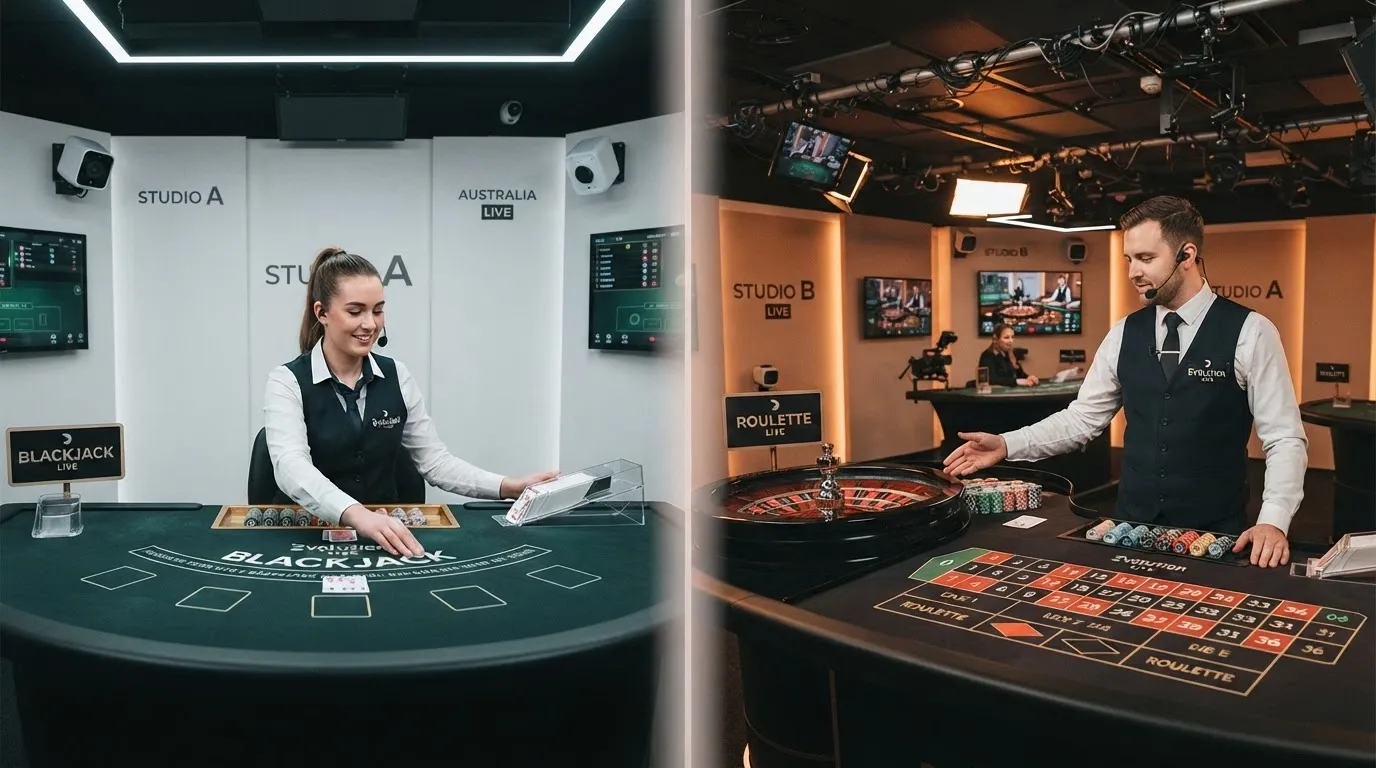
What a provider does is straightforward on paper: operate the studio, run the tables, hire and train the dealers, capture the video, stream the result and license the feed to operators. What an operator does is wrap that feed in a lobby, set the bonuses, handle the deposits and pay out the winnings. The provider sets the game rules, the table limits, the camera angles and the side bet paytables. The operator sets everything else. A punter who has played Lightning Roulette at one Evolution-licensed casino has played the same game as a punter at another Evolution-licensed casino, down to the wheel and the dealer rotation.
Evolution — A 12-Year Streak and 119 New Titles in 2026
Evolution has held the EGR B2B Live Casino Supplier of the Year award for 12 consecutive years — every year since the award was introduced. Its content is licensed by more than 800 operators worldwide, and its 2026 release schedule adds 119 new live and RNG titles, headlined by Hasbro-licensed games such as Monopoly Filthy Rich, Monopoly Roulette and Game Night, plus Infinite Bet Stacker Blackjack and Insurance Baccarat on the table side. The scale is the moat: no other live studio operates at that volume or carries that many operators.
The pipeline matters to a player because it determines what is in the lobby. A new Evolution release is typically picked up by most of its 800-plus operators within weeks, which means the average Evolution-licensed casino adds several new live tables per quarter without the operator doing anything beyond updating the integration. The opposite is also true: when Evolution retires a game, it disappears from the lobby across the network at once.
Pragmatic Play Live — 150 Tables, Mega Multipliers and Localised Studios
Pragmatic Play Live added more than 150 new live tables in the past year, 55 of them localised for specific markets, alongside flagship releases including Flow Blackjack, Crystal Roulette, Sweet Bonanza CandyLand and Mega Wheel. The studio is certified or licensed in more than 30 jurisdictions and supports 33 languages, which makes its localised studios a meaningful part of the offering for non-English-speaking markets — though the Australian-facing tables run in English by default.
The headline games lean on multiplier mechanics. Mega Wheel offers multipliers up to 500x; Mega Roulette combines a single-zero European wheel with Mega Multipliers up to 500x; Sweet Bonanza CandyLand reaches 20,000x; Money Time goes to 40,000x; Bingo Spot offers up to 250x per round and up to 20,000x per ticket. The numbers fit a banner ad and they are real, but they sit on the same volatility-vs-RTP trade described earlier — a 95% to 97% RTP underneath the multiplier spikes.
Pragmatic Play’s table caps run higher than Evolution’s at the standard configuration — A$5,000 to A$10,000 versus Evolution’s A$3,000 to A$5,000 on blackjack — which makes Pragmatic Play’s tables the natural fit for higher-stakes players at the non-VIP level. The difference is small at most stakes and disappears at the VIP end, where both providers push past A$25,000 per hand.
Platforms, APIs and Why the Studio Pipeline Matters
Behind every live stream sits an integration layer. The operator licenses the feed from Evolution or Pragmatic Play through an API, the studio pushes the live video and game data through that API, and the operator’s platform wraps it in the lobby the player navigates. The integration determines what games appear, how the betting interface renders and how reliably the stream runs.
The provider matters more than the casino brand precisely because of this architecture. A change at the studio level — a new game launch, a table retirement, a software update — propagates through the API to every operator using the feed. A change at the operator level — a bonus adjustment, a payment method, a loyalty tier — is local to that one site. Players who care about the game itself are choosing a provider; players who care about the wrapping are choosing an operator.
The studio pipeline also determines what the mobile experience looks like. Both Evolution and Pragmatic Play build their feeds for browser-based play, and both render acceptably on a phone screen. The operator’s platform then decides whether the mobile lobby puts live tables at the top of the menu or buries them three tabs deep. The studio cannot fix a bad mobile lobby; the operator cannot fix a stream that drops frames.
Mobile Live Casino — Apps, Browsers and Playing on a Phone
Every major live casino runs in a mobile browser without a download. The full table, the live stream and the betting interface fit a phone screen in landscape orientation, with the chat window and the betting layout split across the screen and the video taking the larger portion. The mobile experience has been the live lobby’s quiet success story over the past five years, because the technology that made live dealer play awkward on a phone in 2017 — bandwidth, codec efficiency, touch-interface betting layouts — has been solved at the studio level.
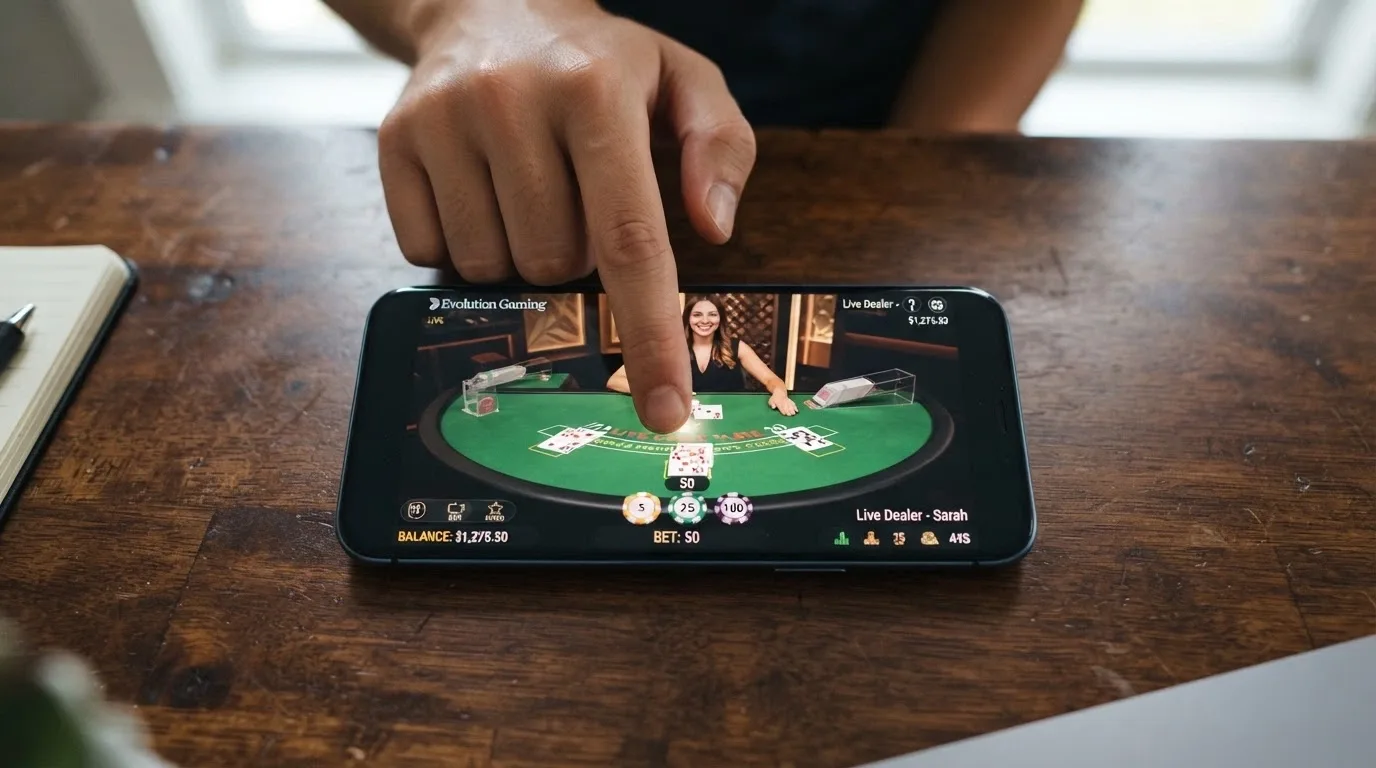
Native apps exist at some offshore operators, but the app-versus-browser distinction matters less for live play than for slots. A native app can store the lobby locally, preload the betting interface and cache the live stream; a browser-based version streams fresh on each session. Both work. The browser version works on every phone without an install, which is the reason most operators lead with the browser experience. The reader who wants a native app can usually find one, but the browser is the default and is not the worse option.
Is Live Casino Legal in Australia? The IGA, ACMA and Offshore Reality
Online casino games — live dealer included — are prohibited under the Interactive Gambling Act 2001. The prohibition is not a grey area, not an unregulated market, and not a loophole the offshore operators have found a way through. It is a federal ban on the supply of online casino games to Australians, with criminal penalties for the provider and a regulator — the ACMA — that has been steadily enforcing it since 2017. The fact that the prohibition does not target the player is not the same as the activity being legal; the activity is illegal at the supply side, and the supply side is the entire offshore market an Australian punter can access.

The Interactive Gambling Act — What It Prohibits and What It Doesn’t
The IGA prohibits the supply of online casino games, online pokies and in-play sports betting to persons in Australia. It does not prohibit wagering on races or sport placed before the event begins, lotteries, or keno. The 2017 amendments closed the offshore loopholes the early operators relied on and gave the ACMA its enforcement and blocking powers. The 2026 reform bill, passed by Parliament on 19 August 2026, adds further restrictions on advertising and inducements, with most measures commencing on 1 January 2027.
The asymmetry is real. The IGA targets the provider, not the player. A punter accessing an offshore casino is not committing an offence under the IGA. That is the technical truth. The functional truth is that the activity is supplied illegally, the operator is breaking Australian law, and the protections Australian consumer law would normally provide — dispute resolution, refund rights, fair-trading guarantees — do not apply. A punter whose withdrawal is refused has no Australian complaints body to appeal to, no ACMA hotline to call, and no BetStop coverage if they want to stop.
ACMA Enforcement — 1,564 Blocked Sites and Over 225 Withdrawals
The ACMA has been blocking illegal gambling sites since its first referral in November 2019. By March 2026, 1,564 illegal gambling and affiliate websites had been blocked at the DNS level by Australian ISPs. More than 225 illegal services have withdrawn from the Australian market on their own since the 2017 strengthening. The first quarter of 2026 alone saw 109 URLs referred for blocking. The enforcement is not theoretical; it is a sustained campaign that has been running for years and continues to remove sites from Australian reach.
DNS-level blocking is not unbeatable — a sufficiently determined user can route around it — but it is what the ACMA does, and it is what most Australian ISPs implement. The effect is that an Australian punter trying to reach a blocked site through a normal connection sees the site fail to load. The site may still operate in other jurisdictions and may still accept the punter’s deposit; the punter simply cannot reach it from a standard Australian internet connection without extra steps.
Offshore Operators, the Credit Card Ban and What You Forfeit
The credit-card and crypto ban, in force since 11 June 2024, is a useful tell. An Australian-licensed wagering operator cannot accept credit cards or cryptocurrency as a deposit. An offshore casino accepting AUD players typically can and often does. An Australian who is asked for a credit card or a crypto deposit by a gambling site is being served by someone outside the Australian rules. The payment method is the simplest single signal that the operator is offshore and that the Australian consumer-protection regime does not apply.
What the punter forfeits by accessing an offshore site is concrete: no Australian consumer protection, no Australian complaints body, no BetStop coverage, no recourse if the operator refuses a withdrawal or voids a win, and the risk that the site is blocked while a balance remains on it. From 1 January 2027, the picture tightens further: banks and payment providers gain express authority to block transactions to illegal gambling operators, which means even the deposit route an offshore site relies on may be cut off. The 2026 reform also prohibits direct marketing of inducements for 14 days after a customer signs up and for three months after a person deregisters from BetStop, which is aimed at licensed operators but signals the direction the regulator is moving.
Staying in Control — BetStop, Deposit Limits and Real Help
The responsible-gambling tools that exist in Australia are real, and they are concrete. BetStop — the National Self-Exclusion Register — has been live since August 2023 and had 67,480 registrations as at 31 July 2026, of which 41,290 exclusions were still active. A single registration excludes a person from every Australian-licensed online and phone wagering service. The National Gambling Helpline (1800 858 858) is free, confidential and staffed 24 hours a day. Gambling Help Online (gamblinghelponline.org.au) provides online chat and counselling. Approximately 2.1% of Australian adults — roughly 430,000 people — experience problem gambling; the Australian Institute of Health and Welfare put high-risk gambling at 1.8% in 2022.
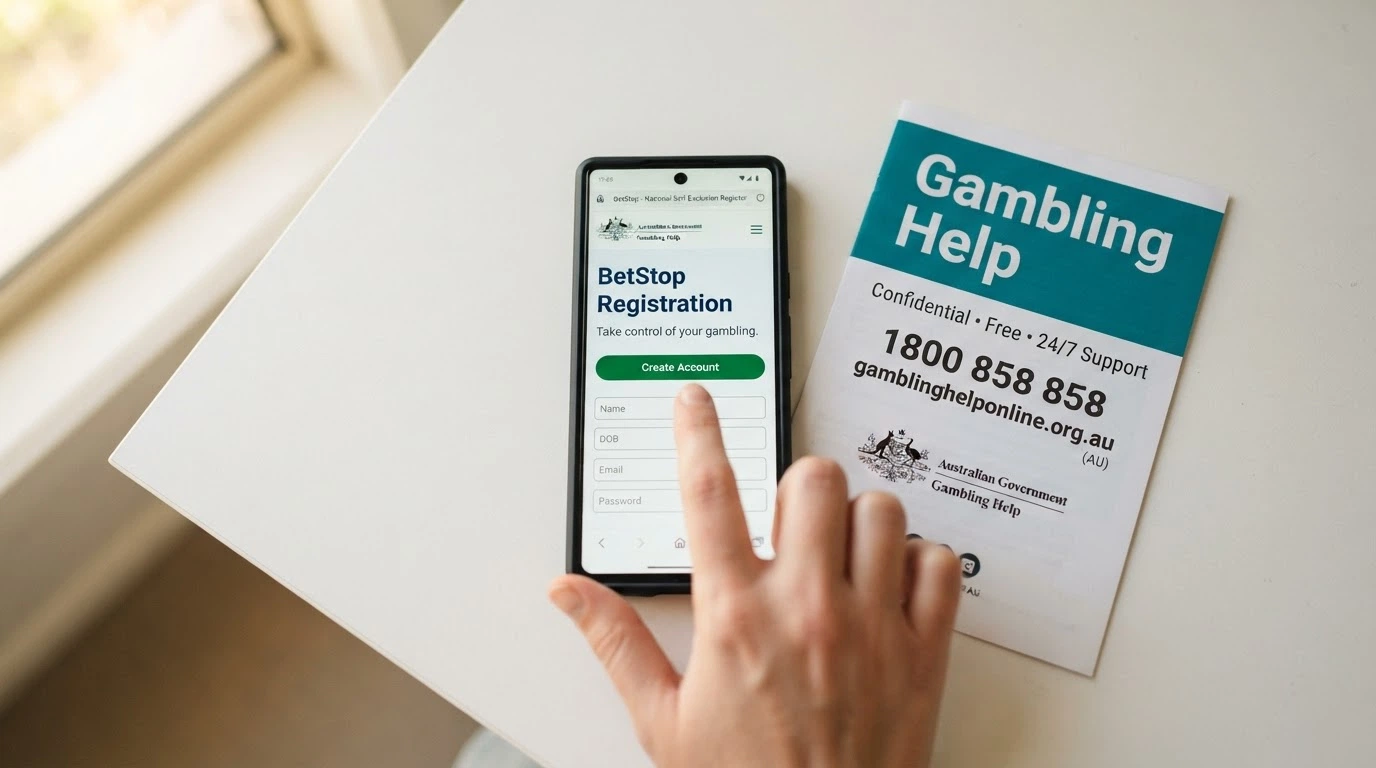
The most important fact on this page is that none of these tools reach an offshore casino.
BetStop, Self-Exclusion and Why It Doesn’t Reach Offshore Casinos
BetStop binds Australian-licensed wagering services. An offshore casino is not licensed here, is not connected to the register, and will keep taking a self-excluded person’s money. A person who registers with BetStop can be confident they will not be able to place a bet with a licensed Australian bookmaker; they cannot be confident they will be stopped at an offshore casino. The registration is a real protective step, but it is not the protective step a person trying to stop gambling needs to take if their access is to offshore sites.
The BetStop demographic profile sharpens the picture. Of the 67,480 registrations, 78% were under 40, and 38% chose lifetime exclusion — meaning they are excluded indefinitely, not for a fixed term. Those numbers describe a population in serious distress using a serious tool. For a person in that population, the offshore route is the one place the tool does not reach. The National Gambling Helpline (1800 858 858) and Gambling Help Online remain available regardless of where a person is gambling, and that is the right next call for anyone whose BetStop registration has not stopped their play.
The Offshore Live Casinos Australian Players Are Using in 2026
Every operator below is offshore. None holds an Australian casino licence, because no such licence can exist. This table describes who Australian players are accessing, in what order of market share, and under what licensing arrangement. It is not a buying recommendation and it is not a quality ranking beyond the market-share order.
| Operator | Licence/Status | Market Share |
|---|---|---|
| Rocket Play | Offshore | 9.4% |
| SkyCrown | Offshore (Curaçao) | 8.55% |
| Royal Reels | Offshore | 2.51% |
| WinSpirit | Offshore | 1.55% |
| Stake | Offshore (crypto-native) | 1.28% |
| Rainbet | Offshore (crypto-native) | 1.28% |
| Scream Casino | Offshore | 0.99% |
| FairGO | Offshore (AU-focused) | 0.80% |
| Bizzo Casino | Offshore (Curaçao) | 0.57% |
| Rocket Casino | Offshore | 0.57% |
The market-share figures are the operators skill dataset’s measure of how much of the AU-facing offshore casino traffic each brand captures. They are not measures of game quality, withdrawal speed or player experience. A 0.57% brand with a strong live lobby will outperform a 9.4% brand with a thin one; the table does not capture that distinction.
SkyCrown
SkyCrown is the highest-market-share casino brand in the featured set with a confirmed live-casino offer, holding an offshore Curaçao licence and running live tables from both Evolution and Pragmatic Play. Its headline welcome package is up to A$8,000 plus 400 free spins, with live casino play excluded from the bonus’s wagering contribution — a structure the operator is transparent about but a player should read carefully before depositing. The standout term is the 10% weekly live casino cashback, credited every Wednesday before 08:00 UTC, returning up to A$1,500 as withdrawable real money with zero wagering and a minimum qualifying loss of A$150. That is the cleanest live-casino bonus in the offshore market.
Table limits at SkyCrown run from A$0.10 minimums on standard tables up to VIP rooms exceeding A$25,000 per hand, giving a player the full spread from micro-stakes recreational play to high-roller sessions. The market position is mid-table at 8.55% — not the largest, but large enough to suggest a stable operator with established AU traffic. Verdict: SkyCrown is the operator for a player who wants the cleanest live-casino bonus structure on this list, accepts that the welcome package is a slots product, and is comfortable playing under an offshore licence. The weekly cashback alone makes it worth comparing before any other name on the list.
Rocket Play
Rocket Play carries the largest AU market share in the featured set at 9.4%, which makes it the operator Australian players are most often already using. Beyond the market position, the live-casino specifics for Rocket Play were not confirmed in this research run — the provider feed, the welcome bonus structure, the wagering terms and the live-game contribution rates are all unverified. The reader who is already a Rocket Play customer knows what the operator offers; the reader who is choosing between brands needs to check Rocket Play’s own terms page directly rather than rely on this article.
The market-share figure says something — players do not stay at a brand with bad withdrawals or collapsed bonuses — but it does not say everything. A 9.4% share reflects trust among existing players, not a verified quality ranking. Verdict: Rocket Play is the operator to evaluate by its own track record rather than by this page. The market-share position is the reason it sits at the top of the table; the live-casino experience for a new player depends on what the operator’s own site shows today.
Stake
Stake is the best-known crypto-native casino brand in the featured set, holding 1.28% AU market share and running Evolution Gaming live tables. The deposit model is the differentiator: Stake accepts cryptocurrency rather than fiat, which places it directly on the wrong side of the June 2024 credit/crypto ban that applies to licensed Australian wagering. An Australian punter using Stake is being served by an operator outside Australian rules, and the payment method is the tell. The 1.28% market share is small relative to Rocket Play or SkyCrown but reflects a distinct crypto-focused audience that has chosen Stake for reasons unrelated to the broader offshore market.
The live lobby draws on Evolution’s feed, which means the game catalogue, the table limits and the stream quality match what any other Evolution-licensed operator offers. What Stake adds on top is the crypto deposit and the brand’s distinctive sportsbook-and-casino product mix. Welcome-bonus terms and bonus structure were not confirmed this run. Verdict: Stake is the right operator for a player who specifically wants a crypto-native platform and Evolution’s full live suite, and who is comfortable that crypto deposits place them outside Australian payment rules. This brand is unsuitable for players requiring PayID, BPAY, or fiat AUD deposit routes.
Royal Reels
Royal Reels sits at 2.51% market share — a mid-tier AU-facing offshore brand with no confirmed live-casino specifics in this research run. The provider feed, the welcome bonus, the wagering terms and the live-game contribution rates were all unverified. A reader choosing Royal Reels on the strength of the brand alone is choosing on brand recognition rather than on verified terms.
The mid-tier market position is the operator’s main descriptive fact. Royal Reels is visible enough in the AU market to clear 2.51% share but is not in the top band by any measure. Verdict: Royal Reels sits in the middle of the pack, offering no unique markers that would elevate it above brands with fully-audited lobbies. The best way to evaluate it is through its own terms page directly.
Bizzo Casino
Bizzo Casino holds an offshore Curaçao licence, runs Evolution Gaming’s full live casino suite (including Crazy Time, Lightning Roulette and hundreds of blackjack tables), and publishes a confirmed welcome package of A$2,500 plus 300 free spins. The game library sits at more than 2,000 titles from 40-plus providers, which makes Bizzo a catalogue play rather than a live-first brand. The 0.57% market share is small but reflects a generalist positioning rather than a quality ceiling.
The Evolution full-suite commitment is the distinguishing fact. A player at Bizzo sees the same live lobby as a player at any other Evolution-licensed operator, which means the games, the table limits and the stream quality are not the differentiator — the welcome bonus, the payment terms and the operator-level experience are. Verdict: Bizzo is the right operator for a player who wants Evolution’s full live suite and a confirmed welcome structure with a modest headline, and who is comfortable that the live-game contribution rates and wagering terms still need to be checked on the operator’s own page.
WinSpirit
WinSpirit carries 1.55% market share — a small-to-mid AU-facing offshore brand. We have not been able to verify its specific live-casino provider feed, welcome bonus structure, or wagering terms. Market position is our only reliable metric for this operator.
A 1.55% share is in the same band as Stake and Rainbet, and the operator sits between the larger mid-tier brands (Royal Reels at 2.51%, SkyCrown at 8.55%) and the single-digit tail (FairGO at 0.80%, Scream Casino at 0.99%, Bizzo at 0.57%, Rocket Casino at 0.57%). Verdict: WinSpirit remains a minor player with no verified specifics. It is not possible to rank it definitively, so the decision rests entirely on what the operator’s site presents today.
FairGO
FairGO holds 0.80% AU market share and is known as an AU-focused offshore brand — the name signals the target market. We have no confirmed data on its live-casino provider feed, welcome bonus or wagering requirements. The AU focus is the operator’s positioning, not a verified quality claim.
The 0.80% share is in the single-digit tail of the featured set and reflects a niche AU-focused strategy rather than broad appeal. Verdict: FairGO is an operator for an AU-focused player who has already used the brand or is specifically looking for an AU-targeted offshore site, and who is comfortable that the live-casino terms will need to be checked directly. The brand recognition is the main reason it appears on this list.
Rainbet
Rainbet carries 1.28% AU market share — identical to Stake’s figure — and operates as a crypto-native platform. Live-casino specifics were not confirmed this run. The crypto-native model places Rainbet in the same category as Stake for payment-method purposes: an Australian punter using Rainbet is depositing via cryptocurrency, which is on the wrong side of the June 2024 ban for licensed Australian wagering.
The 1.28% share is small and matches Stake’s share, which suggests the two crypto-native operators serve similar audiences in similar proportions. Verdict: Rainbet is the operator for a crypto-native player who has already chosen that deposit model, and who understands that crypto deposits place them outside Australian payment rules. The live-casino terms still need direct verification on the operator’s own page.
Scream Casino
Scream Casino holds 0.99% AU market share and is a small-share offshore brand. Its live-casino provider feed, welcome bonus and wagering terms are not verified by this article. The 0.99% share reflects a small but visible presence in the AU offshore market.
The market position is the operator’s main descriptive fact. A brand at 0.99% share is small enough that the reader should treat it as a discovery rather than a default. Verdict: This is a niche option. Without direct verification of its bonus or live lobby, it is best approached as an exploratory choice.
Rocket Casino
Rocket Casino sits at the bottom of the featured set with 0.57% AU market share. We have no confirmed details on its provider feed, welcome bonus, or wagering terms. The 0.57% share reflects a minor AU-facing offshore brand rather than a market leader.
The smallest-share brand in the featured set is the one where the reader has the least corroborating market evidence and the least verified live-casino data. Verdict: Rocket Casino is a brand to evaluate by its own terms rather than by what this page can confirm, with the additional caveat that a 0.57% market share is the thinnest signal of trust among existing players in the featured set. A reader who has used the brand and found the live lobby acceptable is not wrong; the data here is simply too sparse to offer a definitive recommendation.
How We Selected and Evaluated Every Live Casino on This Page
The shortlist behind this page drew on the AU market-share dataset from the operators skill, filtered for offshore casino brands serving Australian players. The market-share figures are the primary ordering criterion. Cross-referencing against search results for AU-facing live casino content identified SkyCrown and Bizzo Casino as the two operators in the set with confirmed live-casino specifics — provider feed, welcome bonus, table limits or cashback structure. Stake and Rainbet were identified as crypto-native platforms via brand-name recognition. The remaining six operators were included on the strength of their AU market-share position, with their live-casino terms noted as unconfirmed this run.
The limits of the data are concrete. Five of seven search calls failed on the first attempt due to transport errors, which left the research run with a thin coverage of operator-specific details outside the two operators with rich surviving data. Where a field says “Not confirmed this run,” it is a statement about the search coverage, not a claim about the operator. The reader who needs a verified bonus term or wagering multiple for any of the six unverified operators should check that operator’s own terms page directly rather than rely on this article.
What the comparison captures is the offshore reality — every operator in the table is offshore, the market shares sum to a description of AU offshore traffic rather than a licensed market — and what it does not capture is game quality, withdrawal reliability or any per-operator feature that requires an account to verify. The ranking is a description, not a recommendation.
What Australian Punters Should Actually Do About Live Casino
The first thing a punter should do is accept the reality of what is being accessed. Live casino is illegal to provide in Australia. Every site an Australian can reach is offshore and outside Australian consumer law. The IGA prohibits the supply, the ACMA enforces the prohibition, and 1,564 sites have been blocked since 2019. The punter is not the target of enforcement, but the punter is also not the beneficiary of any Australian protection. There is no Australian complaints body, no BetStop coverage and no recourse if a withdrawal stalls.
The second thing is to know the maths. Blackjack at 0.5% is the cheapest game in the lobby. European roulette at 2.70% is the standard. Baccarat’s banker bet at 1.06% is the third pillar. The tie bet at 14.4% is a tax on players who have not done the arithmetic. Game shows at 95% to 97% RTP with rare, large multipliers are a volatility product, not an edge product. The player who plays basic-strategy blackjack exclusively is paying roughly 5 cents per A$10 wagered; the player who chases the tie bet or the multiplier wheel is paying several multiples of that.
The third thing is to read the welcome bonus carefully. Most live casino welcome bonuses are written for slots, with live games contributing 0% to the wagering requirement. The headline number on the banner is not the bonus the player is claiming on live play. The cleaner structure is wager-free cashback — SkyCrown’s 10% weekly live cashback is the model — and a player who values transparency should weigh that structure against any deposit-match headline.
The fourth thing is to register with BetStop if gambling has become a problem, and to call 1800 858 858 or visit Gambling Help Online if it has. BetStop does not reach offshore casinos, which is the gap, but the helpline and the counselling service do, and they are free, confidential and available 24 hours a day. The Australian Institute of Health and Welfare puts problem gambling at roughly 2.1% of adults; that is hundreds of thousands of people, and the services exist for them.
The fifth thing, and the most important, is to never deposit more than a person can afford to lose at a site with no Australian recourse. The offshore market is not unsafe in the sense of being a scam — most operators pay out, most games are fair, and the live lobby is professionally run. It is unsafe in the sense that the protections Australian law provides for every other consumer transaction are absent, and the punter is the one carrying that risk. A punter who accepts that risk with open eyes is making a different decision from a punter who has been told the offshore route is equivalent to a licensed product. It is not.
Frequently Asked Questions
How do live casino bonuses work for Australian players?
Live casino welcome bonuses at offshore sites are typically structured as deposit matches, with the player required to wager the bonus (and sometimes the deposit) a fixed number of times before winnings become withdrawable. Most live games contribute 0% to that wagering, meaning the bonus is effectively a slots offer. The cleaner live-casino bonus structure is wager-free cashback, which returns a percentage of net losses as real money with no playthrough.
Is it safe to deposit at an offshore live casino from Australia?
Depositing is not illegal for the player under the IGA, which targets the provider rather than the punter. What the punger forfeits is Australian consumer protection, Australian complaints recourse, BetStop coverage and any guarantee that the site will remain reachable. An Australian asked for a credit card or crypto deposit is being served by an operator outside Australian rules — the payment method is the tell. The deposit itself works at most operators; the protection layer does not.
Can I use PayID to deposit at a live casino in Australia?
PayID and Osko are legal deposit routes for licensed Australian wagering. Whether an offshore live casino accepts PayID varies by operator, and this run did not confirm PayID availability for most operators in the featured set. Credit cards and cryptocurrency are banned for licensed wagering since 11 June 2024, and offshore casinos offering either are operating outside Australian rules — the payment method itself signals the operator’s regulatory status.
What is BetStop and does it cover live casino sites?
BetStop is Australia’s National Self-Exclusion Register, live since August 2023. One registration excludes a person from every Australian-licensed online and phone wagering service. As at 31 July 2026, BetStop had 67,480 registrations with 41,290 exclusions still active. BetStop does not cover offshore casinos — a self-excluded person can still deposit and play at an unlicensed offshore site, which is the critical gap.
What is the RTP of live blackjack versus live roulette?
Live blackjack with correct basic strategy carries an RTP of approximately 99.5% and a house edge near 0.5%. European live roulette returns about 97.30% with a 2.70% house edge. Lightning Roulette trades a small slice of expected value for multiplier variance, sitting around 97.1% on straight-up bets. Blackjack is the lower-cost game; roulette is roughly five times the house edge for the same wager.
Published by the No Deposit Bonus Casino AU team.