
Fast Payout Casino Australia: The Real Withdrawal Timeline for 2026
“Instant payout” is useful shorthand for the fastest advertised route, not a reliable timetable from the withdrawal button to an Australian bank account. The honest answer for 2026 is less glamorous: PayID can clear in seconds to about four hours once approved; crypto can clear in 2–60 minutes; both normally wait behind identity checks and a manual approval queue that can run 12–48 hours, longer on the first payout. The ten casinos below make varying speed claims, but every one is offshore and none holds an Australian casino licence because Australian law provides no such licence to hold.
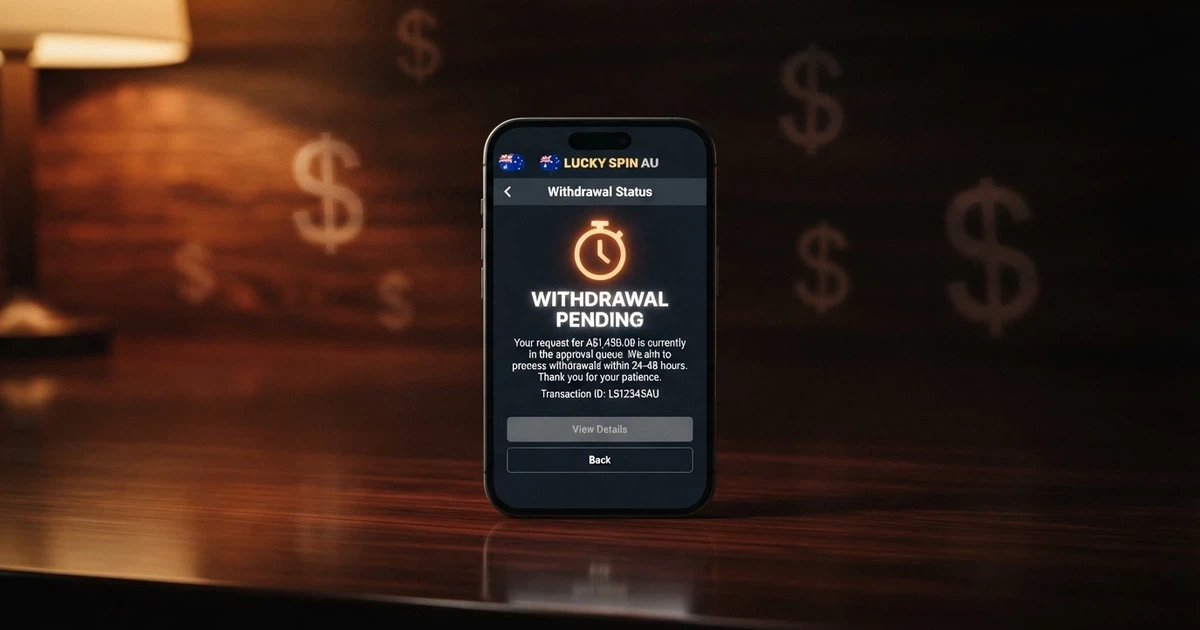
Data current: 3 November 2026. Licence claims were checked against Curaçao licensing information and the Australian Communications and Media Authority’s public blocked-sites record.
Table of Contents
- What “Instant Payout” Actually Means at an Online Casino — and What It Doesn’t
- How Your Money Moves — the Real Payout Path for Australian Players
- The 10 Offshore Casinos Australian Players Use for Fast Payouts in 2026
- Pokies and Casino Games Where Your Winnings Land Fastest
- Why Crypto Casinos Deliver the Fastest AU Cashouts — and the Trade-Off
- Why Your 2026 No-Deposit Bonus Won’t Pay Out as Fast as the Headline Promises
- The Legal Reality — No Instant-Payout Casino Holds an Australian Licence
- Staying in Control When the Operator Sits Offshore
- How We Ranked These Instant-Payout Casinos
- Fast Payouts Worth Having — What the Informed Australian Punter Does in 2026
- Frequently Asked Questions
What “Instant Payout” Actually Means at an Online Casino — and What It Doesn’t
At a good casino, “instant” is shorthand for the shortest realistic period between a completed request and cleared funds. At a marketing-rich casino, it is sometimes allowed to float free of the withdrawal process entirely. That looseness does nobody a favour. A player who needs rent money cannot budget against a “fast” label; a player comparing payment methods needs to know which part of the transfer is genuinely fast and which part remains under the operator’s control.
The distinction is especially important in Australia because no locally licensed online casino exists. The market being compared here is offshore. Some brands publish processing windows measured in minutes, while others advertise a broad 24-hour target. Neither converts the whole transaction into an instant bank transfer. The payment rail moves money only after the operator has accepted the request.

Think of the cashout as four linked stages. First comes the request, when the player selects an amount and method. Second is internal approval, where the operator checks account rules, bonus status and identity. Third is processing, when the approved amount enters the chosen payment system. Fourth is clearing, when the receiving bank, network or blockchain makes the funds available. Skipping a stage in advertising leaves the reader with a misleading total.
The payment method determines the final two stages. PayID/Osko operates through Australia’s New Payments Platform and can move the approved amount in seconds to about four hours. Crypto can move after confirmation on its network in 2–60 minutes. The first two stages remain operator-dependent. If a withdrawal sits unapproved for a day, a four-hour PayID leg cannot erase that day. If approval takes two hours, crypto may complete what PayID cannot.
This is why “fastest available” is the more accurate expression. It puts the decision on a continuum rather than pretending every request is frictionless. The best timing is the shortest total window a player can reasonably expect after the account has been verified and the transaction has met the operator’s conditions. It is never the word “instant” alone.
The KYC Bottleneck — Why Your First Withdrawal Is Never Instant
Know Your Customer checks are the universal speed limit on a first cashout. A legitimate operator verifies the player’s identity before releasing funds, even when its advertised payment window is only an hour. The purpose is compliance, not payment convenience. The operator needs to establish that the account holder is real, that the payment destination belongs to that person and that the activity does not breach its own controls.
That gate can absorb more time than the rail itself. Research into the fastest available payout routes places the internal manual approval queue at 12–48 hours, with the first payout often taking longer. The range matters. A method can clear in seconds and still produce a slow first withdrawal because approval happens before the method is allowed to work. First-time verification, missing documents and mismatched account details can extend the queue beyond that range.
A player can remove avoidable friction before requesting the money. Account details should match the identity on the operator’s records. Any requested verification should be supplied accurately. The receiving bank account or verified crypto address should already be associated with the account where the rules allow it. Those steps do not guarantee approval, but a clean file prevents an avoidable second request from sitting at the front of a manual queue.
Later withdrawals are not automatically immediate either. An established account can still be reviewed, especially after a change in payment method, a large balance movement or a bonus-related condition. The practical lesson is simple: a short payment window describes what happens after approval. KYC describes whether the payment window gets a chance to start.
“No offshore online casino is truly instant once verification is involved. The real question is which ones get closest to true instant withdrawals in 2026.” The force of that observation is not that every payout takes days. It is that “instant” begins after the operator’s compliance work. Anyone judging a casino should start the clock at the request, not at the payment provider’s confirmation screen.
Why Every Casino on This Page Operates Offshore — and What That Means for Your Payout
The Interactive Gambling Act 2001 makes it an offence to provide online casino games, online pokies or in-play sports betting to a person in Australia. Section 15 leaves no Australian casino licence for a fast-payout brand to carry. Offshore status is therefore not a minor technicality placed in the footer; it is the legal condition defining every operator in this comparison.
A Curaçao-rooted licence or Curaçao framework may tell an Australian reader where the operator obtained its offshore permission. It does not give the player Australian consumer protection. The Australian player is not ordinarily prosecuted under the IGA because the Act targets the provider, but “not prosecuted” is not the same as protected. The player has no Australian complaints body covering an offshore casino dispute, no BetStop coverage and no practical recourse if the operator refuses a withdrawal.
That changes the meaning of payout speed. An AUD cashout can look polished while a dispute remains difficult to resolve. A crypto payment can reach a wallet quickly while the operator, or the website itself, remains outside Australian jurisdiction. ACMA can investigate complaints, issue warnings, start civil penalty proceedings and direct internet service providers to block illegal services. Blocking the service does not liquidate a player’s balance.
The distinction also rules out a common shortcut in casino comparisons: “licensed” is sometimes used as though an offshore licence were equivalent to an Australian one. It is not. Licensing NT and the Northern Territory Racing and Wagering Commission are central to licensed online wagering, but their regime covers wagering rather than online casino games. None of the ten brands can point to an Australian casino licence, because none exists.
Offshore access may continue for a time, and the ACMA enforcement record shows that withdrawal risk is not theoretical. Still, legality and product quality remain separate questions. A fast approval queue is valuable only when the operator is willing to release the balance. The lack of Australian recourse leaves that final test with more weight than a banner claiming a five-minute payout.
How Your Money Moves — the Real Payout Path for Australian Players
A withdrawal request begins when the player submits an amount through the cashier. The operator then checks the account against its internal rules. That approval can include identity verification, bonus clearance, payment-destination checks and a review of activity. A request is not fast merely because the cashier accepts it.
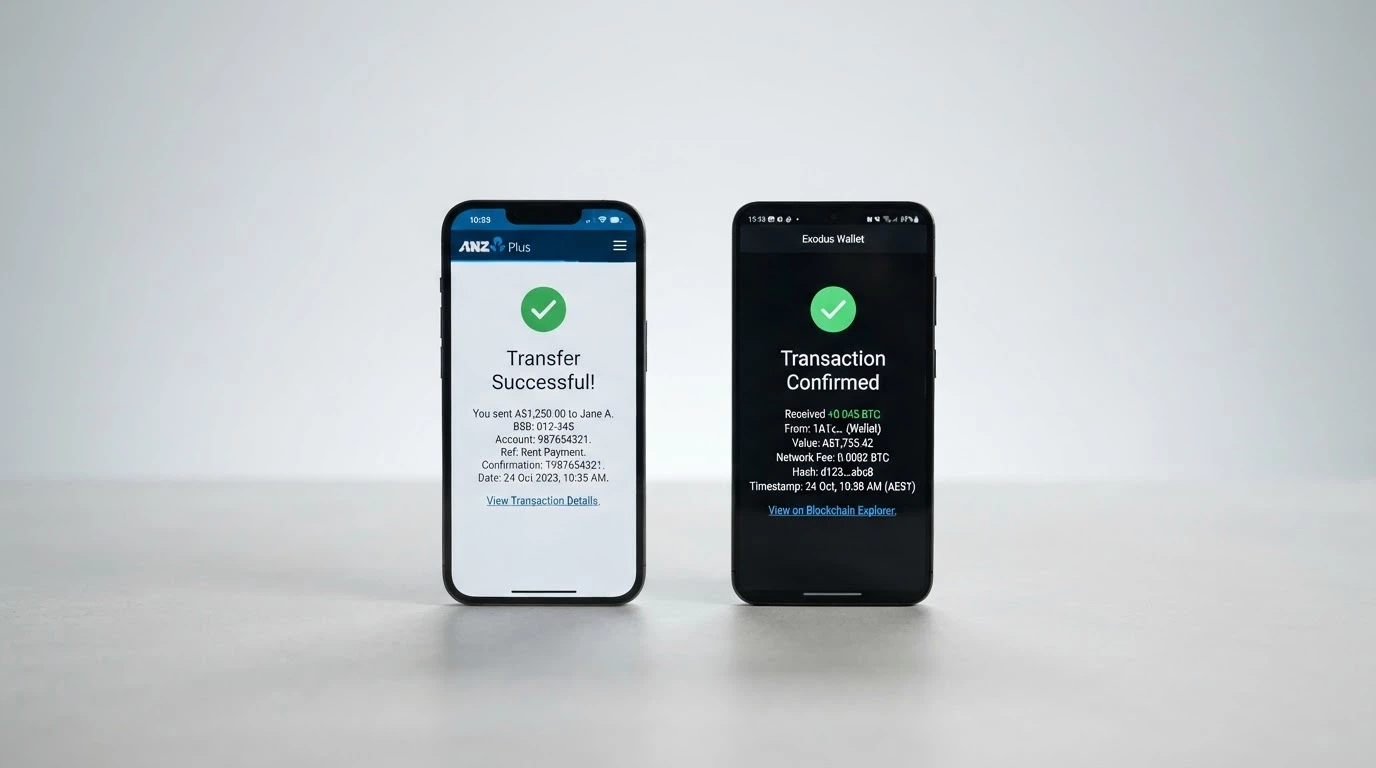
Manual review is where many supposed instant payouts lose their promise. The 12–48-hour queue is the real wait even at an operator built around PayID withdrawals. A first payout can take longer because the compliance work has not previously been completed. A familiar account may move faster, but no payment rail can instruct an internal review team to approve a request.
Once approved, the method takes over. PayID and Osko use the NPP, allowing an AUD transfer to clear in seconds to about four hours. Crypto often clears in 2–60 minutes after approval. The method therefore determines how quickly the final leg can finish, not how quickly the operator reaches a decision.
The last stage is clearing. PayID can arrive through the banking system after internal approval. Crypto can be confirmed by the network after approval. Neither stage resolves a blocked account, an unmet bonus condition or a request that remains in review. Those are operator-side problems wearing a payment-method disguise.
The practical sequence is request, approval, processing and clearing. The shortest total route puts the fewest operator-controlled hours before a fast rail. Crypto usually performs best at that final stage. PayID remains the strongest AUD-native route because it avoids the extra work of converting funds. Neither route makes the approval stage disappear.
| Payment Method | Typical Processing | Typical Clearing | Total Typical Expectation |
|---|---|---|---|
| PayID | 12–48 hours | Seconds to 4 hours | 12–52 hours |
| Crypto | 12–48 hours | 2–60 minutes | 12–49 hours |
| Bank Transfer | 12–48 hours | 1–3 days | 2–5 days |
PayID — the Fastest AUD-Native Route and Where the Real Wait Lives
PayID/Osko is the cleanest domestic option for an Australian who wants the winnings to remain in AUD. NPP transfers can clear in seconds to about four hours once the operator has approved the withdrawal. That performance comes from Australia’s banking infrastructure, not from an offshore casino’s own processing team.
The internal queue still sits in front of it. A manual approval period of 12–48 hours can dominate a rail measured in minutes. First payouts are commonly slower because identity verification has not been completed. A later PayID request may reach the same banking window, but the operator controls when the clock starts.
Daily Osko sending limits are set by the customer’s bank rather than by the casino. ANZ, CommBank, NAB and Westpac each publish their own limits, with typical daily Osko sending allowances ranging from A$1,000 to A$30,000. A bank’s limit is distinct from a casino’s minimum or maximum withdrawal rule. The casino controls the account transaction; the bank controls how much it will send through Osko in a day.
PayID therefore beats a conventional bank-transfer leg because the NPP can move quickly after approval. It does not beat crypto on total speed, because crypto can also clear in minutes and is not tied to the NPP. It offers a different advantage: the player keeps the result in Australian dollars through a familiar domestic system. The hidden cost is time spent waiting for the operator to release the transfer into that system.
Crypto Withdrawals — Why They Clear in Minutes and What You Trade for the Speed
Crypto is the fastest method-level route once the operator approves the withdrawal, often clearing in 2–60 minutes. The blockchain leg can continue beyond normal banking operations because it does not depend on an interbank cut-off in the same way. That can shorten the processing-to-clearing section of the cashout, especially when the casino sends from an already prepared balance.
The trade begins before the blockchain. The request still has to pass the operator’s approval and KYC process. Rainbet describes crypto withdrawals as taking minutes to a few hours after Level 1 KYC. Stake describes minutes to hours. Instant Casino states within one hour after its broader declared payout window. These are operator claims, not independent end-to-end tests.
Crypto also sits outside the rules governing payment for licensed online wagering in Australia. The Interactive Gambling Amendment (Credit and Other Measures) Act 2023 banned credit cards, credit-related products and digital currency as payment for online wagering from 11 June 2024. An operator that fails to enforce that ban can face penalties of up to A$247,500.
A casino asking for crypto is therefore not an Australian-licensed wagering service. If it is offering online casino games, it is offshore in the same broader sense as every other operator on this page. Speed comes with exchange exposure, network conditions, wallet control and no Australian route for a payout complaint. Faster is real. Unprotected is real too.
The 10 Offshore Casinos Australian Players Use for Fast Payouts in 2026
The ranking below is a comparison of published claims, supported bonus terms and the presence of a genuinely fast payment route. It is not a safety certificate and cannot turn a declared processing window into a guaranteed bank arrival. Every operator is offshore, operates under a Curaçao-rooted licence or framework and lacks an Australian casino licence.

A dash is an evidentiary boundary, not an accusation. It means no supported figure is being supplied for that cell. Royal Reels, WinSpirit, Stake and Bizzo do not all have a confirmed welcome-payout combination in the available evidence, but that absence does not prove slow payments. It means a reader cannot compare their cashout timing with the precision the marketing language encourages.
| Payment Method | Typical Processing | Typical Clearing | Total Typical Expectation |
|---|---|---|---|
| PayID | 12–48 hours | Seconds to 4 hours | 12–52 hours |
| Crypto | 12–48 hours | 2–60 minutes | 12–49 hours |
| Bank Transfer | 12–48 hours | 1–3 days | 2–5 days |
The spread tells its own story. Skycrown advertises a 5–20-minute cashout; Rocket Play separates an internal review from a method period that can take 1–3 days; several others publish no exact withdrawal figure at all. Bonus size does not create payment speed. A large package can coexist with a tight conversion cap, a restrictive wagering rule and a fast claim in the same terms, because the amount being paid and the ease of withdrawing it are different questions.
The useful ranking question is therefore not “Which headline is biggest?” It is “Which supported combination has the shortest claimed total path and the least obstructive terms?” Even then, the answer remains conditional. KYC, approval, bonus status and the chosen payment method decide where the actual wait sits.
Skycrown — Fastest Claimed Payout Among the Featured Set
Skycrown carries the shortest published figure in the comparison: withdrawals claimed in 5–20 minutes. That is the speed claim that makes it first, but it arrives with a large four-part welcome package rather than a frictionless cashout. The headline is 450% up to A$8,000 plus 400 free spins, with 40x wagering on both bonus money and free-spin winnings. The bonus lasts 14 days, and the maximum bet while wagering is A$7.50.
The fine print narrows the apparent generosity. Free-spin winnings are limited to A$300 per deposit bonus part. The maximum bonus-to-real-money conversion is A$5,000 per welcome bonus. Crypto depositors cannot take the welcome bonus, an important mismatch for readers drawn to the casino’s fastest route.
The 14-day validity window is another cost. It is long enough to demand a plan and short enough to punish delay. Skycrown is worth reading for a player who values the strongest short cashout claim and can treat the welcome package as a controlled conversion exercise. The payout figure is the attraction; the conversion ceiling decides whether the attraction remains valuable.
Instant Casino — Sub-24-Hour Declared Window, Crypto in Under an Hour
Instant Casino states a payout window of under 24 hours and says crypto withdrawals can arrive within one hour. It offers more than 4,000 game titles. CasinoAudit gives it a score of 77/100, while its licence is identified as Curaçao. The evidence supports a declared, two-speed proposition rather than one uniform withdrawal time.
That is useful because it distinguishes the broad queue from the method. A player who chooses crypto may see the claimed one-hour outcome after the internal process is out of the way. A player using another route remains inside the under-24-hour declaration. Neither statement is a verified end-to-end measurement for an individual Australian account.
The welcome bonus is the missing half of the value equation. Its terms were not confirmed in the available operator information, so there is no responsible way to insert a wagering multiple, cap or spin limit into the comparison. The absence should affect how the offer is read, not become a reason to pretend the bonus is generous or meagre.
Instant Casino suits a reader who wants an explicit sub-24-hour declaration and a sharper crypto promise than the broad market claim. Its speed language is more informative than a bare “instant” label, but it is still operator-declared. The 77/100 score adds outside context, not payment certainty.
JustCasino — 9,500+ Games and a A$5,000 Welcome, Withdrawals Within 24 Hours
JustCasino combines the largest game count in the featured set with a clear withdrawal target. Its library contains more than 9,500 games, and the operator says withdrawals are typically processed within 24 hours. The welcome package reaches A$5,000 plus 400 free spins, with 40x wagering. A daily win limit of A$50,000 and a Curaçao licence are also identified in the available information.
The package is substantial without carrying the most severe conversion cap in the comparison. That does not make the 40x requirement light; a 40x condition still requires turnover before relevant winnings can leave the bonus structure. It does mean the headline is accompanied by a direct “within 24 hours” processing claim, giving the reader a firmer timing reference than several rivals provide.
The game count matters to readers who see library size as part of the product’s value, but it does not alter the KYC queue. Nine thousand five hundred games can shorten the search for a preferred style of play; they cannot approve a withdrawal. The 24-hour target remains an operator statement and should be read as processing, not a guarantee that an Australian bank will credit the account inside every 24-hour period.
JustCasino is worth considering for a player who puts game choice and a stated one-day processing window ahead of the smallest possible bonus. Its strongest combination is breadth and clarity, not an instant rail promise. Crypto may still finish faster than PayID after approval, while the stated 24 hours covers the broader payout process.
Rainbet — Crypto-First With a No-Wager Option and Minutes-Speed Payouts
Rainbet’s welcome structure is the most unusual in the featured set because it gives the player a choice. The package is 250% up to $1,750 across three deposits plus 60 free spins, with a A$30 minimum deposit and seven-day validity. The wager-locked path uses 40x; the alternative is a no-wager gradual release. Crypto withdrawals are described as taking minutes to a few hours after Level 1 KYC.
That choice changes the meaning of “wagering.” A conventional 40x condition keeps a balance tied to turnover. Gradual release instead allows the bonus to become available over time without that wagering lock. It is not a claim that every withdrawal is immediate, and it is not a no-deposit offer. It is a different bonus architecture for a reader who dislikes a single large turnover requirement.
The seven-day validity period is short. It makes the alternative path attractive to a player who will use the account deliberately and unattractive to anyone expecting a long, casual clearance period. The minimum deposit and package currency should also be read carefully: the headline uses dollars rather than expressly labelling every component AUD, unlike the Australian-dollar figures in several other offers.
Rainbet is the standout for a reader who wants crypto speed and a no-wager gradual-release option in the same operator profile. The speed claim still begins after Level 1 KYC, and the short validity window is part of the price. Flexibility is the reason to inspect it closely, not a guarantee that the terms will suit every bankroll.
Stake — The Biggest Crypto-First Name Reaching Australian Players
Stake is presented as a crypto-first operator under a Curaçao framework. Its reported Australian market share is 1.28%, a traffic figure rather than evidence of Australian licensing. Crypto withdrawals are described as taking minutes to hours. The comparison therefore has a meaningful method signal even though the welcome bonus terms are not confirmed.
That creates an uneven but revealing profile. The reader can see a clear crypto direction and a short payout range, yet cannot fill in the bonus side with a responsible wagering figure or free-spin limit. A large market presence may make the name familiar, but familiarity is not consumer protection. It also does not tell an Australian player what the current withdrawal terms say after KYC.
Stake is worth considering for readers who prioritise a crypto-first operator and can accept that the bonus picture is incomplete. Its speed claim is more useful than an unsupported “instant” label because it names a range. The missing terms are a material warning, not a footnote: if a bonus condition cannot be checked, it should not be treated as value.
Bizzo Casino — PayID Deposits and Withdrawals, 8,000+ Games, AU-Tailored
Bizzo is the clearest match for a reader who wants an AUD-native route. It supports PayID for both deposits and withdrawals, offers more than 8,000 games from 70-plus studios, and carries a four-deposit welcome package of up to A$7,250 plus 175 free spins. The package uses 40x wagering, with an A$8 maximum bet during wagering.
The payment-method fit is more important than the game count. PayID can put an approved withdrawal into the NPP, where the banking leg clears in seconds to about four hours. Bizzo’s internal approval time is not published as a precise end-to-end figure here, so the useful promise is the combination of a supported AUD route and a very large library, not a guaranteed same-day bank credit.
Bizzo also has a no-deposit element attached to installing its PWA app: 10 free spins with 40x wagering and an A$75 win cap. That is a small ceiling beside the A$7,250 package. It is also the kind of condition that turns a “free” headline into a narrow exercise: a player can win something, but cannot assume the bonus will become a large withdrawable balance.
Bizzo is worth the closest look among the AUD-focused choices because PayID is named for both directions and the game catalogue is extensive. The A$8 bet ceiling and the separate A$75 cap on the no-deposit spins need to be understood before the package is valued. A broad catalogue does not make a restrictive condition disappear.
Rocket Play — Two-Deposit Welcome With a Modest Match and 40x Wagering
Rocket Play starts with a 100% match up to A$1,000 plus 100 free spins, followed by a 200% match up to A$1,000 on the second deposit. Wagering is 40x, and the maximum bet during wagering is A$7.50. It uses a Curacao licence and describes an internal review that takes under 24 hours, followed by 1–3 days of method time.
That timing is less dramatic than the word “fast” can suggest. The casino’s own review is one part of the process; the selected withdrawal method can add another 1–3 days. The reader should therefore judge the full declared path, not stop at the “under 24 hours” phrase. Bank-transfer speed also varies, as Fair Go’s terms illustrate, and no single rail should be treated as universal.
The second deposit’s 200% match is high in percentage terms, but its A$1,000 cap keeps the maximum headline benefit bounded. Bonus validity and the free-spin win cap were not confirmed, so they do not belong in a completed comparison. The confirmed A$7.50 maximum bet still matters because it controls how much can be staked while the 40x condition is being met.
Rocket Play is a reasonable fit for a reader who prefers a simple two-deposit structure and does not need a five-minute promise. Its value is more restrained than the largest package in the set, but the timing language should be read literally: review under 24 hours, then as much as 1–3 days for the method. That is a window, not an instant event.
Royal Reels — The No-Deposit Entry Point With 2,000+ Games
Royal Reels offers a 100% match up to A$500 with a A$30 minimum deposit, alongside an A$10 no-deposit bonus. Its reported wagering range is 30–40x. The casino has more than 2,000 games from 30-plus providers, including Pragmatic Play, Evolution, Yggdrasil and Hacksaw. A payout speed is not confirmed in the available information.
The A$10 no-deposit bonus is the unusual point. It is a cash-style entry into the set rather than the no-deposit free-spin or chip structures described for Bizzo and Fair Go. A$10 is not a large amount, and the 30–40x condition must be met before the relevant balance can be treated as withdrawable. The absence of a supported speed figure makes a timing promise impossible.
Royal Reels is worth a look for a player whose first concern is a modest no-deposit entry and a broad provider list, not a claimed minute-level cashout. The unknown speed should change the decision more than any promotional adjective. A large game lobby can provide variety; it cannot provide a timetable for approval.
WinSpirit — 200% Welcome and a Loyalty Ecosystem
WinSpirit advertises a 200% welcome bonus plus 25 free spins, with 40x wagering on promotions. It adds tournaments with cash prizes, a cashback program and a loyalty-reward system. Payout speed, bonus caps and several other bonus specifics are not confirmed, so the comparison cannot place a reliable withdrawal window beside the offer.
The percentage looks strong, but a percentage without a confirmed cap cannot be valued. The same problem applies to any implied cashback or loyalty benefit whose limits are absent. The 25 free spins are part of the package, yet no supported win cap or maximum cashout is supplied. It would be misleading to turn that missing information into a prediction.
WinSpirit suits a reader who wants tournaments, cashback and loyalty features alongside a high-percentage headline, provided the missing terms are checked before any decision. The available evidence does not support a fast-payout claim. The right conclusion is not that it is slow; it is that its speed and the outer limits of its promotional value are unconfirmed.
Fair Go — the RTG Specialist for AU Pokies Players
Fair Go is built around RealTime Gaming, with 280 RTG games rather than the multi-studio catalogues seen elsewhere. Its deposit welcome consists of a 100% match up to A$200 on each of the first five deposits, for a stated total of A$1,000. Deposit matches use 30–40x wagering. Its no-deposit chips are reported at about 60x with a maximum cashout of about A$1,804. Crypto withdrawals are described as taking minutes, while bank-transfer time varies.
The contrast inside that offer is sharp. A player can reach five separate A$200 matches, but the no-deposit route has a much heavier reported wagering requirement and a cashout ceiling near A$1,804. The highest no-deposit ceiling in the set is still a ceiling, not permission to withdraw the balance of a casino account. KYC remains a separate gate.
The RTG focus gives Fair Go a clear identity for an Australian pokie player who prefers a concentrated catalogue. It does not make the withdrawal path uniform. Crypto may be fast in minutes after approval, whereas a bank transfer varies. The exact timing for a given account will still depend on the operator’s review and the payment destination.
Fair Go is the most interesting RTG-specific option here, especially for readers who value a specialist library and a five-deposit structure. Its no-deposit terms demand more caution than the modest A$200 match caps suggest. A 280-game lobby is a genuine product characteristic; the near-A$1,804 cap is the number that governs what the no-deposit route can actually return.
Pokies and Casino Games Where Your Winnings Land Fastest
A fast-paying game is not the same thing as a fast-paying casino. A pokie can settle a spin in seconds, while the operator can leave the withdrawal in review for a day or longer. Table games and live-dealer tables can change the rhythm of a session, but they do not control the cashier queue. The decisive speed test remains the distance between the cashout request and the payment provider’s cleared transaction.

RTP, or return to player, describes the long-run relationship between money wagered and money returned by a game. A higher RTP can stretch a given bankroll over more play, which may delay the point at which a player requests a withdrawal. Volatility describes how returns arrive. A more volatile game can produce longer gaps between meaningful outcomes, while a lower-volatility game may produce smaller, more regular movement. Neither quality changes KYC.
Pragmatic Play titles such as Big Bass Bonanza, Sweet Bonanza and Gates of Olympus are prominent in the Australian casino conversation. The available evidence does not provide per-title RTP figures, so it would be dishonest to rank those pokies by return. Familiarity may make a title easy to find, but it says nothing about the withdrawal method or the operator’s internal approval queue.
One operator comparison illustrates the distinction with an average RTP of 98% alongside a withdrawal listing of 0–5 days. That pairing is not a rule for the whole market; it is a warning against treating a game figure as a payment guarantee. A high average return can coexist with a slow cashout because the game return and the operator’s release process are separate systems.
Online Pokies With the Best RTP for Australian Players
The useful way to treat RTP is as a session-length variable, not a withdrawal timer. If a player begins with the same amount, a game with a stronger long-run return may keep the balance in play longer than a game with a weaker return. That can make the player wait longer before cashing out, even though the eventual return is more favourable. It is a slow-burn advantage, not a speed feature.
Volatility decides how uneven that slow burn feels. A highly volatile pokie can go through a long stretch without a significant result; a lower-volatility pokie can produce a steadier sequence of smaller returns. Both can be played responsibly, but a player waiting for a fast cashout should not confuse a frequent small win with a cleared bank balance. The cashout clock starts when the request is approved, not when the reels produce a win.
Big Bass Bonanza, Sweet Bonanza and Gates of Olympus are useful examples of popular Australian lobby choices, not evidence of a highest-RTP ranking. Without title-specific figures, the only defensible comparison is qualitative. A reader who wants an exact return should use the information displayed for the specific title and configuration, then judge payout speed separately.
The house edge remains in every game. RTP is the long-run return concept from which that edge follows; it is not a promise for one session or one spin. Choosing a game with a better theoretical return can improve the odds of making a balance last, but it cannot overcome a casino’s KYC requirement or an unmet bonus condition.
Why Crypto Casinos Deliver the Fastest AU Cashouts — and the Trade-Off
Crypto can cut the final payment leg because the transfer does not have to pass through the same domestic banking queue as PayID. Once the casino has approved the withdrawal, the blockchain can clear it in 2–60 minutes. That makes crypto the fastest method-level option in the comparison, although the operator’s approval process still sits in front of it.
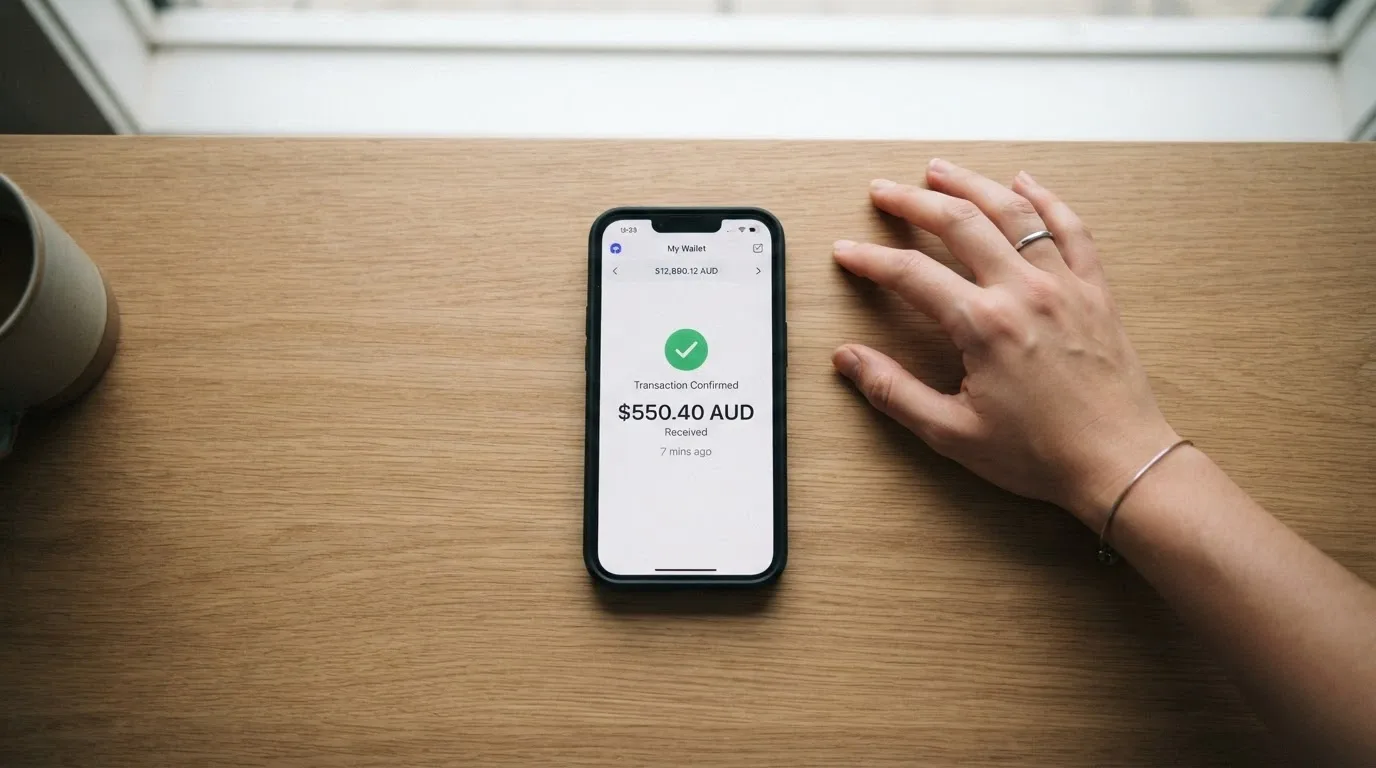
The advantage is clearest in the processing-to-clearing section. PayID’s NPP leg can take seconds to about four hours; crypto can finish in minutes. Neither route removes the casino’s manual queue. A request that spends 24 hours in review is slow before crypto or PayID begins.
Australia’s payment rules sharpen the trade. Credit cards, credit-related products and digital currency have been banned for licensed online wagering since 11 June 2024. The statute carries penalties of up to A$247,500 for an operator that fails to enforce the ban. A casino offering online casino and asking for crypto is outside that licensed-wagering framework, as well as outside Australia’s casino-licensing system.
The resulting speed is purchased with uncertainty. Crypto has no Australian consumer-protection path when an offshore operator refuses a withdrawal. Network conditions, exchange value and wallet control are separate concerns from the casino’s advertised window. “Fast” describes the transfer, not the dispute that follows if the transfer does not begin.
Bitcoin vs the Field — Which Crypto Actually Pays Out Fastest
An exact Bitcoin-versus-ETH-versus-USDT ranking would outrun the supported evidence. The verified comparison is method-wide: crypto withdrawals can clear in 2–60 minutes once approved. A specific asset, network, wallet and casino review queue can alter the actual result, so a universal asset-level promise would be false precision.
Operator windows provide the more useful scale. Rainbet says crypto takes minutes to a few hours after Level 1 KYC. Instant Casino says within one hour. Stake says minutes to hours. These are not independent measurements of the same rail, and they should not be averaged into a new number. They show that the route can be fast after the operator’s gate, while the total time remains account-specific.
Level 1 KYC is the common feature. “Crypto” is not a passport around verification. A legitimate operator still needs to know who is requesting the withdrawal, and a first cashout can take longer while that work is completed. The method-level speed claim starts after that point.
For an Australian player, the choice is less about the token’s logo than about the consequence of the payment. Crypto may win the final-leg comparison, but PayID keeps the result in AUD through a domestic system. Crypto wins potential speed and loses Australian protection. The correct method depends on which cost the reader refuses to carry.
The Anonymity Trade-Off — Faster Cashouts, Zero Australian Protection
Crypto is often presented as anonymous, but “less exposed” is a more accurate description than “invisible.” It can reduce the need to pass a domestic bank transfer, and it may reduce the amount of identity data a player hands directly to a casino. It does not remove the need for a legitimate operator to verify an account before the first withdrawal, and it does not create an Australian remedy if the balance is withheld.
That distinction matters because no KYC is a promise, not a protection. A site may say it needs less information, yet the operator still controls the payment address, the review and the account balance. A blockchain record can also be more permanent than a player expects. Speed and reduced banking exposure do not convert an offshore operator into an Australian-licensed service.
The legal contrast is absolute. The IGA prohibits providers from offering online casino games and online pokies to people in Australia. A crypto payment does not change the provider’s status. It may make the site less visible to a domestic bank, but it also gives the player no Australian complaints body and no recourse if the operator refuses a withdrawal.
ACMA’s enforcement record adds a blunt warning: 1,564 illegal gambling and affiliate websites had been blocked by Australian internet service providers as at March 2026. A blocked site can leave a balance behind. The player is not the target of the prohibition, yet that is cold comfort when the only route for help is the one the offshore operator chooses to provide.
Why Your 2026 No-Deposit Bonus Won’t Pay Out as Fast as the Headline Promises
Bonuses delay a payout when they make turnover or a cap part of the release condition. No-deposit offers make that delay harder to justify because the player contributes no deposit before being asked to satisfy a wagering requirement. “Instant payout” becomes especially hollow when the amount that can actually be withdrawn is small, capped or both.
The featured no-deposit figures run from Bizzo’s 10 free spins with a A$75 win cap, to Royal Reels’ A$10 cash-style bonus, and up to Fair Go’s no-deposit chips at about 60x wagering with a maximum cashout of about A$1,804. The range is wide, but the principle is stable: a bonus can create a fast theoretical clearance for a small amount without creating a fast route to the rest of the balance.
A no-deposit offer also does not remove KYC. A legitimate operator still verifies the account before the first withdrawal. The player may satisfy the wagering rule and then encounter the same compliance queue as any other cashout. The offer reduces the amount at risk; it does not remove the control point.
Rainbet’s no-wager gradual release is a useful contrast, but it belongs to its welcome structure rather than the no-deposit group. It avoids a 40x wager lock by releasing the bonus gradually. The difference is real, yet a seven-day validity period and a separate minimum deposit still apply. There is no free pass around the conditions.
The house edge is the final reminder. A bonus is a promotional balance, not a favourable alteration of the game’s mathematics. Faster clearance of a small capped amount can still represent less value than a slower release from a deposit-funded balance with clearer terms. The headline should be tested against the amount that can be converted, not the amount printed above it.
Wagering Requirements — the Multiplier That Traps Your Withdrawal
A wagering requirement is a turnover demand attached to bonus money or, in some terms, bonus winnings. A 40x multiplier on A$1,000 of bonus means A$40,000 must be wagered before the relevant bonus condition can clear. The number is large because it is a turnover multiple, not a withdrawal fee or a statement that the player has deposited A$40,000.
The qualifying base matters. This comparison uses bonus amounts because the published offers identify their bonus terms that way. It does not convert a deposit-plus-bonus condition into a smaller number. If an offer applies wagering to a combined balance, the true requirement is higher than a bonus-only model. If free spins have their own 40x condition, that is another workload rather than part of the same base.
The prescribed model makes the time scale visible. Assuming a representative A$1 stake per spin, a five-second interval per spin and wagering applied only to the headline bonus amount, Skycrown’s A$8,000 at 40x requires A$320,000 of turnover, equal to 320,000 spins and about 444.4 hours of estimated play. Bizzo’s A$7,250 at 40x requires A$290,000 of turnover, 290,000 spins and about 402.8 hours. Rocket Play’s first-deposit A$1,000 at 40x requires A$40,000 of turnover, 40,000 spins and about 55.6 hours.
Those time figures are estimates under the stated assumptions, not a forecast of an individual session. They do not include the house edge, free-spin wagering, a deposit balance, the time needed to verify documents or the chance of a win. They measure how long the stated turnover can take at the chosen stake. A short validity window can make the model even less comfortable: Skycrown gives 14 days, while Rainbet gives seven days on its wager-locked choice.
Maximum bets and validity periods are part of the same cost. Skycrown and Rocket Play set a A$7.50 maximum during wagering; Bizzo sets A$8. Those figures should not be flattened into one “around A$7” rule, because the operator and offer differ. Players who ignore the cap can find the bonus condition compromised. Players who rush a 40x requirement can find the validity window closing before the turnover is complete.
The marketing word is “bonus”. The calculation punctures it: a large headline balance is not the same as money close to withdrawal. The house edge works during the play, while the wagering rule decides how much play is required before the balance can move. One cost is mathematical; the other is temporal. Both belong in the value test.
No-Deposit Bonuses — the Cashout Caps That Make “Instant Payout” Irrelevant
A no-deposit bonus can be cleared quickly because it is small, but that does not make the withdrawal valuable. Bizzo’s 10 free spins carry 40x wagering and an A$75 win cap. Royal Reels’ A$10 no-deposit bonus carries a reported 30–40x wagering range. Fair Go’s no-deposit chips are reported at about 60x with a maximum cashout of about A$1,804. The cap, rather than the speed of the underlying game, limits the result.
The distinction between “no deposit” and “no conditions” is essential. No deposit describes how the balance entered the account. It says nothing about the wagering multiple, win cap, conversion rule, KYC check or operator review. A player can avoid risking a deposit and still fail to reach a withdrawable amount. The absence of an upfront payment is not a waiver of the conditions attached to the balance.
The headline “instant” is particularly empty when a no-deposit offer has a ceiling. An A$75 win cap is a hard boundary for the stated Bizzo free spins. Fair Go’s approximate A$1,804 maximum cashout is much higher, yet it still applies to no-deposit chips carrying a reported requirement near 60x. Royal Reels’ A$10 is the only clearly cash-style no-deposit bonus in the set, but its size is modest.
A no-deposit offer should be judged by the amount that can survive the wagering rule and remain inside the cashout cap. “Fast” means the balance may be worked through quickly; it does not mean the operator will pay a large balance instantly. The most responsible reading is to treat the offer as a capped trial, not as a shortcut around the payment system.
The Legal Reality — No Instant-Payout Casino Holds an Australian Licence
Online casino games and online pokies are prohibited interactive gambling services in Australia under section 15 of the Interactive Gambling Act 2001. No Australian casino licence exists, federally or in any state or territory. That fact disqualifies every operator on this page from being described as an Australian-licensed online casino, regardless of its offshore licence, game count or payout claim.

The law targets the provider. The individual Australian player is not ordinarily prosecuted merely for using an offshore casino, but the absence of prosecution is a thin shield. The player has no Australian consumer protection, no complaints body, no BetStop coverage and no practical recourse if the operator refuses a withdrawal. A site can also be blocked while a balance remains in the account.
The distinction matters when a brand says “licensed”. Licensing NT and the NTRWC are central to Australia’s online wagering framework, but wagering is not online casino. Pre-event wagering on races and sport, land-based casinos and lotteries are separate categories. The reform taking effect in 2027 also bans online keno and foreign-matched lotteries, so the legal boundary is not a loose comparison between one offshore licence and another.
“Curacao-licensed” answers a different question. It may tell the reader which offshore jurisdiction is associated with the operator, or which framework it uses. It does not answer whether the operator can be compelled by an Australian regulator, whether an Australian player can complain to an Australian body, or whether BetStop will stop the site accepting money. On those questions, the answer is no.
The product prohibition is not a reason to romanticise the offshore market. It is a reason to make the comparison exact. A casino can process a withdrawal quickly and still be outside the law. A payment method can move money efficiently and still leave the player exposed when the operator refuses to release it. Speed is one variable, never a substitute for legal status.
The Interactive Gambling Act — What It Prohibits and What It Doesn’t
Section 15 of the Interactive Gambling Act 2001 makes it an offence to provide online casino games, online pokies or in-play sports betting to a person in Australia. The prohibited activity is the online provision, not a ban on every form of gambling. A land-based casino remains a different product. State and territory lotteries and land-based keno also sit outside the online-casino category, even as the 2026 reform moves to ban online keno from 1 January 2027.
The legal wagering distinction is pre-event. Licensed online wagering on races and sport placed before the event is regulated through state and territory arrangements, with Licensing NT and the NTRWC functioning as the de facto national licensor for online wagering. That framework does not authorise roulette, pokies or an online casino cashier. Mixing the two would make the licence description look more favourable than it is.
ACMA is the federal enforcement body. It investigates complaints about prohibited or unlawful interactive gambling services, issues formal warnings, can bring civil penalty proceedings and can ask internet service providers to block illegal sites. The enforcement path is not a player-payout scheme. It is aimed at stopping the provider from reaching the Australian market.
That division leaves an uncomfortable position for the player. The Act does not turn an offshore payout dispute into a local claim. A refusal to withdraw can be reported and still remain unresolved. The legal reality is therefore best stated without euphemism: the provider is the regulated party, while the player carries the practical risk of the offshore relationship.
What the ACMA Actually Does — 1,564 Blocked Sites and Counting
ACMA has had 1,564 illegal gambling and affiliate websites blocked by Australian internet service providers since its first blocking request in November 2019, as at March 2026. More than 225 illegal services have withdrawn from the Australian market since enforcement was strengthened in 2017. Those figures describe an active enforcement system, not a market that has been made safe for offshore play.
The pattern is complaints and intelligence leading to warnings, civil action and blocking. A site that remains accessible to one player may already be under scrutiny, and a site that is accessible today may be blocked tomorrow. Offshore access is conditional on the provider continuing to evade or outlast enforcement. It is not a permanent right conferred by a fast-payout page.
A blocked site can disappear while a balance remains in the account. ACMA’s action is directed at the illegal service, not at returning each player’s money. The player’s ordinary protection under Australian law is therefore absent at the exact moment it would be needed. A declared withdrawal window cannot be enforced after the website becomes unavailable.
The enforcement record should change how a fast-payout claim is weighted. A five-minute or one-hour transfer claim matters when the operator is operating. It matters less if the operator can vanish before the player makes a withdrawal, changes its payment route, or refuses the request. Speed is a benefit only while a functioning service is willing to provide it.
The 2026 Gambling Reform — How 1 January 2027 Changes the Payment Landscape
The Interactive Gambling Amendment (Gambling Reform) Bill 2026 passed Parliament on 19 August 2026. Its measures commence on 1 January 2027. The relevant change for this subject is express authority for banks and payment providers to block transactions to illegal gambling operators. An offshore casino that relies on a domestic payment route can therefore face a new interruption even before a regulator blocks the website.
The reform also changes the surrounding market. It prohibits inducement marketing for 14 days after a customer signs up and for three months after deregistration from BetStop. It caps wagering television advertising at no more than three ads per hour between 6:00 am and 8:30 pm, with a live-sport blackout from 15 minutes before until five minutes after a live event. It bans foreign-matched lotteries and online keno.
Those advertising and product changes do not create an Australian online casino licence. They reinforce the direction of travel: offshore operators are being pushed further away from ordinary Australian payment access and marketing channels. A player comparing routes in 2026 should not assume the post-1 January 2027 payment environment will resemble the present one.
Crypto is not an escape from the reform. The earlier digital-currency ban for licensed wagering already sits alongside the offshore status of these casinos. The coming bank and payment-provider authority makes the practical question sharper: can the selected route still reach an illegal operator after the reform starts? PayID and conventional bank payments will be exposed to transaction blocking; crypto avoids that domestic route but carries its own custody, exchange and enforcement exposure.
Staying in Control When the Operator Sits Offshore
The fastest advertised cashout is a poor bargain if gambling harm is growing while the player waits for approval. As of March 2026, 15.1% of Australian adults, an estimated 3.32 million people, were experiencing some level of gambling harm. That figure makes the responsible-gambling section part of the decision about which route to use, not a decorative warning placed at the end.
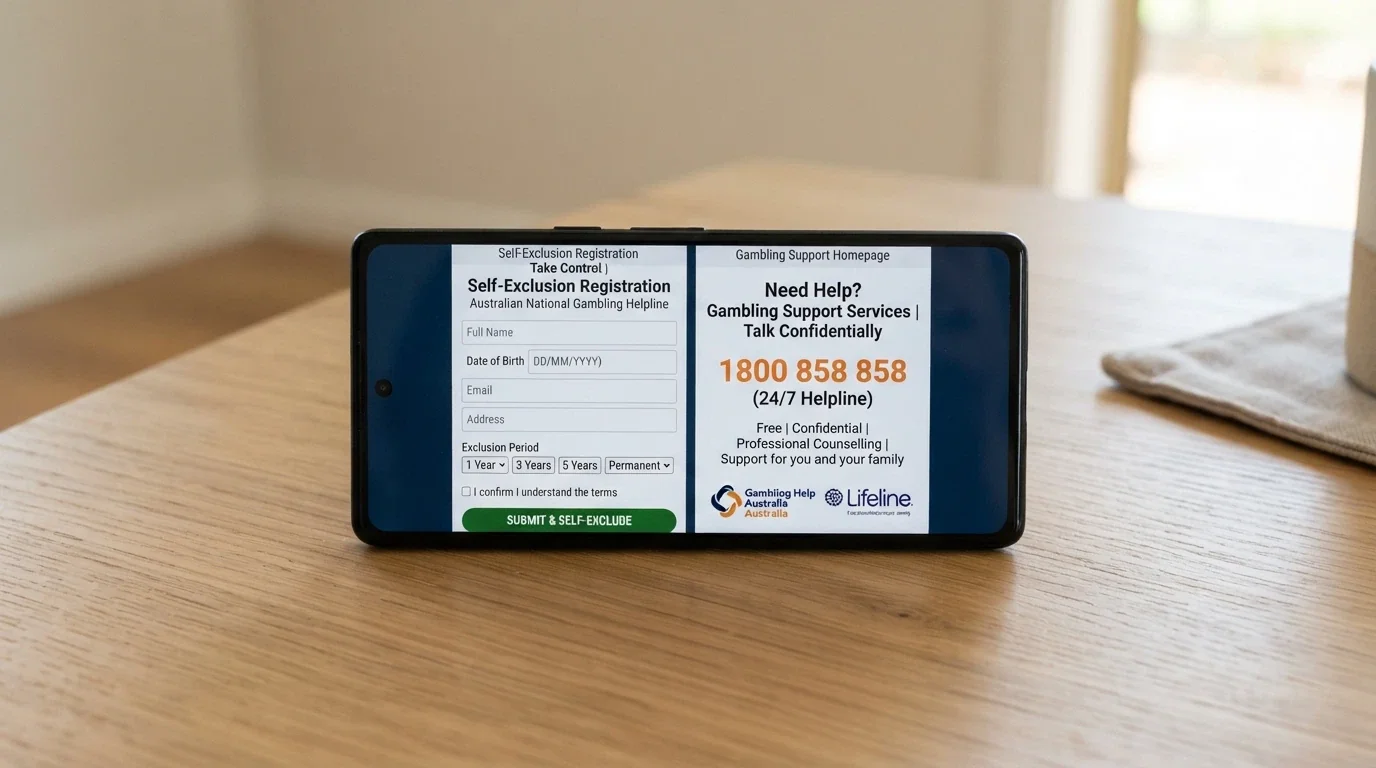
The practical protections weaken at the offshore boundary. BetStop binds Australian-licensed wagering services, not the casinos listed here. A voluntary deposit or loss limit at an offshore operator is useful only if the player enforces it, while self-exclusion at one brand reaches that brand and not the next. There is no federal deposit, loss or stake ceiling for online gambling; limits are operator-dependent and voluntary outside the licensed framework.
The 24/7 National Gambling Helpline is 1800 858 858. It is free, confidential and staffed around the clock, with online chat and counselling available through Gambling Help Online. These services do not make an offshore casino compliant and cannot reverse a withheld withdrawal. They are there to support a person dealing with harm, which is a different job from providing consumer protection.
BetStop — What Australia’s Self-Exclusion Register Actually Covers
BetStop is the National Self-Exclusion Register for Australian-licensed online and phone wagering services. One registration excludes a person from every participating licensed service in that category. It does not connect to any offshore casino on this page. A self-excluded Australian can therefore continue to encounter an offshore operator that is not part of the register.
The figures show a service with reach, but not universal reach. BetStop had 59,830 total registrations and 37,247 active exclusions as at 31 March 2026. A later snapshot at 31 July 2026 recorded 67,480 registrations and 41,290 active exclusions, with 78% of registrants under 40 and 38% choosing lifetime exclusion. Those are different dated snapshots, not interchangeable totals.
Awareness remains a gap. Only 33.5% of wagerers know BetStop exists, while 26.5% of Australian adults are aware of it. Against an estimate of five million wagerers nationwide, including 400,000 high-risk gamblers, about 30,000 people have active exclusions. That is roughly 7.5% of the high-risk estimate, leaving substantial coverage outside the register.
For an offshore casino player, the practical conclusion is stark. BetStop is the strongest Australian exclusion mechanism, but it is not connected to the sites discussed here. Individual-brand self-exclusion may reduce contact with one operator, yet it does not establish a network-wide block. The absence of BetStop coverage is one reason an offshore withdrawal decision cannot be evaluated solely by the speed of its payment method.
Practical Harm-Reduction Tools for AU Players at Offshore Casinos
Start with a limit that is enforceable in real life, not one that depends on a casino remembering a preference. Customer-set deposit limits and activity statements exist in the Australian licensed-wagering framework, but offshore casinos have no federal deposit, loss or stake ceiling. At an offshore site, the controls are operator-dependent and voluntary. A player who cannot keep a limit should treat that as a reason to stop, not as a prompt to open another account.
The statistics justify that caution. An estimated 1,970,000 Australian adults are classified as at-risk or problem gambling. Around 400,000 are in the high-risk group, and 67% of sports and race bettors are classified as being at some risk. Approximately 3.29 million Australians aged five and over are affected annually by their own or another person’s gambling. A study also estimated annual gambling-related health loss at over 400,000 Years Lived with Disability.
The burden is not evenly distributed. AGRC figures put 27.1% of Aboriginal and/or Torres Strait Islander people at risk of gambling harm, compared with 14.6% of non-Indigenous Australians. A general warning does not answer the specific pressure faced by communities already carrying a disproportionate share of harm. Personal controls matter, but so does access to culturally appropriate support.
Before depositing, decide what a loss is allowed to be and what action will follow if that limit is reached. Use a single account destination, keep verification current and do not use a cashout promise to extend play. Self-exclusion at one offshore brand works only at that brand. The National Gambling Helpline on 1800 858 858 is free, confidential and available 24/7; Gambling Help Online also provides online chat and counselling. Those services address harm, not a disputed balance.
How We Ranked These Instant-Payout Casinos
The ranking starts with the part of the claim that can be compared: published payout speed. Skycrown’s 5–20-minute claim is the shortest specific figure. Instant Casino and JustCasino provide declared 24-hour windows, while Rainbet and Stake describe crypto withdrawals in minutes to hours. Rocket Play gives a more qualified internal-review and method-time sequence. Where no supported speed figure exists, the table leaves a dash rather than manufacturing one.
Method coverage comes next. PayID, crypto and an identified internal review determine whether a speed claim can be translated into a real route for an Australian player. Bonus terms then test whether a generous headline is worth the friction. Skycrown, Bizzo, JustCasino and others carry 40x conditions; Rainbet adds a no-wager gradual-release path; Fair Go separates a heavy no-deposit requirement from its deposit matches. A high percentage is not allowed to outrank a missing cashout cap.
The legal check comes before any operator can be mistaken for an Australian-licensed service. ACMA’s blocked-sites record and the fact that no Australian casino whitelist exists are the relevant Australian controls. The evidence also does not confirm the dates of the offshore licences, so those dates are not used as a ranking factor. The comparison is not a substitute for checking current terms before money is committed.
The limits are material. Speed figures are operator-declared, not independently timed end-to-end tests. Bonus terms can change. CasinoAudit’s 77/100 score for Instant Casino is a contextual audit measure, not proof that its crypto withdrawals arrive within one hour. The ranking identifies which operators make the closest supported claim to a fast payout, not which one is legally safe or guaranteed to pay.
Fast Payouts Worth Having — What the Informed Australian Punter Does in 2026
The central finding is simple: PayID is the best AUD-native route after approval, crypto is the fastest method-level route, and KYC is the gate that can make either one irrelevant. None of the ten operators is Australian-licensed. None supplies an Australian complaints body when a withdrawal is refused. The fastest payout is the one that actually lands; if it does not, a minute-level claim is only advertising theatre.
A sensible comparison starts with the approval clock, not the bonus image. Check whether the operator states a total window or only a method window. Treat a 12–48-hour internal queue as normal even when the rail is fast. Treat a missing speed figure as unknown rather than slow. Read the bonus conditions beside the cashout claim, because a A$75 win cap or A$5,000 conversion ceiling can matter more than five minutes of blockchain clearing.
The payment route should match the reason for wanting speed. PayID keeps the funds in AUD and can clear in seconds to about four hours after approval. Crypto can clear in 2–60 minutes, but it brings exchange, wallet and offshore-dispute exposure. From 1 January 2027, banks and payment providers gain express authority to block transactions to illegal gambling operators, so a domestic route that works today may not work the same way after the reform begins.
The right conclusion is not that an offshore casino becomes trustworthy because it displays “instant”. It is that a reader should separate four things: the casino’s legal status, its approval time, the payment method and the amount that can actually be withdrawn. Australian law supplies no casino licence and no payout backstop for these brands. BetStop does not reach them, ACMA can block them and the player has no Australian complaints route. Save the National Gambling Helpline number in the harm-reduction section before play, because speed cannot repair harm after it starts.
Frequently Asked Questions
What is the fastest withdrawal method for Australian online casinos — PayID or crypto?
PayID is usually best for an AUD-denominated withdrawal once the casino approves it: NPP transfers clear in seconds to about four hours. Crypto is generally faster overall, often clearing in 2–60 minutes after approval, but it has no Australian consumer protection and creates exchange, volatility and custody risks. KYC can still dominate both.
How long does a PayID withdrawal actually take at an online casino?
Approved PayID withdrawals can clear in seconds to about four hours on the NPP. That is the banking leg, not cashout completion. KYC comes first, and the operator’s internal queue can take 12–48 hours, often longer on the first payout. The answer is rail time after approval, never a promise of same-day arrival.
Can I use crypto to withdraw from an Australian online casino?
Crypto withdrawals often clear in 2–60 minutes once the casino approves them, making the rail faster than PayID’s seconds-to-about-four-hour banking leg. That does not make them instant from the cashout button, because first withdrawals can wait on KYC and the operator’s 12–48-hour approval queue. Crypto also sits outside Australian payment protections.
Do instant payout casinos require KYC verification before my first withdrawal?
Yes, where the operator is legitimate. It verifies the account before the first withdrawal, even when the payout window is short. That check is the compliance gate; the payment rail only controls the stage after approval. Later cashouts can still spend 12–48 hours in review. “Instant” means instant after verification, not instant at the button.
What happens if an offshore casino refuses to pay out my winnings in Australia?
The Australian player is not prosecuted under the IGA, because it targets providers. That protection does not extend to a payout dispute. An offshore casino may refuse a withdrawal, and the player has no Australian complaints body, consumer protection, BetStop coverage or recourse. Treat the balance as exposed from the moment the site stops paying.
Which online pokies have the highest RTP for Australian players?
The supplied evidence does not support naming one. Per-title figures are not given for Big Bass Bonanza, Sweet Bonanza or Gates of Olympus, so ranking them would be misleading. Use each game’s displayed paytable, and treat any stated return as title- and configuration-specific. Choice may change session duration, not the operator’s KYC or approval clock.
What protection do I have as an Australian playing at an offshore casino?
Very little beyond the offshore operator’s terms. The IGA targets providers, not players, but it supplies no casino licence, consumer protection, complaints body, BetStop coverage or payout-dispute recourse. Australian payment protections do not extend to these casinos. Gambling Help Online and the 24/7 National Gambling Helpline provide support, not a route to recover a balance.
How Game Selection Influences Total Payout Speed
Table games, live dealer and crash games can feel faster because their rounds, decisions and presentation are different. Live dealer play is delivered in real time, and crash games can end a session quickly. Those are product experiences, not payment attributes. A live result does not make a withdrawal live, and a fast round does not shorten a 12–48-hour approval queue.
Megaways is another category label that can mislead a reader looking for payment speed. It describes a reel structure, not a payout rail. Table games and pokies likewise have no inherent advantage in the withdrawal comparison once the request reaches the cashier. The relevant distinction is between an operator-controlled approval period and a method-controlled clearing period.
A player who wants a fast total cashout should choose PayID for AUD or crypto for the shorter method-level window, complete KYC early and avoid claiming a bonus that leaves a balance under review. The game can shape the amount and timing of play leading up to the request. It cannot decide whether the operator releases the resulting balance.
Comparing Withdrawal Timelines for Table and Live Games
Table games, live dealer and crash games can feel faster because their rounds, decisions and presentation are different. Live dealer play is delivered in real time, and crash games can end a session quickly. Those are product experiences, not payment attributes. A live result does not make a withdrawal live, and a fast round does not shorten a 12–48-hour approval queue.
Megaways is another category label that can mislead a reader looking for payment speed. It describes a reel structure, not a payout rail. Table games and pokies likewise have no inherent advantage in the withdrawal comparison once the request reaches the cashier. The relevant distinction is between an operator-controlled approval period and a method-controlled clearing period.
A player who wants a fast total cashout should choose PayID for AUD or crypto for the shorter method-level window, complete KYC early and avoid claiming a bonus that leaves a balance under review. The game can shape the amount and timing of play leading up to the request. It cannot decide whether the operator releases the resulting balance.