A$10 No-Deposit Bonus with PayID in Australia: The Honest Read
 Available in AU
A$10 free, no deposit, instant PayID transfer. The pitch is engineered to short-circuit the part of the brain that pauses to check the small print. That’s the first thing this page is for: to slow the reader down enough to see the offer as it actually exists, not as the banner frames it. The mechanics of a no-deposit bonus — wagering, cashout caps, eligible games and an expiry clock — are the same at every operator, and they exist for a reason. The house edge has to come from somewhere, and on a “free” A$10 it comes almost entirely from the player.
Before the operator names, the law. Under the Interactive Gambling Act 2001 it is an offence to provide online casino games or online pokies to a person in Australia. No licence exists anywhere in the country for an online casino. Every brand reviewed on this page is an offshore operator, and several have been investigated, formally warned or blocked by the Australian Communications and Media Authority. The page describes what these operators offer; it does not recommend one. Where a reader decides to proceed, the choice of operator is theirs alone, and the consumer-protection void that follows from it is theirs alone.
Data current as of 18 October 2026 and verified against the ACMA’s published enforcement actions and the bonus terms published on each operator’s own site where accessible.
Table of Contents
- What a $10 No-Deposit Bonus Actually Gives You — and What It Takes Back
- Online Casino Is Prohibited in Australia — Here Is What the Law Actually Says
- Why Your $10 No-Deposit Bonus Is Smaller Than It Looks
- Sign-Up, Welcome and Deposit Bonuses — What $10 Really Unlocks
- PayID at $10 — Fast Deposits, Slower Withdrawals Than Advertised
- Offshore Casinos Targeting Australian Players — Bonus Terms and Legal Standing Compared
- How We Evaluated Every $10 No-Deposit Bonus on This Page
- What You Should Actually Do About a $10 No-Deposit Bonus in Australia
- Frequently Asked Questions
What a $10 No-Deposit Bonus Actually Gives You — and What It Takes Back
The headline is A$10 in casino credit, handed over with no deposit required. The real value of that credit depends on three numbers buried in the bonus terms: the wagering requirement, the maximum cashout and the contribution rate of the games the bonus can be played on. Read those three together and the shape of the offer appears. Read them in isolation and the bonus looks better than it is.
A$10 no-deposit credit sits in a separate bonus balance the player cannot withdraw directly. To turn any winnings into withdrawable cash, the bonus has to be wagered — multiplied — a set number of times. At a 40× multiple on A$10, the player must place A$400 in bets before a single dollar of bonus-derived winnings can leave the casino. The 30× to 60× range is typical for AU-facing offshore casinos, so the turnover requirement most often falls between A$300 and A$600, and the wagering has to be completed inside a window of seven days on bonus cash and as little as seventy-two hours on free spins. Miss the window and the bonus, plus any winnings accumulated under it, is forfeit.
A cashout cap sits on top of that. Operators strip anything above the cap when the player requests a payout. Caps on AU-facing no-deposit bonuses typically sit between A$50 and A$500, with the lower end more common where the wagering multiple is high. The point of the cap is to bound the casino’s worst-case liability on a bonus it never asked the player to fund. From the player’s side it means a streak of good luck can be trimmed back to the cap on the way out, with no recourse.
The third gatekeeper is game contribution. Pokies count at 100% toward wagering, so an A$1 spin eats exactly A$1 off the requirement. Table games such as blackjack and roulette typically contribute 10% or less, and progressive jackpot pokies are often excluded entirely — at 0% to 10% contribution. That effectively forces the bonus into the pokies lobby, where the house edge is widest. Royal Reels publishes its own version of this split: pokies at 100%, table games and live dealer at 3%. Royal Reels’ number is the most punitive this side of the market; the industry standard on table games sits closer to 10%, but the principle is the same — the bonus is a pokies product.
The $10 Figure — Credit, Not Cash
A$10 no-deposit credit is bonus money, not real money, and the distinction runs through the entire bonus experience. The player’s real-money balance sits untouched. The bonus sits in its own column with its own wagering counter, and the player cannot move funds from the bonus column to the real-money column until the wagering requirement is cleared. Until then the bonus is locked in place.
What does A$10 actually buy in play? At a typical pokie stake of A$0.20 to A$1.00 per spin, A$10 buys between 10 and 50 individual spins. The variance on those spins is wide — a high-volatility title like Gates of Olympus can eat the lot in a single bonus feature round, or it can stretch the bonus across a session that lasts an hour. What it cannot do is sit in the player’s account and wait. The wagering clock starts on the first spin, and at most operators a maximum bet of A$5 per spin applies while the bonus is active. A single A$6 spin — above the cap — can void every dollar of accumulated winnings. The cap is rarely policed in advance, so the player discovers it on the way out, when the cashier refuses the payout.
Casino vs Pokies — Where Your $10 Bonus Actually Applies
The bonus is overwhelmingly a pokies product. The terms push it that way, by design. Pokies contribute 100% to wagering, table games contribute 10% or less, and progressive jackpot pokies are often excluded entirely. The player who sits down at a blackjack table with a A$10 no-deposit bonus is playing with money that barely counts against the requirement — at 10% contribution, a A$10 blackjack bet would clear only A$1 of the wagering target.
This is not a quirk of the marketing. It is the shape the offer is built to take. The house edge on pokies is wider than on table games, so the operator recoups the bonus fastest when play is on the slots. The contribution weighting is the mechanism that steers the player toward the games that benefit the house most. The same A$10 wagered on pokies, blackjack and a progressive jackpot would, in extreme cases, count A$10, A$1 and A$0 against the same requirement.
Welcome Bonus vs No-Deposit Bonus — They Are Not the Same Thing
Conflating the two is how readers sign up expecting one and find the other. A no-deposit bonus asks for nothing — no deposit, no payment method on file, just an account and the bonus credit. A welcome bonus is deposit-gated. It requires a minimum deposit (often A$20 to A$30) and multiplies that deposit with bonus credit subject to its own wagering terms.
Royal Reels carries both: a A$10 no-deposit free chip, auto-credited on sign-up with no code required, and a separate welcome package of A$2,500 plus 50 free spins across the first three deposits, with a A$30 minimum deposit and 35× wagering on the bonus. Rocket Play offers 50 free spins as a no-deposit bonus (on Gamzix “3×5 Hold The Spin” at A$0.10 per spin) with 60× wagering on winnings and a A$50 maximum cashout, and a one-day activation window. Its welcome package runs up to A$6,000 plus 300 free spins across four deposits, with a A$30 minimum first deposit. The two bonus types live in different columns of the cashier, with different wagering multiples and different expiry windows. A player who sees “A$10 free” in the lobby and reads the welcome terms as the conditions that govern it has read the wrong contract.
Online Casino Is Prohibited in Australia — Here Is What the Law Actually Says
The Interactive Gambling Act 2001 prohibits the provision of online casino games, online pokies and in-play sports betting to a person in Australia. There is no licence — federal, state or territory — that allows an online casino to offer real-money pokies to an Australian player. The ACMA is the regulator enforcing this prohibition, and it does so by issuing formal warnings, by obtaining court orders that compel Australian ISPs to block offending domains, and by maintaining a public register of those actions.

The IGA targets the provider, not the individual player. Nobody is arrested for depositing A$50. But the corollary is sharper than the headline lets on: an Australian who uses an offshore casino has no Australian consumer protection. There is no ACMA complaint-recovery mechanism that can force a Curaçao-licensed operator to pay out. There is no local dispute resolution, no AFCA-style ombudsman, no statutory guarantee that the bonus terms offered on the operator’s site are the terms that will be applied on the cashier screen. The payment method being Australian — PayID, Osko, BPAY — does not make the casino Australian. It is still an overseas operator, usually licensed in Curaçao, and enforcement against it is difficult at the player end.
The ACMA’s blocking record is the visible edge of that enforcement. As at August 2026 the regulator had secured the blocking of 1,788 illegal gambling and affiliate websites at Australian ISPs since November 2019, and over 230 illegal services had withdrawn from the Australian market since 2017. The blocking is comprehensive but not airtight. A determined player can route around it. What the block does not do is recover funds the player has already deposited, validate bonus terms, or hold the operator to any standard the player can invoke. It removes the front door; it does not police the back office.
The Interactive Gambling Act — What It Prohibits and What It Doesn’t
The IGA’s prohibition is specific. It covers online casino games, online pokies and in-play sports betting — the products an Australian would reach by clicking on a slot reel or a live-dealer blackjack table. It does not prohibit wagering on sports or racing placed before the event begins. Licensed Australian bookmakers — Sportsbet, TAB, Ladbrokes, Neds, PointsBet, bet365 — offer those products legally under state and territory wagering licences, primarily through the Northern Territory Racing and Wagering Commission. None of them offer online pokies. That product is not licensed, which is why every brand in this guide is an offshore operator.
The ACMA’s enforcement powers run in two directions. It can issue formal warnings to operators found to be providing prohibited services, which carries the weight of a regulator’s finding and a published record. It can also apply to the Federal Court for an order requiring Australian ISPs to block access to an offending domain. Blocking affects every Australian who tries to reach the site through a participating ISP, regardless of whether that individual ever had an account. A formal warning is a signal to the operator; a block is a signal to the player that the regulator considers the operator non-compliant.
The 2026 Gambling Reform Bill — What Changes on 1 January 2027
The Interactive Gambling Amendment (Gambling Reform) Bill 2026 passed Parliament on 19 August 2026 and commences on 1 January 2027. It does not legalise online casino — the prohibition stands. What it does is tighten the surrounding environment: the advertising that funnels players offshore, the payment rails that fund them, and the inducements operators use to retain them.
Three changes bear directly on the offers this page covers. AdStop — a national wagering advertising opt-out register, administered by the ACMA — gives Australians a single mechanism to suppress wagering advertising across every channel. A fourteen-day ban on inducement marketing to new customers is layered on top: an operator cannot dangle a no-deposit bonus at a sign-up until the customer has been on file for two weeks. A ninety-day ban extends that cool-off after BetStop deregistration, and an indefinite ban applies to customers flagged as at-risk. The reform also bans athletes and influencers from promoting wagering brands, and it phases in a broadcasting blackout — wagering ads banned during news and current affairs, around live sport, and between 6 am and 10 pm on broadcast channels by Phase 3.
The most consequential change for offshore operators is on the payments side. From 1 January 2027, banks and payment providers gain express authority to block transactions to illegal gambling operators. PayID transfers to a blocked domain may fail at the bank rail, not at the cashier. That puts friction between the player and the offshore casino that does not exist today, and it narrows the practical difference between “the regulator told you not to” and “your bank refused the transfer”. The casino is still reachable through workarounds, but it gets harder.
When the ACMA Blocks an Operator — What It Means for Your Money
A block means Australian ISPs have been ordered to make the operator’s domain unreachable through normal browsing. It does not mean the operator has been shut down, and it does not mean players with open accounts or pending withdrawals have been made whole. Players with funds on the platform face an immediate problem: their account may still be reachable through a VPN or a mirror domain, but the operator’s compliance posture has shifted toward exit rather than retention. Withdrawal queues lengthen. Customer support thins. Bonus terms get reinterpreted.
The operators in this guide that have been individually confirmed blocked by the ACMA include Rocket Play (investigated and blocked at the regulator’s request), Fair Go Casino (domains Fairgo.com and fairgo.info and alternates blocked — thirteen contraventions of section 15(2A) of the IGA found), and Rainbet (formally warned and the rain.gg domain blocked). Bizzo Casino has been formally warned and its website blocked. The remaining operators in the ranking have not been individually confirmed as blocked in this run. That is not a clearance — it is the absence of a confirmed finding against the brand in the ACMA record as consulted. The check was not exhaustive for every brand.
A formal warning is a step short of a block. It is the regulator’s written finding that an operator has provided a prohibited service to Australian customers. The warning is published; the operator’s response is not. Several of the brands in this guide carry formal warnings; others carry no enforcement finding visible in the ACMA’s published actions. The audit that ranks them treats a published warning as a material risk factor and a published block as a stronger one, because both shrink the operator’s Australian-facing business and increase the probability of arbitrary term changes as the exit arrives.
BetStop Won’t Protect You at an Offshore Casino — and Here Is Why That Matters
BetStop — the National Self-Exclusion Register — went live in August 2023. As at 31 July 2026 it held 67,480 registrations, of which 41,290 exclusions were still active: more than sixty per cent of everyone who ever signed up. Seventy-eight per cent of registrants were under forty; thirty-eight per cent chose lifetime exclusion. Those numbers describe a real cohort of Australians using a real tool to step back from wagering.
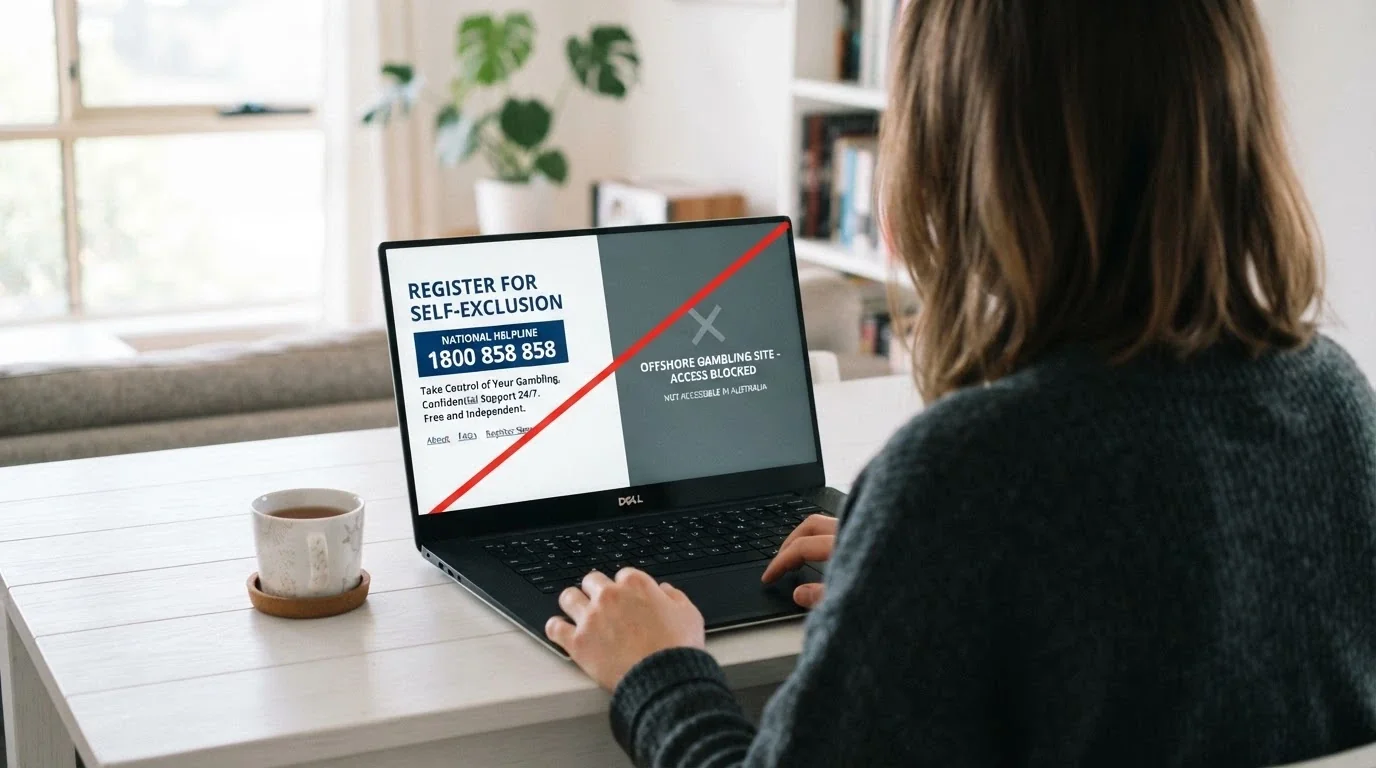
The coverage stops at the border. BetStop binds Australian-licensed wagering operators — Sportsbet, TAB, Ladbrokes and the rest. An offshore casino is not connected to the register. A person who has self-excluded through BetStop can still deposit at an offshore casino, still claim a no-deposit bonus, and still lose. The register’s protection does not extend beyond the perimeter it was built for, and that perimeter was deliberately drawn at the licensed market because the unlicensed market is, in the regulator’s framing, not a market at all.
This is the gap where the harm sits. Approximately 2.1% of Australian adults — roughly 430,000 people — experience problem gambling. The Australian Institute of Health and Welfare put high-risk gambling at 1.8% in 2022. Those figures describe the population BetStop was built to protect, and the population that an offshore casino can still reach. The National Gambling Helpline is 1800 858 858, free and confidential, twenty-four hours a day, with online chat and counselling through Gambling Help Online at gamblinghelponline.org.au. Those services cover offshore play in a way BetStop does not.
Why Your $10 No-Deposit Bonus Is Smaller Than It Looks
The four mechanics that shrink a “free” A$10 are predictable, and they operate the same way at every operator in this guide. Wagering of 30× to 60× on the bonus turns A$10 into A$300 to A$600 in required turnover — money the player must put through the games before a withdrawal is possible. The A$50 to A$500 cashout cap strips anything above it when a payout is requested, regardless of how the player got there. Game contribution rates make table-game play near-useless against the requirement, and the seven-day expiry clock on bonus cash (seventy-two hours on free spins) sets a hard deadline most players miss at least once.
Read the four together and the shape is plain. The bonus is not designed to be converted to cash. It is designed to be played. The handful of players who run through the wagering requirement inside the window, stay below the max-bet cap, hit a result above the cashout threshold and pass KYC verification within the casino’s processing window are the exception, not the rule. Everyone else plays the bonus to zero and is done.
What “$10 Free No Registration” Really Means
“No registration” is the most misleading phrase in the bonus market. What it usually means is no initial sign-up form — the casino hands the player a guest account or asks for an email address to start play. What it does not mean is anonymous play. KYC verification is mandatory before any withdrawal, and KYC at offshore casinos typically requires photo ID, proof of address and, increasingly, source-of-funds documentation. Verification takes twenty-four to seventy-two hours once the documents are submitted, longer if the operator has questions.
Some offers sit between free and gated. Skycrown’s headline of 100 free spins is real, but activation requires phone verification — a step above the no-form “guest” model. The spins are still no-deposit, still playable without funding the account, but the player’s phone number is now on file and the account is bound to it. The bonus was free to claim; the account was not free to open.
The promised anonymity evaporates at the cashier. The player who deposits A$10 via PayID, plays a A$10 no-deposit bonus, wins A$150 and requests a withdrawal is asked for a driver’s licence, a recent utility bill, and possibly a bank statement showing the original deposit. Submitting them takes time. Approval takes more time. The casino that promised “no registration” now knows the player’s name, address and the bank account the winnings are going back to.
Free Play vs Real Money — the Withdrawal Catch
The bonus balance is separate from the real-money balance. The wagering counter runs against the bonus. The player must complete the wagering requirement inside the bonus balance first; until then, withdrawals from the bonus side are not available. Some operators allow a withdrawal from the real-money balance while the bonus is active, but doing so forfeits the bonus and any winnings tied to it. The architecture forces a sequence: clear the bonus, then cash out.
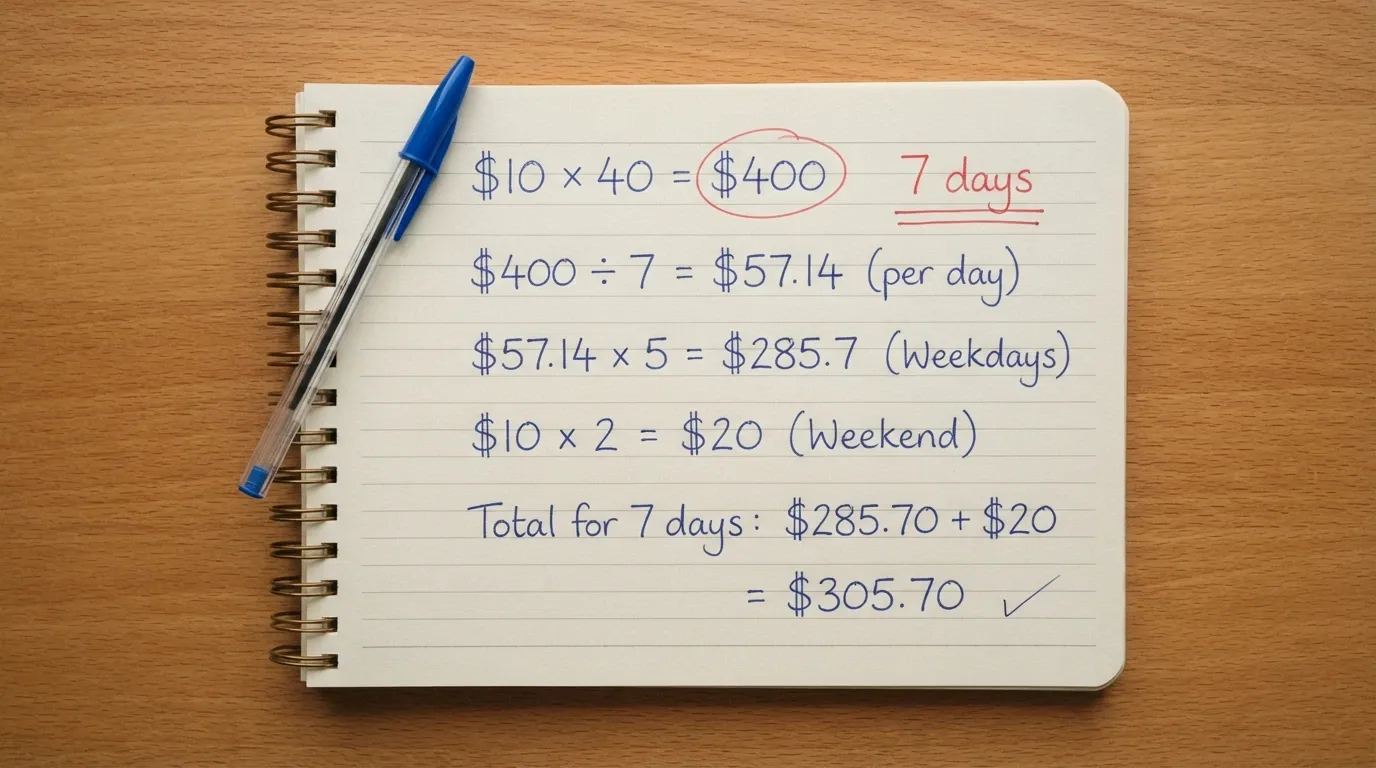
A worked qualitative example shows how the maths drains the offer. A player deposits A$10 via PayID (or claims a A$10 no-deposit free chip), the bonus is credited at 40× wagering — A$400 in turnover required. The player plays A$0.50 a spin on a 96.5% RTP pokie. Over A$400 in turnover the player loses, on average, A$14 to the house edge — A$400 × (1 − 0.965) = A$14 in expected loss. The bonus started at A$10 in player value. The expected loss against the wagering requirement exceeds it. Before any cashout cap, before any KYC delay, before any expiry risk, the bonus is already a negative-EV proposition at this stake and this RTP. A higher stake tightens the loss. A lower RTP widens it. Higher-volatility titles stretch the variance but do not improve the average.
The cap closes the door above a certain threshold. At a A$50 cashout cap, the player would need to land a winning streak well above the expected value of A$400 in turnover to clear it — and then surrender everything above A$50 on the way out. At a A$200 cap, the room is larger but still finite, and the casino’s exit terms decide what the player actually keeps.
$10 Free Pokies — What You Can Actually Play
The titles below are real games offered at AU-facing offshore casinos, with the published return-to-player and volatility figures that research could verify on operator or provider pages. The list is narrow on purpose: research carries RTP for a handful of titles, and the same handful covers most of the bonus-eligible pokie lobbies.
| Slot Title | Provider | RTP | Volatility |
|---|---|---|---|
| Gates of Olympus | Pragmatic Play | 96.50% | High |
| Sweet Bonanza | Pragmatic Play | 96.51% | High |
| Big Bass Bonanza | Pragmatic Play | 96.71% | Medium-to-high |
| Wolf Gold | Pragmatic Play | 96.01% | Medium |
| Sugar Rush 1000 | Pragmatic Play | 96.53% | High |
| Book of Dead | Play’n GO | 96.21% | High |
| Big Bass Splash | Pragmatic Play | 96.71% | Medium-to-high |
| The Dog House | Pragmatic Play | 96.51% | High |
The table carries no recommendation. It lists what each operator’s lobby tends to hold, and what the RTP and volatility bands look like for bonus play. A 96.5% RTP is roughly three-and-a-half percentage points of house edge — high in absolute terms, narrow against the worst pokies on offer, and the operating assumption most operators build their bonus maths around. High-volatility titles stretch the variance: most sessions end below the starting balance; a small number end well above it. Neither result is more “fair” than the other, in the sense that the house edge is the same per spin on average. The volatility just changes how the average is distributed across sessions.
Titles not on this list take the no-data marker in editorial copy, because research does not carry a verified RTP for them. The page never invents a figure for a title research did not name. A reader who sees a pokie not listed above should treat its RTP as unverified, not assume it is comparable.
The Seven-Day Clock — Bonus Expiry and Forfeiture
The bonus has a hard deadline. Bonus cash expires in seven days at most operators in this space; free-spin winnings expire in as little as seventy-two hours. The clock starts on the first spin, not on the day of sign-up, and it does not pause for sleep, work or the player’s preferred session length. Rocket Play’s no-deposit spins carry a one-day activation window — the spins must be used within twenty-four hours of credit, then the 60× wagering on winnings runs on top of that.
Forfeiture is total. The bonus and any winnings accumulated under it disappear at the deadline. The player does not get a “use it or extend it” prompt. The casino does not write to remind the player that the wagering is half-done. The clock runs in the background and the bonus ends where it ends. Players who clear the requirement come out ahead; players who miss by an hour come out with nothing. The arithmetic of the offer assumes a high attrition rate and is priced accordingly — the casino does not need most players to convert the bonus to cash for the offer to pay for itself.
Sign-Up, Welcome and Deposit Bonuses — What $10 Really Unlocks
The A$10 figure shows up across three distinct bonus types, and the cost of each to the player is different. A no-deposit free chip asks for nothing and gives A$10 in bonus credit. A welcome match multiplies the player’s own deposit with bonus credit and ties both to wagering. A free-spins bundle hands over a set number of spins at a fixed stake and applies wagering to whatever those spins win. The marketing renders all three as “free money”. The terms render them differently.

The first thing the player should do on any bonus page is identify which type is on offer. The second is find the wagering multiple, the cashout cap, the max-bet rule and the expiry window. The third is decide whether the bonus is worth the wagering it requires. Most are not, on the figures.
$10 Sign-Up Codes vs Auto-Credited Bonuses
The difference is clerical but it matters when the code expires or changes. An auto-credited bonus lands on the player’s account on sign-up with no further action — Royal Reels’ A$10 free chip is published as auto-credited with no code required. A code-based bonus requires the player to enter a string at the cashier or sign-up form, and the string has to be current. Third-party listings circulate codes that may be weeks or months out of date. Fair Go Casino’s A$10 no-deposit offer is published as code-based in third-party aggregators; the specific code on those pages was not verified this run.
The risk of code-based offers is asymmetric. The player who enters a stale code and signs up has still signed up. The casino has the account, the deposit (if any), and whatever bonus terms apply to a player who did not satisfy the bonus trigger. The remedy is usually to contact support and ask the bonus to be credited manually — a process that varies by operator and depends on the support team’s discretion. Auto-credited offers avoid the failure mode entirely.
Deposit Match Bonuses — When Your $10 Becomes More
A deposit match multiplies the player’s own money with bonus credit. A 100% match on a A$30 deposit at Royal Reels gives the player A$60 to play — A$30 real money plus A$30 bonus — and the A$30 bonus is subject to 35× wagering before any bonus-derived winnings can be withdrawn. The player’s own A$30 sits in the real-money column with no wagering attached, but it cannot be withdrawn while the bonus is active at most operators without forfeiting the bonus.
The minimum deposit is the catch the headline skips. A$10 PayID deposits are common, but welcome match bonuses typically trigger at A$20 to A$30. Skycrown’s A$8,000 welcome package starts at a A$20 minimum deposit; Royal Reels’ welcome bonus and Rocket Play’s welcome package both gate at A$30. NeoSpin is one of the few brands that allows the bonus to trigger at exactly A$10 via PayID, with a 400% match up to A$10,000. A player who deposits A$10 at an operator that gates the welcome at A$30 has funded the account but not claimed the bonus — and is now in the awkward position of either topping up to A$30 to unlock the match or playing with no bonus at all.
The wagering on a deposit match applies to the bonus amount, not the deposit, at most of the operators in this guide. Royal Reels publishes 35× on the bonus. Skycrown publishes 40× on the bonus and 30× on free-spin winnings. Those multiples run on bonus credit only, not on the player’s deposit, but the player has to place the bets — and the bets come out of the combined balance, with the casino crediting wagering against the bonus side at the end of each spin.
Wagering Multipliers, Game Contributions and the Max-Bet Trap
Three hidden terms decide whether the bonus ever pays. The wagering multiple is the multiplier applied to the bonus before any withdrawal is possible. The game contribution rate is the share of each bet that counts toward that requirement. The max-bet cap is the upper limit on a single stake while the bonus is active, and breaking it voids the bonus and the winnings with no warning.
| Bonus Type | Typical Wagering | Game Contribution | Typical Max Cashout | Validity Window |
|---|---|---|---|---|
| No-deposit free chip | 30×–60× on bonus | Pokies 100%, table ≤10%, jackpots 0–10% | A$50–A$500 | 7 days |
| Welcome deposit match | 35×–40× on bonus | Pokies 100%, table ≤10%, jackpots 0–10% | Varies (often none) | 14–30 days |
| Free spins no-deposit | 30×–60× on winnings | Spins locked to nominated title | A$50–A$200 | 72 hours–1 day |
| Reload / cashback | 20×–40× on bonus | Pokies 100%, table ≤10% | Varies | 7–14 days |
The max-bet trap sits below the table. The maximum stake during wagering at most operators in this space is A$5 per spin or hand. The player who usually bets A$10 a spin on pokies will, if they forget to lower the stake after claiming a bonus, hit A$6 on the autoplay and have the bonus voided. The casino does not police the cap in advance and rarely refunds voided bonuses on appeal. The single biggest avoidable loss in bonus play is the spin above the cap.
PayID at $10 — Fast Deposits, Slower Withdrawals Than Advertised
PayID is the bank-native instant transfer rail that runs on Osko. For deposits, it is genuinely fast — funds typically land in the casino account inside sixty seconds, with no card details shared and no fees on either side. For withdrawals, the picture is less clean. The PayID transfer itself is fast, but it sits behind the casino’s internal processing and KYC verification, and those gates add time.

The minimum deposit and withdrawal amounts are where the marketing gets loose with the truth. A$10 minimum deposits are widely advertised, but only ten of twenty-four operators in an independent audit actually honoured that floor in practice.
How a $10 PayID Deposit Works
The flow is short. The player opens the cashier, selects PayID, enters a deposit amount of A$10, and is shown the operator’s PayID — typically an email address or phone number tied to a business bank account. The player opens their own banking app, selects PayID / Osko, sends A$10 to that identifier with a reference (often the player’s account ID at the casino), and the funds appear in the casino balance inside sixty seconds. NeoSpin’s PayID deposits are credited in under thirty seconds, which is on the fast end of the spectrum.
There is no card detail shared. There is no fee at the bank or the casino — PayID on the Osko network is free at every Australian bank. There is no chargeback path: the funds clear to the casino the moment the bank confirms the transfer. That last point matters. A credit-card deposit can be disputed after the fact. A PayID deposit cannot. The transaction is final at the bank end, and the player’s only remedy if the casino refuses the withdrawal is at the casino — and the casino is offshore.
The Silent $20 Minimum — When “$10 Deposit” Isn’t $10
An independent audit of twenty-four AU-facing operators advertising A$10 PayID deposits found that ten passed all of its tests. The other fourteen failed in one of three ways. The most common failure was a silent A$20 minimum — the cashier accepted A$10, the deposit appeared to succeed, and the bonus did not trigger, because the trigger was actually set at A$20 or A$30 in the back-end rules. The second failure was a bonus locked behind a higher trigger: A$10 was accepted but did not unlock the advertised no-deposit or welcome bonus. The third was an A$10 deposit flagged for extended verification — five days or longer, often in lieu of a withdrawal.
The pattern is consistent enough that A$10 PayID deposits should be treated as a marketing claim, not a floor. The operators that genuinely honour A$10 tend to advertise the minimum without qualification; the ones that silently require A$20 or A$30 tend to advertise A$10 with the bonus trigger or the wagering terms quietly raised. The audit’s methodology matters: it tested deposits, not just terms pages, and the gap between the two is the audit’s main finding.
PayID Withdrawals — Minimums, Maximums and the KYC Hurdle
PayID withdrawals from offshore casinos typically have a minimum of A$50 and a daily maximum of A$9,000. Below the minimum, the withdrawal request is refused. Above the maximum, it is queued. Inside the band, the request enters the casino’s internal processing queue, which can run from under an hour to forty-eight hours depending on verification status and the operator’s workload.
KYC is the gating step. The casino will not release funds until it has photo ID, proof of address and, increasingly, source-of-funds documentation on file. The player who supplied those documents at sign-up does not see a delay; the player who has not faces twenty-four to seventy-two hours of verification before the PayID leg even begins. After verification, the casino’s internal approval runs on top — another queue — and only then does the PayID transfer move. End-to-end, a clean first withdrawal takes one to three days. A withdrawal that triggers source-of-funds questions can take a week.
PayID and POLi do not support withdrawals at most AU-facing offshore casinos. A secondary method is needed for cashouts — typically an e-wallet, a bank transfer via SWIFT, or a cryptocurrency payout. The deposit arrives in seconds via PayID; the return trip may travel by a slower rail. The asymmetry is structural, and it sits in the casino’s favour: instant funding, slow payout.
Offshore Casinos Targeting Australian Players — Bonus Terms and Legal Standing Compared
The operators below are all offshore, all unlicensed in Australia, and all targeting Australian customers with bonus offers the IGA prohibits them from marketing. The table compares what each one publishes as its offer against the ACMA’s published enforcement record. Cells the inputs do not cover are left blank — the page does not invent bonus terms the operator’s site did not carry this run.

| Operator | Offshore Licence | No-Deposit Bonus Offer | ACMA Enforcement Status |
|---|---|---|---|
| Royal Reels | Curaçao | A$10 free chip, auto-credited, 30× wagering, A$200 max cashout, 7 days | Not individually confirmed as blocked this run |
| Rocket Play | Curaçao | 50 free spins (Gamzix, A$0.10/spin), 60× wagering on winnings, A$50 max cashout, 1-day activation | Confirmed blocked — investigated, website blocked at ACMA’s request |
| Skycrown | Curaçao | 100 free spins (phone verification required), 40× wagering bonus / 30× on FS winnings, 14-day tier | Not individually confirmed as blocked this run |
| Fair Go Casino | Offshore | AU$10 code-based (per third-party listing — not verified this run) | Confirmed blocked — domains Fairgo.com, fairgo.info blocked, 13 IGA contraventions |
| Bizzo Casino | Consolutetish SRL | Not confirmed this run | Formally warned by ACMA; website blocked |
| Stake | Curaçao | Not confirmed this run | Not individually confirmed as blocked this run |
| Rainbet | Curaçao | Not confirmed this run | Formally warned by ACMA; website blocked |
| Scream Casino | Offshore | Not confirmed this run | Not confirmed this run |
| WinSpirit | Offshore | A$20 no-deposit bonus, 40× wagering (per third-party listing — not verified this run) | Not individually confirmed as blocked this run |
| Rocket Casino | Offshore | Not confirmed this run | Not confirmed this run |
The ACMA column carries weight. A confirmed block or formal warning is the regulator’s published finding that the operator has provided prohibited services to Australian customers. The brands with no confirmed enforcement action in this run are not cleared — the check was not exhaustive, and absence of a published finding is not the same as absence of risk. But the operators with confirmed blocks are documented non-compliant, and that is the cleanest distinction the public record allows.
Royal Reels — A$10 Free Chip, 30× Wagering, A$200 Cap
Royal Reels offers the cleanest no-deposit offer in the ranking: a A$10 free chip, auto-credited on sign-up, no code required, with 30× wagering and a A$200 maximum cashout, valid for seven days. Pokies contribute 100% to wagering; table games and live dealer contribute 3% — the lowest table contribution rate in the operators reviewed, which effectively forces play into the slots lobby. The welcome package is A$2,500 plus 50 free spins across three deposits, with 100% up to A$500 on the first deposit, a A$30 minimum deposit and 35× wagering on bonus only. The maximum bet while any bonus is active is A$5 per spin or hand.
The 30× wagering on the no-deposit chip is the friendliest multiple in the ranking — A$300 in turnover, against the A$400 to A$600 range at 40× to 60×. The A$200 cashout cap is mid-range and generous relative to the A$50 cap on offer at Rocket Play. From a bonus-mechanic standpoint, Royal Reels publishes the cleanest no-deposit terms available to Australian players at this set of operators.
The standing under Australian law is the same as every other operator in the ranking: offshore, Curaçao-licensed, unlicensed in Australia. The ACMA’s enforcement record on Royal Reels specifically was not confirmed in this run, which is not the same as clearance — it means the check did not turn up a published action against the brand. Royal Reels holds 2.51% of the AU-facing offshore casino market, which is meaningful but not dominant. The page describes the offer; it does not recommend the operator. A reader who proceeds should weigh the bonus terms against the regulatory gap and decide accordingly.
Rocket Play — 50 Free Spins No-Deposit, 60× Wagering, A$50 Cap
Rocket Play’s no-deposit offer is 50 free spins on Gamzix’s “3×5 Hold The Spin” at A$0.10 per spin, with 60× wagering on winnings and a A$50 maximum cashout, and a one-day activation window inside which the spins must be used. The 60× wagering on free-spin winnings is the highest multiple in the ranking — the player has to wager any winnings from the spins sixty times over before they can withdraw, on a base that may itself be small. The A$50 cap closes the door above that figure regardless of the run. The welcome package runs up to A$6,000 plus 300 free spins across four deposits, with the first deposit 100% up to A$1,000 plus 100 spins, a A$30 minimum deposit, 30× to 40× wagering and a A$7.50 max bet while the bonus is active. The maximum win on the welcome package is capped at A$5,000.
The standing is the issue. Rocket Play has been investigated by the ACMA for providing a prohibited interactive gambling service to Australian customers and its website has been blocked at the regulator’s request. The block is in the public record and was not lifted at the time of writing. Australian players reaching the operator do so through workarounds — mirror domains, VPNs, the casino’s outreach channels. Rocket Play holds 9.4% of the AU-facing offshore casino market, the largest share in this ranking. That market share sits behind an ACMA block and a 60× no-deposit wagering multiple, and the combination tells its own story about how the offer is priced for a market the regulator is publicly trying to close.
Skycrown — 100 Free Spins, Phone Verification Required, 40× Wagering
Skycrown’s no-deposit headline is 100 free spins, activated by phone verification rather than a deposit. The bonus is no-deposit in the financial sense — no funds change hands — but it is gated by a phone-verification step that places the bonus in the verification-required category rather than the truly anonymous guest-account model. The welcome package is A$8,000 plus 400 free spins across four deposits, with a A$20 minimum deposit, 40× wagering on the bonus and 30× on free-spin winnings, a A$5 max bet and a fourteen-day expiry per deposit tier. Pokies contribute 100% to wagering, table games 10%, live casino 5%.
The 40× wagering on bonus is mid-range. The 30× on free-spin winnings is more favourable than Rocket Play’s 60×. The minimum deposit at A$20 is the lowest in the ranking among deposit-gated welcome offers. Skycrown holds 8.55% of the AU-facing offshore casino market — second only to Rocket Play. The ACMA’s enforcement record on Skycrown specifically was not confirmed in this run, which is not clearance. The phone-verification step on the no-deposit spins is the practical hook: the spins are free to claim but the player’s phone number is on file from the moment of activation, and the casino has a direct line to the player from day one.
Fair Go Casino — A$10 Code-Based Bonus, RTG Pokies, ACMA-Blocked
Fair Go Casino is a long-running AU-facing brand whose operator was found to be among thirteen services provided in breach of section 15(2A) of the Interactive Gambling Act 2001. The ACMA confirmed the breach in its Q4 2025 enforcement report, and the operator’s domains — Fairgo.com, fairgo.info and alternates — were blocked at Australian ISPs. The block is in the public record.
The no-deposit offer is published as AU$10 code-based by third-party aggregators. The specific code on those listings was not verified on the operator’s own site this run, and the wagering, validity and other bonus terms for the no-deposit offer were not confirmed. The provider is reported as RealTime Gaming (RTG), but the brand’s licence jurisdiction, welcome terms and current operational status are not confirmed from primary sources in this research pass. The market position is unclear. What is clear is the regulatory status: an operator under an ACMA breach finding, with blocked domains, published in the regulator’s own action report. A reader weighing the offer is weighing it against that record.
WinSpirit — A$20 No-Deposit, 40× Wagering, Limited Verified Data
WinSpirit’s no-deposit bonus is published as A$20 at 40× wagering in third-party listings. The figure was not directly verified on the operator’s own site this run, and the welcome package, the licence jurisdiction and the ACMA enforcement status were not confirmed from primary sources. The operator holds 1.55% of the AU-facing offshore casino market, which is small but not negligible.
The verification gap matters. Third-party aggregators often carry outdated bonus terms, and a A$20 no-deposit offer with 40× wagering is a different proposition from a A$10 offer at 30×. Without primary verification, the page presents the A$20 figure as directional and flags the gap explicitly. A reader who proceeds on the basis of a third-party listing alone should expect the operator’s actual terms — accessed on sign-up — to differ at the margins. The ACMA’s enforcement record on WinSpirit was not confirmed in this run.
Bizzo Casino — No Confirmed No-Deposit Bonus, ACMA-Warned
Bizzo Casino is operated by Consolutetish SRL. The ACMA formally warned Consolutetish SRL for providing prohibited interactive gambling services to Australian customers — the warning covers Bizzo Casino and National Casino, both operated by the same parent. Bizzo’s website was blocked by ISPs at the ACMA’s request in Q3 2025.
No no-deposit bonus was confirmed for Bizzo Casino this run. The welcome package terms were not confirmed from primary sources. The relevant data is the regulatory action: a formal warning from the federal regulator, a published finding that the operator has provided prohibited services, and a website blocked at the request of that regulator. A reader weighing Bizzo is weighing a brand that has been publicly warned by the ACMA and is operating from behind a block that Australian ISPs honour.
Stake — No Confirmed No-Deposit Bonus, Curaçao-Licensed
Stake is a major global brand with Curaçao licensing and a meaningful AU market presence at 1.28% of offshore casino traffic. It is genuinely unlicensed in Australia — offshore, not AU-licensed, no wagering licence in any state or territory. No no-deposit bonus was confirmed for Stake this run. Welcome terms, wagering, validity and game-provider mix were not confirmed from primary sources in this pass.
Stake’s presence on a page about A$10 no-deposit bonuses is mostly by reputation. The brand is widely recognised; the AU-facing offer is not. A reader who reaches Stake from this page should treat the absence of a confirmed no-deposit bonus as just that — an absence — and check the operator’s own promotions page for current terms before signing up. The ACMA’s enforcement record on Stake specifically was not confirmed in this run.
Rainbet — No Confirmed No-Deposit Bonus, ACMA-Blocked
Rainbet is operated by Make It Holdings Limited / Make It Entertainment Limited and licensed in Curaçao. The ACMA formally warned both entities for providing a prohibited interactive gambling service to Australian customers, and the rain.gg domain was blocked at ISPs in Q3 2025. Rainbet holds 1.28% of the AU-facing offshore casino market — a small share behind a confirmed ACMA block.
No no-deposit bonus was confirmed for Rainbet this run. The relevant data is the enforcement record. A brand with a formal ACMA warning and a blocked domain is operating in a state of regulatory pressure that typically precedes withdrawal from the AU market. A reader who reaches Rainbet through a mirror domain or a workaround is reaching a brand under an active regulator finding.
Scream Casino — No Confirmed No-Deposit Bonus, Limited Data
Scream Casino is listed among AU-facing operators by tracked traffic. No-deposit bonus, welcome terms, wagering, validity, game providers, licence jurisdiction and ACMA status were not confirmed from primary sources this run. The operator’s presence in the market is real enough to be tracked but thin enough on the data side that the page can describe only its presence, not its offer. The page is honest about the gap rather than filling it with third-party guesses.
Rocket Casino — No Confirmed No-Deposit Bonus, Limited Data
Rocket Casino is also listed among AU-facing operators by tracked traffic. The same data gaps apply: no no-deposit bonus confirmed, no welcome terms, no wagering, no validity, no game-provider mix, no licence-jurisdiction confirmation from primary sources, no individual ACMA enforcement action confirmed in this run. The brand exists in the tracked AU market but does not have enough verified data for the page to do more than acknowledge the gap.
How We Evaluated Every $10 No-Deposit Bonus on This Page
The ranking is built from three sources. The primary source is each operator’s own site, accessed where the site was reachable from Australia without workarounds. The bonus terms, the wagering multiples, the cashout caps, the game contribution rates and the validity windows in the table above are taken from those pages or from the operator’s terms-of-service documentation where the page did not publish them inline. Where the operator’s own site did not publish a figure — Stake’s no-deposit bonus, Scream Casino’s full terms — the field is left blank rather than filled from third-party aggregators, because third-party bonus listings carry stale figures more often than not.
The second source is the ACMA’s published enforcement record. The regulator’s blocked-websites list, its formal-warning register and its quarterly action reports were checked for each operator in the ranking. Confirmed blocks and warnings are cited to the relevant ACMA publication. The check was not exhaustive: the ACMA’s list is updated periodically, and an operator not appearing in this run’s check is not the same as an operator with no enforcement history. Where the check did not confirm an action, the field reads “not confirmed this run” or “not individually confirmed as blocked this run” — the absence of a finding in this pass, not a clearance.
The third source is independent audit data on AU-facing operators advertising A$10 PayID deposits, which provided the silent-A$20-minimum finding and the broader pattern that A$10 advertised minimums are honoured by roughly half of the operators that publish them. That audit tested deposits and withdrawals in practice, not just terms pages, and the gap between the two is the audit’s main contribution.
The ranking itself orders the operators by no-deposit bonus completeness first — Royal Reels publishes the cleanest offer in the set, with confirmed terms and a moderate wagering multiple — then by the ACMA enforcement record (confirmed blocks are weighted as material risk), then by AU market presence (a smaller share from a brand with confirmed regulatory issues is treated as more concerning than a smaller share from a brand without them). The page does not score, weight or rank operators numerically; it presents the data and the reader decides.
What You Should Actually Do About a $10 No-Deposit Bonus in Australia
The math is the easy part. A A$10 no-deposit bonus at 40× wagering on a representative high-RTP pokie carries an expected cost of A$14 — A$400 in required turnover × (1 − 0.965) — before any cashout cap, before any KYC delay, before any expiry risk. The expected cost exceeds the bonus value. The expected loss figure is an average across many spins under the stated assumptions; no individual session is guaranteed to land at that figure. Some sessions will end ahead, most will end behind, and the average across all sessions is a loss.

The legal reality sits beside the math. Online casino is prohibited in Australia under the Interactive Gambling Act 2001. The IGA targets the provider, not the individual player. The reader who signs up at an offshore casino is not committing an offence, but they are stepping outside the perimeter of every protection Australian law extends to a gambler: no ACMA complaint-recovery mechanism, no AFCA-style ombudsman, no statutory guarantee of fair terms. From 1 January 2027, banks and payment providers will gain express authority to block PayID transfers to illegal gambling operators, narrowing the practical difference between “the regulator told you not to” and “your bank refused the transfer”.
The practical choice, for a reader who decides to proceed, is the order in which to check the terms before claiming. Read the wagering multiple first — anything above 40× on bonus or 40× on free-spin winnings is a steep ask against an A$10 base. Read the cashout cap second — a A$50 cap on a 60× wagering offer is the worst combination in the ranking. Read the max-bet cap third — A$5 is the standard; above A$5 voids the bonus. Read the expiry window fourth — seven days on bonus cash, seventy-two hours on free spins, one day on Rocket Play’s no-deposit activation. Read the ACMA status fifth — a confirmed block or warning changes the operator’s commercial incentive and increases the probability of arbitrary term changes as the brand exits the market.
The responsible-gambling resources exist regardless of the decision. The National Gambling Helpline is 1800 858 858 — free, confidential, twenty-four hours a day. Gambling Help Online at gamblinghelponline.org.au provides chat and counselling. BetStop — the National Self-Exclusion Register — covers every Australian-licensed wagering operator, and 67,480 Australians have used it as at 31 July 2026. The register does not cover offshore casinos, which is the gap this page has been about from the start.
Frequently Asked Questions
How do I claim a $10 no deposit bonus at an Australian online casino?
Sign up at the operator’s site and create an account — the A$10 free chip is usually auto-credited on completion, with no code or deposit required. Phone or email verification is commonly requested before the bonus is playable. Royal Reels publishes its A$10 chip as auto-credited with no code; some operators require a code from a third-party listing that may be stale. The first withdrawal triggers full KYC verification regardless of the sign-up path.
What are the wagering requirements on a $10 no deposit bonus and how much do I need to bet before I can cash out?
Wagering on AU-facing no-deposit bonuses typically runs from 30× to 60× the bonus amount. A 40× multiple on A$10 means A$400 in total bets before any bonus-derived winnings can be withdrawn; a 60× multiple on the same base means A$600. Pokies contribute 100% to the requirement, table games 10% or less. The wagering must be completed inside a validity window — seven days on bonus cash, seventy-two hours on free spins at most operators.
What is the maximum I can withdraw from a $10 no deposit bonus in Australia?
Maximum cashout caps on AU-facing no-deposit bonuses typically range from A$50 to A$500. Anything above the cap is stripped from the payout at the cashier, regardless of the player’s run. Rocket Play publishes a A$50 cap; Royal Reels publishes A$200. The cap applies to bonus-derived winnings only; deposits and any winnings on the real-money side are treated under the operator’s standard withdrawal rules.
What happens to my bonus if I request a withdrawal before completing the wagering requirement?
Requesting a withdrawal from the bonus balance before the wagering requirement is cleared forfeits the bonus and any winnings accumulated under it. Some operators allow a withdrawal from the real-money balance while the bonus is active, but doing so cancels the bonus at the same time. The architecture forces a sequence: clear the wagering, then cash out. Attempting to short-circuit the sequence costs the player the bonus.
Are $10 no deposit bonuses genuinely free or do I need to make a deposit first?
The bonus is genuinely free to claim at most operators in this ranking — no deposit is required to receive or play the A$10 in bonus credit. The withdrawal side is different: every operator in the ranking requires KYC verification (photo ID, proof of address, sometimes source-of-funds) before the first withdrawal, and verification takes twenty-four to seventy-two hours. Some offers — Skycrown’s 100 free spins — require phone verification at activation, which is not a deposit but does bind the account to the player’s phone number from the outset.
What protections do I have if an offshore casino refuses to pay my $10 no deposit bonus winnings?
An Australian player at an offshore casino has no Australian consumer protection. The Interactive Gambling Act 2001 prohibits the service, which means there is no Australian regulator with authority to compel a payout, no local dispute resolution body the player can invoke, and no AFCA-style ombudsman covering the transaction. The player’s remedies are the casino’s own internal dispute process and, in theory, the regulator in the offshore jurisdiction where the operator is licensed — typically Curaçao. In practice, those remedies are slow, partial and rarely used by Australian players on small no-deposit balances. BetStop does not apply to offshore casinos.
Published by the No Deposit Bonus Casino AU team.