How Far an A$1 Deposit Actually Goes at an Online Pokies Site
 Available in AU
A A$1 deposit at an online pokies site is one of the more misleading numbers in Australian-facing gambling. The marketing line — “play from a dollar”, “deposit from $1”, “real money pokies from a buck” — promises a single dollar unlocks real-money pokies. The fine print delivers twenty free spins on a single title, a wagering hurdle before any win can be withdrawn, and a max-cashout cap that turns a lucky streak into a smaller number than the screen first suggested. The whole package sits behind an offshore licence that has no authority over an Australian consumer, and the Interactive Gambling Act 2001 has banned the provision of online casino games to anyone in Australia since long before any of these brands existed.

Current as of 18 October 2026 · Verified against the ACMA register, operator terms pages and the Interactive Gambling Act 2001.
Table of Contents
- Why a A$1 Deposit Pokies Site Is Never Quite What It Looks Like
- The 2026 Reality Check: Every A$1 Deposit Pokies Site Is Offshore
- Payment Methods That Reach A$1
- A$1 Deposit Pokies on Mobile: What Works and What Doesn’t
- Can You Really Win Real Money from A$1?
- Crypto: The Only Reliable Path to a Genuine A$1 Deposit
- New A$1 Deposit Casinos: Fresh Faces, Same Offshore Reality
- The Legal Reality: Online Pokies Are Not Licensed in Australia
- Playing Safely: Deposit Limits, Self-Exclusion and Where to Get Help
- How We Selected and Ranked These A$1 Deposit Pokies Sites
- So Should You Deposit That Dollar? What the Numbers Actually Say
- Frequently Asked Questions
Why a A$1 Deposit Pokies Site Is Never Quite What It Looks Like
The headline figure exists, and the small print makes plain why so few operators are willing to advertise it widely. A card deposit of a single dollar costs the casino roughly A$0.30 to A$0.50 in payment processing alone, before a cent has been credited to anyone’s account. That is why the real floor at most AU-facing casinos sits at A$10 for standard methods and A$5 to A$10 for crypto. The A$1 promise is real at a handful of sites. At most of the others, it is not.

That is also why the A$1 headline, when it does run, almost always arrives bundled with something else: a small set of free spins, a tiny matched bonus or a promo code that converts the dollar into a different currency altogether. The dollar is real. The twenty or thirty spins it unlocks are the actual product. The wagering attached to those spins is where the cost lives, and the wagering is the only figure on the page that a punter needs to read twice.
The A$1 deposit promise versus what you actually get
A single dollar at the cashier does not buy a single dollar of pokies play. Most pokies start at A$0.10 or A$0.20 per spin, so a A$1 deposit on its own covers between five and ten spins — and a pokie does not credit a win until at least one full spin has been wagered. The headline number and the playable balance are two different figures, and a punter who deposits a dollar expecting a dollar of spins ends up with neither the deposit nor a game that can be played through in any meaningful way.
The mechanics matter because the dollar headline is what the search engine saw, not what reaches the cashier. Most welcome packages start at A$25 to A$30, and the A$1 deposit route almost always leads to a free-spin bundle rather than a matched deposit bonus. The genuine A$1 deposit offer is a small, capped, wagering-laden bundle of free plays on a single game — not a welcome match across an entire casino. The marketing language of “play from a dollar” survives because it does not say “win real money from a dollar”. The fine print does.
What a dollar actually buys at the pokies: spin values, RTP and the house edge
The economic content of a single dollar at a pokie depends on three numbers: the spin cost, the RTP and the volatility. Spin cost is the simplest — most pokies run at A$0.10 or A$0.20 a line, so a dollar is five to ten spins before the balance hits zero. RTP is the percentage of all wagered money the game pays back over millions of spins; a 96% RTP pokie returns A$96 for every A$100 wagered, on average, over the long run. House edge is the inverse — 4% on a 96% RTP title — and it is what the casino keeps per dollar turned over.

Volatility is what decides whether a single session feels generous or barren. A low-medium volatility pokie pays out small amounts often. A high volatility pokie pays out rarely and in larger chunks. The dollar does not change between the two. The shape of the session does.
The figure that matters in this market, and the one operators do not always display, is that the AU-facing offshore segment routinely runs reduced-RTP versions of the same title. A Pragmatic Play pokie that publishes a 96.71% RTP may ship at 94.78% on an offshore site — and the player will not see the difference until they open the in-game info screen and look for it. The dollar is identical at both versions. The expected return is not.
The pokies you can play: titles with sourced RTP and volatility
The four titles below are the ones research verified with a default RTP from a named source. Each has more than one version in circulation at offshore sites, so the figure shown is the one a punter is most likely to see — not necessarily the one they will get. Checking the in-game help screen is the only way to confirm which version a particular site runs.
| Title | RTP | Volatility | Provider | Max Win |
|---|---|---|---|---|
| Big Bass Bonanza | 96.71% | Medium-high (4/5) | Pragmatic Play / Reel Kingdom | 2,100× stake |
| Wolf Gold | 96.01% | Medium | Pragmatic Play | 2,500× |
| Starburst | 96.09% | Low-medium | NetEnt | 500× |
| Book of Dead | 96.21% | High | Play’n GO | — |
Big Bass Bonanza and Wolf Gold are the titles most often attached to A$1-deposit free-spin bundles across the offshore segment. Starburst is the old NetEnt standby with a low-volatility profile that suits a tiny bankroll. Book of Dead is a high-volatility Play’n GO title that pays rarely but pays big when it does — not the natural fit for a dollar balance, but a common title at the offshore brands reviewed below.
The RTP figure is the default. Three of the four — Big Bass Bonanza, Wolf Gold and Book of Dead in some versions — ship with multiple published RTPs in the offshore segment. The 94.78% and 92.50% versions are not theoretical. They are common at AU-facing sites, and the only way to confirm which one a punter is on is to read the help screen on the actual game.
What the A$1 bonus actually costs: a worked example
SpinFever’s A$1 deposit promotion is the clearest number in the set. Twenty free spins on Big Bass Splash at A$0.10 each, so A$2.00 of play value, with 35× wagering on any winnings. Working through the arithmetic: A$2.00 of free-spin winnings at a 35× wagering multiple means A$70 of required turnover before the bonus can be withdrawn. Big Bass Bonanza — the parent title in the same Pragmatic Play series — runs at a default 96.71% RTP, which is a 3.29% house edge.
Plugging those figures into the standard expected-loss formula: required turnover multiplied by the house edge gives the statistical cost over many spins. A$70 multiplied by 0.0329 is A$2.30. That is the expected loss — what the wagering requirement costs in average terms once the spin outcomes are settled across enough sessions to wash out variance. A single lucky run can clear a win. An unlucky run burns the whole A$70 with nothing to show for it. The A$2.30 figure sits between the two and is the honest starting point for what a “free” bundle is worth in cash terms.
That number is a statistical estimate, not a guarantee. The formula averages over a long sequence of spins and assumes only the bonus amount is wagered. No single player sees that figure as their result. It is the floor the offer sits on, not the ceiling.
The 2026 Reality Check: Every A$1 Deposit Pokies Site Is Offshore
A ranking of A$1 deposit pokies sites accepting Australians has one structural feature that needs to be visible before a single brand name is read. Every operator accepting a dollar from a person in Australia works from a Curaçao licence. None holds an Australian casino licence, because none exists — the Interactive Gambling Act 2001 prohibits online casino games from being provided to a person physically in Australia, with no carve-out and no application process.
The table below sets out the ten featured operators, the offer research was able to confirm and the cells research could not fill. Em dashes mark those gaps. They are not placeholders for missing effort. They are the honest record of what was verifiable at the time of writing.
| Operator | Licence | Welcome Bonus | Wagering | Max Cashout |
|---|---|---|---|---|
| Rocket Play | Curaçao | 100% up to A$500 + 100 FS (min A$25) | 40× | A$5,000 |
| SkyCrown | Curaçao | Up to A$4,000 + 400 FS across 5 deposits (first 100% to A$300 + 100 FS, min A$30) | 40× bonus / 30× FS | A$150 (FS) |
| Royal Reels | Curaçao | — | — | — |
| WinSpirit | Curaçao | Up to A$100 max bonus | 40× | A$100 |
| Stake | Curaçao | — | — | — |
| Rainbet | Curaçao | — | — | — |
| Scream Casino | Curaçao | — | — | — |
| FairGO | Curaçao | 100% up to A$200 | 30× | A$200 |
| Bizzo Casino | Curaçao | Free spins no deposit | 40× | — |
| Rocket Casino | Curaçao | Up to A$150 max bonus | 30× | A$150 |
Five of the ten cells across welcome bonus and max cashout are em dashes, not numbers. That is what a single comparison table at this price point looks like when a researcher refuses to invent terms. The cells that are filled are from operator pages or affiliate sources quoted in research; the gaps are gaps. A punter looking at a marketing piece with all the cells filled is looking at a piece that fabricated the rest.
The brands are summarised below in the same order. Where research did not return a figure, the write-up covers the operator qualitatively and lists the checks a punter should run before depositing.
Rocket Play
Rocket Play runs on a Curaçao licence and a broad provider roster — Pragmatic Play, Hacksaw, Play’n GO and Push Gaming among them. The welcome package is a 100% match up to A$500 plus 100 free spins, with the bonus carrying 40× wagering, a 5-day expiry on the spins, a A$7.50 maximum bet while a bonus is active and a A$5,000 maximum win. Slots contribute 100% to wagering.
The catch is the deposit threshold. Rocket Play’s welcome bonus activates from a A$25 minimum, not a A$1 one. Two affiliate sources are at slight variance — one gives the floor at A$25, the other at A$30 — and the small discrepancy is itself a reason to check the cashier before committing. The brand does not advertise itself as a A$1 deposit casino, and the gap between the marketing promise and the welcome floor is the first thing a punter should weigh.
It is not the cheapest entry on this list. It is one of the more flexible on what a win can grow into before the cap.
SkyCrown
SkyCrown’s headline number is the biggest in the set: up to A$4,000 plus 400 free spins across five deposits. The first deposit alone is 100% up to A$300 plus 100 free spins, from a A$30 minimum. The bonus carries 40× wagering; free-spin winnings carry 30×, with a A$3 maximum bet while wagering and a A$150 maximum cashout on the free-spin winnings. The provider mix includes Pragmatic Play, Play’n GO and NetEnt.

SkyCrown is also not a A$1 deposit casino in practice. The first deposit is A$30 to unlock the headline package. The free spins expire within six days. The A$150 cap on FS winnings is one of the more punishing max-cashout figures in the table — a lucky run on the FS is paid out at A$150 even if the screen briefly showed four figures.
A punter chasing the A$4,000 headline is buying a five-deposit commitment with a six-day clock on the first batch of spins. The smaller operators below carry smaller numbers, and fewer time pressures.
Royal Reels
Royal Reels holds a Curaçao licence — confirmed — and the rest of the profile was not available at the time of review. Game providers, welcome bonus terms, wagering multiples and max-cashout caps all returned gaps rather than figures. That is the honest record, and it is what the table shows.
Punters who see Royal Reels on a comparison page should treat the absence of terms as a flag, not a green light. Before depositing any amount, four checks are worth running directly on the operator’s own terms page: the licence number and which Curaçao sub-licence it sits under, the wagering multiple on the welcome bonus, the max cashout figure on free-spin winnings, and the validity window for both. If those pages are thin or do not load, the answer is the same as if the numbers were bad.
WinSpirit
WinSpirit operates under a Curaçao licence and runs an offer capped at A$100 AUD as a maximum bonus, with 40× wagering on it. The cap is the headline feature. A A$100 bonus at 40× is A$4,000 in required turnover, and a A$100 maximum cashout — assuming the max-cashout figure equals the max-bonus figure, which the terms need to confirm — leaves the operator paying out at the same ceiling it credited in the first place. The bonus validity window was not confirmed in research, and that is a figure worth pulling up on the site before claiming.
WinSpirit is for a punter who wants a small, predictable bonus with the kind of wagering multiple this segment runs as standard. It is not where a punter goes for a headline match.
Stake
Stake is one of the larger global crypto-first operators, holds a Curaçao licence, and runs a multi-provider game floor. The welcome bonus and the specific wagering terms were not confirmed in research at the time of review. Stake’s broader reputation in the Australian market is for high-volume play and a sportsbook as much as for pokies, and the absence of a confirmed welcome package is itself part of the picture.
For a punter evaluating Stake against the rest of the list, the same four checks apply as for Royal Reels: licence lookup, wagering multiple, max cashout and validity window. Public profile is not the same as consumer protection.
Rainbet
Rainbet is a newer entrant on the AU-facing market. The Curaçao licence is confirmed; the rest of the offer profile was not available at the time of review. A newer brand warrants closer scrutiny on two fronts specifically: withdrawal processing timeframes — which tend to be the first thing that goes wrong at an offshore brand — and current licence standing, which can change between the date a comparison page is published and the date a punter clicks through.
The check list is the same four: licence number, wagering multiple on the welcome bonus, max-cashout caps on free-spin winnings, and the validity window for each. A punter who skips those checks on a brand they have not heard of before is reading a comparison page instead of reading the terms.
Scream Casino
Scream Casino carries a Curaçao licence and little else research could confirm this round. No welcome bonus figure, no wagering multiple, no provider list, no max-cashout cap. The brand name carries the page weight that the offer terms do not.
A punter reading Scream Casino on a comparison page should treat it the same way as Royal Reels and Rainbet — as a verified-licensed offshore operator whose current terms need to be checked on the site before any deposit. The Curaçao licence in the table is the bare minimum a brand needs to be on the list at all.
FairGO
FairGO is the wagering outlier in the set. The welcome package is a 100% match up to A$200 AUD with 30× wagering, which is the lowest wagering multiple among the featured operators. The max cashout is A$200 AUD. The game floor is RTG (RealTime Gaming) only — a single-provider setup that limits the variety a multi-provider operator like Rocket Play or Stake offers.
A 30× wagering multiple against an offshore-segment standard of 35× to 40× is the difference between A$6,000 and A$8,000 in required turnover on a A$200 bonus. The single-provider RTG floor is the trade-off. A punter who wants the lowest wagering hurdle and does not mind playing the same studio’s catalogue should put FairGO first.
Bizzo Casino
Bizzo Casino sits closest to a no-deposit offer in the set. The package is free spins with no deposit required, with 40× wagering on the winnings. The spins are valid until 31 December 2026. Bizzo carries a Curaçao licence and runs a multi-provider floor.
A punter reading “free spins no deposit” against an offshore brand should check three specifics: the per-spin value, the wagering multiple on winnings and the cap on how much of those winnings can be withdrawn. The first two decide the bonus’s real cost. The third decides whether a win is worth the spin. The hard part is the third figure, not the first two. The 31 December 2026 cutoff ends the offer on a date that is independent of how the wagering runs.
Rocket Casino
Rocket Casino carries a A$150 AUD maximum bonus with 30× wagering — the second-lowest wagering multiple in the set after FairGO. The bonus validity window was not confirmed, and a punter should check that figure on the site before claiming. The Curaçao licence is in place; the rest of the profile was not returned in research.
The verdict is similar to WinSpirit’s, with a slightly higher bonus ceiling and a slightly lower wagering multiple. A$150 at 30× is A$4,500 in turnover, against A$4,000 at WinSpirit on a smaller cap. The difference is small. A punter choosing between the two should look at the max-cashout cap and the validity window — those are the figures that decide whether the offer is worth the deposit.
Payment Methods That Reach A$1
The methods that genuinely take A$1 at an AU-facing casino are few, and one of them is banned under Australian law since 11 June 2024. The ban, passed under the Interactive Gambling Amendment (Credit and Other Measures) Act 2023, prohibits credit cards, credit-related products and digital currency (crypto) from being used as payment for online wagering in Australia. Conventional debit cards and e-wallets still operate, but their minimums are set by the casino and they sit at A$10 or higher for standard methods.
The practical result is a payment-method lottery. A punter with a credit card and a crypto wallet has two methods that the Australian rules forbid, and several methods that do not reach the A$1 floor. PayID is the one that does.
PayID: the Australian option for low deposits
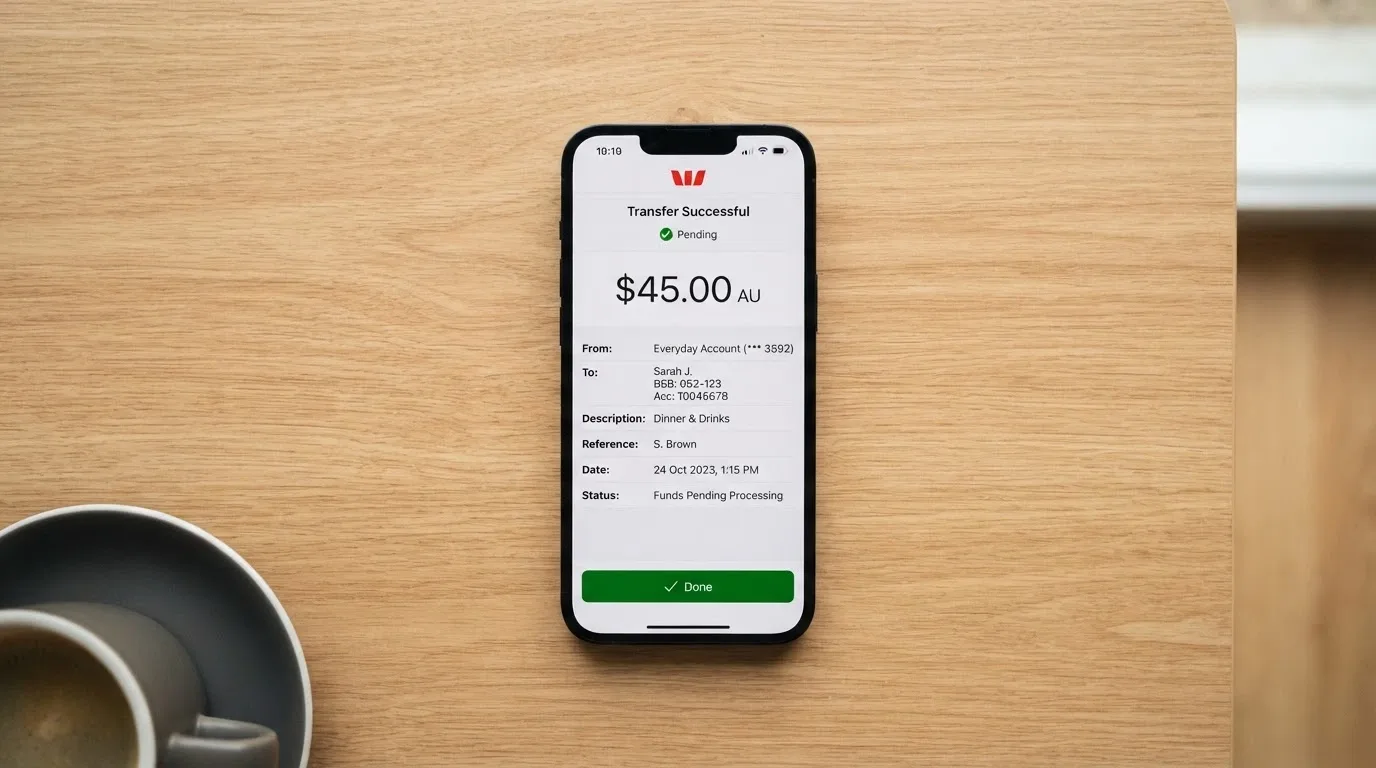
PayID is the Australian real-time payment rail that runs through the New Payments Platform (Osko) — most Australian bank apps use it for instant transfers under a phone number, email or ABN. For a punter, it is the one payment method where A$1 deposit is realistic at a verified AU-facing casino. SpinFever is the clearest verified example: PayID transfers from A$1 with no surcharge, with 20 free spins on Big Bass Splash attached.
PayID at A$1 is the exception in this market, not the rule. The featured operators above do not uniformly advertise a PayID floor at A$1. A punter who arrives at a comparison page and assumes the dollar works at every brand will find a cashier that asks for A$10 or more. The A$1 PayID route is real, and it is narrow.
Credit cards, e-wallets and the methods that do not reach A$1
Credit cards have been off the table for Australian online wagering since 11 June 2024, so the question of whether Visa or Mastercard reach the A$1 floor is moot — they cannot be used at all. Debit cards and standard e-wallets can be, but the floor is set by the casino’s payment processing rather than the punter’s bank. A$10 is the typical floor at most AU-facing operators for cards and wallets; A$5 to A$10 is the typical range for crypto — and crypto is itself banned for the purpose.
The honest answer to “what methods accept A$1” is two: PayID, where the casino has set the floor there, and crypto, which the Australian rules forbid. Everything else lands at A$10 or above.
A$1 Deposit Pokies on Mobile: What Works and What Doesn’t
Mobile is the dominant channel for Australian online gambling — 11% of Australians gambled online in the previous six months, up from 8% in 2020, and most of that traffic is on a phone. The A$1 deposit route works on a mobile in the same way it works on a desktop, because the floor is set by the payment method rather than the screen size. What changes is the friction.
A punter on a phone opens the casino in a browser, lands on the cashier and finds the same A$10 or A$20 floor they would have seen on a laptop. PayID works from a mobile banking app — the punter authorises the transfer in their bank’s app and the funds arrive within seconds. Crypto flows from a phone wallet if the punter has one, with the same June 2024 caveat about whether the casino should be accepting it.
Mobile deposit and play: the same limits, a smaller screen
No operator in the featured set runs a native iOS or Android app-store listing that an Australian can download. Play happens in the mobile browser, on the operator’s responsive site. The pokie games themselves are touch-optimised by their providers — Pragmatic Play, Play’n GO and NetEnt all ship mobile-first HTML5 builds — so the experience is close to native without the app-store layer.
The minimum deposit does not move between devices. A$10 on a desktop is A$10 on a phone. The same is true for the A$1 PayID floor at SpinFever — it is the cashier setting, not the screen. Game performance is the variable: an older phone on a slower connection will load pokies more slowly than a recent flagship on Wi-Fi, and touch controls on a five-reel grid are tighter on a smaller screen. The dollar buys the same number of spins either way.
Can You Really Win Real Money from A$1?
Yes, in the technical sense. A A$1 deposit unlocks real-money play — the spins run on a live game with a real-money balance — and a win is a win against the operator’s own RNG. Whether that win can be turned into a bank withdrawal is a different question, and the wagering requirement is the gate between the two.
The arithmetic is unforgiving. Twenty free spins at A$0.10 each on a 96.71% RTP title produces an average return of A$1.94 across the spins — a small loss against the A$2.00 of spin value. Most of those wins sit below the threshold the operator considers worth paying out. A lucky run that produces A$5 in free-spin winnings, against a 35× wagering requirement, needs A$175 in subsequent turnover before any of it can be withdrawn — and the A$50 max-cashout cap on that promotion means anything above A$50 is forfeited regardless of how the wagering runs.
Australian gambling winnings are not assessable income under section 6-5 of the ITAA 1997, unless a person is carrying on a business of betting, so there is no tax owed on a withdrawal. That is the only upside the Australian rules hand to a punter on this product. The IGA ban is not the only friction, and tax is not one of them.
Real-money withdrawals from a A$1 starting point
Turning a A$1 deposit into a withdrawable balance takes three things to align: a lucky run that produces enough winnings to clear the wagering hurdle, an operator that pays out on time, and a punter who has read the max-cashout cap on the bonus they accepted. The first is variance. The second is operational. The third is paperwork.
The reality at the offshore end is that the only authority over a withdrawal refusal is the operator’s own Curaçao licence — and Curaçao’s regulator is not the Australian Competition and Consumer Commission. A balance can be voided for irregular-play clauses that the punter never read. A withdrawal can sit “pending” long enough that the operator blocks the site itself with an Australian balance still on it. The Interactive Gambling Act 2001 does not protect the consumer in this situation because, in the regulator’s terms, the consumer was never meant to be playing at the site in the first place.
Crypto: The Only Reliable Path to a Genuine A$1 Deposit
Crypto is the deposit rail that genuinely hits the A$1 minimum at most AU-facing casinos. A bitcoin or USDT transfer does not run a card processor and does not pay the A$0.30 to A$0.50 in card fees that push the standard-method floor up to A$10. The result is that crypto minimums sit at A$5 to A$10 at most operators — closer to a dollar than any conventional method, but still not a dollar at the typical operator.
The Australian rules make this route a contradiction. Crypto is banned as payment for online wagering in Australia since 11 June 2024, alongside credit cards and credit-related products. A punter using crypto to deposit at an offshore casino is using a method the Australian regulator has explicitly prohibited for the purpose. The operator, based offshore, is not bound by the ban. The punter is.
The honest summary is this. If a punter wants the closest thing to a genuine A$1 deposit that actually clears the cashier, crypto is the rail. The rules say it should not be used at all. The choice between the two sits with the punter, not the page.
New A$1 Deposit Casinos: Fresh Faces, Same Offshore Reality
A new AU-facing casino brand launches regularly, and the marketing pushes the same A$1 deposit headline that the established brands use. The licence jurisdiction underneath does not change. Curaçao remains the dominant offshore licence for AU-facing casinos that accept micro-deposits, and the absence of an Australian casino licence — because none exists — is the same in 2026 as it was in any prior year.
For a punter evaluating a brand-new brand, the four checks are unchanged: licence number and validity, wagering multiple on the welcome bonus, max cashout on free-spin winnings and the validity window. A new brand without those four clearly stated on its terms page is a brand a punter has no way to evaluate, and the absence of evaluation is information in itself.
The “new casino” framing is marketing. The licence jurisdiction is structural. Both are visible on the same page of the terms.
The Legal Reality: Online Pokies Are Not Licensed in Australia
The Interactive Gambling Act 2001 (IGA) makes it an offence to provide an online casino game — including online pokies — to a person in Australia. There is no licence for online casino anywhere in the country, federally or in any state or territory. The market is structurally closed to providers, and every A$1 deposit pokies site an Australian sees is operating outside that structure.
The Interactive Gambling Amendment (Gambling Reform) Bill 2026 passed Parliament on 19 August 2026. Its measures commence 1 January 2027. The reform tightens the existing prohibition rather than opening any new category. It caps wagering advertising to no more than three ads per hour between 6:00 am and 8:30 pm, with a live-sport blackout from 15 minutes before to five minutes after a live event, and it gives banks and payment providers express authority to block transactions to illegal gambling operators. It does not legalise online pokies.
The IGA prohibition: what is banned and who enforces it
The Australian Communications and Media Authority (ACMA) enforces the online prohibition. It investigates complaints, issues formal warnings, directs ISPs to block illegal sites and pursues civil penalty proceedings. The civil penalties are large — up to A$2,475,000 per day for an individual and up to A$12,375,000 per day for a corporation providing a prohibited service. In January 2026, the ACMA issued eight infringement notices to Tabcorp Holdings Limited at A$19,800 each, totalling A$158,400, for providing prohibited in-play betting — the largest single enforcement action by the regulator in that quarter.
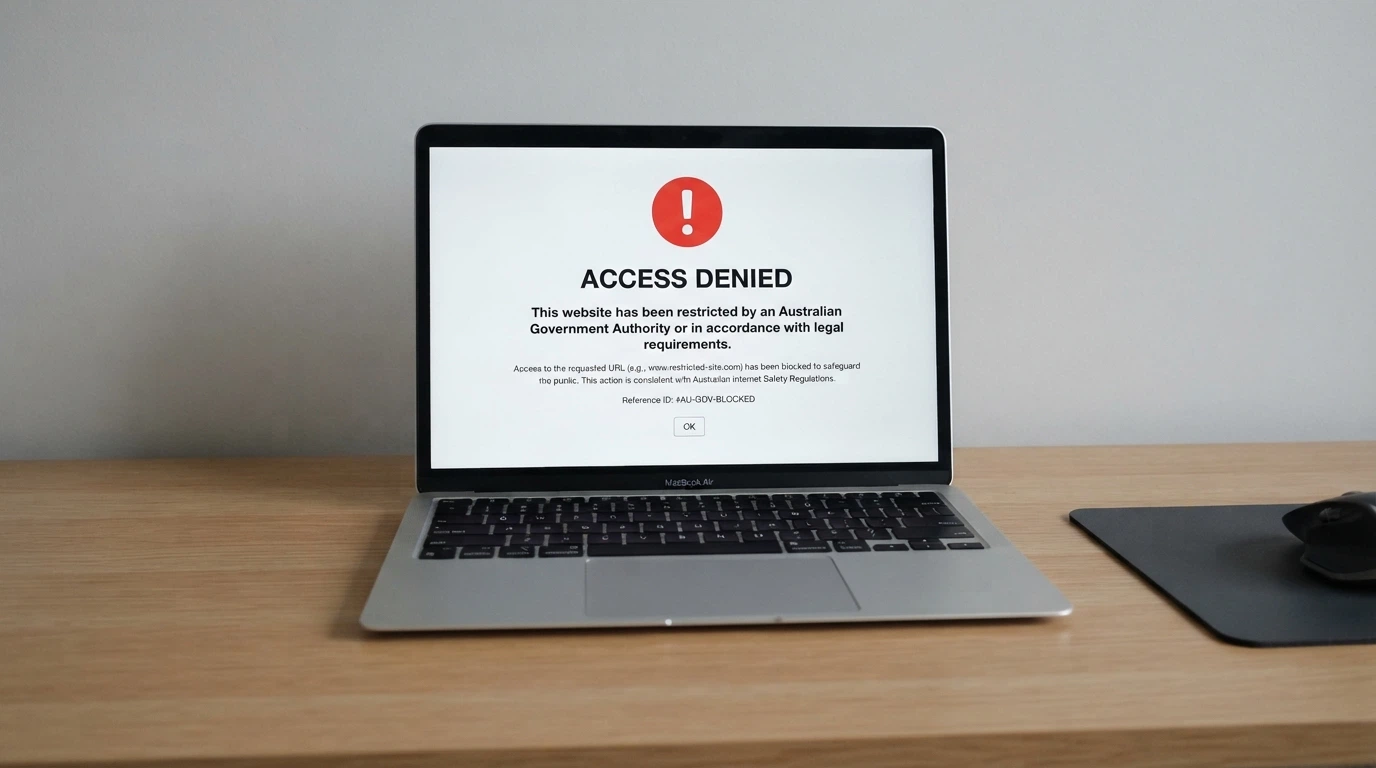
The enforcement record since the prohibition strengthened in 2017 is the visible evidence of how seriously the regulator treats the rules. Since November 2019, 1,788 illegal gambling and affiliate websites have been blocked by Australian ISPs. Over 230 illegal services have withdrawn from the Australian market since 2017. In Q4 2025 alone, the ACMA received 483 enquiries and complaints, found 420 valid complaints, completed 23 investigations into 45 gambling sites, found 69 breaches of the IGA, issued 10 formal warnings and referred 133 websites to ISPs for blocking.
The player is not prosecuted under the IGA — the law targets the provider. A punter can play at an offshore site without being charged with an offence. That fact is not the same as the site being legal. The site is illegal to provide. The punter is not illegal to play. The protection that comes with the licensed wagering system does not transfer to the offshore system, and that distinction is what the rest of this section is about.
What happens when things go wrong: no Australian consumer protection
A Curaçao licence does not give an Australian consumer the same protections as a state-licensed wagering operator. There is no local regulator to appeal to. There is no ombudsman scheme. There is no requirement to keep player funds in segregated accounts, no independent dispute resolution and no automatic refund mechanism for a voided win. The operator’s own terms are the contract, and the operator’s own licence is the only authority that can enforce them.
The Australian protection layer that does exist is set out in the safety section below. The gap between what that layer covers and what offshore casinos offer is the reason a self-excluded Australian punter is still able to deposit at every brand on this list. BetStop, the National Self-Exclusion Register, binds approximately 150 licensed wagering providers. The offshore casino on this page is not one of them.
The 2026 reform tightens the gap, but only on the licensed side. From 1 January 2027, banks and payment providers gain express authority to block transactions to illegal gambling operators. That authority is one-sided — it stops payments from reaching an offshore casino; it does not help a punter recover a balance that has already been accepted and refused by the operator. A withdrawal stuck in “pending” with an offshore brand is, after 1 January 2027, a withdrawal that the Australian banking system is supposed to be refusing to fund in the first place. That is a prevention mechanism, not a recovery mechanism.
Playing Safely: Deposit Limits, Self-Exclusion and Where to Get Help
The A$1 deposit floor is not a safety feature. It is a marketing line, and the harm-reduction tools that an Australian punter actually has sit elsewhere. The most important are BetStop, the National Gambling Helpline and Gambling Help Online.
The context is the scale of the problem. About 2.1% of Australian adults — roughly 430,000 people — experience problem gambling, with the Australian Institute of Health and Welfare putting high-risk gambling at 1.8% in 2022. Australians lose approximately A$25 billion on legal forms of gambling each year. Online participation has been climbing: 11% of Australians gambled online in the previous six months in 2022, up from 8% in 2020. Those figures are about the licensed market. The offshore market adds an unknown volume on top, and the offshore market is also where the A$1 deposit sites sit.
BetStop, the helpline and what actually reduces harm
BetStop launched on 21 August 2023. As of 31 March 2026, 59,830 people had registered to self-exclude, with 37,247 active exclusions. 78% of registrants were under 40, and 38% chose lifetime exclusion. BetStop binds approximately 150 licensed wagering providers. It does not bind an offshore casino.
The National Gambling Helpline is 1800 858 858 — free, confidential, staffed 24 hours a day, seven days a week. Online chat and counselling are available through Gambling Help Online. These are the first calls. They are the services that actually reach a punter, regardless of whether the casino they are playing at is licensed or offshore.
From 1 January 2027, the 2026 reform strengthens the licensed-system side of the framework further. Direct marketing of inducements is prohibited for 14 days after a customer signs up, for three months after deregistering from BetStop and indefinitely for customers identified as at risk. None of these protections apply to an offshore casino. The licensed system is being made safer. The offshore system is being made more blockable. The punter who is already at an offshore site has none of either set of protections.
For a punter who wants to set a deposit limit at an offshore casino, the option exists where the operator offers it — and it is worth testing the cashier before depositing any amount to see whether the limit can be set in dollars, what the minimum granularity is, and how long the limit takes to take effect. The setting is offered at the operator’s discretion. A punter who needs the setting as a condition of continuing to play should treat its absence as a reason to leave.
How We Selected and Ranked These A$1 Deposit Pokies Sites
The ten operators above were drawn from AU-facing affiliate comparison data and cross-checked against the ACMA’s public enforcement record and the licence jurisdiction each operator claims. The IGA prohibition frames the legality assessment — every brand on this list is offshore, and the ranking does not change that. What changes between brands is the offer structure and the depth of the terms research was able to confirm.
Ranking criteria, in the order applied: the deposit minimum (lower is more relevant to an A$1 deposit page), the bonus terms (wagering multiple, max cashout, validity window), the licence status (Curaçao is the baseline; an unverifiable licence is worse) and the game-provider mix (multi-provider is broader; a single-provider setup is narrower). No invented weightings or percentages sit behind the ranking. Where research did not return a figure, the cell is empty and the write-up is qualitative.
Every specific figure traces to a published source or an operator terms page. Where two sources disagreed — as they did on Rocket Play’s A$25 versus A$30 minimum — both figures are carried and the discrepancy is flagged. A reader comparing brands should weigh the figures against the gaps in the same way the page does: an em dash in a cell is a missing specification, not a green light.
So Should You Deposit That Dollar? What the Numbers Actually Say
The verdict the numbers support is that A$1 deposit is real but narrow, and the cost lives in the wagering terms rather than the deposit field. A punter who deposits a dollar at SpinFever gets A$2 in free spins, A$70 in required turnover to clear the bonus and a A$50 maximum cashout on the winnings. The expected loss on that bonus — what the wagering requirement costs in statistical terms once the spins play out — is A$2.30. A punter who deposits at FairGO triggers a 100% match with a A$200 maximum and 30× wagering, the lowest in the set. A punter who deposits at Rocket Play does not actually trigger the welcome bonus until A$25, which is the first thing the comparison table above shows.
None of those offers is backed by an Australian licence — the legal section set out why. The operator table above shows what each brand offers; the offshore reality it sits inside is the structural feature the ranking does not change. Every payment method runs through a network the Australian rules have either not blessed or actively prohibited. Every dispute sits outside Australian consumer law. BetStop does not bind any of the operators. The helpline does, and the helpline is the service a punter should know about before the dollar is deposited.
For a punter with a small bankroll who is happy to spend a dollar on twenty free spins on a single title, with the explicit understanding that the cost is the entertainment budget rather than a deposit that will be returned, the A$1 route works as a trial. For a punter who expects the dollar to grow into a meaningful balance that can be withdrawn, the numbers on this page are the reason that expectation does not survive the wagering hurdle. The punter should never deposit more than they are prepared to lose, and the A$1 headline is the cleanest reminder of that rule the segment offers.
Frequently Asked Questions
Can I really deposit just A$1 at an Australian online casino?
Yes, at a small number of offshore casinos, and through a narrow set of payment methods. PayID is the most common route that genuinely hits the A$1 floor. Standard cards and e-wallets land at A$10 or above. Credit cards and crypto are banned for online wagering in Australia since June 2024, so any site accepting them is operating outside Australian rules.
What bonuses can I get with a A$1 deposit?
The genuine A$1 bonus is a free-spin bundle on a single title. SpinFever’s 20 free spins on Big Bass Splash at A$0.10 each, with a A$50 max cashout, is the clearest example. The bigger welcome packages — SkyCrown’s A$4,000 across five deposits — start at A$25 or A$30, well above the dollar headline.
How many free spins do I get for A$1?
The verified count is 20 to 30 free spins. SpinFever is 20 spins at A$0.10 each on Big Bass Splash, with 35× wagering. KatsuBet’s A$1 promotion is 30 spins at A$0.20 each on Sweet Bonanza, with 40× wagering and a A$100 max cashout. Per-spin values, not cash credits.
What are the wagering requirements on A$1 deposit bonuses?
Wagering multiples on A$1-deposit free-spin bundles run from 35× to 40×, applied to winnings rather than the deposit. SpinFever is 35×; KatsuBet, WinSpirit and Bizzo sit at 40×; FairGO and Rocket Casino carry 30× on their matched-deposit bonuses. At 96.71% RTP, the statistical cost of clearing A$70 in turnover is around A$2.30.
What happens if an offshore casino refuses my withdrawal?
An Australian punter has no local regulator to appeal to. The IGA targets the provider, not the customer, so there is no Australian consumer protection on the offshore product. The Curaçao licence is the sole authority. Document the request, check the terms for max-cashout caps and contact the Curaçao regulator directly as a last resort.
Published by the No Deposit Bonus Casino AU team.