
Best Paying Online Pokies Australia: Where the Real Money Actually Returns
Data current as of 22 November 2026 and checked against ACMA enforcement records, BetStop quarterly statistics and independent August 2026 payout testing.

A pokie at 99% return-to-player looks unbeatable on paper. A venue machine capped at 87% feels insulting by comparison. The gap between those two numbers, around twelve cents on every dollar, is where the entire conversation about “best paying” lives. But the percentage is only the start of the decision. How fast the winnings arrive, whether the operator actually releases them, and what protections sit behind the cashier are the other three legs of the stool. Strip any one of them away and the highest RTP in the catalogue becomes academic.
This page works through all four. The first section sorts out what “best paying” actually measures and why the venue-versus-online gap exists. The second ranks fourteen real-money pokies by their published RTP, the highest-payout games Australians can access right now. The third compares ten offshore casinos on the terms that determine whether a welcome bonus pays out or disappears. Then payout speed, then the legality landscape that makes every operator on the page sit outside Australian licensing, and finally a closing checklist for the deposit that comes next.
Table of Contents
- Why “best paying” means more than a single number
- The highest-RTP online pokies Australians can actually play in 2026
- The 10 offshore casinos that pay best on pokies — ranked for 2026
- How fast your winnings actually land — payout speed tested
- Why every pokies site you can play from Australia is offshore — and what that costs you
- How we picked and ranked the best-paying pokies sites
- What to do next — picking a high-paying pokies site you can trust
- Frequently asked questions
Why “best paying” means more than a single number
What “best paying” actually means — RTP and house edge
Return-to-player, or RTP, is the long-run share of every wagered dollar a pokie returns to players as winnings. A 96% RTP game gives back, on average, ninety-six cents of every dollar fed through it. The other four cents is the house edge: the operator’s built-in margin, the cut the pokie keeps regardless of how any individual session runs.
The two numbers are arithmetic twins. A 96% RTP pokie has a 4% house edge. A 99% pokie has a 1% edge. Over ten thousand spins at A$1 each, that 3% difference accumulates to roughly A$300. Over a hundred thousand spins, it crosses A$3,000. The percentage point is small; the dollar figure is not.
Most online pokies from major studios sit between 94% and 97% RTP. The spread looks narrow on a screen, but it is wide in practice. A pokie at the bottom of that range returns A$94 for every A$100 wagered; one at the top returns A$97. That A$3 difference, applied across a long enough session, separates a break-even week from a quietly profitable one. Most players never measure their session length in those terms, which is part of why the gap persists.
Land-based venues tell a different story. New South Wales mandates a minimum 85% RTP for its poker machines, Victoria 87%. The gap to online is not subtle. Roughly ten percentage points separate the floor of a NSW pub from the median of a Curacao-licensed online catalogue. Why the difference? Venues carry rent, staff, regulatory overhead and state taxes. Online operators carry a server bill and a marketing budget. The economics of physical premises bleed into the payout floor.
RTP also has a conditional reading that the marketing rarely mentions. Mega Joker, for example, runs at a theoretical 99.00% RTP, but only in Supermeter mode. The base game sits closer to 76.9%. The headline number is accurate, but it is the number for a specific way of playing. Nobody plays the base game, so 99% is the meaningful figure. A punter who treats every published RTP as unconditional has already misread the data.
The Australian online casino formats that pay
Online pokies reach Australian players through three formats: a downloadable desktop client, an instant-play browser version and a mobile-first app. The format itself is not what determines the payout. The RTP is set by the operator’s build of the game, the same back-end mathematics regardless of whether the player loads it on a laptop in a browser or spins it on a phone through an app.
What changes between formats is convenience. Browser casinos need no install, which is why most Australian players default to them. Mobile apps, increasingly common as smartphone play dominates the market, often deliver identical RTP to their desktop equivalents. The one place a format can shift the numbers is in demo or “fun” mode: those sessions typically run on a separate, often lower-volatility build, and they do not pay real money. Distinguishing real-money play from demo mode is the first practical distinction any punter needs to make.
Real-money play and the mobile shift
Real-money play means the spins are wagering actual Australian dollars and any return credits back to a withdrawable balance. Demo or fun play means the spins are free, the balance is fictional, and no withdrawal exists regardless of how big the on-screen number gets. The two are sometimes toggled inside the same game client, and the toggle is the only thing standing between practice and commitment.
Mobile play has quietly become the default. The ANU’s 2025 gambling participation study found online gambling reached 56.1% participation among Australians who gambled at all. That figure captures the shift: the laptop is no longer the centre of gravity. Mobile-first design, vertical-orientation reels, one-handed bonus buy buttons, these are the conventions the major studios now design around. RTP is not affected by the device. The pay-table sits on the same server. What the device changes is where the session happens and how often a punter can reach for the cashier, which is its own kind of risk worth naming.
The highest-RTP online pokies Australians can actually play in 2026
Highest RTP pokies — the top titles ranked
The table below ranks every online pokie whose published RTP could be backed by a primary source, sorted highest first. Provider, volatility and max-win columns appear only where research carries a confirmed value.

| Pokie title | RTP | Provider | Volatility | Max win |
|---|---|---|---|---|
| Mega Joker | 99.00% (Supermeter) | NetEnt | — | — |
| Book of 99 | 99.00% | Relax Gaming | High | 12,075× |
| 1429 Uncharted Seas | 98.60% | Thunderkick | Low | 670× |
| Blood Suckers | 98.00% | NetEnt | Low | 900× |
| White Rabbit Megaways | 97.72% | Big Time Gaming | High | 13,029× |
| Immortal Romance | 96.86% | Microgaming | — | — |
| Dead or Alive 2 | 96.82% | NetEnt | Very high | 111,111× |
| Razor Shark | 96.70% | Push Gaming | Very high | 25,000× |
| Sweet Bonanza | 96.51% | Pragmatic Play | High | 21,175× |
| Gates of Olympus | 96.50% | Pragmatic Play | High | 5,000× |
| Book of Dead | 96.21% | Play’n GO | High | 5,000× |
| Starburst | 96.09% | NetEnt | Low-medium | 500× |
| Wolf Gold | 96.01% | Pragmatic Play | Medium | — |
| Mega Moolah | ~96% total (88.12% base) | Microgaming | Medium | Progressive |
Two titles share the top spot at 99.00%, but they get there by different routes. Mega Joker’s 99% applies only when the Supermeter is active; the base game is closer to 76.9%, a number nobody would ever quote. Book of 99 hits the same mark on standard play, with high volatility and a max win just over 12,000× the stake. The cluster below it — 1429 Uncharted Seas, Blood Suckers, White Rabbit Megaways — sits in the 97% to 98.60% band and behaves very differently from the 99% outliers. Lower volatility, more frequent but smaller wins, sessions that last longer per dollar.
The bulk of the catalogue falls between 96% and 97%. That is where the familiar titles live: Book of Dead, Starburst, Wolf Gold, Sweet Bonanza, Gates of Olympus. Immortal Romance sits at 96.86%, slightly above the median of the band. Mega Moolah is a separate case entirely, discussed below.
RTP variants — same game, different payout
The number on a pokie’s pay-table is not necessarily the number on your screen. Operators can load different RTP builds of the same title, and the player has no way to tell from the loading screen. Starburst is the clearest example: the same NetEnt release ships in 92%, 94%, 96.09% and, rarely, 99% variants. The default is 96.09%, but an operator who chooses a lower build is free to do so.
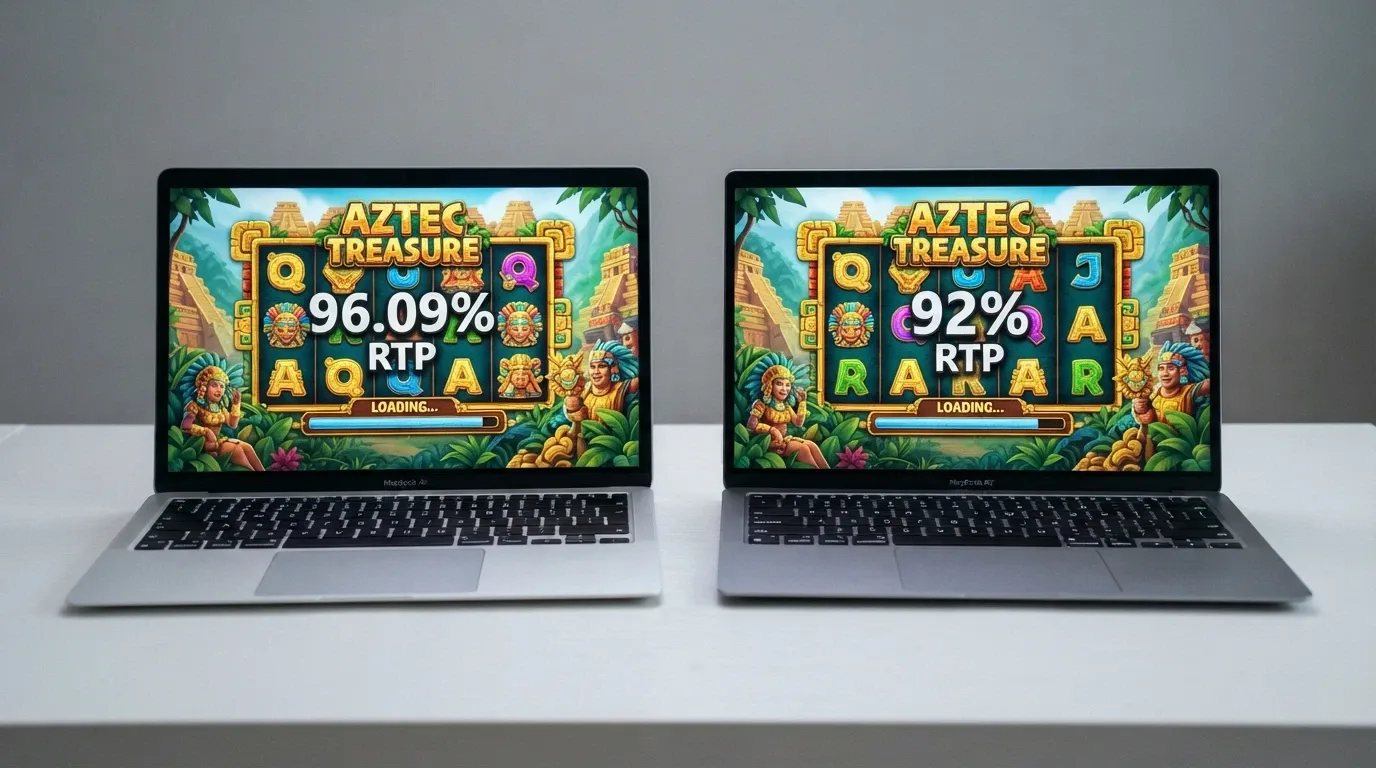
Why would an operator run a lower-RTP version? Margin. The three to four cents per dollar difference adds up across a large player base and lets the operator offset bonus costs, marketing spend or a thinner house edge on table games. The player sees the same title screen either way.
The only reliable check is the in-game help or rules screen, which lists the theoretical return for the version actually loaded. If the number does not match what a review site or the developer’s published spec states, the build the player is sitting on is the lower one. None of the featured operators on this page publishes per-game RTP variants openly, and research did not surface a per-operator build inventory. The principle is the one to keep in mind; the specific verification has to happen at the game client itself.
Online pokies vs venue machines — which pay more
The direct comparison makes the case without nuance. A NSW pub sits at an 85% RTP floor; a Victorian club, 87%. The online median sits at 94% to 97%. That is a seven to twelve percentage point gap, every session, every spin. Over a year of regular play the gap runs into thousands of dollars.
Venue economics explain the floor. A poker machine in a club earns the venue rent, staff time, compliance overhead and state taxes. The minimum RTP reflects what the venue can sustain while still turning a profit. Online operators carry a fraction of that overhead, and the savings pass through to the return rate. The trade-off, and it is a real one, is consumer protection. A NSW club falls under state gaming regulation; an offshore online casino does not fall under any Australian regime at all.
Progressive jackpots — big prize, lower base RTP
Mega Moolah is the showcase example and the clearest warning. The headline figure, ~96% total theoretical return, hides an 88.12% base game. The missing seven points is the jackpot contribution: a slice of every wager feeds the progressive pool, which is why the total return sits higher than the base, and why the Mega jackpot seeds at over A$1,000,000 between resets.
The Mega jackpot record stands at A$20,062,600, paid in 2015 and logged by Guinness. A second major payout of €18,910,668 followed in September 2018. Both figures circulate widely; both are real events. The odds of hitting the Mega on any individual spin are roughly 1 in 50 million. A punter chasing that prize is paying for the chance through a base RTP that is meaningfully below the catalogue median.
For a session of a few hundred spins, Mega Moolah behaves like an 88% pokie with a lottery ticket stapled to it. Over enough spins to feed the jackpot mechanically, the total return drifts back toward 96%, but the variance along the way is enormous. The right framing is that a progressive is two products bolted together: a below-average base game and a separate, low-probability draw. Neither part makes it the “best paying” pokie in the catalogue; both parts explain why it is among the most popular.
Volatility vs RTP — what each one tells you
RTP answers one question: over a long stretch, how much of every dollar comes back. Volatility answers a different one: how that return is distributed. A low-volatility pokie returns most of its RTP through frequent small wins. A high-volatility pokie returns its RTP through rare but large payouts, with longer stretches of small losses in between.
The two interact in ways that catch players out. Dead or Alive 2 carries a 96.82% RTP and a very high volatility rating, with a 111,111× max win. The session-to-session feel is swings: long dry patches, then occasional large hits. Blood Suckers, at 98% RTP and low volatility with a 900× max win, behaves the opposite way. Smaller wins, more of them, less variance.
For a player with a small bankroll and a short session, low volatility stretches the money further even at a slightly lower RTP. For a player chasing a big score and willing to ride out the dry patches, high volatility offers a path that low-volatility games simply do not. Book of 99 and 1429 Uncharted Seas sit at opposite ends of that trade-off within the 98% to 99% cluster. The percentage is similar; the experience is not.
The 10 offshore casinos that pay best on pokies — ranked for 2026
Every brand in this section is an offshore casino. No Australian online casino licence exists, federally or in any state or territory, so a locally licensed alternative to these operators does not exist. They are ranked on the terms that determine whether the bonus structure pays out: licence, welcome offer, wagering and the speed at which winnings arrive. Individual write-ups follow the comparison table.

| Operator | Licence | Welcome bonus (first deposit) | Wagering |
|---|---|---|---|
| SkyCrown | Curacao | 450% up to A$8,000 across 4 deposits | 40× bonus |
| RocketPlay | Curacao | 100% up to A$500 + 100 FS (1st dep); 200% up to A$500 (2nd dep) | 40× bonus |
| WinSpirit | Curacao | 200% + 25 FS | 40× |
| Royal Reels | Curacao | 100% up to A$500 (min A$30) + A$10 no-deposit | 30–40× |
| Fair Go | Curacao eGaming | 100% up to A$200 × 5 deposits (A$1,000 total) | 30× (deposit+bonus) |
| Bizzo Casino | Curacao | Up to A$7,250 + 175 FS across 4 deposits | 40× |
| Stake | Curacao | — | — |
| Rainbet | Anjouan | First-deposit promo, min A$30 / max qualifying A$700 | 40× first-deposit balance |
| Scream Casino | — | — | — |
| Fastpay Casino | Curacao (OGL/2023/174/0082) | — | — |
A bonus’s wagering multiple is what determines whether the headline number ends up in the player’s balance or in the operator’s. A 40× requirement on a A$500 bonus means A$20,000 of turnover before any withdrawal is possible, an estimate whose real cost is computed later in this section. Caps on cashouts shrink the upper end of any win. Validity windows shorten the calendar. The table carries what research confirms; cells without a confirmed value stay blank, because an invented entry there would do more damage than the gap.
What the bonus actually costs the player
A welcome bonus looks like free money until the wagering requirement is applied. The arithmetic is straightforward: required turnover equals the bonus multiplied by the wagering factor. For SkyCrown’s first-deposit tier, at 40× wagering on a A$500 bonus, that works out to A$20,000 of qualifying wagers before any withdrawal unlocks.
The cost of clearing that turnover is the expected loss: turnover multiplied by the house edge, where the house edge is one minus the RTP. At a 96% RTP pokie, the house edge is 4%. A$20,000 of turnover multiplied by 4% gives an expected loss of A$800, before any winnings are even counted. At 94% RTP, the same turnover costs A$1,200 in expected loss. The bonus number on the page is not the number the player walks away with; the difference between bonus and expected loss is where the marketing hides.
A representative worked example using RocketPlay’s A$500 first-deposit tier makes the trade-off visible. At 40× wagering, the player must turn A$20,000 through the games before the bonus and any associated winnings become withdrawable. At a 96.5% RTP pokie, the expected loss on that turnover is roughly A$700. The headline A$500 bonus therefore carries an expected cost of about A$700 to clear, which means a player who claims and clears the bonus walks away with less than they would have walked away with by skipping it and playing the same A$20,000 directly. The bonus is a marketing number that becomes a negative number the moment the math is done. Smaller bonuses at 30× wagering, and higher-RTP pokies at 97%+, shift the calculation back toward the player, but the direction of the trade is the same across the catalogue.
SkyCrown
SkyCrown runs a Curacao licence and leads the comparison table on the strength of its 450% headline, spread across four deposits for up to A$8,000 in bonus funds. Four hundred free spins ride alongside, parceled out across the same deposits on Wolf Treasure, Coin Volcano, 15 Dragon Pearls and Mighty Wild: Panther. The wagering requirement is 40× on the bonus amount, with a 14-day validity window that compresses to 5 days at the high-roller tier. Free-spin winnings carry the same 40× multiplier.
The structure is a volume play. A player who wants to clear the full A$8,000 needs to turn over more than A$300,000 across the four deposits combined, at 40× wagering. The maximum cashout on the welcome bonus sits at A$5,000, a cap that quietly cancels any run past that figure regardless of what the bonus meter reads. SkyCrown’s game library spans 70+ studios including Pragmatic Play, Play’n GO and BGaming, which is where the catalogue depth argument earns its weight. For a player with a large bankroll and the discipline to play through high-RTP titles consistently, SkyCrown offers the most bonus dollars per deposit. For anyone else, the structure rewards careful reading of the terms before the first deposit clears.
RocketPlay
RocketPlay runs a Curacao licence and a two-deposit welcome that reads more cleanly than the multi-deposit competitors. The first deposit matches 100% up to A$500 with 100 free spins attached; the second deposit matches 200% up to A$500. Wagering is 40× on the bonus amount, with 14 days to clear. No-deposit caps where applicable sit at A$50 to A$100.
The offer is smaller in headline than SkyCrown’s but easier to track. Two deposits, one bonus each, no fourth-tier high-roller complications. The provider list covers BGaming, Pragmatic Play and Platipus, a narrower set than the leaders but enough to load the high-RTP titles from the table earlier in this page. RocketPlay suits a player who wants a clear bonus shape and is comfortable working through two deposit cycles rather than four.
WinSpirit
WinSpirit runs a Curacao licence and a compact welcome offer: a 200% bonus plus 25 free spins, with 40× wagering on the bonus. The game library is multi-provider, but the specific studios were not confirmed in this run’s research, so the catalogue depth cannot be quoted with certainty.
Validity and maximum-cashout terms did not surface in the checks for this page. That gap matters: a 200% bonus at 40× wagering has a real expected cost, and whether the player walks away with anything depends on terms that could not be verified. Treat the offer shape as indicative rather than complete, and read the operator’s own terms page before depositing.
Royal Reels
Royal Reels holds a Curacao licence and offers a 100% match up to A$500 on a minimum A$30 deposit, plus a small A$10 no-deposit chip to start. Wagering sits at 30× to 40× depending on which bonus is being cleared, and the provider list runs to 30+ studios including Pragmatic Play, Evolution, Yggdrasil and Hacksaw Gaming.
The no-deposit entry is the differentiator here. Most competitors on this page require a deposit before any bonus activates; Royal Reels hands over A$10 in playable funds on registration. The catch is the bonus type: chip-based, not spin-based, with its own wagering track. Validity terms were not confirmed in the research for this page. The no-deposit chip suits a player who wants to test the cashier and the game client before committing their own funds.
Fair Go
Fair Go is the RealTime Gaming-only operator in the set. Curacao eGaming has covered the brand since 2017. The welcome structure is five deposits, each matched 100% up to A$200, for a total headline of A$1,000. Wagering is 30× on the deposit-plus-bonus amount for the matched deposits, but climbs to 60× on no-deposit chip winnings. The validity window is 7 days, shorter than any competitor on the page. Maximum cashout on no-deposit chips is capped at A$180.
RTG-only is a meaningful constraint. The catalogue does not carry NetEnt, Play’n GO, Thunderkick or Push Gaming. Blood Suckers, Book of 99, Razor Shark and Gates of Olympus are simply not available here. The welcome bonus is also chip-based rather than free-spin-based, which makes the playthrough track different from competitors. Fair Go suits a player who specifically wants an RTG experience and is comfortable with the shorter validity window.
Bizzo Casino
Bizzo runs a Curacao licence through TechSolutions Group N.V., launched in 2021. The headline figure is the largest on the page: up to A$7,250 in bonus funds plus 175 free spins, spread across four deposits. The first-deposit tier is 125%, requiring a A$250+ deposit to unlock the top rate, with 40× wagering on the bonus. Ten free spins are available without deposit through the progressive web app installation, capped at A$75 maximum cashout.
The game library is wide: 70+ studios including Pragmatic Play, Play’n GO, BGaming and Hacksaw. Validity terms for the welcome package were not confirmed in this run’s research. The headline is striking; the volume of turnover needed to clear a A$7,250 bonus at 40× is also striking. A player considering Bizzo should weigh the same expected-loss arithmetic as SkyCrown’s structure, scaled up.
Stake
Stake runs a Curacao licence and a multi-provider library that includes Pragmatic Play, Evolution, Hacksaw Gaming and Nolimit City. The game depth is the headline asset here. Stake carries one of the largest active user counts in the offshore-casino space, which translates into liquidity on the original games, table-stakes variety and a live dealer catalogue that is hard to match.
Welcome-bonus terms did not surface in this run’s research. Stake has historically operated closer to a rakeback-and-rewards model than a matched-deposit model, but the current welcome structure was not verifiable for this page. Treat the absence as a gap rather than a finding, and check the operator’s own promotions page before depositing. The market presence and provider depth make Stake worth a look; the terms on which the welcome bonus currently sits are not quoted here because the data is not on hand.
Rainbet
Rainbet is the only Anjouan-licensed operator on the page (licence reference ALSI-152406029-FI2). The first-deposit promotion requires a minimum A$30 deposit and caps qualifying funds at A$700, with 40× wagering on the first-deposit balance. Free spins on Sweet Bonanza come attached, with 40× wagering on the spin winnings.
The provider list covers Pragmatic Play, Play’n GO, Red Tiger, NetEnt, Thunderkick, Novomatic and Spinomenal, which is wide enough to load most of the high-RTP titles from the table earlier. Validity terms were not confirmed in this run. The A$700 cap on qualifying deposit is unusually low for a first-deposit match, which makes Rainbet a smaller-scale offer than the multi-thousand-dollar headlines elsewhere.
Scream Casino
Scream Casino appears in this ranking on the basis of operator-skill data showing AU market presence. Licence, providers and bonus terms were not confirmed in this run’s research. The brand has AU traffic, which is enough to keep it in the ranking, but not enough to populate the comparison table or a detailed write-up.
What can be said without invention is that the operator is in the offshore space, the AU market sees the brand, and any specific feature claim sits outside what was verifiable for this page. A punter considering Scream Casino should expect to verify the licence, the bonus shape and the game provider set on the operator’s own site before depositing. The rank reflects presence, not terms.
Fastpay Casino
Fastpay Casino runs a Curacao licence (reference OGL/2023/174/0082 per Slotozilla) and claims a 4,000+ game library, the largest catalogue size on this page. Bonus terms were not confirmed in this run’s research. The brand name implies payout speed, and the game count is the verifiable selling point.
A 4,000-game library gives the operator the depth to host essentially every high-RTP title from the table earlier, plus niche and exclusive releases. Welcome bonus specifics were not verifiable for this page. A player drawn to Fastpay on catalogue breadth should confirm the current welcome offer and the associated wagering terms directly with the operator.
How fast your winnings actually land — payout speed tested
Withdrawal speed by method — what real testing found
Independent August 2026 testing produced these median payout times across the major deposit routes: crypto at 42 minutes, PayID at 2 hours, e-wallets at 6 hours, Visa and Mastercard at 2 working days, and bank transfer at 3 working days. The fastest single PayID result clocked in under 10 minutes.
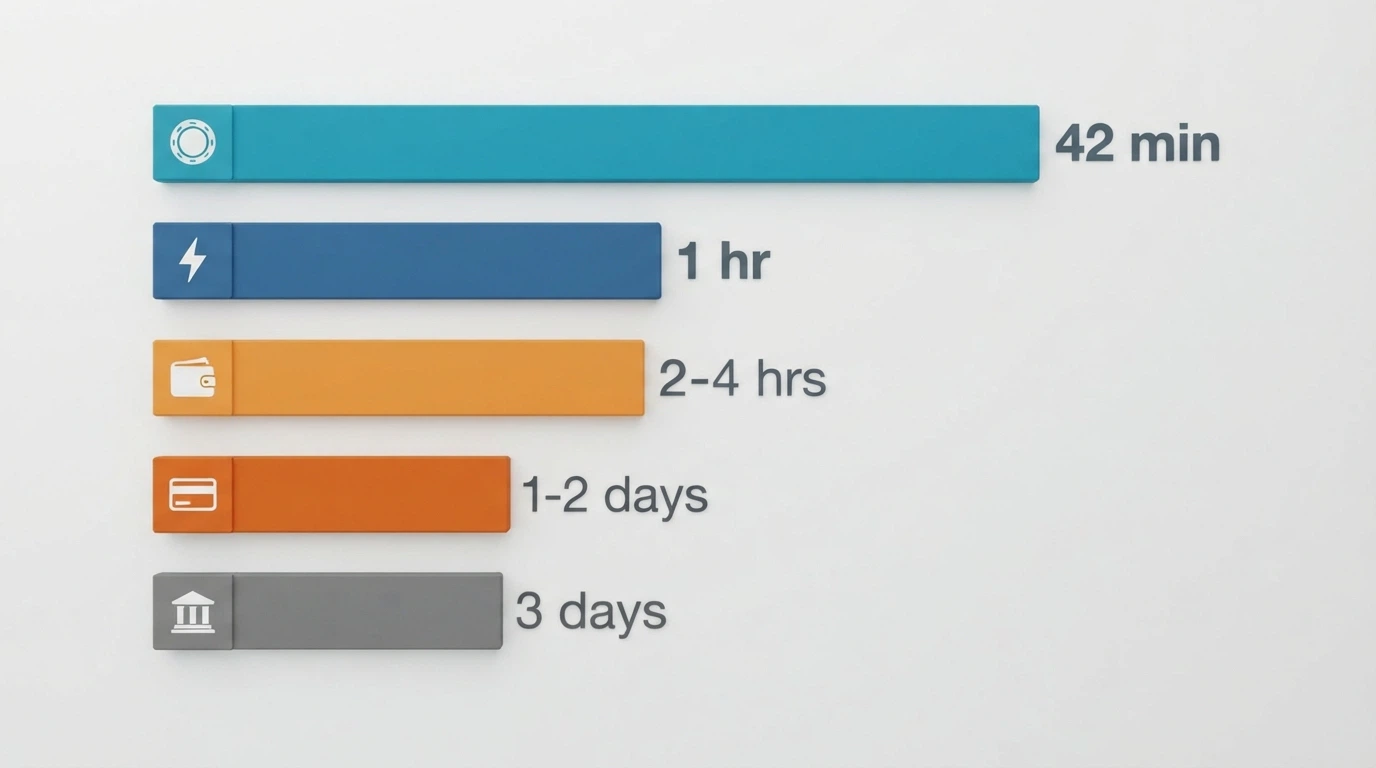
The gap between deposit speed and withdrawal speed is the thing to watch. PayID deposits clear in under 30 seconds any day of the week. PayID withdrawals clear in a median of 2 hours. The deposit side feels instant because it is instant; the withdrawal side feels slower because the operator’s pending period and verification hold sit between the cashout request and the funds arriving. Crypto sits at the opposite extreme: the median is fastest overall at 42 minutes, but crypto is banned as a deposit method for licensed Australian wagering, which means using it implies the operator sits outside that regime.
POLi, the once-dominant AU instant-deposit method, was decommissioned on 30 September 2023. Any site still advertising POLi is operating on stale payment pages.
How payout terms shape what “best paying” really means
A 98% RTP pokie that pays in 3 working days is, in practical terms, a better deal than a 99% pokie whose operator caps the welcome bonus cashout at A$180 and holds withdrawals in pending for a week. The headline number is not the only number; it is sometimes the least important one.
Cashout caps are the most common brake. SkyCrown’s welcome bonus caps at A$5,000, meaning any winnings above that figure disappear at withdrawal regardless of how the bonus meter reads. Fair Go’s no-deposit chips cap at A$180. Pending periods vary by operator and are rarely published in plain numbers; a 24-hour to 72-hour internal review is common. Verification holds, triggered by the first withdrawal or by a payout above a threshold, can stretch the timeline further when document checks are involved.
The fastest route on the page is the one whose mechanics suit the player’s needs: PayID for domestic speed on smaller balances, BPAY for high-limit deposits where business-day processing is acceptable, crypto for the fastest overall withdrawal time where the regulatory implications are acceptable to the player.
PayID and crypto — the fastest routes in 2026
PayID runs on the Osko rail, which is why deposits clear in under 30 seconds any day of the week. The same rail handles withdrawals, where the August 2026 median sat at 2 hours and the fastest test result came in under 10 minutes. PayID is a domestic system, accessible through any AU bank that supports the protocol, and it carries no offshore-casino stigma in the way crypto does.
Crypto is the fastest overall, at a 42-minute median, but credit cards and crypto have been banned as payment methods for licensed Australian wagering since 11 June 2024. The ban applies to operators licensed under Australian regimes. Offshore casinos accepting crypto are not bound by that rule, which is why crypto deposits at any of the operators on this page imply the operator sits outside Australian consumer protection entirely.
BPAY is the high-limit fallback. Some banks allow A$20,000+ per BPAY payment, and the rail processes on business days only, with no instant-withdrawal option. For a player moving a large balance in one shot, BPAY is the practical route. For daily top-ups, PayID wins on speed.
Why every pokies site you can play from Australia is offshore — and what that costs you
The Interactive Gambling Act — no licence, no local operator
The Interactive Gambling Act 2001 makes it an offence to provide online casino games and online pokies to a person in Australia. No licence category exists, federally or in any state or territory, for the product the operators on this page sell. The Australian Communications and Media Authority is the federal regulator that enforces the prohibition.
The Act targets the provider, not the player. Individual Australians who deposit at an offshore casino are not prosecuted. The penalty structure runs against the operator offering the service, with fines and site-blocking orders sitting on the operator side of the transaction. That asymmetry is why offshore casinos continue to accept Australian customers: the demand exists, the supply is offshore, and the regulator reaches the supply rather than the demand.
Enforcement has been active. Since the ACMA’s first blocking request in November 2019, 1,564 illegal gambling and affiliate websites have been blocked by Australian ISPs as of March 2026. More than 225 illegal services have withdrawn from the Australian market since enforcement was strengthened in 2017. The pace has been steady rather than dramatic, but the direction is consistent.
What playing offshore actually costs you
The protections an Australian punter gives up the moment they deposit offshore are concrete. None is abstract, and each one matters when something goes wrong.

- No BetStop coverage. BetStop is Australia’s national self-exclusion register, with 59,830 registrations and 37,247 active exclusions as of 31 March 2026. The register connects to every AU-licensed wagering service. Offshore casinos do not connect to BetStop. A self-excluded player who deposits offshore has not self-excluded; the operator has no mechanism to refuse them.
- No Australian consumer-law recourse. A refused withdrawal, a voided win, a bonus term applied retroactively: none of these disputes can be escalated to the Australian Financial Complaints Authority or to a state consumer tribunal. The operator sits outside Australian jurisdiction.
- Site blocking can leave balances inaccessible. The ACMA blocks sites at the DNS level. If a balance sits on a blocked site, the player cannot reach the cashier to withdraw it. The funds are not confiscated; they are simply unreachable from an Australian connection.
- Payment method is a regulatory tell. A credit card or crypto deposit at a gambling site indicates an offshore operator outside the AU rules, since June 2024. The payment method itself signals the regulatory regime the operator runs under.
- Bank blocking from January 2027. From 1 January 2027, banks and payment providers gain express authority to block transactions to illegal gambling operators. Existing deposit routes may stop working without warning.
The protections on the licensed side are not trivial. BetStop alone reaches across every AU-licensed bookmaker with a single registration. Offshore play sits outside that net.
The 2026 reform and what changes for pokies players
The Interactive Gambling Amendment (Gambling Reform) Bill 2026 passed Parliament on 19 August 2026. Its measures commence on 1 January 2027. Three of them directly affect the offshore-pokies landscape.
First, online keno (referred to in marketing as “pocket pokies”) and foreign-matched lotteries are banned outright from 1 January 2027. The keno ban is the closest direct hit to the pokie-adjacent product: same device, same session pattern, different label. Second, banks and payment providers gain express authority to block transactions to illegal gambling operators. A deposit that worked in December may fail in January without explanation. Third, inducement marketing is prohibited for 14 days after a customer signs up and for three months after a person deregisters from BetStop, with the at-risk customer category protected indefinitely. The wagering-advertising rules tighten alongside: a maximum of three wagering ads per hour between 6:00 am and 8:30 pm, a live-sport blackout starting 15 minutes before and ending 5 minutes after a live event, and a bar on athletes, celebrities and influencers promoting wagering products.
The cumulative effect is a tighter perimeter around the licensed market and a less hospitable payments environment for the offshore one. None of the measures legalises offshore play; all of them raise the cost of accessing it.
Responsible gambling — the harm numbers and where to get help
The Australian harm data is stark and trending upward. About 430,000 Australian adults experience problem gambling, roughly 2.1% of the adult population. Risky gambling climbed from 13.7% in 2024 to 19.4% in 2025, almost double the COVID-era baseline. Approximately 3.29 million Australians aged five and over are affected annually by their own or another person’s gambling, including around 1.38 million adult affected others and roughly 280,000 affected children. Annual health loss associated with gambling-related harm in Australian adults is estimated at over 400,000 Years Lived with Disability.

Electronic gaming machines carry the strongest association with higher-risk gambling: an odds ratio of 8.0 in the HILDA study, compared with 2.3 for race betting and 1.5 for sports betting. Australians lose approximately A$25 billion on legal forms of gambling each year. Aboriginal and Torres Strait Islander Australians face gambling harm at 27.1%, compared with 14.6% for the non-Indigenous population.
The services that work are free, confidential and available around the clock.
- National Gambling Helpline: 1800 858 858 — free, 24/7, Australia-wide.
- Gambling Help Online: gamblinghelponline.org.au — free online chat with professional counsellors, 24/7.
- BetStop: betstop.gov.au — National Self-Exclusion Register. Covers AU-licensed wagering only. Does not cover offshore casinos.
- National Debt Helpline: 1800 007 007 — financial difficulties linked to gambling.
- SHARC (Self Help Addiction Resource Centre): 1300 660 068 — supports friends and family affected by gambling.
The Helpline and Gambling Help Online work regardless of where a person plays, licensed or offshore. BetStop works only against licensed operators.
BetStop and why offshore casinos don’t connect
BetStop launched in August 2023 as a single registration that excludes a player from every AU-licensed online and phone wagering service. As of 31 March 2026, the register holds 59,830 registrations, of which 37,247 are active exclusions. The coverage is broad on the licensed side; it is non-existent on the offshore side.
Awareness is the bottleneck. Only 33.5% of wagerers know BetStop exists, according to the Australian Gambling Research Centre. Of an estimated 400,000 high-risk gamblers nationwide, just 30,000 hold active exclusions, a coverage rate of 7.5%. The tool exists; the population it could help has not yet reached it.
For a self-excluded player, the offshore route is a tempting bypass. The temptation is exactly the problem: the offshore casino has no mechanism to refuse them, and the bet they place to test whether the exclusion holds is the bet that breaks it. The Helpline exists for the moment a self-excluded player is weighing that decision.
How we picked and ranked the best-paying pokies sites
The ranking on this page draws on four sources. Published RTP data comes from developer specs and the major affiliate trackers, cross-checked where multiple sources confirm the same number. Operator terms and conditions were read directly from each featured brand’s own site at the time of research, with the gaps noted where terms could not be confirmed in this run. ACMA enforcement records supplied the blocking and withdrawal statistics. Independent payout testing from August 2026 provided the median withdrawal times by method.
Operators were ranked on four criteria: the depth of high-RTP coverage in the game library, published or tested withdrawal speed, the shape of the bonus terms (wagering multiple, validity, cashout cap), and licence status. Every operator on the page is offshore, because no Australian-licensed online casino exists. The ranking is by fit to the topic — RTP range, game depth, payout speed — not by market share or popularity.
What the ranking does not cover: no AU-licensed casino is included, because none exists for online pokies. Operators whose bonus terms could not be verified this run (Stake, Scream Casino, Fastpay Casino) appear in the table and write-ups with the gaps noted rather than with invented specifics. The expected-loss arithmetic uses the operator-set wagering and a 94% to 97% RTP band; outside that band the calculation no longer applies.
What to do next — picking a high-paying pokies site you can trust
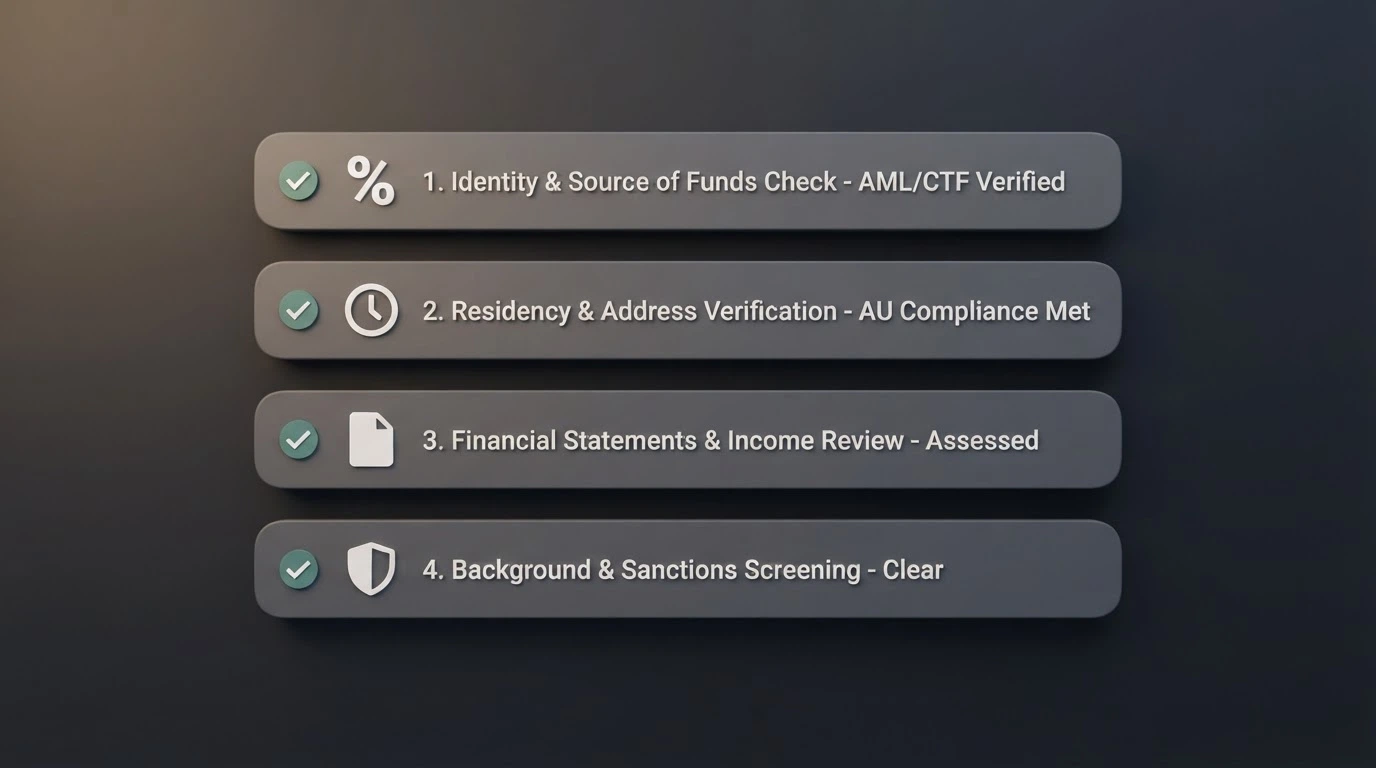
Four checks before the first deposit, in order.
Check the RTP variant of the specific pokie the player intends to load. The published RTP is a ceiling, not a guarantee. The in-game help or rules screen lists the theoretical return for the build actually loaded; if the figure does not match the developer’s published spec, the build is the lower one and the player’s expected return adjusts accordingly.
Pick a withdrawal method before depositing. PayID is the domestic speed leader, with a median payout of 2 hours and the fastest single test under 10 minutes. Crypto is faster overall at a 42-minute median but implies an offshore operator outside Australian consumer protection. BPAY handles high-limit deposits where business-day processing is acceptable. Match the method to the amount and the urgency.
Read the bonus wagering and cashout cap before claiming. A 40× wagering multiple on a A$500 bonus means A$20,000 of qualifying turnover; the expected loss at 96% RTP sits at roughly A$800. A A$5,000 cashout cap on a welcome bonus means any winnings above that figure disappear regardless of what the bonus meter reads. The arithmetic makes the offer’s real cost visible before any commitment.
Verify the licence and know it is not Australian. Every operator on this page is offshore. BetStop does not reach them, ACMA may block them at any time, and Australian consumer law does not cover disputes. A player who accepts those terms is making an informed choice; a player who assumes Australian protections exist has misread the situation.
Set a deposit limit before starting. Licensed AU operators offer customer-set deposit limits as a standard feature. Offshore operators vary; the player should set their own limit before the first deposit, not after the first session. The National Gambling Helpline (1800 858 858) is free, confidential and available 24/7 for anyone whose own limit has slipped.
The two tables on this page — the highest-RTP pokies and the offshore operator comparison — are the working tools. Cross-reference them: confirm the operator carries the specific title at the expected RTP build, confirm the withdrawal method is supported, confirm the bonus terms match what the player is willing to clear. The decision sits in that cross-reference, not in any single number.
Frequently asked questions
Are online pokies legal in Australia and can I play for real money?
Online casino games and online pokies are prohibited under the Interactive Gambling Act 2001, so no Australian licence exists for the operators on this page. The Act targets the provider, not the player; individual Australians who deposit offshore are not prosecuted. From 1 January 2027, banks and payment providers can also block transactions to illegal operators.
Can I trust the RTP shown on a pokie game, or can casinos change it?
The RTP figure shown in a pokie’s help screen is accurate for the build the operator has loaded. Operators can run lower-RTP variants of the same title — Starburst, for example, ships at 92%, 94%, 96.09% and rarely 99% — and the player has no way to tell from the loading screen. The only reliable check is the in-game rules screen.
What are the safest payment methods for depositing at online pokies sites in Australia?
For licensed AU wagering, PayID, BPAY, debit card and bank transfer are the legal routes; credit cards and crypto have been banned since 11 June 2024. Offshore casinos accepting crypto or credit cards sit outside Australian rules, and the payment method itself signals that. PayID clears deposits in under 30 seconds and has a 2-hour median payout.
How fast can I withdraw winnings from an online pokie site using PayID or crypto?
PayID withdrawals have a 2-hour median in August 2026 testing, with the fastest result under 10 minutes. Crypto withdrawals are faster overall at a 42-minute median. Both depend on the operator’s pending period and verification hold, which sit between the cashout request and the funds arriving in the player’s account.
What happens to my money if an offshore pokies site is blocked by ACMA?
The ACMA blocks sites at the DNS level, which prevents Australian customers from reaching the site. A balance still sitting on a blocked site is not confiscated, but it is unreachable from an Australian internet connection. Withdrawal would require accessing the site through an alternative route, and the player’s recourse against the operator in any subsequent dispute is limited to the operator’s own jurisdiction.