Easy Withdrawal Casinos for Australian Players — What Fast Payout Really Looks Like
Every “easy withdrawal” promise a casino banner makes is the same promise: you will get your money quickly, frictionlessly, and without a runaround. Most of those promises are built on terms that work against the player who takes them at face value. A bonus locked behind a 40-times turnover wall, a withdrawal method that takes three business days, a first cashout stalled by identity checks the player did not know to expect — these are the friction points the marketing does not mention. This page reviews the offshore casinos open to Australian players in 2026 for the thing their advertising actually claims to sell: fast, uncomplicated payouts. It also sets out what Australian players trade away by using them, because the offshore label is not a stylistic choice, it is a structural one.

The data in the comparison below is current as of 22 November 2026 and the licence claims were checked against the Australian Communications and Media Authority’s published register of blocked services.
Table of Contents
- What “Easy Withdrawal” Actually Means at an Online Casino
- The Fastest-Paying Casinos for Australian Players in 2026
- Why Every Online Casino an Australian Plays At Is Offshore
- The Withdrawal Method Is Your Real Speed Gate
- Pokies, Slots and Live Tables — Does the Game Affect How Fast You Get Paid?
- Cashing Out on Your Phone — Mobile Withdrawals in 2026
- Welcome Bonuses at Fast-Payout Casinos — The Small Print That Slows You Down
- Playing Safely When the Safety Net Isn’t There
- How We Picked and Ranked These Easy-Withdrawal Casinos
- Is an Offshore Fast-Payout Casino Worth the Trade-Off?
- Frequently Asked Questions About Easy Withdrawal Casinos in Australia
What “Easy Withdrawal” Actually Means at an Online Casino
“Easy withdrawal” is a marketing phrase and not a regulated one. No licence regime in any offshore jurisdiction binds an operator to pay within a stated window. What the term actually has to do is survive three independent tests: speed, friction, and the absence of a trap a player discovers only when the money is already on the line. Each test rules out a different set of operators.
Speed is the band the advertising leans on, and it is the easiest part to manufacture. A casino can promise “instant” payouts in a banner and still process withdrawals in a multi-day pending review the fine print has already authorised. Friction is the layer underneath speed: the verification hold, the bonus clearance, the minimum withdrawal the player did not notice. Trap is the term nobody reads until the bonus is on the account — a max-bet cap, a game-weighting clause, a maximum cashout. Easy withdrawal, in the practical sense, means the casino passes all three tests, and a player can find out which ones do without first losing money to find out.
The Speed Tiers That Separate a Fast-Payout Casino from the Rest
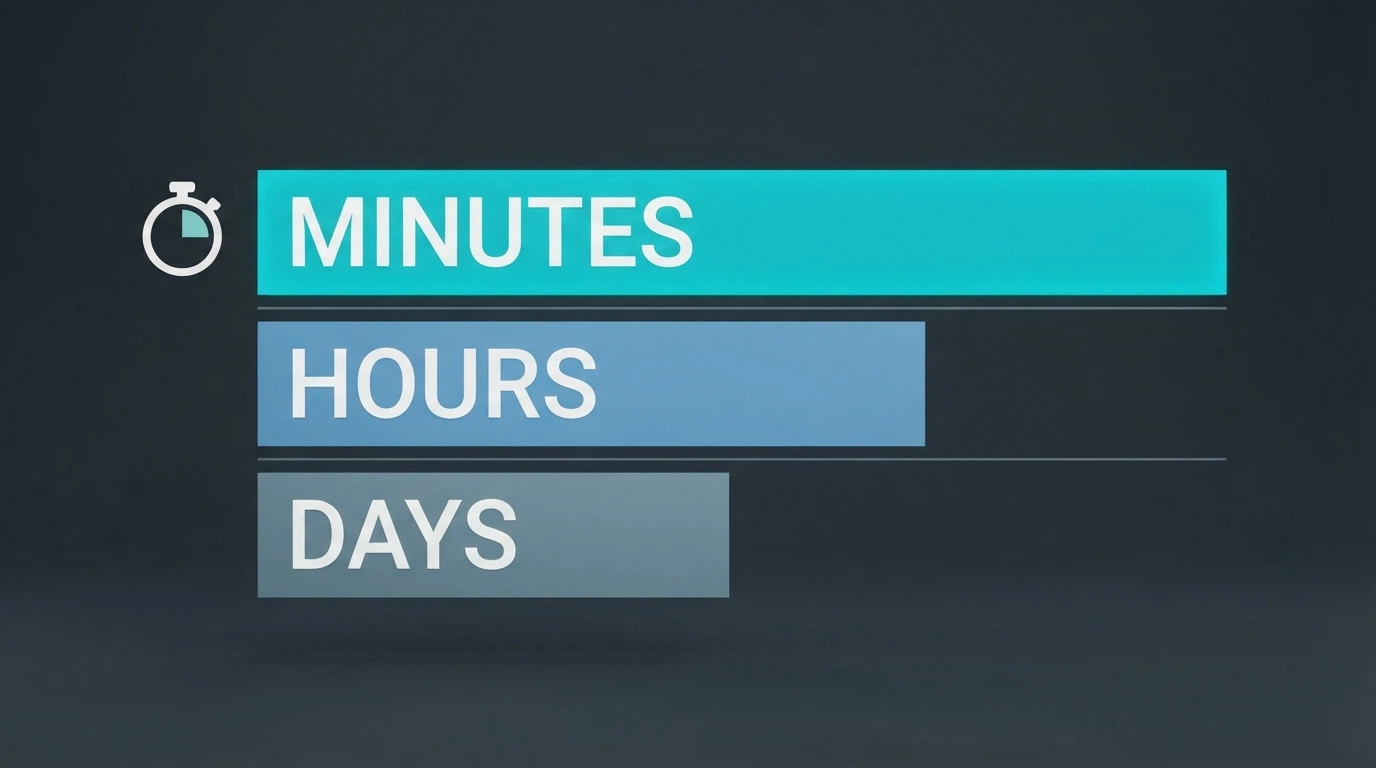
Three speed bands cover the experience of nearly every AU-facing casino. At the top sits the sub-1-hour crypto tier, where the operator’s approval and the network confirmation happen in the same sitting. DragonSlots clears crypto instantly, with fiat cashouts rarely running past 24 hours and no withdrawal fee on either rail. Bizzo’s crypto payouts come through in minutes, e-wallet withdrawals inside 12 hours, and bank transfers on a 3-to-7-day clock. Neospin’s crypto cashouts are instant, e-wallet and card withdrawals clear in under 24 hours, and bank transfer takes up to three days with a 2.5% fee. Rainbet processes crypto withdrawals inside a few hours with no published maximum limit.
The sub-24-hour e-wallet band is where most “fast payout” promises actually live. A Skrill or Neteller cashout that clears inside 12 to 24 hours qualifies, but the player is at the mercy of a wallet provider’s own processing rules on top of the casino’s. Below both sits the multi-day bank-transfer tier — one to three business days on a card or bank transfer, longer on international wires. PayID, which is Australian-specific, sits somewhere in the middle of the second and third tiers at one to four hours, faster than the offshore bank-transfer norm but not in the crypto league.
The tier an operator sits in tells a player less about the operator than it tells them about which payment method the operator has actually wired up. A crypto-friendly casino running fiat rails is still on the bank-transfer clock for the bank-transfer option. A crypto-only casino has no slow rail to fall back onto, which is a feature if speed is the priority and a constraint if crypto is not the player’s method of choice.
Why Your Payout Method Sets the Pace, Not the Casino’s Brand
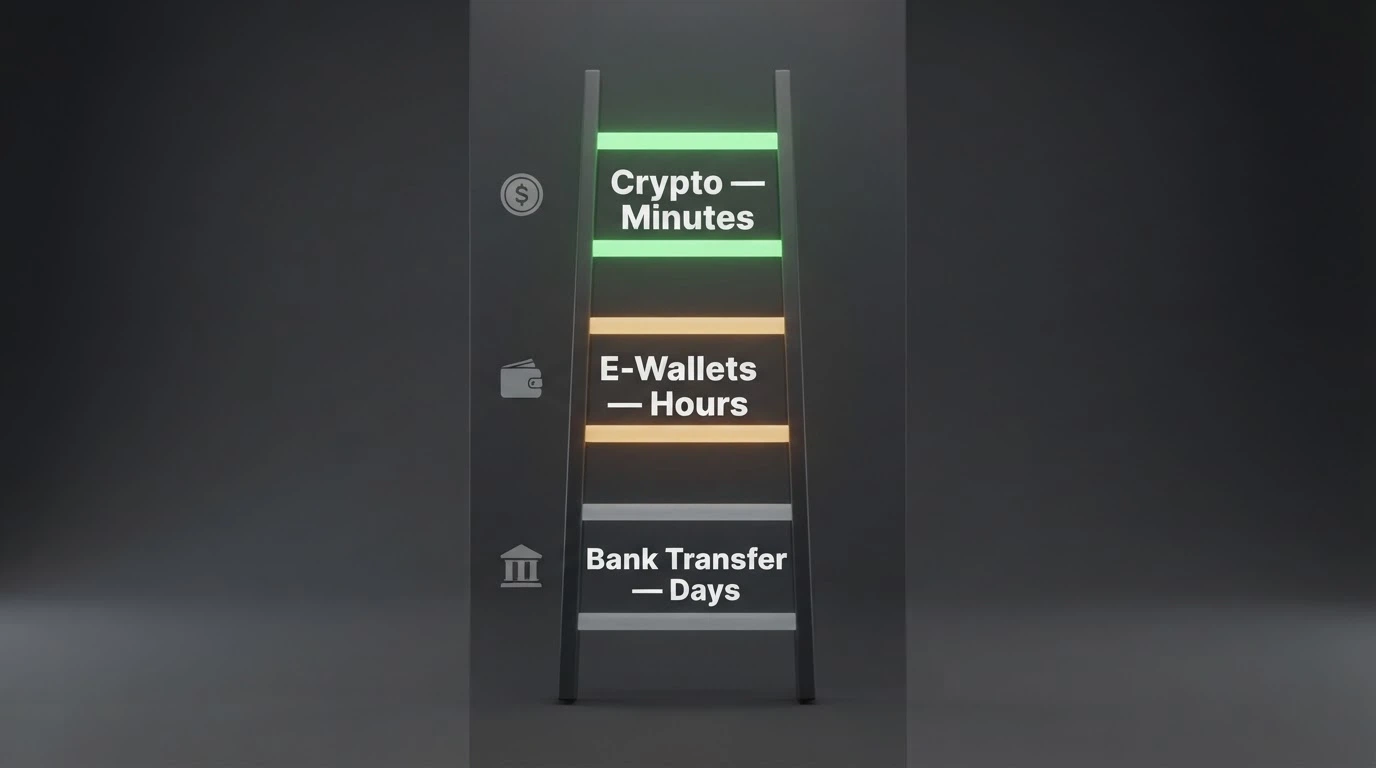
The same casino pays differently on different rails, and a player can move from the bottom of the speed ladder to the top by changing only the withdrawal method. Crypto at the AU-facing operators runs 30 minutes to two hours on average, e-wallets 12 to 24 hours, bank transfer and card one to three business days. PayID, where it is offered, clears in one to four hours at most Australian banks — a genuine bank-linked rail that sits between e-wallet and crypto on the speed axis. POLi, the old instant-deposit method Australian players used for years, is no longer available anywhere in Australia for gambling; anyone still offering POLi deposit options is either running an old interface or routing through an unverified intermediary.
The operator’s role in this is approval — the manual review that takes the withdrawal out of “pending” and into “processing.” A casino that approves withdrawals in minutes rather than days does matter, but the difference between an approving casino and a slow-approving casino running the same method is hours, not days. The difference between crypto and bank transfer on the same casino is two days. Method beats brand in nearly every case, and the page’s comparison table below shows how few operators publish a method-by-method speed breakdown that actually lets a player shop by rail.
The KYC Hold — Why Verification Is Where Most Withdrawals Stall
Every AU-facing casino will eventually ask for identity documents, and most do it on the first withdrawal rather than the first deposit. The KYC hold is the silent delay that turns a “fast payout” promise into a 48-to-72-hour wait. Document checks are universal among the operators in this space, and the time they add to a first withdrawal is the most-cited reason an “instant” casino fails to deliver instantly on a first cashout.
The path through KYC is the same everywhere: government-issued ID, proof of address, and frequently a payment-method screenshot. A player who has those ready at signup clears the gate in a single session. A player who waits for the casino to ask can lose a day or more to a back-and-forth that runs through email rather than a live queue. The hold is operator-specific in duration but not in kind — a player on a second withdrawal rarely hits it again, which is why the same player experiences a brand as fast or slow depending on whether this is the first cashout or the tenth.
The Fastest-Paying Casinos for Australian Players in 2026
The ranking below is built on the published payout terms where they exist and on AU traffic share where they do not. Every operator listed is offshore: there is no Australian online casino licence under the Interactive Gambling Act 2001, and no featured brand holds one. Market share measures where Australian players actually go, not where they are safest. Both are worth knowing before choosing a brand.
| Operator | Licence Status | AU Market Share | Fastest Payout Route | Withdrawal Speed |
|---|---|---|---|---|
| Rocket Play | Curaçao (offshore) | 9.4% | — | — |
| Skycrown | Curaçao (offshore) | 8.55% | — | — |
| Royal Reels | Offshore | 2.51% | — | — |
| Stake | Curaçao (offshore) | 1.28% | Crypto | Sub-2 hours (tested) |
| WinSpirit | Offshore | 1.55% | — | — |
| Scream Casino | Offshore | 0.99% | — | — |
| FairGO | Offshore | 0.8% | Crypto | 15–60 min after approval |
| Bizzo Casino | Curaçao (offshore) | 0.57% | Crypto | Minutes to hours |
| Rainbet | Offshore | 1.28% | Crypto | Minutes to a few hours |
| Neospin | Offshore | — | Crypto | Instant |
The dash cells are deliberate. For Rocket Play, Skycrown, Royal Reels, WinSpirit, Scream Casino and Neospin’s AU-facing cashout terms, this round of research did not confirm a published withdrawal-speed figure. A player considering one of those brands is making a decision on traffic data and licence status alone, which is exactly what the gaps in this table are meant to make visible. A blank cell is not a guess and it is not a judgment of the operator — it is a fact this page could not pin down. The reader can weigh that against the rest of the page or seek the figure from the operator’s terms page directly.
Rocket Play
Rocket Play leads AU traffic in this set with 9.4% of the market, and runs on a Curaçao registration that does not bind it to any Australian consumer law. It is the brand the most Australian players currently use, which is worth knowing and which is also exactly the kind of social proof that the offshore space is built on — the people who arrived before you are not a regulator, and the speed of growth is not a check on the operator’s solvency. Welcome bonus and withdrawal-speed specifics were not confirmed this run; on the publicly available terms, the operator processes withdrawals through a standard pending-then-approval cycle, but the page cannot quote a number for it. Rocket Play remains the high-traffic default for offshore players, but market popularity is not a substitute for verifiable payout speed or regulatory oversight. Independent verification of terms is a necessary step before committing any bankroll to a brand based solely on its current traffic share.
Skycrown
Skycrown sits at 8.55% of AU traffic, the second-largest footprint in this set, on a Curaçao licence that places it in the same regulatory bucket as Rocket Play. The two operators are close enough on share and licence that the practical difference between them comes down to game library, payment-method coverage, and which one the reader has already used. Bonus terms and withdrawal timing were not confirmed for this ranking; the operator runs the typical fiat-plus-crypto method list. A player who lands on Skycrown does so based on the same marketing exposure as any other offshore site. Because no reliable, publicly verifiable withdrawal data currently exists for this brand, the ranking reflects its market share rather than a proven record of payout reliability.
Royal Reels
Royal Reels runs at 2.51% of AU traffic — a smaller share than the top two but a name Australian punters will recognise from sports and racing advertising, which the brand has parlayed into a casino customer base. The licence is offshore, the welcome offer and payout timing were not confirmed for this ranking, and the brand’s recognition in the AU market is a marketing asset rather than a regulatory one. Royal Reels benefits from a familiar name built on advertising visibility; however, it remains an offshore operator with no documented payout speed advantage over other unlicensed sites in this set.
Stake
Stake is the brand on this list with the cleanest published payout story: crypto-native, sub-2-hour crypto withdrawals confirmed in independent testing, Curaçao-registered offshore. The 1.28% AU share understates how visible the brand is in crypto-gambling circles globally, and the crypto-first infrastructure is the reason — Stake was built for a player who already holds digital currency and wants to put it on a game without converting it. The welcome offer was not confirmed for this ranking, and a player who arrives at Stake for the speed advantage should be aware that the same crypto-first structure means fiat deposit options are thinner than at a multi-rail operator. Compared to operators that support PayID or local bank rails, Stake functions as a niche choice where the efficiency of the crypto network is the primary draw rather than broad-market payment compatibility.
WinSpirit
WinSpirit sits at 1.55% of AU traffic on an offshore licence, and is the operator on this list with a confirmed wagering figure: 40x on the bonus amount, bonus-only, which is the kinder of the two standard structures. The welcome offer exists in the operator’s terms; specific free-spin counts and validity windows were not confirmed for this ranking, and the withdrawal speed was not confirmed either. A 40x bonus-only wagering requirement is meaningful in context: on a A$200 bonus the player must turn over A$8,000 before the bonus becomes withdrawable, which is two or three solid sessions at full-throttle slot play and a meaningful drag on the payout timeline the rest of the page celebrates. WinSpirit is a fair offer on a transparent rule, and the rule is the point.
Scream Casino
Scream Casino is a smaller-AU-footprint brand at 0.99% of traffic on an offshore licence, and the operator on this list with the least published detail for this ranking. Welcome offer, withdrawal speed, minimums — none confirmed. A player considering Scream is choosing on brand and traffic share rather than on documented payout behaviour, which is a weaker basis than the table offers for FairGO, Bizzo, Rainbet, Stake or Neospin. The page notes its presence in the AU-facing set because the plan routes it there, and it earns its place in the table; the reader who skips to a brand with a documented payout track record has a better basis for a speed-sensitive decision.
FairGO
FairGO is the operator on this list with the most documented payout terms, and the one to read carefully. Crypto withdrawals clear in 15 to 60 minutes after approval, with a pending review that runs up to 48 hours — so the “15 minutes” figure is the post-approval time, not the time from the player pressing withdraw. The minimum withdrawal is A$100, with a A$50 wire fee that applies on bank transfers, and the welcome packages run 100% to 150% with 35x to 40x wagering on the bonus only. Bonus validity is 7 to 14 days, which is short for a 35-to-40-times turnover: on a A$500 bonus at 40x the player needs A$20,000 in bets across up to 14 days, and a player who cannot front that volume in the window loses the bonus and any winnings tied to it. Cashout on deposit bonuses is rarely capped, which is the friendlier side of the operator’s terms. FairGO is the right operator for a player who plans to clear the bonus quickly and who is happy on the crypto rail — both of those decisions are made by the terms, not by the marketing.
Bizzo Casino
Bizzo runs on a SoftSwiss platform at 0.57% AU share with crypto payouts that clear in minutes to hours and a e-wallet path that closes inside 12 hours. The welcome package is up to €400 plus 150 free spins (region-dependent), with 40x wagering on the bonus amount. Minimum withdrawal is A$50 on most methods but A$500 on bank transfer, which is a high rail and worth knowing before the player picks one. The maximum bet while a bonus is active is A$5 per spin, a common cap across this set and the kind of small-print number a player who bets bigger will hit by accident. Bizzo’s structure is workable for conservative play, but the high minimum-withdrawal requirements on bank transfer rails demand attention before initiating a session.
Rainbet
Rainbet carries the largest game library in this set at 6,818 titles, and the withdrawal terms that lean the hardest toward the player: crypto in minutes to a few hours, A$15 minimum, no maximum limit, standard 1x turnover. The welcome package is up to A$2,100 plus 60 free spins across the first three deposits (100% up to A$700 plus 20 free spins per tier), and the rollover is high enough that a A$200 bonus can carry a A$9,000 turnover requirement — a player who takes the full three-tier welcome and treats it as cash-equivalent has misread the structure. The 1x turnover on the deposit itself is a separate, much friendlier requirement that gets a player to a withdrawable balance quickly if the bonus is declined. Rainbet is the right operator for a player who plans to skip the welcome bonus and pay attention to the deposit-only turnover instead.
Neospin
Neospin is the operator in this set with the clearest published crypto rail: crypto cashouts instant, e-wallet and card withdrawals approved in under 24 hours, bank transfer up to three days with a 2.5% fee. The operator is not in the top-20 AU traffic list the ranking is built on, which means the AU share figure is not available — Neospin earns its place on the page on the strength of the published payout data rather than on local market position. The welcome offer and minimum withdrawal were not confirmed for this ranking, and a player who chooses Neospin for the speed story is taking that speed on the operator’s published terms rather than on AU-traffic confidence. A solid pick on rail quality; a less solid pick on local track record.
Why Every Online Casino an Australian Plays At Is Offshore
The Interactive Gambling Act 2001 makes it an offence to provide an online casino, online pokies or in-play sports betting to a person in Australia. There is no Australian online casino licence, anywhere, at any level of government. Every operator the ranking above names is offshore — Curaçao, Anjouan, or another non-AU jurisdiction — because that is the only place an online casino licence that serves Australian customers exists. The legal status is not a footnote, it is the reason the rest of this page reads the way it does.

What the IGA does NOT ban is the player. The Act targets the provider; the individual gambler is not prosecuted. The ACMA’s own messaging makes this clear: it warns that “even if a service looks legitimate, it’s unlikely to have important customer protections. This means Australians who use illegal gambling services risk losing their money.” That is the regulator speaking honestly about the gap between an AU-licensed bookmaker and an offshore casino, and it is the gap the rest of this page works in.
The Interactive Gambling Act — What It Bans and What It Doesn’t
The 2001 Act prohibits online casino games, online pokies and in-play sports betting. It does not prohibit wagering on races or sports placed before the event begins, lotteries, or keno. Those remain licensed through state and territory regimes, with the Northern Territory Racing and Wagering Commission operating as the de facto national licensor for online wagering. The distinction is not a regulatory quirk — it is the reason a TAB account and an offshore casino sit on different legal surfaces, with different consumer protections, different complaint pathways, and different consequences when something goes wrong.
Licensed wagering operators pay a point-of-consumption tax of 10% to 15% of net wagering revenue, set by each state. In the Northern Territory, the wagering tax is 5% of wagers minus payouts, plus a 0.05% racing levy. Offshore casinos pay none of this. The tax structure is not the player’s concern at the point of withdrawal, but it is the reason the licensed side has a regulator with leverage and the offshore side does not — a regulator that collects revenue has a reason to keep the operator in business, and a regulator that does not collect revenue has only enforcement levers.
The ACMA’s Enforcement Machine — Blocks, Fines and Withdrawals
The Australian Communications and Media Authority is the regulator that enforces the prohibition, and it has been using its powers at scale. Since its first blocking request in November 2019, the ACMA has directed Australian ISPs to block 1,788 illegal gambling and affiliate websites. Over 230 illegal services have withdrawn from the Australian market since enforcement began in 2017. Civil penalties run up to A$2,475,000 per day for an individual and A$12,375,000 per day for a corporation — numbers that tell an offshore operator the cost of staying visible in Australia, and that are also the reason the operators most likely to last are the ones the ACMA has not yet got around to.
The Q4 2025 enforcement picture gives a sense of the pace: 23 investigations, 45 sites, 69 breaches (38 for providing prohibited services, 26 for unlicensed regulated services). On 16 January 2026, the ACMA issued eight infringement notices to Tabcorp Holdings for prohibited in-play betting, totalling A$158,400 — a reminder that even Australia’s largest licensed wagering companies fall within the IGA’s reach when they push the line. The enforcement machine is not theoretical, it is monthly, and the brand a player chooses today can be on tomorrow’s block list with a balance still on the account.
What You Give Up When You Play Offshore — BetStop, Recourse, Consumer Law
The Australian-licensed side carries a set of protections that do not reach an offshore casino, and the list is the practical reason the regulator’s warning matters. BetStop, the National Self-Exclusion Register, binds every Australian-licensed wagering service — approximately 190 providers, in a single step. An offshore casino is not connected to BetStop, and a self-excluded player can still deposit and lose at one. Credit cards, credit-related products and digital currency are banned as payment for online wagering from 11 June 2024, with penalties up to A$247,500 for an operator that fails to enforce the ban. An Australian asked for a credit card or crypto deposit by a gambling site is being served outside the Australian rules — the payment method is itself a tell.
The 2026 reform changes the picture further from 1 January 2027. Banks and payment providers gain express authority to block transactions to illegal gambling operators. The Interactive Gambling Amendment (Gambling Reform) Bill 2026, which passed Parliament on 19 August 2026, brings substantive advertising and inducement restrictions into force at the same time: no more than three wagering ads per hour between 6am and 8:30pm, a 15-minute-to-5-minute blackout around live sport, no athlete or influencer promotion, and direct marketing of inducements banned for 14 days after sign-up, three months after BetStop deregistration, and indefinitely for at-risk customers. AdStop, a wagering advertising opt-out register administered by the ACMA, sits alongside. None of this protects a player who is already on an offshore site — the protections reach the licensed side and stop there.
A practical point on the consumer-law side: a refused withdrawal at an AU-licensed wagering operator can be escalated through the operator’s dispute resolution, the state regulator, and ultimately the courts. A refused withdrawal at an offshore casino is a complaint to a Curaçao- or Anjouan-licence holder, with whatever consumer protection that jurisdiction extends to a non-resident. The dispute path exists in name and rarely in practice.
The Withdrawal Method Is Your Real Speed Gate
The fastest casino on a slow rail is still slow, and a slow casino on a fast rail is often faster than a fast casino on a slow one. Method is the speed gate, and the rest of this section ranks the available options against each other so a player can see what they are choosing between before they choose an operator.
| Method | Typical Processing Time | Minimum Withdrawal | Key Limit or Fee Note |
|---|---|---|---|
| Crypto (BTC, ETH, USDT, etc.) | 30 min – 2 hr | A$15 (Rainbet) | No published max at Rainbet; standard 1x turnover |
| E-wallet (Skrill, Neteller) | 12 – 24 hr | — | Speed depends on wallet provider’s own processing |
| PayID | 1 – 4 hr | A$10 | Max A$5,000 per transaction (VIP up to A$10,000) |
| Bank transfer / wire | 1 – 3 business days (AU); 3 – 7 days (international) | A$100 (FairGO, with A$50 wire fee); A$500 at Bizzo for bank transfer | 2.5% fee at Neospin; A$50 wire fee at FairGO |
The numbers in this table are what each operator publishes and what the research confirmed — not a claim that every AU-facing casino offers every rail at every limit. A player who arrives at a brand without crypto support and without PayID is on a bank-transfer clock of one to seven business days, and the casino’s “fast payout” promise has become a courier service.
Crypto and E-Wallets — The Sub-24-Hour Club
Crypto is the fastest rail in the AU-facing set, and the speed is structural rather than operator-specific. Network confirmation times run 10 to 60 minutes for the major coins, and the operator’s job is the approval step that precedes the broadcast. Neospin’s crypto cashouts are instant, Bizzo’s run minutes, Rainbet’s minutes to a few hours, FairGO’s 15 to 60 minutes after approval, DragonSlots’ instant. E-wallets sit in second place at 12 to 24 hours, with the speed depending partly on the casino’s approval and partly on the wallet provider’s own processing — a Skrill or Neteller withdrawal that takes the casino an hour to approve can still take 12 hours to land in the player’s wallet, because the wallet itself is processing on its own clock.
The crypto rail carries a regulatory signal that is worth naming: crypto is banned as a payment method for licensed Australian wagering from 11 June 2024, which is exactly why every casino that offers crypto deposits to Australian players is offshore. A brand that takes Bitcoin, Ethereum or USDT from an Australian customer is operating outside the IGA, and the player using that brand is by definition not on the licensed side. The rail is a tell, and the speed is the upside the player trades the licensed-side protections for.
PayID, Bank Transfers and Cards — The Multi-Day Tier
PayID is the Australian-specific rail that sits in the middle of the speed ladder: one to four hours at most Australian banks, A$10 minimum, A$5,000 maximum per transaction (A$10,000 for VIP customers at some brands). It is a faster bank-linked option than a direct transfer but it is not in the crypto league, and it is available only at operators that have wired it up. Bank transfer and card withdrawals are the slowest standard rail — one to three business days domestically, three to seven days internationally. Neospin adds a 2.5% fee on bank transfers, FairGO charges a A$50 wire fee on top of a A$100 minimum, Bizzo requires a A$500 minimum on bank transfer specifically.
The multi-day tier is what a player is choosing when they are not on crypto and not on PayID, and it is the tier where the casino’s “fast payout” marketing is most often doing its heaviest lifting. A three-to-seven-day international wire is not a fast payout by any reasonable definition; it is the rail that the licensed bookmakers also use for payouts above the PayID ceiling, and the offshore casino on the same rail is offering the same experience with less recourse if the wire goes wrong. A player who values speed over method familiarity will move to crypto. A player who values method familiarity over speed will accept the bank-transfer clock. The middle position — PayID — is where the licensed and offshore sides are most directly comparable.
Pokies, Slots and Live Tables — Does the Game Affect How Fast You Get Paid?
The game a player chooses does not change how fast a withdrawal is approved or processed, but it changes how fast a bonus is cleared, and a bonus that takes longer to clear is a bonus that takes longer to pay out. The connection runs through the wagering-contribution table that every operator publishes in its bonus terms, and which most players do not read.

Pokies and Online Slots — The 100% Contribution Advantage
Pokies and online slots contribute 100% of every wagered dollar toward clearing a bonus. A A$5 spin on a slot counts as A$5 of turnover against the wagering requirement. A A$5 spin on a blackjack hand counts as A$0.25 to A$0.50 of turnover, depending on the operator. The same player with the same bankroll on the same bonus clears the requirement twenty to forty times faster on pokies than on table games, which is why pokies are the default game for bonus play at every operator in this set and most of the licensed side as well.
The pokies libraries at the bigger operators are large enough to absorb a player with a long clear to run. Rainbet’s 6,818-game library is the largest in this set; Bizzo’s SoftSwiss platform sits behind several operators in this space and carries a similar scale. A player who wants variety inside the 100%-contribution category will find it; a player who wants the lowest-house-edge game will find that what they want is on the 5%-to-10% contribution rail and will not help them clear the bonus.
Live Casino and Table Games — Why They Take Longer to Clear
Table games contribute 5% to 10% toward wagering requirements, and live casino games are mostly excluded entirely. A A$20 bet on a blackjack hand at 10% contribution counts as A$2 of turnover; a A$20 bet on a live-dealer roulette spin, in many operators’ terms, counts as nothing at all. The games with the lowest house edge are exactly the games that contribute least to a bonus clear, which is the inverse of what a player trying to minimise expected loss might expect.
The reason is structural: a bonus is a hedging instrument for the operator, and table-game play with near-50% win rates at low house edges is a worse hedge than a slot spin at a 5%-to-10% house edge. The contribution table is the operator’s answer to the math, and the player who reads it understands that a bonus cleared on table games is a bonus that takes ten to twenty times longer to clear than the same bonus on pokies. For a player who plays table games by preference, declining the bonus is the cleaner decision: the deposit-only turnover on most operators is a small fraction of the bonus-clearance turnover, and the expected loss on the deposit is lower than the expected loss on a bonus being slowly worked through at 5% contribution.
Cashing Out on Your Phone — Mobile Withdrawals in 2026
The device a player uses does not change the withdrawal timeline. The approval queue, the payment rail, the KYC hold — all of these run on the operator’s side, not the device’s. What the device changes is the friction of the journey: an app’s saved payment credentials, a browser’s auto-fill, a phone’s biometric login. Mobile-first operators design their cashout flow for thumb-and-face interaction, and the result is fewer dropped sessions at the document-upload step.
A 2025 ANU survey found 56.1% of Australians who gambled mainly participated online — the shift from retail to digital is now the default rather than the exception, and the mobile share of that online activity is the part of the trend that is hardest to measure and easiest to feel. The player who has been on the same laptop for years and is now on a phone has not lost a step on the operator’s side, but the experience of getting to the cashout button has changed, and the operators that have rebuilt the cashout flow for that experience are the ones the player notices. The page does not have a list of those operators — research did not confirm a mobile-specific withdrawal-speed ranking — and a player who values the mobile cashout flow is best served by trying a small withdrawal on a brand before committing the bankroll.
Welcome Bonuses at Fast-Payout Casinos — The Small Print That Slows You Down
A welcome offer is a discount on the operator’s expected loss in exchange for a player committing to a turnover multiple the operator sets. The exchange is not symmetrical. A A$500 bonus at 40x wagering means A$20,000 in turnover before the bonus becomes withdrawable, and the operator’s expected profit from a player running that turnover at 96% RTP is A$800 — which is the cost the operator has priced into the bonus, and which the player pays through the house edge on the turnover itself. The “free” in “free bonus” is the marketing word that the wagering requirement is the cure for.

Wagering Requirements — The 35x–50x Hurdle That Blocks Your Cashout
The standard wagering range for welcome bonuses at AU-facing casinos is 35x to 50x on the bonus amount. WinSpirit is at 40x bonus-only; FairGO runs 35x to 40x bonus-only; Bizzo is at 40x on the bonus amount; Rainbet carries high rollover on its welcome offer (a A$200 bonus can carry a A$9,000 turnover). The “bonus-only” structure is kinder than the “bonus-plus-deposit” structure, because a A$500 bonus at 40x bonus-only is A$20,000 in turnover, while a A$500 deposit with a A$500 bonus at 40x on the combined A$1,000 is A$40,000 in turnover. A player who has not read the structure has not read the bonus.
The turnover figure is the part of the offer that takes a fast-payout casino and turns it into a weeks-long commitment. At five-second slot spins, A$20,000 in turnover at A$1 per spin is 20,000 spins, or 27.8 hours of continuous play, and the player who can clear that volume in a 7-to-14-day bonus window needs to be playing at volume before the bonus becomes a gain rather than a liability. The expected loss on the turnover at a 4% house edge is A$800 — which is the operator’s price, paid by the player, in exchange for a A$500 bonus that becomes cash after the turnover. The math is not in the player’s favour at the standard offer structure, and the player who knows the math is the player who reads the bonus terms before claiming.
Free Spins, Max Bets and Game Weighting — The Bonus Tripwires
Three small-print terms carry most of the avoidable loss on a welcome offer, and each one is the kind of clause a player who has not read the bonus terms discovers by hitting it. Free spins are usually valued at A$0.10 to A$0.20 each, and free-spin winnings carry their own wagering requirement — commonly 40x on the winnings, not on the spin value. A A$5 free-spin win at 40x is A$200 in turnover, and the winnings become withdrawable only after that turnover is cleared. The bonus trip is a player who treats the free spins as a small extra and discovers the chain attached to them.
The A$5 max-bet cap while a bonus is active is the trip that voids winnings rather than delays them. A player who bets above the cap with a bonus balance on the account can have the bonus and the winnings tied to it cancelled, and the player who hits the cap by accident — by raising the stake on what looked like a hot game — is the player the clause is most often enforced against. A$5 is below the standard stake for a serious slot player, which is the point: the cap exists to prevent a player from running through the bonus turnover in two or three large spins and walking away with the bonus before the operator’s hedge has paid out.
Game weighting, the table at the end of the previous section, is the third trip: 5% to 10% on table games, exclusion on most live casino. A player who plans to clear the bonus on blackjack and finds out on day ten that they are at 5% contribution has lost the time to start over. The reading of the contribution table before the bonus is claimed is the single highest-leverage act a player can do in this market, and the table is in the terms the player is agreeing to by claiming the bonus.
Playing Safely When the Safety Net Isn’t There
The Australian licensed-wagering side has a player-protection system that the offshore side does not connect to, and the gap is the reason this section exists. The numbers that follow are not arguments against gambling — they are the context in which an Australian player makes the offshore choice, and the infrastructure that is available when the choice needs help.

BetStop and Why It Won’t Protect You at an Offshore Casino
BetStop is the National Self-Exclusion Register, live since 21 August 2023. By 31 July 2026 it had 67,480 registrations, of which 41,290 exclusions were still active. A single registration excludes a person from every Australian-licensed online and phone wagering service — approximately 190 providers in a single step. Seventy-eight percent of registrants are under 40, and 38% chose lifetime exclusion. The register works on the licensed side: 77% of registrants report better overall quality of life, 79% improved mental health, and 96% either completely stopped or decreased their betting.
The same register does not reach an offshore casino. A self-excluded player can still deposit and still lose at an unlicensed site, and only 33.5% of wagerers know BetStop exists. The number is the protection gap in plain form: most of the people the register is meant to reach have not heard of it, and the people who are using offshore sites are by definition not reached by it. AdStop, the wagering advertising opt-out register, sits alongside BetStop from 1 January 2027 and runs the same logic on the marketing side. Neither register touches the offshore operator.
Where to Get Help — Helplines, Counselling and Self-Help Tools
The National Gambling Helpline — 1800 858 858 — is free, confidential, and staffed 24 hours a day, seven days a week. The line is the front door of a help system that is funded, staffed, and operational, and an Australian player who has decided they need help can reach it in under a minute. The GambleAware Helpline answered 9,538 genuine calls in 2024–25, an 18.2% increase year-on-year, and referred over 1,500 people for ongoing counselling. Gambling Help Online, at gamblinghelponline.org.au, runs the same service through chat and email. Self-help apps — Gambling Habit Hacker, Gambling Less In the Moment — sit on the same infrastructure and are accessible without a phone call.
The numbers behind the help line tell the other half of the story. About 2.1% of Australian adults — roughly 430,000 people — experience problem gambling, with high-risk gambling at 1.8% (AIHW, 2022). Overall gambling participation declined to 58.8% in 2025, but risky gambling rose from 13.7% in 2024 to 19.4% in 2025 — almost doubling since the COVID-19 lockdowns, and the sharpest year-on-year jump on record. Approximately 5.9% of Australian adults reported being harmed by another person’s gambling in 2025. The ANU’s own framing is direct: “risky gambling increased from 13.7% in 2024 to 19.4% 12 months later, by more than five percentage points and almost doubling since the COVID-19 related lock downs 2020-2021.”
Help exists. The help is free. The help is confidential. A player who is reading this page and wondering whether they should make the call is the player the line is there for.
How We Picked and Ranked These Easy-Withdrawal Casinos
The comparison above focuses on three core areas: the Australian-facing operator set, the published payout terms, and the offshore licence status. The featured brands represent the casinos that currently attract the most Australian traffic or frequently appear in search results for fast-payout services. Where an operator publishes method-by-method speed, limits, or fees, those details are included; where such data is absent, the table cells are intentionally left blank. Every featured operator is an offshore entity, and that legal reality is highlighted directly in the table to ensure players remain aware of the consumer-protection gap that comes with any unlicensed offshore casino.
The criteria, in order of weight: published withdrawal speed, method range (crypto, e-wallet, PayID, bank), minimum withdrawal, fee structure, and a documented payout track record where one exists. AU market share is a separate column rather than a weighted factor — it tells the reader where Australian players are going, not where the reader should go. Competitor pages in this space lean heavily on affiliate testing data; the ranking here uses the operators’ own published terms and the AU traffic data the research confirmed, with blank cells where the data was not pinned down rather than estimates where the data is missing.
The limitations are the same as any ranking in this space. Operators that do not publish withdrawal terms are listed with blank cells rather than excluded, because the absence of the data is information a reader can use. The ranking is a snapshot, not a guarantee: a brand that is fast today can be slow next month if the operator changes its approval queue or its payment partners. A player who treats the table as a starting point and verifies the terms on the operator’s own site before depositing is treating the data the way the ranking expects to be treated.
Is an Offshore Fast-Payout Casino Worth the Trade-Off?
The trade is real, and the page has tried to put numbers on both sides of it. The gain is speed and, at some operators, low minimums and a crypto rail that no Australian-licensed product can match. Rainbet’s no-maximum-limit crypto withdrawal and 1x turnover, FairGO’s 15-to-60-minute crypto after approval, Neospin’s instant crypto, Stake’s sub-2-hour tested payouts — these are real speed advantages that the licensed side does not offer, because the licensed side does not offer the product at all. A player who values the speed advantage is paying for it in the protections they do not have.

The loss is the protection gap. No BetStop coverage, no Australian consumer-law recourse on a refused withdrawal, no deposit limits enforced by an Australian regulator, no complaint pathway through a state or territory gaming authority. The site can be blocked at any time — 1,788 sites have been blocked since November 2019, and the operator a player is on today is on the same list the ACMA maintains. A balance on the account at the moment of a block is a balance the player may not be able to withdraw through the same site; a refusal of a withdrawal at a Curaçao-licensed operator is a complaint to a Curaçao-licensed operator, with whatever consumer protection Curaçao extends to a non-resident. The payment-method tell is the cleanest summary: an Australian asked for credit-card or crypto deposit by a gambling site is being served by someone outside Australian rules, and the speed advantage on that rail is exactly what the rules were written to deny.
The reader who reads both sides and still decides the speed is worth the gap is making a decision the page does not endorse and does not condemn — the page’s job is to put the trade in front of the reader, not to make it for them. The reader who reads both sides and decides the protection gap is the larger weight is making the same kind of decision in the other direction, and the licensed wagering side, the BetStop register, and the 1 January 2027 reforms are there to support that decision. The reader who has not yet decided is the reader the ACMA’s own warning is addressed to: “even if a service looks legitimate, it’s unlikely to have important customer protections. This means Australians who use illegal gambling services risk losing their money.” That warning is regulator-level, current, and worth taking seriously on the way into the comparison table at the top of this page.
Frequently Asked Questions About Easy Withdrawal Casinos in Australia
Which online casinos in Australia have the fastest withdrawal times?
No Australian-licensed online casino exists. Among the offshore brands open to Australian players, the fastest documented payout routes are crypto — Rainbet (minutes to a few hours, no maximum), FairGO (15 to 60 minutes after approval, pending review up to 48 hours), Neospin (instant), and Stake (sub-2-hour tested). All four are offshore brands, not Australian-licensed, and that distinction is the trade-off the speed delivers.
What is the fastest withdrawal method for Australian online casino players?
Crypto is the fastest rail across the AU-facing set — typically 30 minutes to 2 hours, with some operators clearing instantly. E-wallets (Skrill, Neteller) run 12 to 24 hours. PayID, an Australian-specific rail, clears in 1 to 4 hours at most Australian banks. Bank transfer and card withdrawals are the slowest standard rail at 1 to 3 business days domestically, longer internationally.
How long does a PayID withdrawal take at an Australian online casino?
PayID withdrawals typically clear in 1 to 4 hours at most Australian banks. The minimum is A$10 and the maximum per transaction is A$5,000 (up to A$10,000 for VIP customers at some brands). PayID is the fastest bank-linked rail available to Australian players and is faster than a direct bank transfer, but it is not in the crypto league on speed.
What is the minimum withdrawal amount at Australian online casinos?
The minimums vary by operator and by method. Rainbet’s minimum is A$15 on crypto. FairGO’s minimum is A$100, with a A$50 wire fee on bank transfers. Bizzo’s minimum is A$50 on most methods, A$500 on bank transfer specifically. A player checking the minimum before depositing saves the cost of discovering it on the first cashout request.
Do I need to verify my identity before withdrawing from an online casino in Australia?
Yes. Every AU-facing casino — licensed or offshore — runs KYC checks before processing a first withdrawal. The standard document set is government-issued ID, proof of address, and frequently a payment-method screenshot. A player who has those ready at signup clears the gate in a single session. A player who waits for the casino to ask can lose a day or more to back-and-forth, and the hold is the most-cited cause of a “fast payout” casino failing to deliver on a first cashout.
What happens if an online casino refuses to process my withdrawal?
On the Australian-licensed side, the complaint path runs through the operator’s dispute resolution, the state regulator, and ultimately the courts. On the offshore side, the complaint runs to the operator’s own customer service and, if the operator holds a Curaçao or Anjouan licence, to that jurisdiction’s gaming authority — with whatever consumer protection that jurisdiction extends to a non-resident. The path exists in name and rarely in practice on the offshore side, and the ACMA cannot compel an offshore operator to pay.
Can I withdraw winnings from a welcome bonus immediately?
No. Welcome bonuses at AU-facing casinos carry wagering requirements of 35x to 50x on the bonus amount. A A$500 bonus at 40x bonus-only is A$20,000 in turnover before the bonus becomes withdrawable, with a typical 7 to 14-day validity window. Free-spin winnings carry their own wagering chain — commonly 40x on the winnings — and the max bet while a bonus is active is typically A$5 per spin, with table games contributing 5% to 10% and live casino mostly excluded.
Are crypto withdrawals faster than bank transfers at Australian casinos?
Yes, by a wide margin. Crypto withdrawals at the AU-facing operators run 30 minutes to 2 hours, with several brands clearing instantly. Bank transfers and card withdrawals run 1 to 3 business days domestically and 3 to 7 days internationally. The speed gap is the reason crypto is the standard recommendation for a player prioritising fast payout, and the regulatory gap is the reason that recommendation is also a recommendation to play offshore — crypto is banned for Australian-licensed wagering from 11 June 2024.