
A $100 No Deposit Bonus in Australia: What the Search Term Actually Buys You
 Available in AU
A “no deposit bonus” is a casino’s way of letting a new player open an account and play with house money before the player has put any of their own. The casino credits the account with bonus funds or free spins; the player wagers those credits on real games; whatever can be withdrawn after the rules are satisfied lands in real money. The product reads as free, and in one narrow sense it is: no deposit comes out of the player’s pocket. In every other sense the terms take back most of what the headline promised.
This page compares the offers that Australian-facing offshore casinos carry in 2026 under the $100 free-chip banner, the terms that govern each one, and the legal and consumer-protection ground those casinos stand on. The headline amount is not the cashable amount, and the cashable amount is not protected the way it would be at a licensed Australian wagering operator.
Current as of 18 October 2026 · Verified against the ACMA’s interactive gambling register and current operator terms where published.
Table of Contents
- Why Your 2026 $100 No Deposit Bonus Is Worth Less Than You Think
- What Offshore Casinos Actually Offer Australian Players
- How PayID Deposits Work at Offshore Casinos (And Why Credit Cards Are Banned)
- The Legal Reality: Every $100 No Deposit Bonus Comes From an Unlicensed Operator
- What You Lose When You Play at an Unlicensed Casino
- How We Evaluated These $100 No Deposit Bonus Casinos
- Is a $100 No Deposit Bonus Worth the Risk?
- Frequently Asked Questions
Why Your 2026 $100 No Deposit Bonus Is Worth Less Than You Think
A $100 free chip is the kind of number a marketing department prints in 60-point type. Three forces collapse that figure before it reaches a bank account: the wagering requirement, the max-cashout cap and the game-contribution rules. Each one is set by the casino, none is negotiable, and together they determine the actual ceiling on what the bonus can pay.
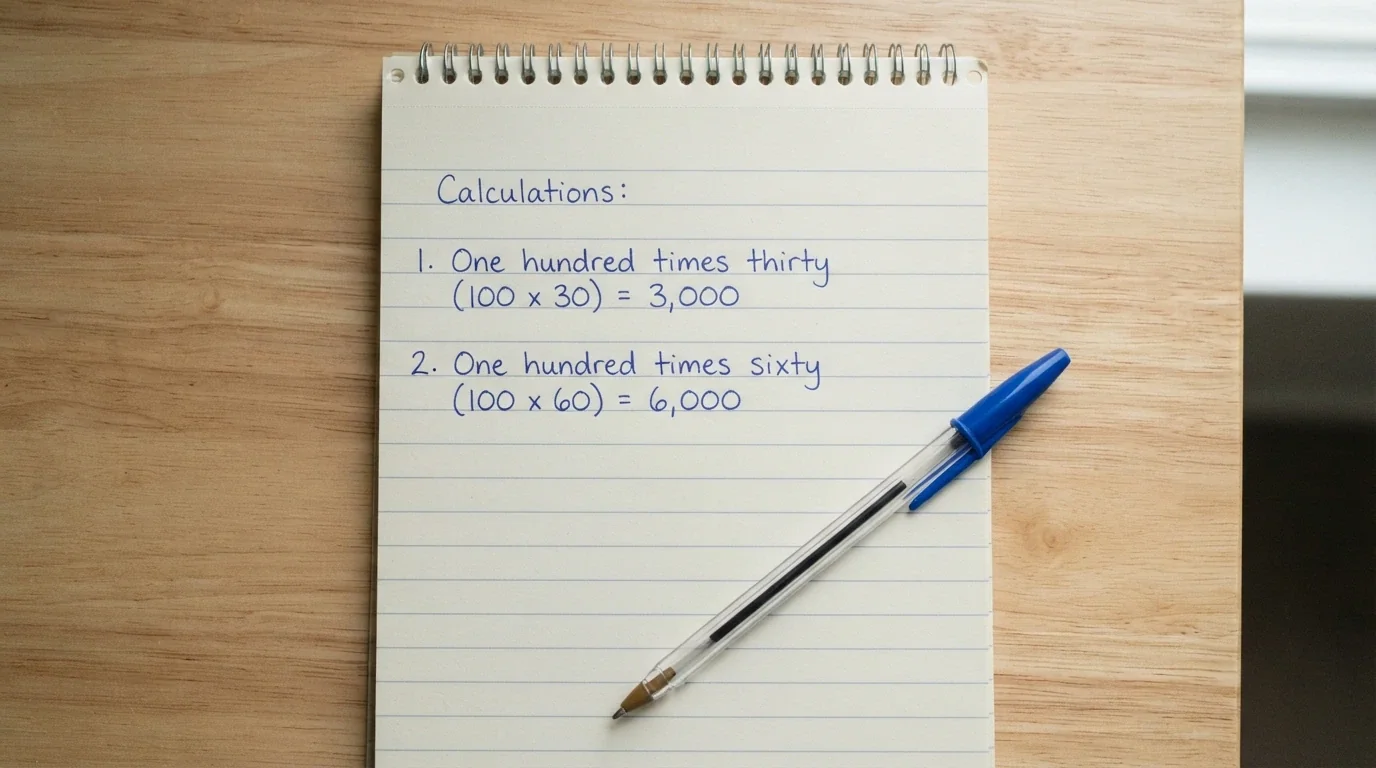
The wagering requirement multiplies the bonus by some factor — 30x to 60x is the band across AU-facing offshore casinos — and the player must place bets totalling that multiplied amount before any withdrawal is permitted. On a $100 chip at 30x the player must run $3,000 through the games. On a $100 chip at 60x the figure is $6,000. None of that turnover returns to the player as cash; it is the price of unlocking the bonus.
The max-cashout cap is the second clamp. Even after the wagering is cleared, the casino will not pay out more than a stated ceiling regardless of what the player wins. Across the operators reviewed for this page, that ceiling sits between A$50 and A$180 for genuine no-deposit chips, with Fair Go’s free-spin package capped at A$180 and Bogart Casino’s A$100 chip — a benchmark outside the featured set — capped at exactly A$100. Rainbet’s deposit-match package runs higher, at A$200, but it is a deposit-gated offer, not a no-deposit chip.
The game-contribution rule is the third. Pokies count 100% toward wagering; table games contribute between 0% and 10% at most AU-facing operators. A player who tries to grind through a bonus at blackjack will, in effect, wager the same $3,000 over and over with the casino refusing to count any of it toward the playthrough. The choice of game is itself a term.
The $100 no-deposit chip itself is rarer than the search suggests. Fair Go’s public no-deposit chips more commonly appear in the A$10 to A$40 band; a clean A$100 chip at sign-up is uncommon and is typically tied to a deposit requirement or a loyalty tier rather than offered outright. What the search term describes is closer to a tier than a product on most featured operators’ public terms pages.
The $100 No-Deposit Free Chip: What the Search Term Actually Means
A “no-deposit bonus” is house credit that arrives in a player’s account on registration, sometimes via a code, sometimes automatically. The casino extends it to let a player try the games without committing money; the casino hopes the player will then deposit. The arrangement is standard across the offshore market.
What a $100 chip specifically looks like is harder. Bogart Casino, an operator outside the featured set used here as a benchmark, runs an A$100 free chip with 30x wagering and a A$100 max cashout — a clean illustration of what a $100 no-deposit offer looks like when it exists. Within the featured set, the same dollar amount appears in a different shape: Fair Go’s public no-deposit chips cluster at A$10, A$15, A$25 and A$40, with A$100 tiers appearing only as deposit-tied or loyalty-tied chips. A reader searching for a clean A$100 sign-up chip is searching for a tier that is not a standard offering across the operators most Australians reach.
The smaller-chip alternatives are the realistic shortlist. They carry the same mechanics — wagering, cashout cap, game contribution — at a smaller headline figure and often a slightly friendlier cap. For a player who wants to evaluate an offshore casino without depositing, A$25 or A$40 chips are the standard fare.
Wagering Requirements: Why 30x Means You Bet $3,000 Before You See a Cent
A wagering requirement, also called a playthrough, is the multiplier that converts a bonus into required turnover. A 30x wagering requirement on a A$100 chip means the player must place A$3,000 in qualifying bets before any withdrawal becomes possible. A 60x requirement on the same chip means A$6,000. The bets themselves are not extra deposits; they are the bets the player would make playing the games anyway. The wagering requirement is the toll.
Across AU-facing no-deposit-offer casinos the wagering requirement runs from 30x (the low end) to 60x (the high end), with 35x to 45x the most common band. Fair Go’s deposit match bonus carries 30x; Fair Go’s free-spin no-deposit offers carry 60x, with the same A$180 cashout cap regardless of which side of the spread a player sits on. Rainbet runs 30x on the deposit plus bonus for its welcome package. The lower the multiple, the closer the bonus comes to functioning as advertised.
To illustrate the order of magnitude: a A$100 bonus at 30x wagering, played at a A$5 max bet per spin (the lower end of the A$5–A$8 band that runs across this market), requires 600 spins to clear. At a five-second interval between spins, that is 50 minutes of continuous play — long enough to feel the turnover. At 60x, the same chip asks for 1,200 spins, or roughly 100 minutes. The arithmetic is straightforward and the implication is not: the time cost of clearing a bonus is real, and the cashable value is not.
Game contribution is what decides whether that time cost is even payable. Pokies contribute 100% toward wagering; table games contribute 0% to 10% at most AU-facing operators. A player who tries to clear a bonus at blackjack or roulette will, in many cases, watch the wagering requirement stay at 100% complete no matter how long they play, because the casino counts table-game bets at zero or near-zero toward the playthrough. The realistic clearing game is the pokie reel.
Max Cashout Caps: The A$50–A$180 Ceiling on What You Can Withdraw
The max-cashout cap is the rule that decides what the bonus is actually worth. Even after the wagering requirement is met, the casino will not pay more than the cap, regardless of the win. A $100 chip with a $180 cashout cap can pay at most $180. A $100 chip with a $50 cap can pay at most $50. The cap is the ceiling the bonus cannot exceed.
Across genuine $100 no-deposit free chips the cap typically sits between A$50 and A$180. Fair Go’s cap on all chip sizes is approximately A$180, which is the higher end of the spread and which holds regardless of whether the chip is A$25, A$50 or A$100 — meaning a larger chip does not necessarily unlock a larger withdrawal. Bogart Casino’s A$100 chip carries a A$100 cap, dollar-for-dollar. Rainbet’s deposit-match package caps at A$200, which is the loosest cap on this page; the price of the looseness is that the offer requires a deposit and ties the wagering to the deposit as well as the bonus.
The cap exists because the casino is extending the bonus to attract a depositing customer, and the cap limits how much of that introductory credit can leave the building as withdrawable cash. A player who reads only the headline figure and misses the cap will size their expectations accordingly and be disappointed.
Deposit Match Bonuses: More Money Up Front, More Strings Attached
A deposit match is a different product from a no-deposit chip. Instead of crediting the account for free, the casino matches a percentage of the player’s first deposit up to a stated ceiling. Rainbet’s 100% match up to A$500 plus 100 free spins is a typical example; the player deposits A$500, the casino credits another A$500 in bonus funds, and the player wagers bonus plus deposit through the playthrough requirement before withdrawing.
The headline figure on a deposit match is larger than on a no-deposit chip — A$500 is not unusual — but the player’s own cash is now in the game. A A$500 deposit that the casino matches is A$1,000 in play, with the bonus half locked behind a 30x wagering requirement on bonus plus deposit. That is A$30,000 in required turnover for a bonus that will cap at A$200 on withdrawal.
The trade-off is size for risk. No-deposit chips cost the player nothing up front and cap their downside at zero; deposit matches can cost the player a real deposit they then struggle to withdraw because the bonus terms attached to it govern the playthrough. The larger headline is not a better deal; it is a different deal, and one a reader should weigh on its own terms.
Bonus Codes and How to Claim a No-Deposit Offer
- Register an account at the offshore casino using accurate details — withdrawals will be checked against these and any mismatch can stall the payout.
- Enter the bonus code at the cashier or in the account settings if one is required; some no-deposit offers credit automatically on verification.
- Complete any verification the operator demands — email confirmation, phone number, sometimes identity documents for larger withdrawals.
- The bonus balance appears in the account and the validity window starts; most no-deposit offers run between 3 and 10 days from claim.
- Play pokies only — table games contribute 0% to 10% toward wagering and will not move the playthrough forward in any meaningful way.
- Respect the max bet per spin (A$5 to A$8 across this market) — a single oversized spin can void the bonus and the winnings attached to it.
Fair Go’s public chips are sometimes tied to deposit status or loyalty tier; not every code is published on the public site. A reader who cannot find a clean A$100 chip on the operator’s terms page is not looking in the wrong place — the chip at that tier is uncommon and is often a deposit-gated or loyalty-tier benefit rather than a public offer.
Which Pokies Work With Your Free Chip (And Which Games Don’t)
Game eligibility is the rule that decides whether the wagering requirement can be cleared at all. At most AU-facing casinos, pokies count 100% of each bet toward the playthrough requirement. Table games — blackjack, roulette, baccarat — contribute 0% to 10%, depending on the operator and the game. Live dealer games tend to sit at the low end of that range. A player who spends the playthrough on table games will, in many cases, find the wagering meter unmoved when they check.
The realistic clearing game is the pokie. Within the pokie category, RTG titles are what Fair Go runs exclusively; the other featured operators run a mix of providers that this review did not surface at the per-title level. Specific per-game RTP and volatility figures were not confirmed in the research for this page, so this article does not name a “best pokie” — that recommendation would be guesswork, and the reader should check the operator’s published RTP list before committing the bonus balance.
The max-bet rule during bonus play runs at A$5 to A$8 per spin across this market. A single bet above the cap can void the bonus and any winnings tied to it. The rule is enforced server-side; the casino does not need to catch the player in the act to enforce it, because the bet history shows what was wagered.
What Offshore Casinos Actually Offer Australian Players
The 10 operators reviewed on this page are the offshore casinos Australians most often reach. None is Australian-licensed, because no Australian licence exists for the product they sell. Every one is an offshore operator offering a prohibited interactive gambling service under the Interactive Gambling Act 2001, with no Australian consumer protection backing the bonus or the withdrawal.

The featured set was chosen on traffic data, not on licence standing or product quality. A reader comparing options needs to know that the comparison is between equivalent offshore operators, not between licensed and unlicensed choices. The comparison framework below ranks them on the terms they publish — wagering requirement, max cashout cap, payment range — and flags the operators whose published terms this review could not confirm.
The gap between the search term and what is on offer is the central finding of this section. The search asks for a $100 no-deposit bonus; the featured operators mostly run smaller no-deposit chips, with the A$100 tier appearing either as a benchmark outside the featured set or as a deposit-tied or loyalty-tied chip rather than a clean sign-up offer.
Side-by-Side: How the 10 Offshore Casinos Compare
| Operator | Licence / Regulatory Status | Wagering Requirement |
|---|---|---|
| Fair Go | Offshore (Curacao). No Australian licence. | 30x (match bonus); 60x (no-deposit free spins) |
| RocketPlay | Offshore. No Australian licence. | 35x–40x |
| Skycrown | Offshore. No Australian licence. | — |
| Royal Reels | Offshore. No Australian licence. | — |
| WinSpirit | Offshore — Curacao Antillephone N.V. (No. 8048/JAZ2014-053). No Australian licence. | 40x |
| Stake | Offshore (Curacao). No Australian licence. | — |
| Rainbet | Offshore — MGA and UKGC reported, not confirmed on register this run. No Australian licence. | 30x (bonus + deposit) |
| Scream Casino | Offshore. No Australian licence. | — |
| Bizzo Casino | Offshore (Curacao). No Australian licence. | 35x–40x |
| Rocket Casino | Offshore (Curacao). No Australian licence. | 30x |
Several rows carry no wagering figure. The plan called for honest gaps where research had no figure, and that is what an em dash represents here. Skycrown, Royal Reels, Stake and Scream Casino did not publish specific bonus terms this review could confirm; the wagering row stays blank rather than inventing a number. The audit treats a dash as a gap, not an omission.
Fair Go — RTG Pokies and the Elusive A$100 Free Chip
Fair Go runs on RealTime Gaming software exclusively, which means the pokie library is the RTG catalogue and not a mix of providers. For a player who knows RTG titles this is familiar ground; for a player who does not, the entire library is one developer’s output and the variety is narrower than at a multi-provider casino.
The no-deposit chips Fair Go publishes publicly are most often A$10, A$15, A$25 or A$40. A clean A$100 chip at sign-up is uncommon on the public terms page and is usually tied to a deposit requirement or a loyalty tier rather than offered outright. A reader who has seen a “Fair Go A$100 free chip” promotion should check whether the chip is genuinely no-deposit or whether it requires a deposit or a status the new account does not yet have.
The wagering requirement on Fair Go’s free-spin no-deposit offers sits at 60x, with a A$180 max cashout cap. The same A$180 cap holds across Fair Go’s chip sizes — a A$25 chip and a A$100 chip carry the same ceiling on what can be withdrawn. A larger chip does not unlock a larger payout. The deposit match bonus carries 30x, which is the friendlier end of the spread, but it is a deposit-gated offer.
Fair Go’s domain is Fairgocasino.com.au — the .com.au suffix is a familiarity cue for Australian players and is not a regulatory signal. The casino is offshore; the domain does not change that. The .com.au suffix can also be a soft target for ACMA blocking, since the regulator directs ISPs to block illegal gambling sites and a .com.au domain is no exception to that programme.
RocketPlay — Low Max-Bet Cap and Tight Withdrawal Limits
RocketPlay’s welcome package carries a A$7.50 max-bet cap per spin during wagering — on the lower end of the A$5–A$8 spread that runs across this market. A player who respects the cap will clear the playthrough at a steady pace; a player who bets above it risks having the bonus and the attached winnings voided.
The withdrawal caps at RocketPlay are layered. A$2,500 per day, A$7,500 per week and A$15,000 per month. A player who wins a large amount and tries to withdraw it all at once will find the request split across the weekly or monthly ceiling. This is not unusual for an offshore casino but it is a real friction on cashing out larger wins, and a player should know it before committing a deposit.
The wagering band on RocketPlay’s bonus terms runs at 35x to 40x, which is squarely inside the 35x–45x common band for AU-facing offshore casinos. Specific welcome-bonus amounts and max-cashout figures on RocketPlay were not confirmed in the research for this page; the reader should check the operator’s published terms before claiming.
Skycrown — Competitive Caps but Bonus Details Hard to Pin Down
Skycrown is an offshore casino accessible from Australia, and its published bonus terms this review could not confirm to the same depth as the operators whose terms are in the public record. The welcome-bonus amount, wagering multiple, max-cashout cap and max-bet rule did not surface in this round of research; the prose treatment of Skycrown is therefore qualitative.
For a player evaluating Skycrown, the verification steps are the same as for any operator whose terms are thin: read the bonus terms page before depositing, check the wagering multiple and the max cashout, confirm the max-bet rule during wagering, and check the bonus validity window. An operator whose terms are hard to find is not necessarily a worse operator, but it is an operator whose bonus is harder to evaluate before claiming.
Royal Reels — The .com.au Domain With No Australian Licence
Royal Reels’ domain is Royalreels.com.au. The .com.au suffix reads as an Australian address, and a player who does not dig further may read the domain as a signal of local operation. It is not. Royal Reels is an offshore casino with no Australian licence; the .com.au suffix is a familiarity cue rather than a regulatory signal, in the same way that Fair Go’s .com.au is.
Specific bonus terms on Royal Reels were not confirmed in this round. The absence is not unusual at this depth of the market — several of the featured operators do not publish full bonus terms in a way the research pipeline could verify. Treat the absence of public terms on Royal Reels as a gap to fill yourself: check the operator’s official terms page before committing any funds.
WinSpirit — Curacao-Licensed With a A$500 Welcome Match and Fast Crypto Payouts
WinSpirit is the most transparent operator in the featured set on the licensing question. It holds a Curacao Antillephone N.V. licence under No. 8048/JAZ2014-053 — an offshore licence, not an Australian one, but a named and verifiable licence rather than an anonymous one. For a player who wants to know which regulator is behind the brand, WinSpirit is the most legible answer in this comparison.
The welcome package is 100% up to A$500 plus free spins, with 40x wagering on the bonus amount. The wagering sits in the upper-middle of the spread — above Rainbet’s 30x and at the upper end of the 35x–45x common band. The bonus is not a no-deposit chip; it requires a deposit to unlock.
WinSpirit publishes withdrawal times by method, which is rarer in this market than the absence of that information suggests. Crypto withdrawals run 0 to 24 hours; e-wallets run instantly to one hour; Visa and Mastercard run 2 to 5 business days; bank transfers run 3 to 5 business days. The crypto and e-wallet windows are competitive; the card and bank windows are the slowest band on the page but not unusual for offshore processing.
Stake — The Loyalty Model That Skips the Welcome Bonus
Stake does not run a traditional welcome bonus. The operator’s value proposition is a rakeback and loyalty rewards model: a percentage of every wager returns to the player through the loyalty programme, rather than a one-off sign-up chip or deposit match. For a player searching specifically for a $100 no-deposit bonus, Stake is the wrong fit. For a player who values ongoing rakeback over a sign-up chip, Stake is the most interesting operator in the featured set.
The distinction matters. A no-deposit bonus is a one-time introductory credit with a wagering requirement attached. A rakeback model is a continuous rebate on every wager the player places, with no wagering requirement and no cashout cap. The economics are different — a rakeback player pays real money into the account and earns a percentage back; a no-deposit-bonus player plays house money and is limited by the cap. A reader who arrived searching for a sign-up chip should understand that Stake’s offering is built around a different mechanic.
Specific bonus terms on Stake were not confirmed in the research for this page. The operator is described here on its model rather than on a specific number, because the model is the product.
Rainbet — A$200 Max Cashout and 30x Wagering on a A$500 Match
Rainbet runs a deposit-gated welcome package that is the largest headline figure in the featured set: 100% match up to A$500 plus 100 free spins. The wagering requirement is 30x on bonus plus deposit — Rainbet ties the playthrough to both the player’s deposit and the casino’s bonus, which is a tighter condition than wagering the bonus alone. The max cashout from the bonus is A$200, which is the loosest cap on this page.
The trade-off is size for tightness. A A$500 deposit matched by A$500 in bonus funds, with A$1,000 in play and A$30,000 in required turnover, is a larger position than a no-deposit chip. The A$200 cashout cap is higher than most no-deposit caps but lower than the headline would suggest.
Rainbet’s payment range is the widest in the featured set. The operator accepts credit and debit cards, PayPal, POLi, PayID and direct bank transfers for Australian deposits. PayID is the Australian-favoured instant option; POLi is the bank-transfer equivalent for players who prefer not to share card details; PayPal is the e-wallet route. The presence of credit cards at Rainbet is itself a regulatory tell: licensed Australian wagering operators cannot accept credit cards for online gambling since June 2024, and the acceptance of credit is a sign the operator is offshore.
Scream Casino — Limited Public Data on Bonus Terms
Scream Casino is an offshore casino accessible from Australia, and its published bonus terms this review could not confirm in detail. The welcome bonus, wagering requirement, max cashout and max bet did not surface in research; the prose treatment is therefore qualitative.
For a player considering Scream Casino, the verification steps are the same as for any operator whose terms are thin. Read the bonus terms page before depositing. Check the wagering multiple and the max cashout. Confirm the max-bet rule during wagering. Confirm the bonus validity window. An operator whose terms are hard to find is harder to evaluate before claiming, regardless of how the rest of the offer reads.
Bizzo Casino — 35x–40x Wagering in the Mainstream Range
Bizzo Casino runs a 35x to 40x wagering range, which sits squarely inside the 35x to 45x common band across AU-facing offshore casinos. It is not at the low end of the spread (30x, where Fair Go’s deposit match and Rocket Casino sit) and not at the high end (60x, where Fair Go’s free spins sit). It is the centre of the pack.
Specific welcome-bonus amounts and cashout caps at Bizzo were not confirmed in research; the wagering range is the figure the operator’s terms page did surface. Verify these missing details on the Bizzo terms page — your bonus value hinges on the exact cap and rules, and these are worth checking personally before claiming.
Rocket Casino — 30x Wagering With Unconfirmed Cashout Caps
Rocket Casino’s 30x wagering requirement sits at the low end of the spread — the same band as Fair Go’s deposit match and Rainbet’s deposit package. For a player comparing wagering figures across the featured set, Rocket Casino’s 30x is the friendliest number available, but the wagering figure alone is not the whole offer.
The max-cashout cap and max-bet rule on Rocket Casino were not confirmed in this round of research. The absence matters because the cap is what determines the real ceiling on what a bonus can pay. A 30x wagering requirement with a low cap is a smaller real-world offer than the wagering figure alone suggests, and a reader comparing Rocket Casino to other operators should check the cashout cap before weighing the wagering advantage.
How PayID Deposits Work at Offshore Casinos (And Why Credit Cards Are Banned)
The payment method an operator accepts is itself a regulatory signal. Licensed Australian wagering operators cannot accept credit cards, credit-related products or digital currency for online gambling since 11 June 2024 — the Interactive Gambling Amendment (Credit and Other Measures) Act 2023 banned those payment routes, with penalties of up to A$247,500 for operators that fail to enforce the ban. An offshore casino accepting credit cards or crypto is operating outside the rules that bind the licensed market.

PayID is the Australian-favoured instant deposit method — a bank-to-bank transfer that uses a phone number, email or ABN as the address rather than a BSB and account number. It runs over the Osko payment system and settles in seconds. For licensed Australian wagering, PayID is one of the legal deposit routes alongside debit card, BPAY and direct bank transfer. For offshore casinos, PayID’s presence signals an operator that has built a payment range around Australian customer convenience rather than around the licensed market’s rules.
The credit-card and crypto ban is the tell that separates the licensed from the unlicensed product. A reader who sees credit cards accepted for online casino deposits is looking at an operator outside Australian rules — because the product those deposits fund is itself prohibited under the Interactive Gambling Act 2001. The payment method is not a separate rule; it is a consequence of the product rule.
PayID: The Instant Deposit Method Australians Prefer
PayID works by attaching a phone number, email address or ABN to a bank account. The customer enters the PayID at the casino cashier rather than a BSB and account number, and the funds settle through Osko in seconds. The convenience is the speed: a PayID deposit clears before the player has finished registering the bonus code, which is the practical reason PayID has become the standard Australian instant deposit method.
Rainbet is the operator in the featured set whose payment range most clearly targets the Australian market — PayID, POLi, PayPal, credit and debit cards, direct bank transfer. PayID’s presence at an offshore casino is an Australian-friendliness signal; it is not a regulatory signal, because the operator is offshore regardless of which payment rails it offers.
For a player using PayID at an offshore casino, the practical points are the same as for any deposit method. The deposit is instant; the withdrawal is not, because PayID withdrawals at offshore operators typically run through standard bank-transfer rails and clear in 3 to 5 business days. PayID is fast in; it is not fast out.
Other Payment Methods: POLi, Crypto, Neosurf and Bank Transfers
POLi is the bank-transfer equivalent that does not require a BSB and account number. The customer authorises the transfer through POLi’s interface and the funds clear to the casino. POLi is widely accepted across AU-facing operators.
Cryptocurrency is the offshore casino’s fastest withdrawal route — WinSpirit publishes crypto withdrawals at 0 to 24 hours, and some operators run faster than that. Crypto is also the clearest regulatory tell: licensed Australian wagering cannot accept crypto since June 2024, so crypto acceptance at a casino is a sign the operator is offshore.
Neosurf is the prepaid voucher route — a player buys a voucher at a retail outlet and redeems the code at the casino cashier. It is the method a player uses when they do not want to share bank or card details. It is not the fastest method and it is not the cheapest.
Debit cards and bank transfers are the slowest withdrawal routes at offshore casinos — 2 to 5 business days for cards and 3 to 5 business days for bank transfers at WinSpirit. They are the standard withdrawal rails rather than the fastest. A player choosing a withdrawal method at an offshore casino is choosing between speed (crypto, e-wallet) and rails that are easier to dispute (card, bank).
Withdrawal Times: From Instant Crypto to Week-Long Bank Transfers
| Withdrawal Method | Typical Processing Time | Notes |
|---|---|---|
| Cryptocurrency | 0–24 hours | Fastest route; offshore-only by virtue of the credit ban; confirms via blockchain |
| E-wallets | Instant to 1 hour | Operator-dependent; some offshore operators run faster than published |
| Visa / Mastercard | 2–5 business days | Card-network rails; subject to issuer processing |
| Bank transfer | 3–5 business days | Slowest standard route; PayID withdrawals typically clear via this rail |
The fastest routes are also the offshore signals. Crypto is not available at licensed Australian wagering operators. E-wallets are available at some licensed operators but are more commonly an offshore feature. The card and bank rails are the slowest and the most familiar to Australian players who have used domestic wagering services before.
A reader who wants fast withdrawals is choosing between offshore operators by default. That is a choice the page returns to in the verdict.
The Legal Reality: Every $100 No Deposit Bonus Comes From an Unlicensed Operator
The Interactive Gambling Act 2001 makes it an offence to provide online casino games, online pokies and in-play sports betting to a person in Australia. No licence exists for any of these products anywhere in the country — not federally, not in any state or territory. The Australian Communications and Media Authority is the regulator that enforces the prohibition, and the regulator’s public position is unambiguous: even where a service looks legitimate, it is unlikely to have important customer protections.
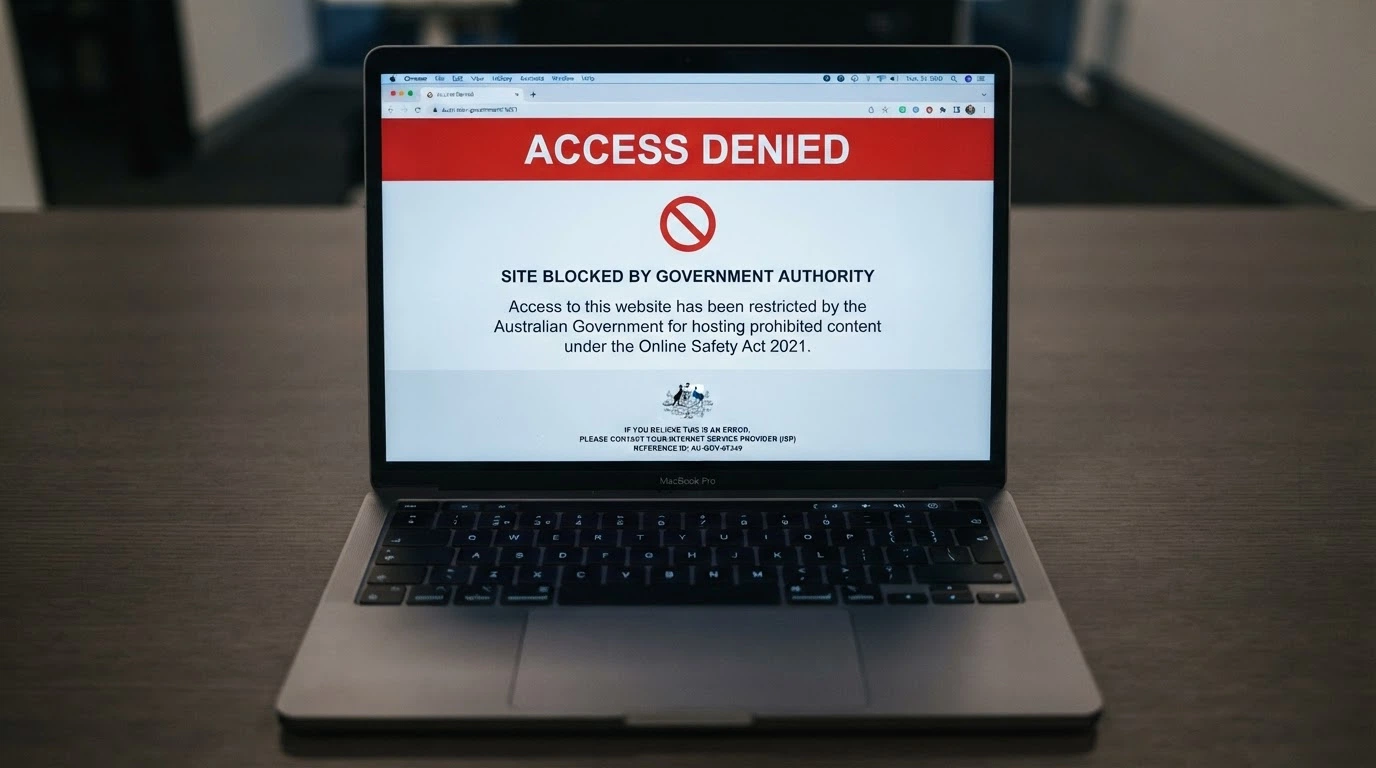
The legal architecture has three parts. The first is the statute — section 15(2A) of the Interactive Gambling Act 2001, which makes the provision of a prohibited interactive gambling service with an Australian customer link an offence, with civil penalties up to A$2,475,000 per day for an individual and A$12,375,000 per day for a corporation. The second is the regulator — the ACMA, which investigates complaints, issues formal warnings, refers sites to ISPs for blocking and runs the consumer-protection infrastructure that licensed wagering operators must connect to. The third is the consequence — every casino offering a $100 no-deposit bonus to an Australian player is operating offshore, beyond Australian consumer protection, and without the BetStop coverage that licensed wagering operators must honour.
The individual player is not prosecuted. The IGA targets the provider, not the customer. The risk to the player is not legal; it is practical. No ACMA recourse if a withdrawal is refused. No BetStop coverage if a self-excluded person deposits. No dispute resolution through Australian consumer law. The casino can be blocked by Australian ISPs with a balance remaining in the account.
The Interactive Gambling Act 2001: What It Prohibits and Why
Section 15(2A) of the Interactive Gambling Act 2001 is the operative provision. It makes it an offence to provide a prohibited interactive gambling service — defined in section 5 as a gambling service provided in the course of carrying on a business, using the internet, to customers physically present in Australia — with an Australian customer link. The penalty scale is significant: civil penalties up to A$2,475,000 per day for an individual provider and A$12,375,000 per day for a corporation.
The Q4 2025 figures illustrate the regulator’s pace. The ACMA completed 23 investigations into 45 gambling sites in that quarter, finding 69 breaches of the Interactive Gambling Act, including 38 for providing a prohibited interactive gambling service. 133 websites were referred to ISPs for blocking in the same quarter. 10 formal warnings were issued to operators including Dama N.V. (Vegas Now, Rooster Bet, Rocketspin) and NovaForge Ltd (CrownPlay, Spinsy, Cashed). On 16 January 2026 the ACMA issued 8 infringement notices to Tabcorp Holdings for providing a prohibited in-play betting service, totalling A$158,400 — a reminder that the prohibition reaches Australian-licensed wagering operators as well as offshore ones when they offer products outside their licence.
What the statute does not prohibit is wagering on races and sport placed before the event begins, lotteries and keno. Licensed wagering operators — Sportsbet, Tab, Bet365, Ladbrokes, TABtouch, PointsBet, Neds, Betr, Picklebet, Betfair — hold state and territory licences for these products. They do not offer casino games or online pokies and are not the operators offering $100 no-deposit bonuses.
The ACMA’s Enforcement: 1,788 Sites Blocked and Counting
The ACMA’s blocking programme is the most visible consequence of the prohibition. Since its first blocking request in November 2019, the ACMA has had 1,788 illegal gambling and affiliate websites blocked by Australian ISPs as of August 2026. The number grows every quarter as the regulator refers new sites to ISPs and ISPs implement the blocks.
The enforcement record also includes withdrawals. Over 230 illegal services have pulled out of the Australian market since the ACMA started enforcing online gambling rules in 2017. A blocked or warned operator does not always continue to take Australian customers; some exit the market entirely rather than face continued enforcement.
For a player at an offshore casino, the practical implication of blocking is that the site can become unreachable from an Australian IP without warning. A balance in the account at the time of a block may not be withdrawable through the standard rails, because the player cannot reach the site to initiate the withdrawal. A reader who plans to deposit at an offshore casino should know that the casino itself is on the regulator’s target list, and that the regulator’s actions can affect the player’s ability to access the account.
The 2026 Reforms: What Changes From 1 January 2027
The Interactive Gambling Amendment (Gambling Reform) Bill 2026 passed Parliament on 19 August 2026. Its measures commence on 1 January 2027. The reform is law with a start date; it is not yet in force in 2026, but it is no longer speculative.
The reform’s central change for offshore casino access is the payment-blocking power. From 1 January 2027, banks and payment providers gain express authority to block transactions to illegal gambling operators. The mechanism is not yet fully specified — the cost-recovery levy bill that funds the ACMA’s expanded role was also passed — but the direction is set. A PayID deposit to an offshore casino in 2027 may be refused by the bank rather than simply being processed.
The reform also tightens advertising. From 1 January 2027, wagering advertising during live sporting events is banned from 15 minutes before to 5 minutes after the event, between 5am and 8:30pm. Radio wagering ads are banned during school drop-off and pick-up times. Broadcasting of sporting odds is banned outright. Online wagering ads are limited to logged-in, age-verified users with an opt-out. Wagering ads are banned in sports venues and on uniforms. Athletes, celebrities and influencers are barred from promotion.
AdStop is the national wagering advertising opt-out register, ACMA-administered and funded by a cost-recovery levy on licensed wagering providers. It joins BetStop as a second consumer-protection register. Direct marketing of inducements is prohibited for 14 days after a customer signs up with a licensed operator and for 3 months after a person deregisters from BetStop. The inducement ban reaches the licensed market; the offshore market operates outside it. Online keno “pocket pokies” and foreign-matched lotteries are banned. Existing sponsorship agreements — jersey logos, stadium signage — are exempt from the ad ban until 31 December 2031, giving the sports-wagering sponsors a five-year transition.
The reform does not legalise online casino. It does not create an Australian licence for the product. It tightens the prohibition, gives banks new tools to enforce it, and restricts the advertising that drives demand for offshore sites. For a player considering an offshore casino in 2027, the practical effect is that deposits may be harder to make and that the regulator’s reach extends further into the payment rails.
What You Lose When You Play at an Unlicensed Casino
The player-protection infrastructure that licensed Australian wagering operators must connect to does not reach offshore casinos. The infrastructure is built into the National Consumer Protection Framework for Online Wagering — 10 measures covering restricted inducements, voluntary deposit limits, activity statements, take-a-break, account closure, staff training, and other obligations — and into BetStop, the National Self-Exclusion Register. None of it binds an offshore operator, because none of the offshore operators hold Australian licences.
The harm of the offshore route is not the bonus terms. The harm is the absence of the infrastructure that catches a player who has stopped enjoying the game and started chasing losses. A self-excluded person who has registered with BetStop cannot deposit at a licensed Australian wagering operator — the register binds every Australian-licensed online and phone wagering service. The same person can still deposit at an offshore casino, because the offshore casino is not connected to the register. BetStop’s coverage is a licence condition, and the offshore casino has no licence.
The National Gambling Helpline and Gambling Help Online are the help infrastructure every Australian player should know, regardless of where they play. They are not offshore-specific; they cover any Australian who needs help, including the players this page is about.
BetStop: Why Australia’s Self-Exclusion Register Doesn’t Protect You Here
BetStop is the National Self-Exclusion Register, live since August 2023. One registration excludes the player from every Australian-licensed online and phone wagering service. By 31 July 2026, 67,480 people had registered; 41,290 exclusions were still active. 78% of registrants were under 40, and 38% chose a lifetime exclusion — a profile that skews young and committed.

BetStop binds Australian-licensed wagering services only. An offshore casino is not connected to the register and will continue accepting deposits from a self-excluded person. This is the single most concrete harm of the offshore route: the register that a vulnerable player has registered with does not reach the operator that is taking their money.
For a reader who has registered with BetStop, or who is considering registering, the offshore casino is the gap the register cannot close. The register is a powerful tool within the licensed market; outside it, the player is on their own.
Deposit Limits, Activity Statements and the National Consumer Protection Framework
- Voluntary deposit limits, set by the player and enforceable by the licensed operator.
- Activity statements, sent to the player on a regular cadence with a full account ledger.
- Take-a-break, a cooling-off period during which the account is locked.
- Account closure, processed on the player’s request without delay.
- Staff training, so that frontline operators recognise the signs of harm and escalate where appropriate.
The 10 measures of the National Consumer Protection Framework apply to licensed wagering operators. Offshore casinos are not part of the framework; they do not offer deposit limits in the same enforceable form, do not send activity statements, and do not have the staff-training obligations. The licensed market carries the cost of these measures — point-of-consumption tax of 10–15% of net wagering revenue plus NT wagering tax of 5% and a 0.05% racing levy — because the licensed market also carries the consumer-protection obligation. The offshore market carries neither.
Problem Gambling in Australia: The Numbers and Where to Get Help
About 2.1% of Australian adults — roughly 430,000 people — experience problem gambling, with high-risk gambling at 1.8%, per the Australian Institute of Health and Welfare’s 2022 data. These are the people for whom the player-protection infrastructure was built, and the people the offshore route leaves without it.
The National Gambling Helpline is 1800 858 858 — free, confidential and staffed 24 hours a day, seven days a week. Gambling Help Online is gamblinghelponline.org.au, with online chat and counselling. Both services are available to any Australian who needs them, including players at offshore casinos, and both are staffed by people who understand the gambling landscape specifically. A reader who feels their play has moved beyond entertainment should reach these services before it moves further.
The 2026 reform strengthens BetStop — by adding a three-month inducement-marketing ban after BetStop deregistration, by extending AdStop to advertising, and by giving banks new tools to block payments to illegal operators. The reform does not reach the offshore casino player retroactively, but it shapes the environment the player operates in from 2027 onwards.
How We Evaluated These $100 No Deposit Bonus Casinos
The 10 featured operators were chosen on traffic data — the operators Australians most often reach, per the operators skill’s traffic data — and not on licence standing, because no Australian licence exists for the product they sell. The ranking is between equivalent offshore operators; it is not a comparison between licensed and unlicensed choices.
Each operator was checked against the Interactive Gambling Act 2001 — specifically, against the question of whether any of them holds an Australian casino licence. None does, because no such licence exists. WinSpirit is the most legible on offshore licensing: it holds a named Curacao Antillephone N.V. licence (No. 8048/JAZ2014-053). Rainbet is reported to hold MGA and UKGC licences, but those were not confirmed on the regulator registers this run, and they are still not Australian licences. The other operators are described as offshore without a named licence figure this review could verify.
Bonus terms were cross-referenced across competitor affiliate pages — QR Solutions, The Walkman, VegasPokie, Casinoshub, Helpgurus, LCB and others — and against the operators’ own published terms pages where available. Where the cross-reference did not surface a specific figure — a max cashout cap, a max bet rule, a bonus validity window — that field is left blank in the comparison table rather than being filled with an estimate. The audit treats a blank as a gap; a reader should treat a blank as a signal to check the operator’s terms page directly before claiming.
The limitations of the review are real. Specific RTP, volatility and max-win figures for individual pokies titles were not surfaced in this round of research; the page therefore does not name a “best pokie to play with a $100 free chip” at the title level. Several operators did not publish full bonus terms in a way that could be verified; their entries are qualitative rather than numerical. A reader who treats this page as the final word on a specific operator’s bonus is reading it wrong; the page is a starting point, and the operator’s terms page is the deciding document.
Is a $100 No Deposit Bonus Worth the Risk?
A clean A$100 no-deposit bonus at 30x wagering and a A$180 max cashout cap can pay at most A$180, after the player has run A$3,000 in turnover through the pokies. The arithmetic is straightforward; the time cost is the part players underestimate. A$3,000 in turnover at a A$5 max bet is 600 spins; at a five-second interval, that is 50 minutes of continuous play. The bonus does not pay more for playing longer; it pays the same A$180 cap regardless of how the player performs, because the cap is what stops the payout.

A clean A$100 no-deposit bonus does not exist at most of the featured operators in the way the search term describes. Fair Go’s public no-deposit chips cluster in the A$10 to A$40 range; the A$100 tier appears as a deposit-tied or loyalty-tied chip rather than a clean sign-up offer. Bogart Casino’s A$100 chip, used here as a benchmark, is a clean illustration of what a $100 no-deposit chip looks like when it exists, but it is outside the featured set.
The risk of the offshore route is not the bonus terms. It is what the offshore route leaves behind. No ACMA recourse if a withdrawal is refused. No BetStop coverage if a self-excluded player deposits. No dispute resolution under Australian consumer law. A site that can be blocked by Australian ISPs, with a balance remaining in the account. From 1 January 2027, banks gain the express authority to refuse transactions to illegal gambling operators, which means the deposit itself can be refused at the bank before it reaches the casino.
A reader who decides to claim a $100 no-deposit bonus at an offshore casino is choosing a capped payout, a 30x to 60x turnover requirement, and no Australian consumer protection. A reader who decides not to is choosing to keep that consumer protection and accept that the Australian licensed market does not offer the product they searched for. The two choices are not equivalent in safety; they are not equivalent in payout ceiling either. The decision is the reader’s, and the page’s job is to make sure the decision is made with the facts in front of it.
A final point on tax: Australian gambling winnings are not assessable income under section 6-5 of the ITAA 1997, unless the person carries on a business of gambling. This is a factual note rather than tax advice, and the reader’s own circumstances will determine whether it applies.
Frequently Asked Questions
Can I get into legal trouble for claiming a no deposit casino bonus in Australia?
No. The Interactive Gambling Act 2001 targets the provider of a prohibited interactive gambling service, not the individual customer. Civil penalties of up to A$2,475,000 per day for individuals and A$12,375,000 per day for corporations apply to operators, not players. The risk to a player using an offshore casino is not prosecution — it is the absence of Australian consumer protection if something goes wrong.
What happens if an offshore casino refuses to pay my winnings in Australia?
There is no Australian regulator with authority over an offshore casino. The ACMA can investigate the Australian end of the arrangement but cannot compel an offshore operator to pay. Dispute resolution through Australian consumer law does not apply because the operator is not subject to it. A player whose withdrawal is refused has, in practice, the same options they would have with any overseas counterparty — chargeback where the payment rail allows it, public complaint channels, or nothing at all.
How long does a no deposit bonus last before it expires?
Across AU-facing offshore casinos the validity window runs from 3 to 10 days from the moment the bonus is claimed. The window is short by design — a longer window would give the player more time to clear the wagering, which is not what the casino wants. A player who claims a no-deposit bonus and does not play within the window forfeits the bonus and any winnings attached to it.
What are the best pokies to play with a $100 free chip?
The realistic answer is: pokies contribute 100% toward wagering requirements at most AU-facing casinos, and table games contribute 0% to 10%. The clearing game is therefore a pokie, but specific per-title RTP and volatility figures were not confirmed in this round of research. Fair Go runs exclusively on RealTime Gaming software; the other featured operators run a mix of providers. The reader should check the operator’s published RTP list before committing the bonus balance to a specific title, and should not treat any “best pokie” recommendation as authoritative.
What is the maximum amount I can cash out from a $100 no deposit bonus?
Across genuine $100 no-deposit free chips the max-cashout cap typically sits between A$50 and A$180. Fair Go’s cap on all chip sizes is approximately A$180, which holds regardless of whether the chip is A$25, A$50 or A$100. Bogart Casino’s A$100 chip carries a A$100 cap dollar-for-dollar. Rainbet’s deposit-match package caps at A$200, but it is a deposit-gated offer rather than a no-deposit chip. The cap is the ceiling; the bonus cannot pay more than it.
What is the BetStop self-exclusion register and does it cover offshore casinos?
BetStop is the National Self-Exclusion Register, live since August 2023. One registration excludes the player from every Australian-licensed online and phone wagering service. By 31 July 2026, 67,480 people had registered, with 41,290 exclusions still active. BetStop binds Australian-licensed wagering services only; offshore casinos are not connected to the register and will continue accepting deposits from a self-excluded person. The register is the most concrete harm-minimisation tool in the licensed market, and offshore play is the gap it cannot close.
Prepared by the No Deposit Bonus Casino AU editorial staff.