
2026 Australian $5 Deposit Casinos: The Honest Floor and What It Buys
Search any review site and you will find a “best $5 deposit casino Australia” list longer than a poker tournament bracket. Read past the table and a less tidy picture appears: the AU$5 figure is, for fiat, closer to a search-engine artefact than a product. Genuine $5 deposits exist, but they exist almost entirely through one rail — cryptocurrency — and the operators offering them sit entirely outside Australian law. This page is the version of that list that tells you what the cashier screen actually shows, what the bonus headline is actually worth at that floor, and what you give up by playing there at all.
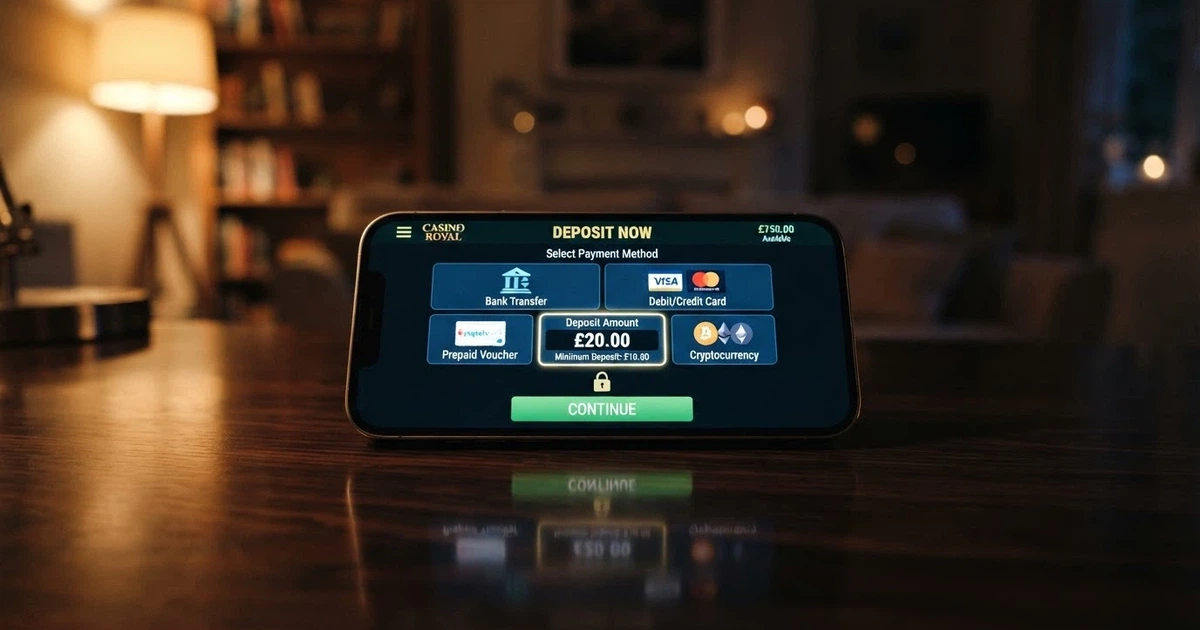
The data below is current as of 29 October 2026 and was checked against the Australian Communications and Media Authority (ACMA) register, the Interactive Gambling Act 2001, and audited affiliate cashier pages.
Table of Contents
- Why Your $5 Casino Deposit Is Harder to Find Than Advertised
- The Real Deposit Floor: What Each Payment Method Actually Requires
- Ranked: The Offshore Casinos Australian Players Are Searching For — and Their Real Deposit Floors
- SkyCrown
- Royal Reels
- RocketPlay
- Fair Go Casino
- Ozwin Casino
- WinSpirit
- Stake
- Bizzo Casino
- PlayAmo
- Ignition Casino
- Bonuses on a $5 Deposit: What You Can Actually Claim
- Turning $5 Into Real Play: The Pokies That Make a Micro-Bankroll Count
- Mobile Play on a $5 Deposit: No Compromise on the Small Screen
- New $5 Deposit Casinos in 2026: Fresh Faces, Same Offshore Reality
- Are $5 Deposit Casinos Legal in Australia? The Full Offshore Picture
- Staying Safe: Responsible Gambling Tools and the BetStop Gap
- How We Evaluated These $5 Deposit Casinos
- What Your $5 Actually Buys at an Offshore Casino
- Frequently Asked Questions
Why Your $5 Casino Deposit Is Harder to Find Than Advertised
The AU$5 minimum deposit slot in the Australian market looks crowded. Twenty or thirty affiliate sites rank operators at that headline. Sit down at any real cashier and the slot empties: most payment methods refuse it. PayID enforces a casino-side floor around AU$20 because the PSP layer flags micro-deposits as fraud testing. Card networks price a minimum transaction fee that wipes the margin on a AU$5 Visa deposit. Neosurf, the prepaid voucher sold in Australian newsagencies, sells its smallest denomination at AU$10 — the AU$5 voucher is a European SKU that does not appear on local shelves.
What actually works below AU$10 is the rail no Australian-licensed operator can use: cryptocurrency. Stake accepts a deposit worth roughly AU$0.10 in Bitcoin. BC.Game handles about AU$1 in USDT. Bitcasino.io sits functionally at zero. Three crypto-only brands carry the entire genuine sub-AU$10 deposit market for Australian players.
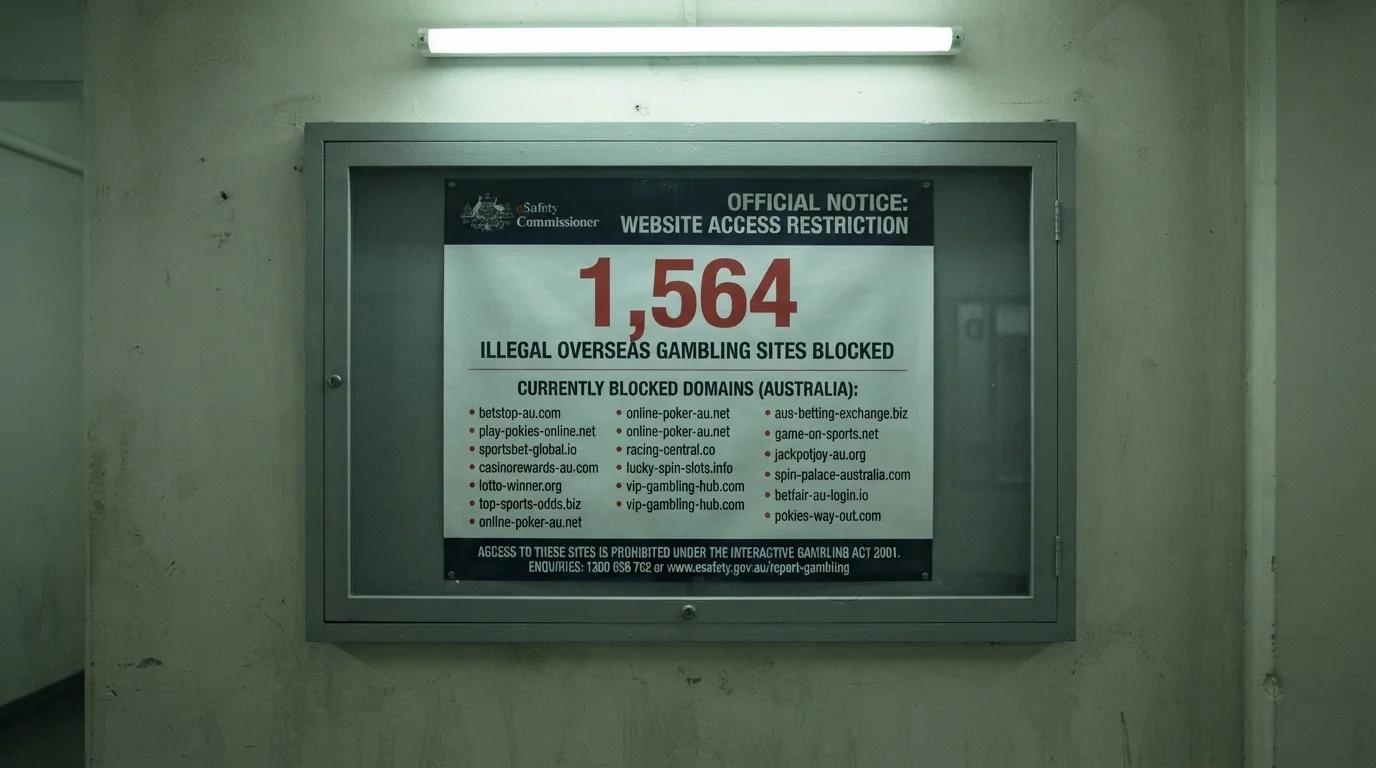
The asymmetry cuts two ways. On one side, AU$5 is a real product. A crypto deposit of that size buys approximately fifty spins at AU$0.10 each — five minutes of real-money play, which is roughly what the punter’s first coffee break buys at the cashier. On the other side, that five-minute deposit opens a session at an operator the Australian government has been trying to block since 2017. The ACMA has had 1,564 illegal gambling and affiliate sites added to Australian ISP blocklists since November 2019, and from 1 January 2027 banks join the block. None of the brands below is licensed here. Every balance held at one is a balance an Australian has no legal mechanism to recover if the operator refuses to pay it out.
What “$5 Minimum Deposit” Actually Means in Australia
Strip the marketing from a “AU$5 deposit casino” claim and three questions remain. Which payment method does the cashier accept at that figure? Does the welcome bonus eligibility match the play deposit? Can you actually withdraw your AU$5 balance if the session ends in profit? Affiliate pages that publish “AU$5 minimum” without answering any of those three ship a headline that breaks on first use.
Neosurf is the closest fiat option. The voucher format lets a punter walk into a newsagency, hand over cash, and walk out with a sixteen-digit code redeemable at the deposit screen — no bank account, no card on file, no identity check at that step. Australian newsagencies stock the AU$10, AU$20, AU$50 and AU$100 denominations; AU$5 is an EU-only denomination that does not appear in the local SKU list. The minimum fiat deposit that an Australian can truly hand a cashier today is therefore AU$10, not AU$5.
PayID and Osko replaced POLi at the end of September 2023 and now sit at the centre of every AU-facing cashier. The technology settles in under sixty seconds and charges nothing to the player — both genuine improvements on POLi’s older rails. The problem is not the speed but the floor: casinos using PayID set their own minimum at the cashier, and that minimum sits at AU$20 across the surveyed set. Anti-fraud monitoring at the PSP layer triggers on inbound micro-deposits, so operators keep the floor high enough to filter the tests out. A PayID casino advertised at AU$5 is, at the cashier, a AU$20 casino in everything but the banner.
Visa and Mastercard carry a similar minimum-transaction economics problem. Card networks charge a flat fee per transaction on top of the percentage interchange, and that flat fee makes a AU$5 deposit unprofitable below a certain size. Operators therefore set their card cashier minimums in the AU$10–AU$20 band. Some pairs of numbers are very close to AU$5. None of them is AU$5.
One industry researcher’s short summary puts the point plainly: “There is no honest AU$5 fiat-deposit casino for Australian players in 2026 — the figure is a search-engine invention, not a product.” The honest AU$5 product sits on a different rail.
Who the Micro-Deposit Format Actually Suits
Three reader profiles match the format. The first is the budget player who wants to test a casino without committing more than a coffee. A five-dollar deposit is, by design, throwaway — the worst case is one bad session and a take-away lesson. The format is genuinely cheaper than the AU$20 floor for that purpose, and that cost difference matters to readers who are running tight discretionary budgets.
The second profile is the first-time casino triallist. Someone who has never played real-money pokies before does not need to deposit AU$100 to figure out whether online pokies interest them. An AU$5 crypto deposit that buys fifty spins is the most efficient way to find out. The learning happens in the session, not in the stack.
The third profile is the crypto-native punter. Someone already holding Bitcoin or USDT in a wallet does not measure casino deposits in dollars — they measure them in fractions of a coin. A AU$0.10 BTC-equivalent deposit at Stake is a natural unit, not a workaround. For this reader, the AU$5 fiat floor is irrelevant; the AU$0.10 crypto floor is just the round-down.
All three readers should know what the deposit actually buys in play. Fifty spins at AU$0.10 each is approximately five minutes of real-money play time at the average pokie tempo. A reader expecting an hour of gameplay from AU$5 has misunderstood the product; the deposit that buys an hour starts closer to AU$60. AU$5 is a sample size, not a session.
The Withdrawal Trap: Why a $5 Deposit Doesn’t Mean a $5 Cash-Out
The minimum deposit and the minimum withdrawal are never the same number at these operators. Minimum deposits sit at AU$5 (crypto only) to AU$20 (most fiat). Minimum withdrawals sit in the AU$25–AU$50 range, sometimes AU$50–AU$100. A AU$5 depositor who wins ten dollars mid-session and tries to cash out will be told the threshold has not been met, and the requirement to either keep playing or surrender the balance becomes the operator’s quiet way of converting small wins back into more deposits.
For a crypto player on Stake at AU$0.10 this trap sits further away — the deposit is tiny, and the BTC-denominated withdrawal floor tracks at a low value. For a Neosurf player who puts in AU$10 and ends the session with AU$15, the trap is closer and more consequential: the AU$25 minimum means one more session, and the longer the balance sits the more likely it is to be spent rather than withdrawn. The asymmetry is structural. It is also published on the operator’s banking page, which is exactly the page a punters at a AU$5 casino rarely read.
The Real Deposit Floor: What Each Payment Method Actually Requires
The “AU$5” headline collapses the moment a reader picks a payment method. Each method has its own economics, and those economics produce a small set of distinct real floors. The matrix below compares them.
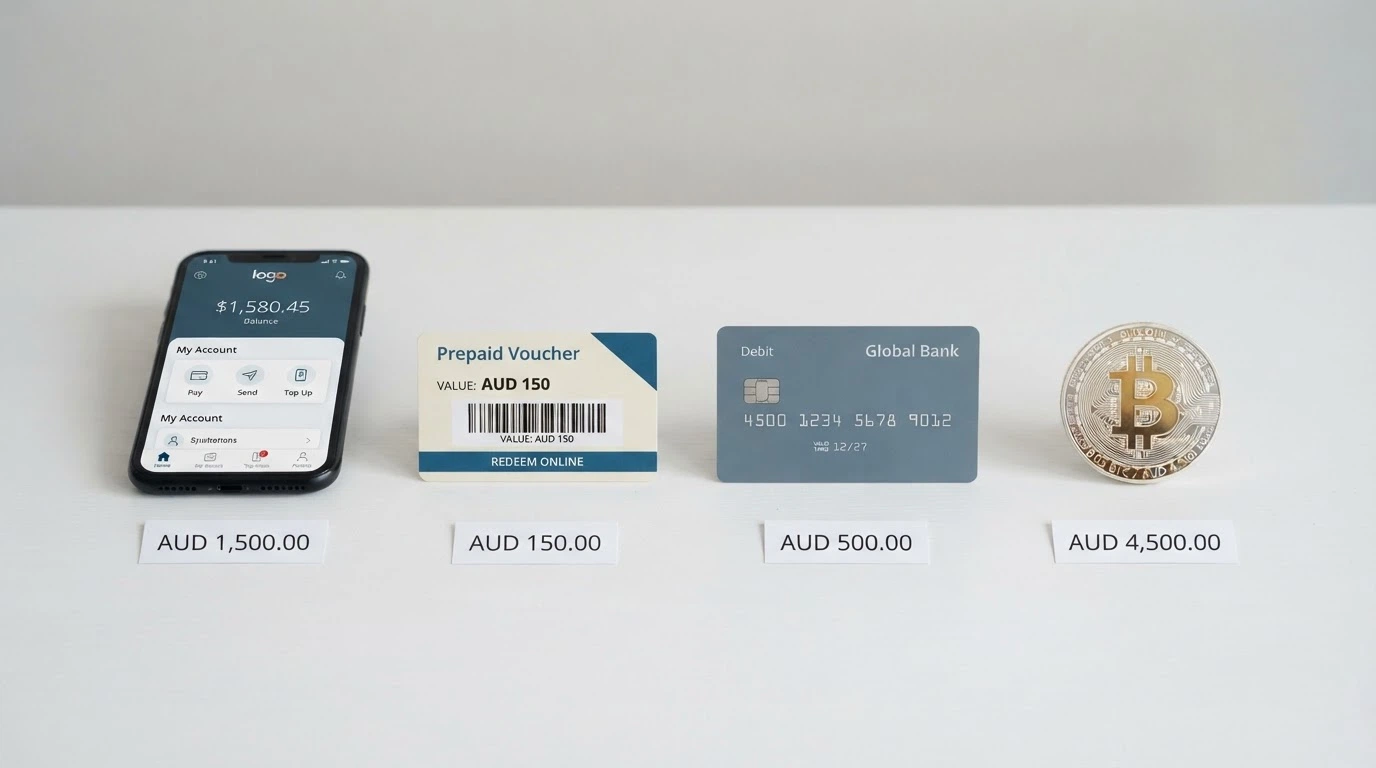
| Payment Method | Real Minimum Deposit | Processing Time | Fees | Notes |
|---|---|---|---|---|
| PayID / Osko | AU$20 | < 60 seconds | Zero | Casino-side minimum driven by PSP anti-fraud monitoring |
| Neosurf voucher | AU$10 | Instant | Zero at cashier | Sold at Australian newsagencies; AU$5 voucher is EU-only |
| Visa / Mastercard | AU$10–AU$20 | Instant | None to player | Card-network minimum transaction fee makes AU$5 unprofitable |
| Bitcoin / USDT / altcoins | ~AU$0.10 BTC-equivalent | Network confirmation | Network fee only | Confirmed at Stake (BTC), BC.Game (USDT), Bitcasino.io (BTC) |
Every AU-facing cashier will hand a player one of these four rails, sometimes with a fifth (BPAY, MiFinity, eZeeWallet) layered on top. None of them allows an honest AU$5 deposit from fiat. The AU$5 figure that appears on the operator’s promotional page is an aspirational floor that the underlying PSP or card network does not honour.
PayID and Osko: Fast, Australian — but Never $5
PayID and Osko are the default rails for the surveyed operators targeting Australian players. POLi, their predecessor for instant bank transfers, shut down at the end of September 2023; PayID absorbed the use case. The replacement is faster at the consumer end — sub-sixty-second settlement — and free of transfer fees, which is a genuine improvement.
The casino side operates differently. Operators that use PayID set their own minimum at the cashier, and across the surveyed set that floor sits at AU$20. The reason is downstream of speed: payment service providers flag inbound micro-deposits as a fraud pattern (testing stolen cards, layering small amounts through a mule account, probing the operator’s reversals process). Operators adjust by raising their minimum until the flagged transactions stop. PayID can technically clear an AU$5 deposit in the same second as an AU$200 one. Business policy says the AU$5 one is the deposit the operator does not want.
Where the operator allows PayID for withdrawals, settlement is genuinely fast — typically one to four hours. That speed is one of the genuine edges of the rail for Australian players. The AU$20 minimum is the corresponding cost.
Neosurf: The Voucher That Comes Close
Neosurf is the lowest fiat floor available to an Australian player without using crypto. Vouchers are sold at newsagents, convenience stores and some petrol stations in denominations that start at AU$10. A player walks in, hands over ten dollars, leaves with a sixteen-digit code, and types it into the deposit screen — the cashier holds the credit immediately, no bank account or card is required at that step.
The privacy angle is real. Neosurf does not hand the operator your bank details or card number. For a punter who wants to keep casino spending off their transaction history, this rail is materially cleaner than a card deposit. The lower denomination was sold in Europe at one point — a Neosurf representative publicly walked an Aus-affiliate reviewer through the SKU list when asked — but the AU$5 voucher does not appear in Australian outlets.
For the surveyed set, Ozwin Casino accepts Neosurf at a minimum of AU$10. That is the published entry point. A handful of smaller brands run similar numbers. Combined with PayID’s AU$20 floor, Neosurf at AU$10 is the practical bottom for any Australian who wants to keep the deposit in fiat.
Credit and Debit Cards: The A$10–A$20 Processor Floor
Visa and Mastercard deposits sit at a AU$10–AU$20 minimum across the surveyed AU-facing operators — Ozwin at the higher end with a AU$20 card minimum, most others somewhere in the middle. The floor is not the operator’s call. Card networks charge a minimum transaction fee on top of interchange, which means the merchant’s processing cost on a AU$5 deposit exceeds the deposit itself in some cases. Operators solve that by setting a cashier minimum that protects margin per transaction.
One extra constraint applies in the other direction. Since 11 June 2024, credit cards and credit-related products have been banned as a payment method for licensed online wagering in Australia. The ban targets licensed operators, not offshore ones — every surveyed brand below accepts credit cards and crypto from Australian players without flagging a problem. A licensed wagering brand cannot take your Visa for a bet; an offshore casino will.
For an Australian punter at an offshore casino, the credit-card ban is informative twice over. It signals that the payment rail being offered is one Australian regulation has explicitly closed for licensed operators, which is itself a confirmation the operator is operating outside Australian regulation. And it shifts the workaround: deposits at an offshore casino from an Australian-issued credit card carry an extra layer of risk if the transaction is later disputed at the bank, because the bank’s own terms will refuse chargeback on illegal wagering.
Cryptocurrency: The Only Genuine Sub-$5 Deposit Route
Cryptocurrency is the only genuine sub-AU$10 deposit route available to Australian players today. The surveyed minimums are not symbolic: Stake accepts deposits down to roughly AU$0.10 in BTC-equivalent, BC.Game sits around AU$1 in USDT, and Bitcasino.io is effectively zero. These are the lowest real-money deposit floors available at any AU-facing casino.
The mechanics travel through the wallet rather than the payment processor. A player copies a casino deposit address, sends any amount above the floor from a self-custody wallet, and sees the balance appear after one to three network confirmations. The cost is the network fee (often trivial at small amounts on the right chain) and the volatility risk between sending and confirming — for someone depositing AU$5 worth of Bitcoin, a three-minute confirmation interval can be enough for the dollar value to move a few cents either way.
The structural trade-off is twofold. First, the credit-card and crypto payment ban for licensed wagering means that any operator accepting crypto from Australians is automatically outside Australian regulatory reach — accepting that deposit is itself a marker of the operator’s offshore status. Second, deposit-match welcome bonuses at multi-provider operators often exclude crypto deposits from the bonus eligibility. SkyCrown’s A$8,000 + 400 free spins package is one example — depositing via Bitcoin does not unlock it. The lowest real deposit floor and the headline welcome package tend not to coexist.
For a punter whose priority is genuinely testing the cashier at the lowest possible cost, crypto is the answer. For a punter whose priority is the headline welcome bonus, the crypto path usually routes to the same operator but a different promotional path.
Ranked: The Offshore Casinos Australian Players Are Searching For — and Their Real Deposit Floors
The table below ranks the ten brands that dominate the Australian “$5 deposit casino” search results. The ranking orders by verified minimum deposit, then by bonus value and game quality. Every operator is offshore and Curacao-licensed; none holds an Australian licence.
| Casino | Licence Status | Welcome Bonus | Wagering Multiplier |
|---|---|---|---|
| Stake | Curacao (offshore, no AU licence) | Not confirmed | — |
| Ozwin Casino | Curacao (offshore, no AU licence) | Up to A$4,000 + 100 FS | 30× (bonus + deposit) |
| Royal Reels | Curacao (offshore, no AU licence) | A$2,500 across 3 deposits + 50 FS | 35× (bonus only) |
| Bizzo Casino | Curacao (offshore, no AU licence) | Deposit match (specifics not confirmed) + 10–25 no-deposit FS | 40× on no-deposit spin winnings |
| PlayAmo | Curacao (offshore, no AU licence) | Deposit match + FS (specifics not confirmed) | — |
| Ignition Casino | Curacao (offshore, no AU licence) | Card and crypto variants (specifics not confirmed) | — |
| SkyCrown | Curacao (offshore, no AU licence) | Up to A$8,000 + 400 FS across 4 deposits | 40× (bonus + FS) |
| Fair Go Casino | Curacao (offshore, no AU licence) | 100% up to AU$200 × 5 (A$1,000 total) | 30× (deposit + bonus) |
| RocketPlay | Curacao (offshore, no AU licence) | Up to $2,000 + 100 FS | 40× (bonus) |
| WinSpirit | Curacao (offshore, no AU licence) | 100% up to A$300 + 100 FS + 200% up to A$1,000 | 40× (bonus) |
The order does not reflect regulatory standing (none of the ten is licensed in Australia) or game quality (the data only justifies rough comparisons), and it certainly does not reflect legal safety — every row carries the same offshore risk profile. It reflects a single pragmatic question: which operator gets a reader from “I want to spend AU$5” to “I am spinning a real-money pokie” with the fewest hidden steps between marketing and cashier.
How We Built This Ranking
Three sources fed into the ranking. The first was the cross-referenced affiliate audit data listing each operator’s claimed minimum deposit against the cashier screen of each operator. The second was the ACMA’s blocked-services register, used not as a positive signal but as a negative one — operators that had been blocked, or whose domain had recently moved, were flagged for instability. The third was the available welcome-bonus terms from each operator’s promotional page or its reviewed coverage.
The weighting is qualitative, not numerical. License transparency was treated as a binary (offshore or absent), since no Australian licence exists for any entry. Verified minimum deposit was treated as a hard pass/fail on the first floor. Bonus value was treated as the next filter, with wagering multiplier and max-bet cap pulling weight. Game-provider quality and pokie RTP range acted as tiebreakers for operators at the same minimum.
The methodology is not a score. No percentage rankings are assigned, because no input justifies a manufactured number — every figure on this page came from a researched source, and weighting those figures against each other on a numerical scale is the kind of judgement that needs an explicit input.
What Separates a Genuine Low-Deposit Casino from a Marketing Headline
Three tests expose the gap. The first is the cashier-vs-marketing test: open the deposit screen, find the cheapest payment method, and read the actual minimum. A casino that advertises AU$5 in the banner and AU$20 in the cashier has failed the first test, and the failure usually traces to a PSP anti-fraud floor or a card-network minimum. The second is the bonus-eligibility test: open the bonus terms and find the minimum qualifying deposit. A casino that lets you play for AU$5 but requires AU$30 to claim the welcome offer has failed the second test. The third is the withdrawal-feasibility test: open the banking page and find the minimum withdrawal. A casino that accepts AU$5 deposits and AU$50 withdrawals has failed the third test, because the gap forces the small-balance player to keep playing rather than cash out.
The three tests grade operators out of three. Most surveyed brands fail at least one.
SkyCrown
SkyCrown is the heaviest welcome package of the surveyed set: up to A$8,000 plus 400 free spins across the first four deposits, with the first part alone delivering 120% up to A$1,200 plus 125 free spins. The wagering multiple sits at 40× on both bonus money and free-spin winnings, with a A$300 maximum win per free-spin part and a A$5,000 per-part bonus cap (A$20,000 cumulative across the package).
The catch is the minimum qualifying deposit. SkyCrown sets that at A$30 on the first deposit, rising to A$50 by the fourth. An AU$5 player cannot reach the bonus from the cashier at all — the lowest eligible route here is AU$30, twelve times the deposit floor. And the welcome offer explicitly excludes deposits made in cryptocurrency. So a punter who arrived at SkyCrown via the genuine AU$5-floored Stake/BC.Game route will find the bonus invisible.
Verdict: SkyCrown is for a punter who planned to deposit AU$30, not AU$5, and who is happy with a 40× wagering multiple. The headline number is loud; the deposit that triggers it is six times larger than the page’s subject.
Royal Reels
Royal Reels runs a quieter welcome package: A$2,500 across three deposits (100% up to A$500, 75% up to A$750, 100% up to A$1,250) plus 50 free spins at A$0.20 per spin. The wagering multiple is 35× on the bonus only — meaningfully lower than SkyCrown’s 40× — and the per-spin cap during wagering is A$5, which absorbs almost every standard pokie without brushing the limit.
The library is a Royal Reels strength: roughly 1,400 pokies out of 1,800 total titles, with an average RTP of 96.4% across the top 50 most-played pokies. That is a genuine quality edge over the RTG-only operators, where the library is wider in volume but narrower in RTP variance. Pragmatic Play and Play’n GO’s pokiefirst libraries carry the catalogue.
The minimum qualifying deposit is the unverified point. Royal Reels markets at AU$5, but the cashier’s bonus-qualifying minimum was not explicitly confirmed from reviewed sources this run. The 35× on bonus only is, however, the lowest wagering on a deposit match in the survey — which matters more than the headline number for someone running a tight bonus budget.
Verdict: Royal Reels suits a punter who values wagering fairness over headline size and is comfortable with an unverified bonus-minimum figure.
RocketPlay
RocketPlay splits the welcome into two tiers: a first deposit of 100% + 100 free spins, followed by a second-deposit 200% boost totalling up to $2,000 + 100 FS. Wagering is 40× on the bonus amount, bonus validity runs 7–30 days depending on the promotion, and the max bet during wagering is AUD 7.50.
The minimum qualifying deposits split the same way: AU$20 on the first deposit, AU$75 on the second. A punter planning a AU$5 deposit gets nothing from this welcome; a punter planning a AU$20 first deposit gets the 100% + 100 FS at the standard rate. The 200% on the second deposit is one of the stronger boosts in the surveyed set, but AU$75 is also one of the heavier minimums.
Verdict: RocketPlay suits a punter prepared to commit AU$75 across the welcome and willing to clear it within the lower validity window. The structure rewards a larger second deposit than the first, which is unusual and worth knowing before signing up.
Fair Go Casino
Fair Go is the AUD-native specialist with the simplest terms to read. 100% up to AU$200 on each of the first five deposits — total AU$1,000 across the welcome — with 30× wagering on deposit + bonus and slots contributing 100%. That is the lowest wagering multiplier in the surveyed set on a deposit-match package, and the structure (deposit + bonus rather than bonus alone) is also the one most transparent about its real cost.
The library is the trade-off. Fair Go is single-provider Realtime Gaming (RTG), with approximately 200 games. No live dealer. The RTG catalogue is smaller than the multi-provider sets, but the games that are there are stable, the AUD denomination is native, and the withdrawals process through PayID and Neosurf cleanly.
For a AU$5 punter, Fair Go offers something specifically useful: 20 free spins on Elemental Adventures as a no-deposit offer, with a A$180 max cashout. A punter who wants a five-dollar session to test the cashier can combine the no-deposit free spins with the AU$20 minimum deposit for the welcome match, and the 30× multiple is the gentlest on the welcome bonus side.
Verdict: Fair Go suits a punter who values low wagering, AUD-native play and RTG’s catalogue over the larger multi-provider libraries. The 280-game library is a limit, not a flaw.
Ozwin Casino
Ozwin is the one operator in the surveyed set where the AU$5 deposit is unambiguous at the cashier. The deposit floors split by payment method: AU$5 via Lightning Bitcoin, AU$10 via Neosurf, AU$20 via Visa/Mastercard. A punter holding Bitcoin in a Lightning-enabled wallet can genuinely deposit AU$5 here and start playing within minutes.
The welcome package runs up to A$4,000 + 100 free spins across four deposits, with a 200% first-deposit match up to A$2,000 plus 50 free spins on Cash Bandits 2. Wagering is 30× on bonus + deposit; free-spin winnings carry 10× wagering separately — a notable distinction, because most operators fold free-spin wagering into the bonus multiple. The free-spin path is cleaner here than elsewhere in the set.
Ozwin also offers 100% cashback on the first busted deposit — a rare refund-style insurance term — and Lightning Bitcoin withdrawals settle in 15–30 minutes after approval. The weekly withdrawal limit of A$7,500 is higher than most RTG-only peers and is generous for a punter who manages to clear the welcome.
Verdict: Ozwin is the strongest AU$5-floor operator in the surveyed set for a punter who actually uses Lightning Bitcoin. The wagering split (bonus + deposit vs free-spin winnings) is unusually reader-friendly.
WinSpirit
WinSpirit’s welcome is the most structurally interesting and the most tightly drawn. First deposit: 100% up to A$300 plus 100 free spins. Second: 200% up to A$1,000. Wagering is 40× on the bonus amount. The bonus expires 7 days after reception — the shortest bonus validity in the surveyed set — and the max bet during wagering is A$5.
The minimum qualifying deposit for most bonuses is A$30, which keeps WinSpirit outside reach for an honest AU$5 player. The no-deposit path is genuinely useful, though: 40 no-deposit spins (20 for downloading the app, 20 for leaving a review) with a A$50 maximum cashout from no-deposit bonus. A punter who only wants to spend nothing can claim forty spins and try to reach A$50 in winnings within the bonus terms.
Verdict: WinSpirit suits a punter prepared to clear a 40× bonus within 7 days. The 7-day validity is the binding constraint; the 200% second-deposit boost is the reward.
Stake
Stake is the genuine AU$0.10 BTC-equivalent floor of the surveyed set, and it is the only operator where a punter can deposit what amounts to a fraction of a cent and start playing. The crypto-only setup means there is no PayID, no Neosurf, no card cashier — just a wallet address and a few minutes of network confirmation.
The trade-off is welcome-bonus coverage. Reviewed sources this run did not confirm a traditional welcome bonus at Stake in the form that the other surveyed brands offer; the operator’s value to most readers sits in its ongoing promotions rather than a deposit match. The proprietary games are provably fair (the result of every bet can be cryptographically verified by the player), which addresses one of the standard concerns about offshore play — fairness — at the technical level. The multi-provider slot lobby adds the standard catalogue of third-party titles.
Verdict: Stake is for the punter whose floor is genuinely AU$0.10 and who wants the cryptographically verifiable fairness claim. There is no welcome bonus safety net to soften the absence of one.
Bizzo Casino
Bizzo is one of two operators in the set where the AU$5 minimum deposit is auditable at the source. The casino also carries 10–25 free spins as a no-deposit bonus with 40× wagering on spin winnings — the standard no-deposit terms for the surveyed set.
The welcome bonus deposit match specifics are the gap on Bizzo. Reviewed sources this run did not carry the deposit-match percentage, cap or wagering terms in detail, so a reader comparing it against Royal Reels or SkyCrown has less to compare on. The library is the unverified strength: a large multi-provider catalogue with fast verification reported across affiliate audits.
Verdict: Bizzo suits a punter whose priority is large multi-provider library breadth over a brand where the deposit-match terms are precisely known. The 10–25 no-deposit spins with 40× wagering are a representative sample of the no-deposit tier.
PlayAmo
PlayAmo rounds out the AU$5 minimum deposit operators with crypto-friendly rails (Bitcoin, Litecoin, Dogecoin supported) and a large multi-provider lobby. The welcome package is a deposit match plus free spins, but the specifics — percentage, cap, wagering — were not confirmed in the reviewed sources this run, so the operator sits alongside Bizzo and Ignition as a verified-floor but unverified-bonus entry.
Verdict: PlayAmo suits a punter who values crypto deposit flexibility (multi-coin support) and multi-provider lobby size over surfacing the full welcome-bonus terms on a comparison page.
Ignition Casino
Ignition Casino sits at the AU$5 minimum deposit but only on the crypto side of the cashier — fiat deposits run higher. The casino carries separate welcome bonuses for crypto and card deposits, which is a structural choice a punter should know about: cashing in via Bitcoin accesses a different bonus than cashing in via Visa. Neither variant’s details were confirmed this run.
The library features 777 Deluxe and A Night with Cleo among the headline titles, and Ignition is one of the better-known offshore brands among Australian-facing players. The Curacao licence is the standard offshore mark for this set.
Verdict: Ignition fits a punter who specifically wants the Ignition brand and is comfortable with a crypto-only AU$5. Like Bizzo and PlayAmo, the welcome specifics sit unverified.
Bonuses on a $5 Deposit: What You Can Actually Claim
The single most useful fact about bonuses at the AU$5 floor is that most welcome bonuses set a minimum qualifying deposit above AU$5. Of the ten surveyed operators, only one (Ozwin, via Lightning Bitcoin) lets a genuine AU$5 deposit trigger the welcome offer. The rest gate the bonus at AU$20, AU$30 or AU$50.

The arithmetic is simple. A bonus with a AU$30 minimum qualifying deposit is, for a AU$5 punter, not a bonus. It is a marketing line. The headline number (A$8,000 + 400 free spins at SkyCrown, for example) reads generously, but the path from “I have AU$5” to “I can claim this” goes through “I need to find another AU$25 first.”
The no-deposit tier is the genuine AU$5-friendly offer. Free spins awarded without a deposit carry their own terms (win caps, separate wagering, game restrictions) but they are the only path to bonus play that doesn’t require topping up. Fair Go’s 20 no-deposit spins on Elemental Adventures with A$180 max cashout and WinSpirit’s 40 no-deposit spins with A$50 max cashout are the two clearest examples in the set.
Welcome Bonuses and the Minimum-Deposit Trap
The trap operates at the bonus-terms level, not the cashier. A punter who deposited AU$5 at SkyCrown (if the cashier allowed it, which it doesn’t) would find the bonus greyed out — the T&Cs require AU$30. The same holds at WinSpirit (A$30), Fair Go (A$20) and RocketPlay (A$20). The gap between bonus-eligibility and play-deposit minimums is itself information: operators expect the budget player to deposit enough to clear the T&Cs, not enough to play a single session.
Crypto deposits widen the gap at SkyCrown — explicitly excluded from the welcome. A punter holding Bitcoin and looking at SkyCrown cannot reach the bonus from the crypto rail.
Ozwin is the operator that closes the gap, at AU$5 via Lightning Bitcoin. That is the genuine AU$5 path to a welcome bonus in the surveyed set.
No-Deposit and Free-Spin Offers That Skip the Deposit Floor
No-deposit offers are the budget-punter’s only guaranteed claim. The terms vary across the set:
- Fair Go: 20 no-deposit spins on Elemental Adventures; A$180 max cashout; specific wagering not confirmed separately.
- WinSpirit: 40 no-deposit spins (20 app download, 20 review) with A$50 max cashout from no-deposit bonus.
- Bizzo: 10–25 no-deposit spins with 40× wagering on spin winnings.
The no-deposit path has a low ceiling by design. WinSpirit’s A$50 cap and Bizzo’s 40× wagering on small win amounts means the expected cashout from the free spins is small in absolute terms. But for a punter with no budget to deposit at all, the no-deposit tier turns the AU$5 page into a AU$0 page.
Turning $5 Into Real Play: The Pokies That Make a Micro-Bankroll Count
The pokie title matters more than the deposit size at the AU$5 level. A AU$5 balance at one pokie and the same AU$5 at another are not the same proposition.

Three variables drive the difference. The first is minimum bet: at AU$0.10 per spin, a AU$5 deposit produces roughly fifty spins. A pokie with a AU$0.20 minimum bet halves that to twenty-five spins; a pokie with a AU$0.50 minimum cuts it to ten. The second is RTP — the mathematical edge the house keeps, expressed as the percentage of wagered money returned to players over the long run. A pokie at 96% RTP returns, on average, 96 cents per dollar wagered; a pokie at 99% RTP returns 99 cents. For fifty spins at AU$0.10, the long-run expected loss falls from AU$2.00 at 96% RTP to AU$0.50 at 99% RTP. The third is volatility — the spread between frequent small wins and rare large wins. A high-volatility pokie can eat a AU$5 balance in two minutes without a feature; a low-volatility pokie stretches the same balance into a slower, steadier burn.
The table below covers ten audited pokies, listed in descending order of auditability rather than ranking.
| Pokie Title | RTP | Volatility | Provider | Max Win |
|---|---|---|---|---|
| Mega Joker | up to 99.00% | High | NetEnt | — |
| Big Bass Bonanza | 96.71% | High | Pragmatic Play | 2,100× |
| Sweet Bonanza | 96.51% | High | Pragmatic Play | ~21,100× |
| Gates of Olympus | 96.50% | High | Pragmatic Play | 5,000× |
| Aloha! Cluster Pays | 96.42% | Low | NetEnt | 700× |
| Piggy Riches | 96.38% | Medium | NetEnt | 7,500× |
| Book of Dead | 96.21% | High | Play’n GO | 5,000× |
| Starburst | 96.09% | Low | NetEnt | 500× |
| Wolf Gold | 96.01% | Medium | Pragmatic Play | 2,500× |
| Elvis Frog in Vegas | 96.00% | Medium–High | BGaming | — |
Mega Joker’s headline number (up to 99.00% RTP) is conditional on optimal Supermeter play; the standard play RTP is lower and the volatility in Supermeter mode is genuinely high. Starburst and Aloha! Cluster Pays round out the low-volatility options, the kind that turn a AU$5 balance into slow, visible session time. Big Bass Bonanza sits as the highest-RTP standard-play pokie in the audited set.
High-RTP Slots That Give a Small Deposit More Mileage
Mega Joker is the mathematical standout at up to 99.00% RTP with optimal Supermeter play, but the route to that figure is gated on a pokie with an unfamiliar mechanic and high variance. A punter chasing the headline RTP should know that the optimal-play figure requires betting at the top level and that the variance is the sort that can wipe a AU$5 balance inside two minutes while building toward it.
Big Bass Bonanza’s 96.71% RTP is the cleanest standard-play number, and at high volatility it carries the same wipe risk but with a more recognisable pokie structure. The 1% RTP gap between Big Bass Bonanza and Wolf Gold translates for two hundred spins at AU$0.10 to a 20-cent expected-loss difference. Over fifty spins at the AU$5 floor, that difference is five cents. RTP matters more as the bankroll grows, less as it shrinks. For a AU$5 deposit, the RTP tells the punter how big the cumulative house edge is across many sessions, not whether any single fifty-spin session returns.
The Royal Reels 96.4% average across the top fifty pokies is the more useful number for choosing a casino lobby: the library-level RTP lets a punter pick a venue (Royal Reels) where the average pokie returned 96.4 cents per dollar, instead of relying on picking the highest-RTP individual title.
Mobile Play on a $5 Deposit: No Compromise on the Small Screen
The deposit floor is set by the payment method, not the device. Every surveyed operator offers a mobile-responsive cashier with the same minimum-deposit options as the desktop version. PayID settles in under sixty seconds from a mobile banking app. Neosurf voucher codes paste into the mobile cashier identically to the desktop one. Crypto deposits use a QR code displayed by the casino and a wallet app on the same screen, with confirmation in minutes.

The only AU-facing mobile operator-specific offer found in the surveyed set is WinSpirit’s 20-spin app-download no-deposit offer — a small but genuine extra for a punter who installs the dedicated app. Beyond that, mobile-specific bonuses are not a structural feature of the AU$5-floored market; the mobile experience is functionally a reskin of the desktop cashier.
New $5 Deposit Casinos in 2026: Fresh Faces, Same Offshore Reality
The Australian search volume for “new AU$5 deposit casino” describes the same pattern as the broader list: brands launch quarterly, each with a freshly issued Curacao licence and the same offshore risk profile, and each prioritising the AU-facing SEO terms the established brands already rank for.
The product on offer at a new launch is structurally identical. A welcome match the same shape as the existing brands, a multi-provider library assembled from the same aggregator, payment methods blocked or filtered by the same PCI and PSP rules. A new brand is rarely a new product — it is a new domain with the same suppliers.
The ACMA blocking risk applies to new brands at a higher rate than to established ones. Junior operators make more compliance errors, attract more complaints to the regulator, and route through more aggregator shells that have already drawn enforcement attention. 1,564 sites blocked since November 2019 reads as a backdrop, but a material fraction of those blocks fell on newer launches.
For a punter considering a brand launched in the last six months, the verification questions are the same as for an established one: which licence, which payment methods, which withdrawal terms, which bonus terms. The newness has no positive signal.
Are $5 Deposit Casinos Legal in Australia? The Full Offshore Picture
Online casino games, online pokies and in-play sports betting are prohibited to provide to anyone in Australia under the Interactive Gambling Act 2001. There is no Australian licence for online casino — not federally, not in any state or territory. Every AU$5 deposit casino listed on this page operates from offshore under a Curacao (or equivalent) licence, accepts Australian players without an Australian legal basis to do so, and carries no Australian consumer protection.
The credit-card and crypto payment ban for licensed wagering (since 11 June 2024) further tightens that picture: any operator accepting those payment methods from Australian players is doing so outside Australian regulatory reach. Accepting credit card and crypto is a structural signal of offshore status. The Interactive Gambling Amendment (Gambling Reform) Bill 2026 passed Parliament on 19 August 2026, with bank-and-payment-provider blocking powers commencing 1 January 2027 — adding a new enforcement layer to a market that already blocks ISPs at the domain level.
The punter does not face prosecution; the IGA targets the provider, not the individual player. But the punter forfeits every Australian consumer protection that licensed play would carry, and the ACMA can direct Australian ISPs to block the operator’s domain with the punter’s balance still on it.
The Interactive Gambling Act: What It Actually Prohibits
The Interactive Gambling Act 2001 prohibits three products when supplied to a person physically in Australia: online casino games (slots/pokies, table games), online pokies, and in-play sports betting. The Act targets the provider, not the player. A punter spinning at an offshore casino commits no offence under the Act.
What is licensed at the state and territory level: pre-event race wagering, pre-event sports wagering, lotteries and keno. The Northern Territory Racing and Wagering Commission (NTRWC), administered by Licensing NT, is the de facto national online wagering licensor; licences run for terms of up to 20 years. Online casino is nowhere in the licensed perimeter.
The ACMA’s Enforcement Record: 1,564 Sites Blocked and Counting
The Australian Communications and Media Authority (ACMA) has had 1,564 illegal gambling and affiliate websites blocked by Australian ISPs since the first blocking request in November 2019. More than 225 illegal services have withdrawn from the Australian market since 2017 — a count that includes operators that quietly exited rather than face civil penalty proceedings.
The civil penalties for providing prohibited interactive gambling services run up to A$2,475,000 per day for an individual and A$12,375,000 per day for a corporation. The 2026 reform bill (passed 19 August 2026, commencing 1 January 2027) adds bank-and-payment-provider blocking powers: from that date, banks may refuse transactions to identified illegal operators, and the punter’s deposit becomes harder to land rather than just harder to withdraw.
The IGA’s 2017 amendment closed the offshore loopholes the early operators had been using (running affiliate marketing from inside the country, processing payments through Australian intermediaries). The post-2017 enforcement architecture is the framework the ACMA still runs.
Offshore vs Licensed: What Australian Players Give Up
Offshore play forfeits the four protections that licensed play carries. BetStop does not bind offshore operators — an Australian who self-excludes through the National Self-Exclusion Register keeps playing at offshore sites, which is the precise gap the regulator has flagged. No Australian Financial Complaints Authority (AFCA) path exists for disputes with an offshore operator; the punter has no Australian arbiter to appeal to. No recourse exists if the operator refuses a withdrawal — the punter cannot take the dispute to an Australian court in any practical sense. And the ACMA can block the operator’s domain with the punter’s balance still on it, leaving the punter with money held by an entity they cannot contact.
The practical deposit-method signal is the cleanest test. An AU-facing casino accepting PayID + credit card + crypto is, by construction, running outside the regulated Australian perimeter (the licensed operators are banned from credit card and crypto). A punter who values the protections of the Australian system should not deposit at a casino that the system has explicitly told it cannot license.
Staying Safe: Responsible Gambling Tools and the BetStop Gap
The Australian responsible-gambling infrastructure is among the strongest in the world for licensed operators — and it stops at the border for offshore ones. BetStop excludes a punter from every licensed wagering service in one registration; the National Gambling Helpline (1800 858 858) is free, confidential and staffed 24/7; Gambling Help Online (gamblinghelponline.org.au) carries chat and counselling. None of these tools covers the offshore casinos on this page.
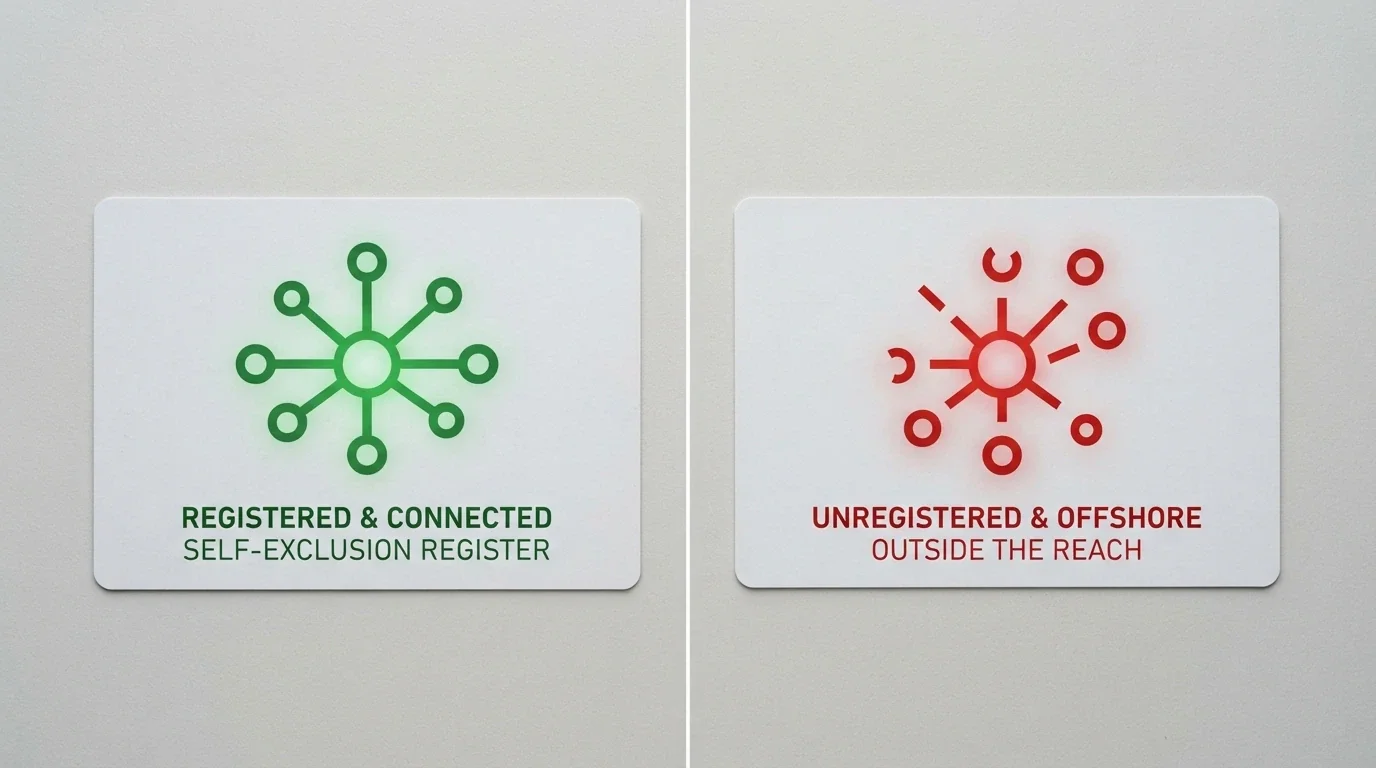
The hall-the-borders gap is the practical risk to highlight. A punter who registers on BetStop keeps account access at every offshore operator above, and the offshore operators have no obligation — and no incentive — to honour a self-exclusion registered with a different regulator. The infrastructure that exists at the Australian-licensed level simply does not reach the operators serving Australian players today.
BetStop: Australia’s Self-Exclusion Register and Its Offshore Blind Spot
BetStop launched on 21 August 2023 and had gathered 59,830 registrations to the end of Q3 FY 2025–2026. As of 31 March 2026, 37,247 people had active exclusions; 22,583 had completed their exclusion or cancelled early. The single registration excludes a person from every licensed online and phone wagering provider in Australia.
The ACMA’s most recent survey puts the outcome in plain numbers: 77% of people who registered for self-exclusion report a better overall quality of life, with “Around four in five people (77 per cent) who have registered for self-exclusion … experience a better overall quality of life” the specific figure carried by the agency. For a punter considering registration, the data says the system works.
For a punter already playing offshore, the system does not reach them. The BetStop registration has no legal or technical effect on an offshore operator’s onboarding — the operator does not see the registration, is not bound by it, and has no obligation to action it. A punter who wants the offshore variant closed should use the deposit-limit and time-out tools the offshore operator offers (most quality ones do), and combine that with the free Australian help infrastructure on the helpline side. The combination matters precisely because neither tool alone closes the gap.
Deposit Limits, Time-Outs and Help Resources That Actually Work
Operator-side deposit-limit and session time-out tools work regardless of jurisdiction. Setting a daily deposit cap at the cashier, setting a session reminder to ping every thirty minutes, or triggering a take-a-break period is a player-controlled action that the offshore operators’ systems will honour (the better-rated ones, at least). These are the tools that close the offshore-side gap.
The free Australian help infrastructure works in parallel. The National Gambling Helpline on 1800 858 858 is free, confidential and staffed around the clock. Gambling Help Online (gamblinghelponline.org.au) carries live chat and online counselling. These resources do not need the punter to be playing at a licensed operator; they work for someone playing at an offshore casino the same way they work for someone playing at a TAB. The caveat is the same one BetStop carries: the offshore operator cannot be compelled to act on a result of that conversation.
The prevalence data is the context in which all of this sits. Approximately 2.1% of Australian adults — roughly 430,000 people — experience problem gambling, and the AIHW’s 2022 high-risk figure sits at 1.8%. A 2026 model-based study estimates 3.29 million Australians are affected annually by their own or another person’s gambling, with 1.97 million adults at-risk or problem gambling and over 400,000 Years Lived with Disability of annual health loss. Australians lost AU$36.0 billion to gambling in the 12 months to March 2026 — an increase of close to AU$1.3 billion on the previous twelve months. These are the numbers that put the AU$5 deposit in its real frame.
How We Evaluated These $5 Deposit Casinos
The methodology is the four-source cross-check. The first source is the set of affiliate audit listings carrying each operator’s claimed minimum deposit, bonus terms and game-provider mix. The second is the ACMA’s blocked-services register, used as a stability signal — operators that had been blocked or whose domain had recently relocated were flagged in the qualitative notes. The third is the available welcome-bonus terms from each operator’s promotional page or its reviewed affiliate coverage. The fourth is the audited pokie RTP and volatility data from provider-published specs and reviewed coverage, applied to the casino-library-level analysis (Royal Reels’ 96.4% across the top 50 most-played, for example).
The criteria, in order of weight: verified minimum deposit at the cashier (the hard floor), bonus terms and wagering fairness (the cost of claiming), game-provider quality (the catalogue), licence transparency and withdrawal terms (the friction at cash-out). No invented weightings, no percentage rankings: every numerical comparison on this page traces to a sourced figure.
What Your $5 Actually Buys at an Offshore Casino
The honest restatement: a AU$5 deposit at an AU-facing casino is real only through cryptocurrency, and the operators offering it are offshore in every sense — licensed outside Australia, outside Australian consumer protection, outside BetStop and exposed to the ACMA’s blocking power. The fiat version of AU$5, which is what every “AU$5 minimum deposit casino Australia” search result implies, does not exist at the cashier for Australian players today. The closest genuine fiat floor is AU$10 at Neosurf; the standard AU$20 PayID floor is the market average.
Two paths sit before a punter weighing the page. The crypto path: deposit in BTC or USDT at Stake, BC.Game, Bitcasino.io or Ozwin (Lightning) and accept the offshore risk profile in exchange for the genuine AU$0.10 floor and the verifiable fairness of provably fair games. The fiat path: deposit AU$10 via Neosurf or AU$20 via PayID and accept the higher floor in exchange for a payment method that does not depend on crypto volatility.
Two warnings travel with both paths. The first is the withdrawal floor: most operators will not release a small balance, so a small win folds back into more play by structural design. The second is the offshore risk profile: any balance held at these operators can be blocked at the ISP level by the ACMA, with no Australian remedy. A AU$5 deposit buys the right to test the cashier and the games. It does not buy the right to walk away with a guaranteed small win. And it does not buy any Australian consumer protection at all.
For a punter whose budget is genuinely AU$5, the calculus is comparison, not refusal. Crypto at Stake buys the lowest floor and the clearest fairness claim, with no welcome bonus safety net. Lightning Bitcoin at Ozwin buys the lowest floor with a real welcome bonus behind it and 30× wagering on the bonus. Bizzo, PlayAmo and Ignition sit at AU$5 by listing but offer no verified welcome structure. The choice is which side of that trade-off matters more.
Frequently Asked Questions
Can I really deposit just $5 at an Australian online casino?
Only via cryptocurrency. Stake accepts roughly AU$0.10 in BTC-equivalent, BC.Game about AU$1 in USDT, and Ozwin AU$5 via Lightning Bitcoin. Every AU-facing fiat payment method — PayID, Neosurf, Visa, Mastercard — enforces a minimum of AU$10–AU$20 at the cashier. The “$5 minimum deposit casino Australia” headline describes the crypto slots, not a fiat product.
Can I get a welcome bonus with a $5 deposit?
Only at Ozwin via Lightning Bitcoin (AU$5 minimum qualifying deposit). SkyCrown requires AU$30–AU$50, RocketPlay AU$20 then AU$75, Fair Go AU$20, WinSpirit AU$30. The welcome bonuses at the others are inaccessible from a genuine AU$5 deposit. No-deposit free-spin offers (Fair Go, WinSpirit, Bizzo) bypass the deposit floor but carry separate win caps.
What is the minimum withdrawal amount at $5 deposit casinos?
Typically AU$25–AU$50, sometimes AU$50–AU$100. Minimum withdrawals sit well above minimum deposits across the surveyed set. A punter who deposits AU$5 and ends the session with a small profit cannot cash out the small profit in most cases — the balance either continues to be played or is forfeited by the floor.
Is it safe to play at a casino that asks for only a $5 deposit?
The safety answer has two layers. Technical safety (encryption, fairness) is governed by the operator and varies. Legal safety is structural: every operator above is offshore, not licensed in Australia, not connected to BetStop, and capable of being blocked by the ACMA with a punter’s balance still on it. There is no Australian consumer recourse for a withheld withdrawal at an offshore casino.
What happens if I register on BetStop — does it block offshore casinos too?
No. BetStop binds Australian-licensed wagering services only. An offshore casino is not connected to the register, has no obligation to honour a BetStop registration, and will continue accepting a self-excluded Australian’s deposits. To limit offshore play, set deposit and time-out limits at the operator level directly.
Why do some casinos advertise $5 deposits but charge $20 at the cashier?
PayID and card processors impose their own minimums because of anti-fraud monitoring and card-network transaction fees. The operator’s marketing layer advertises the currency (AU$5); the PSP or card-network layer enforces the actual minimum (AU$20). The PlayAmo and Ignition cashier screens reflect that gap explicitly when a punter tries to drop below the floor.