Live dealer casinos for Australian players: the offshore-only market in 2026
Every live dealer casino that takes Australian players operates from outside Australia. No local licence exists for the product — the Interactive Gambling Act 2001 prohibits online casino games outright, and the ACMA has had 1,564 such sites blocked by Australian ISPs since November 2019. None of the ten brands ranked below is licensed in Australia. They are not licensed against some looser Australian regime. They are not “in the process” of being licensed. The product itself is prohibited, full stop.
That is the single fact everything else here rests on. The comparison that follows sits between offshore operators — Curaçao is the most common licence, PayID and Bitcoin sit at the cashier, and the safety net a domestic regulator provides does not apply. Players who decide to proceed are doing so outside the Australian rules, and what follows is built to help them see clearly what that means.
Current as of 22 November 2026 — verified against the Curaçao Gaming Control Board public register and each operator’s terms page.
Table of Contents
- Live dealer casinos: what they are and why Australians play them
- The legal reality: why no live dealer casino holds an Australian licence
- The top live dealer casinos accepting Australian players in 2026
- Live dealer games: more than just blackjack and roulette
- The studios behind the stream: who builds Australia’s live dealer tables
- Why your live dealer bonus is smaller than it looks
- Crypto at the live table: paying with Bitcoin and beyond
- Staying safe: responsible gambling tools every live dealer player should use
- How we picked and ranked the casinos on this page
- What to check before you sit at a live dealer table
- Frequently asked questions
Live dealer casinos: what they are and why Australians play them
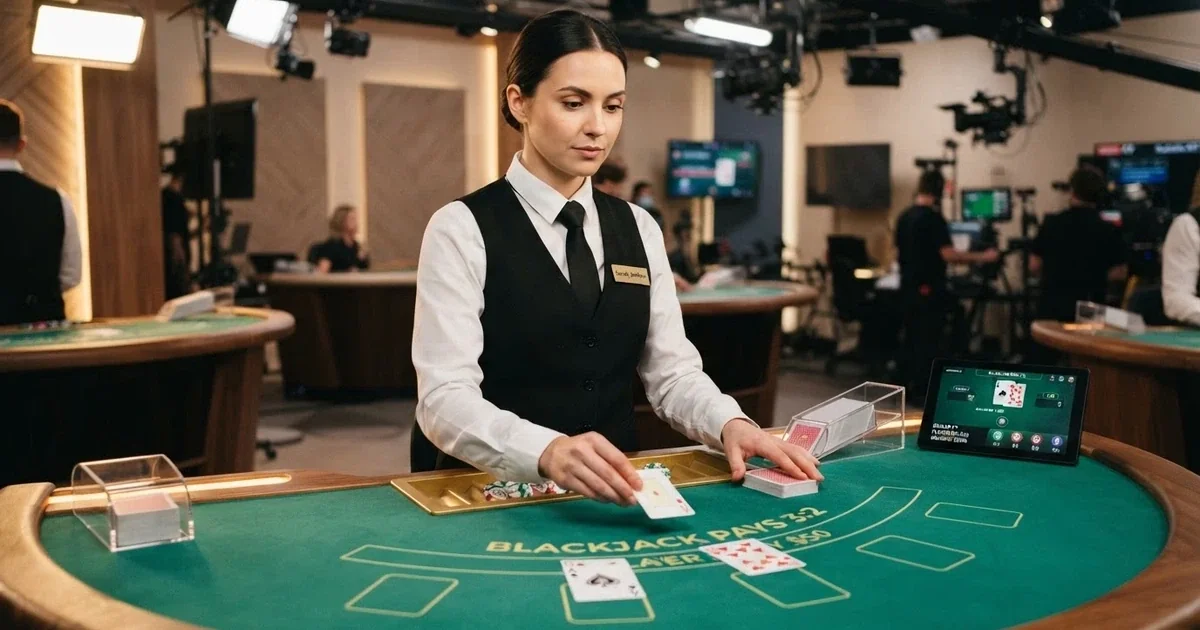
A live dealer casino is an online gambling product in which the cards, the wheel, the dice and the dealer are all physical — streamed in real time from a studio — while the player’s bets are placed digitally through an on-screen interface. The studio can be in Bucharest, Riga, Malta, or somewhere outside Australia; what matters is that the dealer is a person dealing real cards on a real table. The camera feeds multiple angles to the player, a chat window lets players type back to the dealer, and a results overlay tracks wins, losses and round history. The whole experience is closer to a land-based casino floor than to a slot machine, and that is why the format exists: for the player who wants the table game without leaving the house.
The format draws Australian players because it answers a complaint the older online casino product never quite addressed. Pokies are pokies — randomised, fast, mechanical, lonely. RNG blackjack runs at the speed of a button click and pays out numbers on a screen. Live dealer sits in between: real pace, real human presence, the social texture of a table, with the convenience of doing it from the couch. For Australians barred from the licensed online market since 2001, live dealer is also one of the closest analogues to the table-game experience they used to get at Crown Melbourne or The Star Sydney, only delivered over a stream and paid for in Bitcoin or PayID.
What a live dealer casino actually is
The studio is the heart of it. A live dealer studio is a purpose-built floor, usually windowless, fitted with adjustable LED lighting to keep the felt colour consistent across 16-hour shifts. Multiple cameras mounted on ceiling booms feed angles — the dealer’s hands, the wheel, the shoe of cards, an overhead shot for the table layout. A control room off the floor monitors every stream for technical faults; a separate game controller, sometimes called the pit boss, settles disputes and verifies outcomes. The dealer runs the game in the language the studio chooses — English is the standard at studios serving AU-facing brands — and a chat moderator handles player messages.
Bets sit in a digital overlay that runs on top of the stream. The player does not push chips across a felt; they click positions on a betting layout rendered in their browser or app. The timer on the layout runs out, the system locks bets, and the dealer proceeds. Outcomes are read by optical character recognition — the system reads the card symbols or the wheel pocket off the camera feed — and the player’s balance is settled without the dealer pressing anything. The whole round typically resolves in under thirty seconds for roulette, under twenty for a hand of blackjack. Baccarat, the fastest of the three, can run a hand in twelve seconds in its Speed variant.
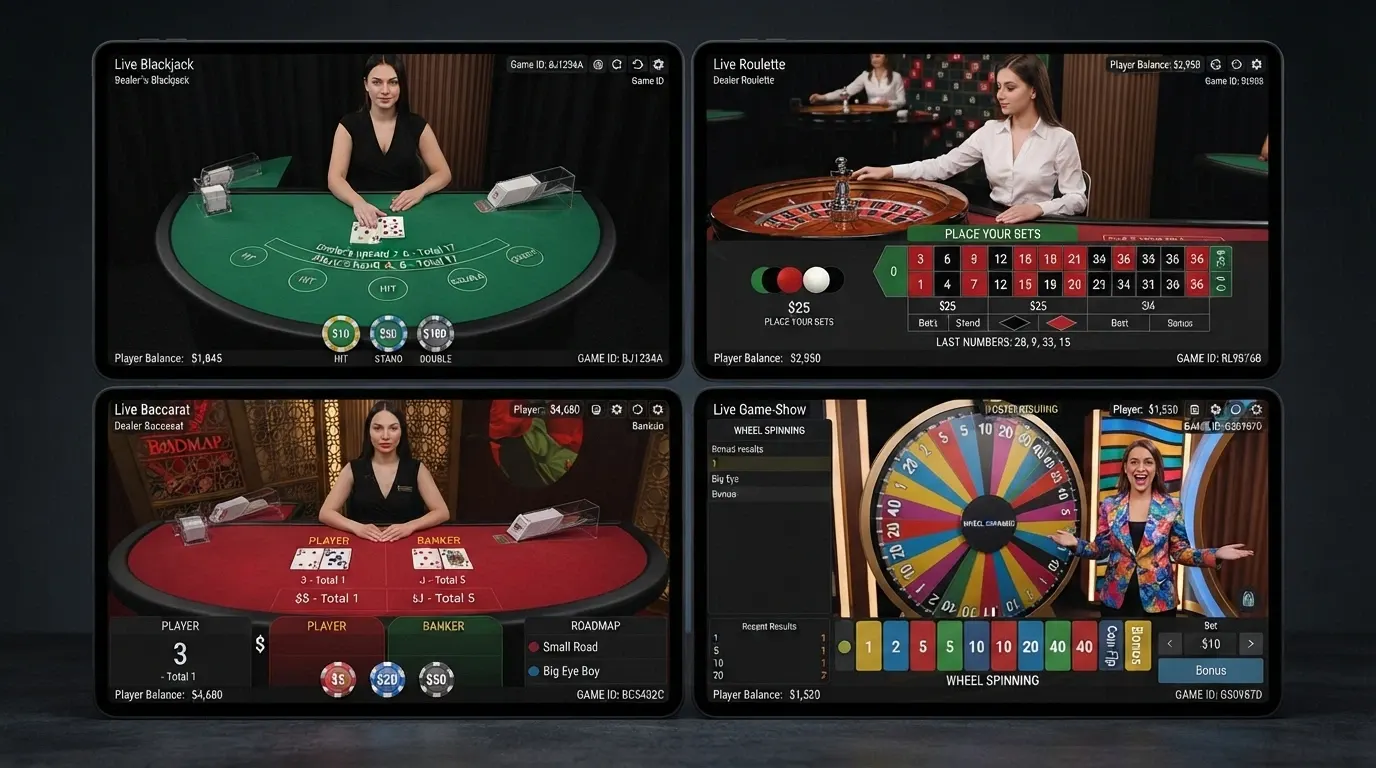
The player’s view is a screen with a video panel and a betting panel sitting beside or beneath it. They can resize the video, switch camera angles, type messages to the dealer, and tip the dealer through a button on the interface. There is no audio feed from other players unless the operator opens it. What the player sees is a slightly stylised version of a casino floor: the dealer is talking to someone off-camera (usually the game controller), the background music is studio-controlled, and the brands on the side of the table are the operator’s, not the studio’s.
Real-money play versus free-play and demo mode at live tables
Live dealer tables almost never run in demo mode. The format costs the operator real money — a dealer, a studio, camera operators, a game controller — and there is no point running a seat empty for a player who is not betting. A handful of providers offer “fun mode” entries at low-stakes tables, and a few studios run late-night low-limit tables that effectively double as practice, but the live dealer product is, by design, a real-money product. A player who wants to learn blackjack rules or try a roulette strategy without putting cash on the table will find the live lobby mostly closed to them and will end up at the RNG tables, which do run in demo.
What that means in practice is that the first time a player sits at a live dealer table, they are staking real money against the house. The minimum bet on a standard live blackjack table is usually A$5 to A$10; the minimum on roulette is A$1 to A$5 on outside bets; baccarat’s minimum is typically A$5 to A$10 on banker or player. Some providers run micro-stakes tables at A$0.50 or A$1, but those are rare in the AU-facing market and tend to fill up fast. Anyone hoping to test the waters with a ‘fun mode’ session will usually find the lobby closed to them, necessitating a deposit before any play can begin.
Mobile play: streaming live tables to a phone screen
Live dealer works on mobile because the stream is, technically, just video. A modern phone over a stable 4G or 5G connection handles a 720p live stream without buffering, and the betting interface is built as a portrait or landscape overlay that scales to the screen. The two practical differences from desktop are: the stream takes up most of the screen so the betting layout shrinks, and the player’s data budget is doing some of the work — a 30-minute live dealer session at 720p will chew through roughly 1.5 GB of mobile data, which is worth knowing before someone settles in on a train.
Game selection on mobile is roughly the same as on desktop. The studios design tables to be played either way, and a mobile-optimised lobby at any of the larger operators will carry the same roulette, blackjack and baccarat variants as the desktop version, plus most of the game shows. What changes is the live dealer lobby’s organisation — studios tend to bury the more exotic variants on mobile to keep the layout clean, so a player hunting for Salon Privé or Lightning Roulette on a phone may need to scroll past a few standard tables. Apps versus browser is mostly a matter of taste; the in-browser experience is functionally identical to the app at the operators that run both, and the browser route saves the player a download and an update cycle.
The legal reality: why no live dealer casino holds an Australian licence
There is no Australian online casino licence. Not for live dealer, not for slots, not for RNG table games. The Interactive Gambling Act 2001 — strengthened by a 2017 amendment — prohibits the offering of online casino games and in-play betting to anyone physically located in Australia. The statute names the prohibited product, the regulator enforces it, and the enforcement tally runs into the four digits. No amount of marketing language from an offshore operator changes what the statute says.
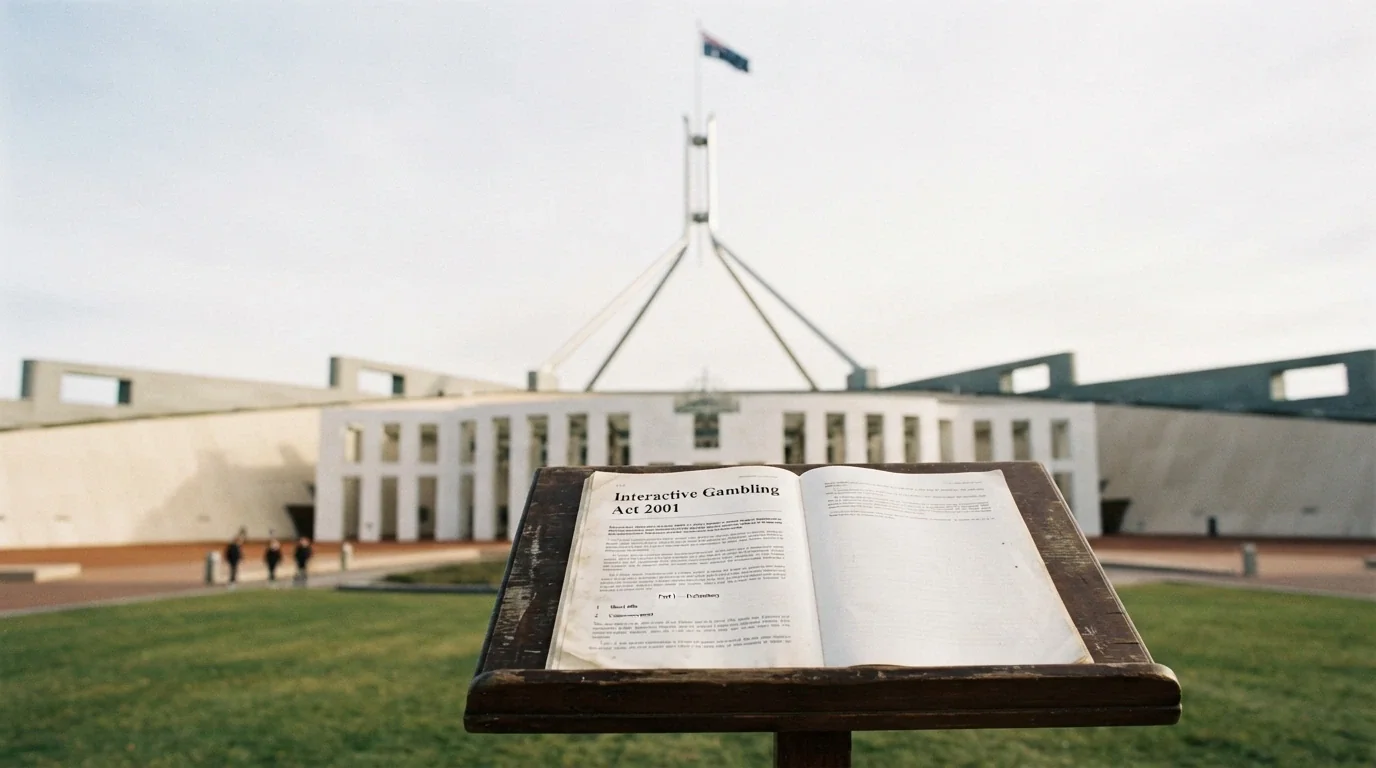
What that prohibition covers is “prohibited interactive gambling services” — the Act’s term for online casino games, online pokies, and in-play wagering on sporting events. The wording targets the provider, not the player: a person offering blackjack, roulette, baccarat or pokies to customers located here is running a prohibited service. The Act does not prohibit the player from accessing such a service, which is why Australians can still type an offshore URL into a browser and sit down at a live table; the prohibition sits on the operator offering the product, not on the individual punter using it.
The Interactive Gambling Act 2001 and the ACMA
The ACMA — Australian Communications and Media Authority — is the federal body responsible for enforcing the online prohibition. Its powers include investigating complaints, issuing formal warnings, starting civil penalty proceedings, and directing Australian ISPs to block illegal sites at the DNS level. The first formal blocking request went out in November 2019. Since then, the ACMA has had 1,564 illegal gambling and affiliate websites blocked by Australian ISPs, and more than 225 services have withdrawn from the Australian market entirely. Those numbers have been climbing every quarter and they tell a simple story: when the regulator moves against a site, the site either gets blocked or it leaves.
The way a complaint turns into a block is roughly this: the ACMA receives reports from the public or from monitoring, identifies a site it judges to be offering a prohibited service, issues a formal warning or infringement notice, and — if the operator does not withdraw — refers the site to ISPs for blocking. Blocking happens at the DNS level; describe the enforcement as it stands, not as something to be routed around. An Australian who has a balance on an offshore site at the moment it gets blocked has a problem that no Australian regulator can solve for them.
What the ACMA does not do is prosecute individual players. The IGA targets the provider. The player is not the subject of enforcement, and the regulator’s role is to stop the offering, not the consumption. That structural asymmetry — the provider gets the penalty, the player gets the risk — is the reason the offshore market keeps operating, and it is the reason a player comparing offshore casinos needs to think in terms of what protections they are not getting, not what protections they have.
Offshore-licensed versus in-market: what the distinction means for Australian players
Every casino on this page is Curaçao-licensed. Curaçao is the most common offshore licence in the iGaming market and is the licence almost every AU-facing brand carries. The Curaçao Gaming Control Board issues the licence; the operator pays a setup cost, submits to a basic compliance review, and operates under the Board’s general oversight. What the licence does is provide a regulatory framework in some jurisdiction. What it does not do is provide Australian consumer protection — there is no Australian complaints body offshore players can turn to, no Australian guarantee on withdrawals, no Australian recourse if an operator closes an account or refuses to pay out a win.
This is the practical difference between an offshore casino and a domestic one. The domestic licensed bookmaker — Sportsbet, TAB, bet365, Ladbrokes, Neds, PointsBet — sits inside the Australian system. It holds a Northern Territory Racing and Wagering Commission licence, complies with state-level consumer law, takes instructions from ACMA on advertising and inducements, and is connected to BetStop, which is the National Self-Exclusion Register. If a player has a withdrawal dispute with a domestic bookmaker, the regulator can be involved. If a player has a dispute with an offshore casino, the regulator cannot.
The offshore operator’s risk profile is different in three concrete ways. First, the casino can be blocked at any time — and if a player’s balance is sitting in their account at that moment, the casino has no obligation to release it. Second, the player has no recourse through Australian consumer law if the operator refuses a withdrawal or changes its terms after the fact. Third, BetStop does not cover offshore casinos. A player who has self-excluded through BetStop can still deposit, bet, and lose at an offshore site — the register binds Australian-licensed services only, and an offshore operator is not connected to it. The combination of these three is what makes the offshore route structurally different from any wagering a player can do through a domestic bookmaker, and the rest of the page is built on that difference, not around it.
The top live dealer casinos accepting Australian players in 2026
The ten casinos below are the brands that dominate the AU-facing live dealer market. They share three things: a Curaçao licence, a live dealer lobby built around Evolution or Pragmatic Play or both, and a payment page that lists PayID, debit cards or crypto. They differ on welcome offers, withdrawal caps, game count, and the depth of their live dealer content. The ranking reflects how each one stacks up across those differences — not a recommendation, just a comparison, and one the player has to finish on their own.
The point worth stating before the table: none of these is licensed in Australia. Some are larger, some are more established, some are cleaner about their terms — but the offshore status is the same for every brand on the page, and any reader comparing them on that basis is comparing apples to apples. The differences that matter are the ones the table makes visible.
| Operator | Licence | Welcome offer | Free spins | Crypto accepted |
|---|---|---|---|---|
| RocketPlay | Curaçao | 100% up to A$1,000 + 100 FS (first deposit) | 100 | Yes |
| SkyCrown | Curaçao | 4-tier up to A$8,000 + 400 FS | 400 | Yes |
| BitStarz | Curaçao | Fiat: 100% up to A$2,000 + 180 FS / Crypto: up to 5 BTC + 180 FS | 180 + 30 ND | Yes |
| Royal Reels | Curaçao | 100% up to A$500 + A$10 ND | — | — |
| Stake | Curaçao | 10% weekly cashback (0x wagering) | — | Yes (BTC, ETH, LTC) |
| Joe Fortune | Curaçao | Up to A$5,000 + 450 FS (across 5 deposits) | 450 | — |
| Bizzo Casino | Curaçao | — | — | — |
| FairGO | Curaçao | — | — | — |
| Vave | Curaçao | Up to 4 BTC + 100 FS (first deposit 150% up to 1.5 BTC) | 100 + 40 ND | Yes |
| Spinago | Curaçao eGaming | — | — | Yes (BTC, ETH, LTC, USDT) |
How we evaluate and rank live dealer casinos for Australian players
Six criteria order the list. They are stated up front so the reader knows what they are looking at.
The first is licence transparency. Every casino on this page is Curaçao-licensed; what separates them on this criterion is how clearly the licence is displayed, how easy it is to find the licence number on the footer, and whether the operator lists a registered entity that can be cross-checked against the Curaçao Gaming Control Board register. The second is the bonus terms and the live dealer contribution rate — which is the share of each wagered dollar that counts toward the bonus’s turnover requirement. The third is game breadth and provider depth: how many slots, how many live tables, how many software studios under one roof. The fourth is payment reach for Australians: PayID, debit card, crypto, AUD wallet, minimum deposit, withdrawal fees. The fifth is withdrawal caps — daily, weekly, monthly — because a casino with a generous bonus and a tight withdrawal cap is not actually being generous. The sixth is responsible gambling infrastructure: what tools the casino itself offers, because the offshore status means BetStop does not apply.
No weighting has been invented for this ranking. The criteria are stated in the order the page uses them. Where the data is missing, the operator falls in the ranking rather than the cell being fabricated.
RocketPlay
RocketPlay runs an offshore operation under Dama NV, Curaçao, with a live dealer table limit of A$750 and a library of more than 3,000 games from 50+ providers including Evolution and Pragmatic Play. The first-deposit welcome is 100% up to A$1,000 plus 100 free spins, with wagering at 30x to 40x on the bonus amount. PayID is supported alongside crypto and the major card networks, and the withdrawal caps sit at A$2,500 per day, A$7,500 per week, A$15,000 per month.
The A$750 table limit is one of the more useful specifics on the page. It tells a high-stakes player exactly where the ceiling is — they cannot put more than A$750 on a single live hand at this brand, regardless of how deep their bankroll runs. The withdrawal caps tell the same story from the other direction: a player who hits a five-figure win cannot extract it in one transaction; the operator’s structure forces them back across multiple days. That is not a flaw, exactly — it is how the operator manages its own cash flow — but it is the kind of detail a player needs to know before they deposit.
RocketPlay earns its spot because the lobby is broad, the terms are clear, and the table limit is published. The cap structure is the trade-off: a player who plans their cashouts around the daily and weekly limits will not be surprised, but a player who expects instant access to a large balance will.
SkyCrown
SkyCrown runs a four-tier welcome package worth up to A$8,000 plus 400 free spins, with 40x wagering and a 14-day validity window after each tier is credited. The minimum deposit climbs from A$30 on the first tier to A$50 on the fourth. A high-roller welcome goes up to A$3,000 on the first deposit for players depositing A$300 or more. Free-spin winnings are capped at A$300 per bonus part. The critical detail for live dealer players is that SkyCrown’s live casino contribution toward wagering is typically 10% — meaning only ten cents of every dollar wagered on a live table counts toward clearing the bonus.
That contribution rate is the single most important number on this write-up. A 40x wagering requirement on a A$1,000 bonus means A$40,000 in turnover is required to clear it. At 100% contribution — what slots would deliver — that is A$40,000 of slot play. At 10% contribution — what live tables deliver at SkyCrown — the same A$40,000 in turnover requires A$400,000 of live dealer play, because every A$10 wagered on live contributes only A$1 to the requirement. A player chasing the headline bonus figure while playing live blackjack is, in practice, signing up for ten times the volume of play the marketing implies.
SkyCrown’s headline figure is the kind of number that doesn’t survive contact with the terms. The high-roller tier and the PayID and crypto cashier support a player who knows exactly what they are doing; a player drawn in by the A$8,000 figure alone will find the live dealer contribution rate doing the work the small print always does.
BitStarz
BitStarz runs a dual-track welcome: fiat players can claim 100% up to A$2,000 plus 180 free spins, and crypto players can claim up to 5 BTC plus 180 free spins across four deposits. Wagering sits at 40x. The brand also runs 30 no-deposit free spins as a sign-up offer — one of the few no-deposit entries in this set — which means a player can have a real-money round on a slot without funding their account first.
The dual-track welcome is what separates BitStarz from most of the rest of the page. Most operators on this list force the player into one welcome or the other; BitStarz lets them pick. The 5 BTC crypto package is generous in headline terms but volatile in real value — 5 BTC in 2026 is one number, and 5 BTC in a week is another. The 30 no-deposit spins are a genuine trial offer, and a player who treats them as a no-strings look at the lobby will get an honest sample.
The brand’s age and operational track record matter here too. BitStarz has been running since 2014, which makes it one of the older offshore brands serving Australian players, and a player who values operational continuity over the newest sign-up bonus has a reason to put it higher in the comparison than the welcome offer alone would suggest.
Royal Reels
Royal Reels offers an A$10 no-deposit bonus and a 100% deposit match up to A$500. Game provider details and bonus wagering were not confirmed in the sources checked for this page. The licence is Curaçao; the specific registered entity was not located in this run.
An A$10 no-deposit bonus is a low-stakes entry — the kind of offer that lets a player register, take the trial money, and see whether the casino runs the way the marketing claims before committing their own funds. A 100% up to A$500 is a modest deposit match by the standards of this set, where SkyCrown’s A$8,000 and Joe Fortune’s A$5,000 headline numbers tower over it. The trade-off is obvious: a smaller match means a smaller bonus to clear and a shorter wagering burden, which is a real benefit to a player who is wary of clearing bonuses at all.
Royal Reels’ A$10 no-deposit is genuine trial money, and that is the case for it. Everything else on the operator — wagering, contribution, withdrawal caps — needs to be checked on the terms page before any player commits more than the trial balance.
Stake
Stake does not run a deposit-match welcome bonus. The brand’s headline offer is 10% weekly cashback with no wagering requirement, which is structurally different from anything else on this page. Payments are crypto-first — Bitcoin, Ethereum, Litecoin and others — and there is no traditional welcome package to chase.
The cashback model is the most player-friendly bonus structure on the page, and the comparison is worth pausing on. A cashback offer with 0x wagering pays out real money the player can withdraw. A 100% deposit match with 40x wagering pays out a bonus that has to be turned over tens of thousands of dollars before it converts to withdrawable cash. The marketing word for the second offer is “boost”; the arithmetic of the first offer is the only thing here that earns its own hype.
Stake is the outlier on the page. Stake deviates from the standard deposit-match model entirely, preferring a cashback structure that functions more like a direct rebate on losses than a bonus to be unlocked. It stands alone in this comparison for that reason.
Joe Fortune
Joe Fortune’s headline is volume: up to A$5,000 in welcome bonus cash plus 450 free spins across the first five deposits. The 450 free spins is the largest free-spin count in the comparison set, which is why Joe Fortune shows up on most shortlists for AU-facing players. Curaçao licence. Provider and wagering specifics were not confirmed this run.
A 450 free-spin headline is the kind of number that looks like the metric. It is not. The metric is what the spins pay out and what the payout converts to after wagering. Joe Fortune’s page does not list wagering in the public-facing terms section of the sites reviewed for this article, and that is exactly the kind of detail a player needs before they take a 450-spin offer seriously — the spin count is the marketing word, the conversion rate is the only one that matters at the cashier.
Joe Fortune earns its slot in this comparison on the strength of its spin count and its AU-facing branding. The spin count serves as a clear headline draw, though caution dictates reviewing the wagering and contribution terms before committing to any deposit.
Bizzo Casino
Bizzo runs a library of 2,000+ titles from 40+ software providers. Curaçao licence. Welcome bonus, free spin count and wagering requirements were not confirmed in the sources checked for this page.
Bizzo’s case for being on the list is straightforward: 40+ providers is a broad stable, and 2,000+ titles is a reasonable game count. The unknowns are the bonus terms, the withdrawal caps, and the live dealer contribution rate — all of which matter more to a comparison shopper than the game library does, because game breadth is easy to advertise and terms are where the actual cost of playing lives.
Bizzo is the placeholder in this comparison for a player who values game breadth over headline bonus. A direct comparison on terms is what cannot be given here, and what the player has to do themselves before depositing.
FairGO
FairGO is a Curaçao-licensed brand operating in the AU-facing market. Provider details, welcome bonus, free spin count and wagering were not confirmed in the sources checked for this article.
The FairGO entry on this page is the one that most needs a footnote. A brand can list a Curaçao licence, accept Australian players, and run a perfectly normal live dealer lobby — and still have terms that are not visible in any of the public-facing sources reviewed for this comparison. A player who is drawn to FairGO for any reason other than its presence on a list of AU-facing brands should treat the verification step as part of the price of entry.
FairGO sits on this page because it appears in the AU-facing market. Whether the brand is the right one for a particular player depends on terms that were not confirmed this run, and a player who decides to deposit is taking that step on the operator’s own representations rather than on anything in this comparison.
Vave
Vave runs a crypto welcome package worth up to 4 BTC plus 100 free spins across four deposits, with the first deposit offering 150% up to 1.5 BTC. The minimum deposit is 20 USDT or the crypto equivalent. A 40 no-deposit free spin offer is available to new sign-ups — one of the few no-deposit entries in this set alongside BitStarz. Curaçao licence.
Vave is a crypto-first brand. The 4 BTC headline is the highest crypto welcome on the page, but it is also volatile in real value: 4 BTC in 2026 is one number, and 4 BTC at any point after the deposit clears is another. A player who thinks in USDT will find the 20 USDT minimum straightforward; a player who thinks in BTC will need to convert the headline figure into something they can actually compare.
Vave makes sense for a player whose bankroll is in crypto and who wants both a no-deposit trial and a substantial match. The wagering and contribution rates were not confirmed this run; the player needs to read the terms on the live dealer contribution before treating the BTC figure as anything other than a headline.
Spinago
Spinago runs a 7,000+ game library from 60+ studios, holds a Curaçao eGaming licence, and was founded in 2022. The cashier supports Bitcoin, Ethereum, Litecoin and Tether with instant clearing, and the wallet includes an AUD balance option. Welcome bonus, free spin count and wagering requirements were not confirmed this run.
The 7,000+ library is the largest on this page, and the AUD wallet is unusual among the offshore brands reviewed here — most offshore operators run in USD or EUR and convert on deposit. A player who thinks in dollars and does not want to keep mental track of a conversion will see the AUD wallet as a real feature.
Spinago is the breadth-first option in this comparison. A player who values game count over bonus headline has their reason; a player who values bonus terms needs to find the specifics on the operator’s terms page, because the welcome offer was not confirmed in the sources reviewed here.
Live dealer games: more than just blackjack and roulette
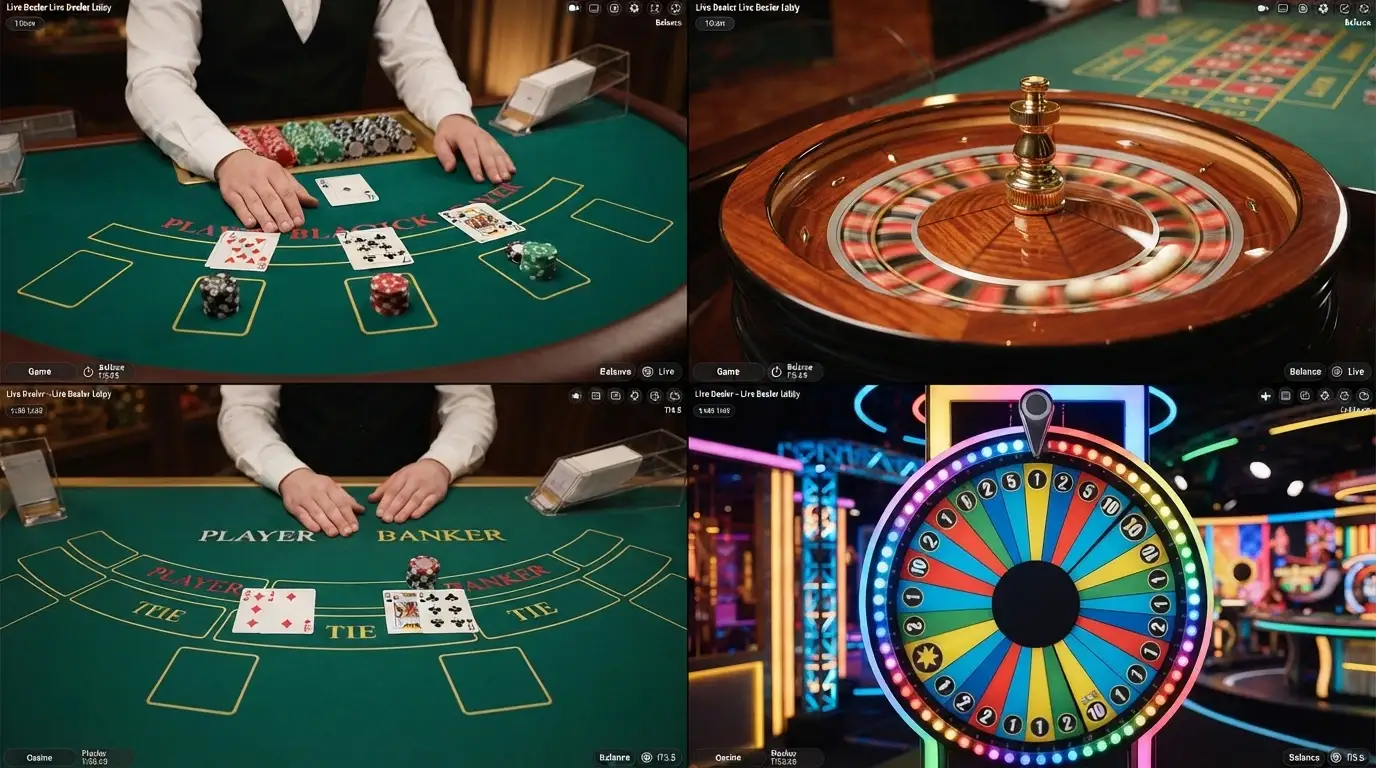
The live dealer lobby at any of the brands above goes well past the classic three. Blackjack, roulette and baccarat are still the spine of the product, but game shows, wheel-spin titles and dice games have taken a growing share of the lobby at studios like Evolution and Pragmatic Play Live. The four-way comparison below covers the formats an Australian player is most likely to encounter when they open the live casino tab.
| Game type | Key mechanic | Player seats | Standout title |
|---|---|---|---|
| Live blackjack | Physical cards dealt to standard 7-seat table; bet on hand total closest to 21 without busting | 7 standard; unlimited seats (Infinite Blackjack) | Infinite Blackjack (Evolution) |
| Live roulette | Single-zero European wheel as standard; bets on number, colour, range, dozens | Open — no individual seat limit on betting positions | Lightning Roulette (Evolution) — multipliers up to x500 |
| Live baccarat | Banker or player hand closest to 9 wins; minimal decisions per round | 7 standard; VIP tables at higher stakes | Speed Baccarat |
| Live game shows | Wheel spin, ball drop, or board game mechanic with bonus rounds | Open — all players bet on outcomes | Crazy Time, Monopoly Live, Dream Catcher (Evolution) |
How a live dealer game plays: the stream, the interface, and the pace
A live dealer round plays out in three phases. The first is the betting window — typically 10 to 15 seconds on a roulette table, around 10 seconds on a blackjack hand, as little as 5 seconds on Speed Baccarat. The player clicks positions on the betting layout; the system locks bets when the timer runs out. The second phase is the action: the dealer spins the wheel, deals the cards, or rolls the dice. The third phase is the settlement — the OCR system reads the outcome, the player’s balance is updated, and the betting window for the next round opens.
The pace is what separates live dealer from RNG. An RNG blackjack hand resolves in under two seconds; a live dealer hand resolves in twelve to fifteen seconds. A live roulette spin takes 30 to 45 seconds from bet close to result. Speed variants cut that down — Speed Baccarat can complete a hand in twelve seconds, Speed Roulette runs without a betting window between spins — but the floor on round length is the dealer, not the software.
The player’s job is to manage the betting window. A late click on a roulette layout at a busy table can miss the lockout, and the system will return the stake; the same applies to blackjack hands and baccarat rounds. The dealer does not wait. The chat function is a parallel channel — it does not affect play — but a player who types a question to the dealer during a betting window is using up time they should be spending on layout decisions.
Live blackjack and its variants
Standard live blackjack at an AU-facing casino is a seven-seat table with a physical shoe and a real dealer. The player takes a seat, places a bet, and plays a hand against the dealer using the on-screen hit, stand, double and split buttons. Side bets — Perfect Pairs, 21+3, Bet Behind — sit alongside the main bet on the layout. Table limits at the standard tables usually run A$5 to A$500 or A$10 to A$1,000; VIP tables go higher.
The standout variant is Infinite Blackjack by Evolution, which removes the seven-seat limit. Every player at the table bets on the same hand — they all see the same cards, they all make their own hit/stand/double/split decisions, and the system handles the dealing as if they were playing individual hands. The format solves a problem that has dogged live blackjack for years: a full seven-seat table means the eighth player has to wait or pick another table. Infinite Blackjack means the table never fills up. The house edge is the same as standard blackjack; the pace is faster because there is no dealing delay between players.
Other variants worth knowing: Speed Blackjack cuts the dealing time by dealing to the player who has decided first rather than going seat-by-seat; VIP Blackjack raises the table limit for high-stakes players; Power Blackjack removes the 9-to-10 soft total rule and adds more doubling options. Side bet variety — Perfect Pairs, 21+3, Hot 3, Bust It — varies by studio and by table.
Live roulette: Lightning, auto, and the European wheel
European roulette is the standard. A single-zero wheel, 37 pockets, a house edge of 2.70%. The American double-zero wheel — 38 pockets, a house edge of 5.26% — appears at some studios and is the version a player should avoid unless there is a reason to take the worse odds. The studio feeds multiple angles — the wheel close-up, the dealer throwing the ball, an overhead shot — and the betting layout runs the inside bets (single numbers, splits, streets, corners) and outside bets (red/black, odd/even, dozens, columns) the player expects.
Lightning Roulette by Evolution is the variant that pulled live roulette into the game-show era. The wheel is still a standard European single-zero wheel; the difference is that one to five numbers are struck by “lightning” before each spin, and a multiplier between x50 and x500 is applied to straight-up bets on those numbers. A straight-up bet on a single number pays 29:1 normally and 29:1 plus the multiplier when the lightning hits. The format changed what a roulette player expects from a round: a straight-up bet that pays 29:1 with no multiplier is now the dull version of itself, and Lightning tables at most AU-facing casinos are running full sessions.
Auto Roulette removes the dealer entirely — the wheel is mechanical, the ball is launched automatically, the rounds run continuously with no betting window between spins. The format is faster than dealer-run roulette and is popular with high-volume players who want the maximum number of spins per hour. Pragmatic Play Live and Evolution both run auto roulette tables; the variant count and the limits differ by studio.
Live baccarat: speed, squeeze, and the high-roller table
Live baccarat is the format that fits the streamed product best. The rules are simple — bet on banker, player, or tie; the hand closest to 9 wins; banker wins pay 0.95:1 with a 5% commission — and the round resolves quickly. Standard live baccarat at most AU-facing casinos is a seven-seat table with a low minimum (A$5 to A$10) and a high maximum (A$10,000 or more). Side bets — Player Pair, Banker Pair, Either Pair, Perfect Pair — sit on the layout.
Speed Baccarat cuts the round time to roughly 12 seconds by removing the squeeze and dealing face-up from the start. Pragmatic Play Live’s Speed Baccarat is a standout in the format. Squeeze Baccarat does the opposite — the dealer slowly reveals the cards, building tension across the hand — and is the variant most associated with high-stakes play in Macau and the broader Asian market. No Commission Baccarat removes the 5% banker commission and pays even money on banker wins, but adjusts the rule on a winning banker total of 6 to push the bet rather than pay.
The high-roller appeal is structural. Baccarat’s simple decision — banker or player — means the player’s job is bankroll management rather than strategy. A high-stakes player can put a large bet down, watch the round resolve, and move on. The format draws the largest bets in any live dealer lobby; tables at the major studios are routinely running A$10,000, A$25,000 and A$50,000 maximums.
Game shows and the expanding live lobby
Game shows are the segment of the live lobby that has grown the most over the last five years. The format is a wheel spin, a ball drop, or a board-game mechanic with bonus rounds — closer in feel to a TV game show than to a casino table game. The three flagship titles are Crazy Time, Monopoly Live and Dream Catcher, all from Evolution.
Crazy Time is the most complex of the three. A money wheel with 54 segments determines the base outcome; a Top Slot above the wheel assigns multipliers to one or two segments before each spin; and four bonus games — Cash Hunt, Pachinko, Coin Flip, Crazy Time — give the round its peaks. The maximum payout on Crazy Time runs into six figures on a single spin. Monopoly Live combines a money wheel with a 3D Monopoly board bonus round where the player moves around the board collecting multipliers. Dream Catcher is the simpler version: a vertical money wheel, segments numbered 1, 2, 5, 10, 20 and 40, no bonus round beyond the wheel itself.
The player seats on a game show are open — every player bets on the same spin, and there is no individual seat. The format runs fast: a spin takes 30 to 60 seconds, and bonus rounds can run another minute. Game shows are also the segment where studios push hardest on visual production — the sets look like television stages, the hosts are styled as presenters, and the experience is closer to a game-show audience than to a casino floor.
The studios behind the stream: who builds Australia’s live dealer tables
Two studios dominate the AU-facing live dealer market: Evolution Gaming and Pragmatic Play Live. A player who opens the live casino lobby at any of the larger brands on this page will see Evolution tables first and Pragmatic Play tables second. Smaller studios — Winfinity, Imagine Live, Iconic21, LuckyStreak — fill out the lobby at some operators, but they sit behind the two market leaders in table count, production scale, and the variety of formats they offer.
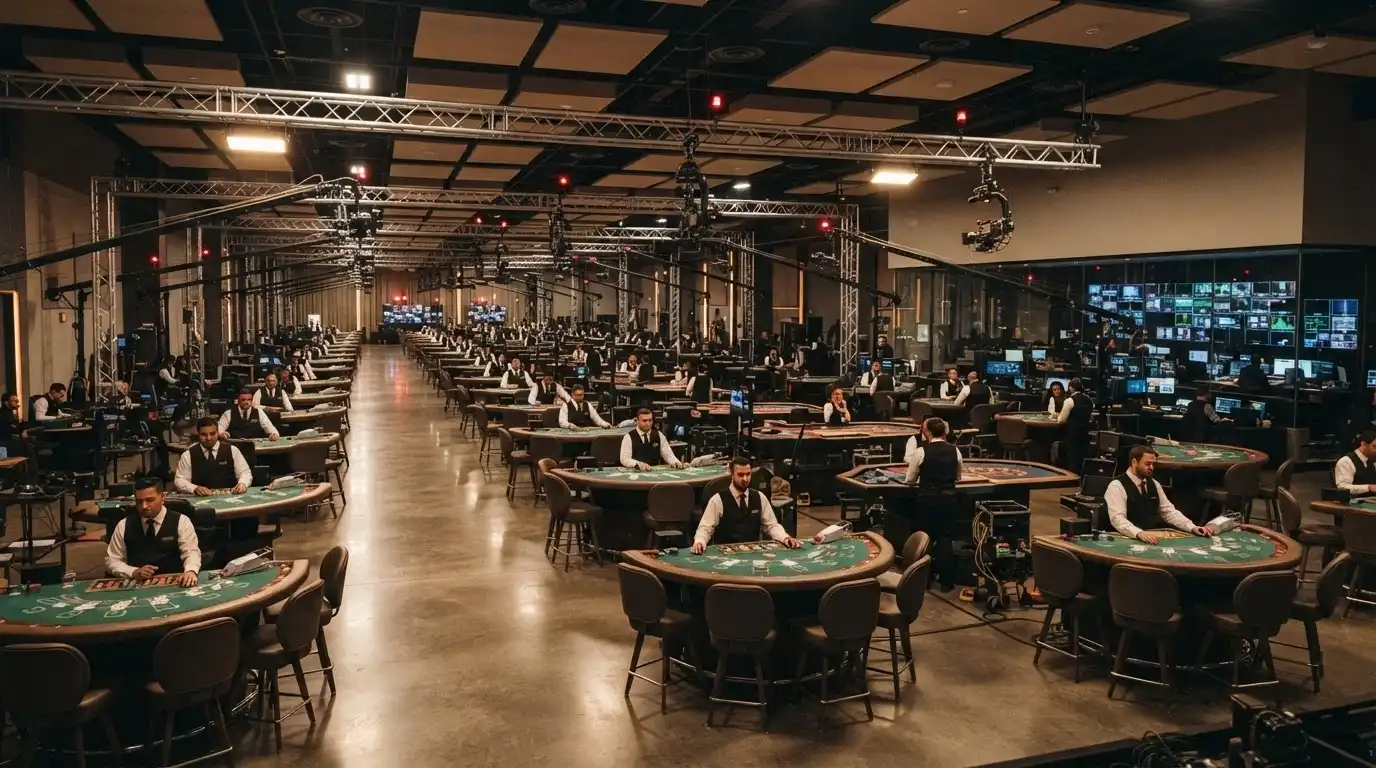
The provider matters to the player for three reasons. First, the studio decides the rules and the payouts on the games it runs — a roulette wheel is the same in principle, but a Lightning Roulette round is not the same as a standard roulette round. Second, the studio’s licence footprint affects whether the games are certified by major regulators — Pragmatic Play Live’s MGA and UKGC licences carry weight that smaller studios cannot replicate. Third, the studio’s production quality affects how a game looks and how fast it plays — the camera angles, the betting interface, the round pace are all set by the studio, not the casino.
Evolution Gaming: the market leader
Evolution is headquartered in Sweden and operates major studios across Europe and North America. The company powers the majority of premium live casino lobbies worldwide, and an Evolution-powered lobby is the default at most of the brands on this page. The catalogue is the largest in the industry: standard blackjack, roulette and baccarat in multiple variants; the Infinite Blackjack unlimited-seat format; Lightning Roulette and Lightning Blackjack with multiplier mechanics; the full game-show catalogue from Dream Catcher and Monopoly Live through Crazy Time and the newer Funky Time.
The studio’s scale shows in two ways a player can see without much effort. The first is table count — a major Evolution-powered lobby can carry 200+ tables across blackjack, roulette, baccarat and game shows. The second is localisation — Evolution runs dedicated tables in multiple languages, country-specific studio sets, and branded tables for individual casino operators. An Australian player at a brand with Evolution’s full catalogue is, in practice, sitting at one of the largest gambling productions on earth.
The pricing on Evolution games for the casino is high, which is why operators with Evolution content tend to have higher minimum bets than operators running on smaller studios. The trade-off is the catalogue and the production — a player who wants Lightning Roulette, Crazy Time, or the full blackjack variant set has only one realistic choice of studio.
Pragmatic Play Live: the Bucharest challenger
Pragmatic Play Live operates from a purpose-built studio in Bucharest with capacity for more than 43 simultaneous tables running 4K cameras 24/7. The live division operates under MGA and UKGC licences, and Pragmatic Play as a whole holds certifications in more than 40 jurisdictions. The catalogue covers blackjack, roulette, baccarat, Speed Baccarat and a smaller game-show line — the studio runs Sweet Bonanza CandyLand and a few wheel-spin titles that compete directly with Evolution’s game-show format.
The Bucharest facility is the most concrete difference between Pragmatic Play and the smaller studios. A 43-table operation running 24/7 is a serious production; most second-tier live studios run a fraction of that capacity and shut down between peak hours. The 4K camera feed is more of a marketing word than a practical difference at most player screens — a 1080p mobile stream is what most players actually receive — but the infrastructure behind it is real.
Pragmatic Play’s licence footprint is the second thing worth flagging. MGA and UKGC are stricter regimes than Curaçao, and the studio’s compliance with those regulators is a real signal about how the games are run. A player who is concerned about the offshore status of the casino can at least point to a studio whose product is regulated in two major European jurisdictions.
Smaller providers and white-label platforms
The second tier of live dealer studios is where the long tail lives. Winfinity, Imagine Live, Iconic21, LuckyStreak, Ezugi, Vivo Gaming, SA Gaming — the list runs on. Some of these are pure-play live studios; others are slots companies that added a live division. The Charmius line-up, for example, draws 247 tables from Winfinity (68 titles), Imagine Live (60 games), Iconic21 (47 games), and LuckyStreak (14 tables) — a mid-sized live dealer lobby built entirely from second-tier studios.
White-label live casino platforms bundle several smaller studios under one integration, letting an operator run a single live lobby that pulls tables from three or four providers. The format gives the operator breadth without the cost of running Evolution; the trade-off is the catalogue depth on any single game type. A second-tier lobby might carry 30 blackjack tables, 20 roulette tables, and a handful of baccarat and game-show variants — versus an Evolution lobby’s 100+ blackjack variants and the full game-show catalogue.
A player at a second-tier lobby is not getting a worse product in the sense of rigged games — the providers carry their own licences and their games are independently certified. The difference is the variety and the production polish. A Winfinity roulette table is not a Lightning Roulette round, and a LuckyStreak blackjack table is not an Infinite Blackjack round. The player knows what they are getting.
Why your live dealer bonus is smaller than it looks
A welcome offer’s headline number is the marketing word, and the small print is what the player actually pays for. Every operator on this page runs a deposit match, a free spin package, a no-deposit offer, or — in Stake’s case — a cashback structure that works differently. The differences between them are not just the headline figures. They are the wagering multiples, the live dealer contribution rates, the bonus validity windows, the maximum win caps, and the structures that decide what the player is actually buying when they accept the offer.

The headline numbers worth pausing on: RocketPlay’s 100% up to A$1,000 plus 100 free spins; SkyCrown’s four-tier package up to A$8,000 plus 400 free spins; BitStarz’s fiat A$2,000 or crypto 5 BTC welcome plus 180 free spins and 30 no-deposit spins; Joe Fortune’s 450 free spins over five deposits; Vave’s 4 BTC plus 100 free spins and 40 no-deposit spins. Royal Reels’ A$10 no-deposit bonus and 100% up to A$500 sits at the modest end of the set. Stake is the structural outlier — 10% weekly cashback with no wagering requirement, which is the only bonus format on this page that pays out as withdrawable cash from the first dollar.
Welcome bonuses and how wagering shrinks their real value
A 100% deposit match up to A$1,000 means the casino doubles the player’s first deposit, up to A$1,000. The player deposits A$1,000, the casino credits another A$1,000, and the player has A$2,000 to play with. The bonus is the A$1,000 the casino added; the A$1,000 the player deposited is theirs. The bonus comes with a wagering requirement — the multiple that decides how much the player has to bet before the bonus converts from bonus money to withdrawable cash.
At 40x wagering on a A$1,000 bonus, the player has to turn over A$40,000 before the A$1,000 bonus converts. A$40,000 is the marketing word’s anatomy. On slots, where the contribution rate is usually 100%, that is A$40,000 of slot play. On live dealer games, where the contribution rate is often 10% — SkyCrown’s is 10% — the same A$40,000 in turnover requires A$400,000 of live dealer play. The 40x headline becomes 400x in practice for a live player, and that is the gap the marketing word never mentions.
Stake’s 10% weekly cashback with 0x wagering pays out as real money the player can withdraw immediately. There is no turnover requirement because there is no bonus to clear — the cashback is the operator’s rebate on net losses, paid in cash. The structural difference is the only thing on this page that earns its own hype.
Free spins and no-deposit offers at the live tables
Free spins are slot free spins, not live dealer free spins. A 100 free spins offer at an AU-facing casino will run on one or two specific slot titles — Book of Dead, Gates of Olympus, a Pragmatic Play slot — and the winnings convert to bonus money with the same wagering as a deposit match. SkyCrown’s free spins come with a A$300 maximum win cap per bonus part, which means a player can win no more than A$300 from a single free-spin allocation, regardless of what the slot actually pays out. The cap is the structural ceiling on a free-spin offer; the marketing word is the spin count.
No-deposit offers are the same structure with the deposit removed. BitStarz’s 30 no-deposit free spins give the player a real-money round on a slot without funding the account first; winnings convert to bonus money at the same 40x wagering. Vave’s 40 no-deposit spins work the same way. Royal Reels’ A$10 no-deposit bonus is the cash equivalent — A$10 in real-money credit to play with, winnings subject to whatever wagering the operator sets (and the operator’s wagering was not confirmed this run).
The structural reality: a no-deposit offer is a chance to look at the lobby without putting cash on the table. A 30 or 40 spin allocation pays out a small amount if the slot runs hot and converts to bonus money if it does. The player who treats a no-deposit offer as a way to win real money is reading the marketing word and not the small print.
Crypto at the live table: paying with Bitcoin and beyond
Most AU-facing live dealer casinos accept Bitcoin. Many accept Ethereum, Litecoin and Tether alongside it. Some accept Bitcoin Cash, Ripple, USD Coin and DAI on top of those. The crypto cashier is a feature at offshore operators because the payment method was banned for licensed Australian wagering services in June 2024 — and a casino asking for crypto from an Australian player is, by definition, an operator sitting outside the Australian rules.
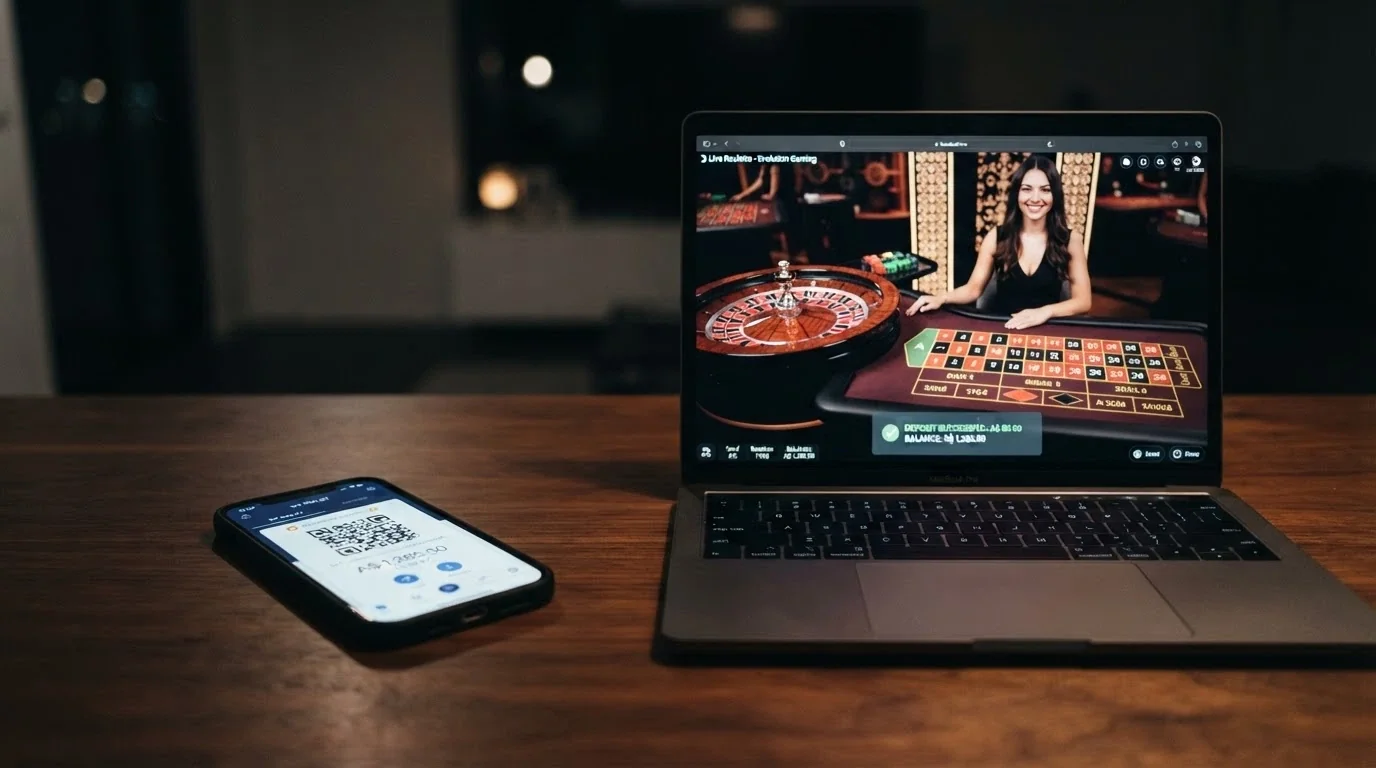
The Interactive Gambling Amendment (Credit and Other Measures) Act 2023 brought the ban into force on 11 June 2024. Credit cards, credit-related products, and digital currency (crypto) are now prohibited as payment for online wagering through any Australian-licensed service. An operator that fails to enforce the ban faces penalties of up to A$247,500. The ban does not bind an offshore casino — the offshore casino is not licensed in Australia and is not subject to the prohibition. Which is why the offshore casino’s cashier lists Bitcoin, and the licensed bookmaker’s does not.
Bitcoin deposits: how they work at live tables
A Bitcoin deposit at an offshore live dealer casino starts with the player opening a Bitcoin wallet — a self-custody wallet, an exchange wallet, or a casino’s own wallet. The player goes to the cashier, selects Bitcoin, and the casino generates a one-time deposit address and a QR code. The player sends BTC from their wallet to that address, the transaction confirms on the Bitcoin network in roughly 10 to 60 minutes depending on the fee paid, and the casino credits the balance in AUD or USD equivalent at the rate at confirmation.
The conversion matters. A player who deposits 0.1 BTC at confirmation and the casino credits A$1,000 has locked the value at confirmation. If BTC moves 5% in either direction before the player withdraws, the AUD balance does not change — the casino paid out in AUD, the player got AUD. A player who deposits in BTC and withdraws in BTC is exposed to the BTC price across the deposit and the withdrawal, which can be a feature or a risk depending on which way the price moved.
The featured operators on this page that accept Bitcoin: Spinago (BTC, ETH, LTC, USDT — instant clearing); Stake (BTC, ETH, LTC); BitStarz (crypto welcome up to 5 BTC); Vave (BTC for the welcome package); Wazamba (BTC among a wider crypto list). The transaction is free at the casino end; the player pays the Bitcoin network fee on deposit and again on withdrawal.
Beyond Bitcoin: Ethereum, Litecoin, Tether and the altcoin options
Ethereum and Litecoin are the second-tier cryptocurrencies at most AU-facing casinos. Ethereum is faster than Bitcoin on confirmation (typically under a minute) but more expensive on network fees — a stablecoin transfer on Ethereum can cost several dollars in gas, which matters at small deposit sizes. Litecoin sits between the two: cheaper than Bitcoin, faster than Bitcoin, similar in shape.
Tether (USDT) is the stablecoin option. A USDT deposit pegs to the US dollar at 1:1 and removes the price volatility question — a player who deposits 1,000 USDT and withdraws 1,000 USDT gets the same dollar value, regardless of what BTC or ETH did in between. Vave’s minimum deposit is 20 USDT; Spinago accepts USDT with instant clearing. Wazamba accepts Bitcoin Cash, Ripple, USD Coin, and DAI alongside the more common options — a wider crypto line-up than most of the brands on this page, and a useful one for a player whose wallet is in altcoins.
The altcoin spread at a casino is a small signal about the operator’s payment infrastructure. A casino that accepts eight cryptocurrencies has built a multi-chain cashier; a casino that accepts only Bitcoin and Ethereum is running the minimum viable version. Neither is a quality judgment in itself, but the player who holds a specific coin will see the spread as a practical matter before they deposit.
Spotting a casino that takes crypto at the live tables
Crypto acceptance is usually listed in the cashier, but a player can also check the homepage footer, the terms of service, and the payments help page. A casino that takes crypto will almost always list a deposit address or a network in the cashier, will display a Bitcoin symbol or a “Crypto accepted” badge on the homepage, and will have a payments page that lists Bitcoin alongside the other methods.
What a crypto deposit tells the player, structurally: the operator is offshore, the operator is not bound by the June 2024 credit/crypto payment ban, and the operator is operating outside the Australian regulatory framework. None of that makes the operator a fraud. It does make the player a customer of an offshore service rather than a domestic one, and the protections — the consumer law, the regulator, the self-exclusion register — are the ones the player should check before depositing, not the ones the casino will volunteer.
A licensed Australian bookmaker does not take crypto. A casino that does is, by definition, operating in a different regulatory world.
Staying safe: responsible gambling tools every live dealer player should use
Offshore casinos sit outside BetStop, and the safety tools the player can set themselves matter more than they would at a domestic bookmaker. The tools a typical offshore live dealer casino offers are the same five:
- Deposit limits — daily, weekly and monthly caps the player can set on their own account
- Loss limits — caps on net losses over a defined period, set by the player
- Session time-outs — automatic logout after a defined session length (30 minutes, 1 hour, etc.)
- Self-exclusion — periods (typically 6 months, 1 year, 5 years) during which the account is locked and the casino will not accept deposits
- Reality check pop-ups — periodic reminders during play showing how long the player has been at the table and what they have won or lost
Player safety tools you can set yourself
A player who decides to use an offshore casino is the only person setting these limits. BetStop — the National Self-Exclusion Register — binds Australian-licensed wagering services only, and an offshore casino is not connected to it. A player who self-excludes through BetStop can still deposit, bet, and lose at an offshore site; the offshore operator does not see the registration, has no obligation to honour it, and will accept the player’s money.
The tools the player can use at the offshore casino itself are real, and the player should use them. A deposit limit of A$200 per week, set on the day the player opens the account, is more useful than a BetStop registration the casino cannot see. A session time-out of 60 minutes is the kind of detail that does not feel important until the player has been at the table for four hours. Self-exclusion at the casino level is the strongest single tool available, and a player who has decided to stop playing can close the account through the responsible gambling page rather than through the registrar the casino will not be told about.
The difference between the offshore and the domestic experience is structural. The domestic bookmaker is required to offer the tools, is connected to BetStop, and is monitored by a regulator. The offshore casino offers the tools at its own discretion, is not connected to BetStop, and is not monitored by an Australian regulator. A player who decides to use the offshore route should treat the in-casino tools as their primary line of defence, not their second.
Where to get help with problem gambling in Australia
The National Gambling Helpline is 1800 858 858 — free, confidential, staffed 24/7. The same service runs online chat and email counselling through Gambling Help Online. The helpline is the front door for problem gambling support in Australia; it does not require the player to have stopped gambling, does not require them to be at an offshore site, and does not require them to register. It is a phone call and a conversation.
State-based face-to-face counselling runs alongside the national service: Gamblers Help in Victoria, GambleAware in New South Wales, the Queensland Responsible Gambling Initiative, and equivalents in other states. A player who wants ongoing counselling rather than a single phone call can be referred through the helpline to a local service.
The prevalence numbers are the ones this page has to carry. About 2.1% of Australian adults — roughly 430,000 people — experience problem gambling. The Australian Institute of Health and Welfare put high-risk gambling at 1.8% in 2022. Those numbers are from the licensed market; the offshore market has no equivalent data, and the risk profile for a player at an offshore casino with no BetStop coverage is, by definition, harder to monitor. The helpline is the resource a player can use regardless of which casino they were playing at, and this page lists it as the single most important thing a reader can take away.
How we picked and ranked the casinos on this page
The set is built from the ten AU-facing offshore live dealer casinos that appear most often in the comparison landscape for this topic. The criteria that order them are stated earlier in the page (licence transparency, bonus terms with live dealer contribution, game and provider breadth, payment reach for Australians, withdrawal caps, responsible gambling infrastructure). No weighting was applied; the criteria are listed in the order the page uses them, and the ranking reflects how each operator stacks up across all six.
The sources checked for the comparison are the Curaçao Gaming Control Board’s public register (for licence confirmation), each operator’s own terms and conditions pages (for bonus, wagering, and withdrawal terms), and review aggregators where the operator’s game count, provider list and bonus terms are mirrored. Where research did not confirm a specific (welcome bonus, free spin count, wagering requirement, withdrawal cap), the cell is left blank or marked with an em dash rather than filled with a figure that did not survive verification.
What the comparison cannot do: it cannot verify the operator’s day-to-day treatment of players. A casino that pays out cleanly one month can change its terms the next; the Curaçao licence gives the regulator oversight but does not give the regulator an Australian presence. The page describes what the operators say about themselves. A player who deposits at any of them is taking that step on the operators’ own representations, and the work ends at making those representations legible.
What to check before you sit at a live dealer table
Three things matter more than the welcome bonus. First, verify the licence yourself. The Curaçao Gaming Control Board’s public register lists the licence holder; an operator whose licence does not show up there is not what it claims to be. The footer of every casino page on this list carries a licence number — a player who cannot find it should not be depositing at that brand.
Second, read the bonus terms for live dealer contribution and validity. A 40x wagering requirement on a A$1,000 bonus at a 10% live dealer contribution is A$400,000 of live dealer play, not A$40,000. A 14-day validity window is a hard deadline, not a suggestion. The marketing word lives in the headline; the arithmetic lives in the small print.
Third, check the withdrawal caps and the payment routes. A casino with a A$2,500 daily withdrawal cap and a Bitcoin cashier is a different proposition from a casino with a A$10,000 daily cap and a PayID cashier. A player who expects to win a large amount and withdraw it quickly should match their expectation to the operator’s structure, not the operator’s marketing.
The irreducible risk is the offshore status. No Curaçao licence gives an Australian player Australian consumer protection. No Curaçao licence connects the casino to BetStop. No Curaçao licence prevents the ACMA from blocking the site at any time. The brand on the page is the brand the player is dealing with; the regulator is in Curaçao, not Canberra; and the protections are the ones the player sets themselves, not the ones the casino is required to offer. A player who decides to proceed anyway is making an informed decision, not a safe one. The point is to make sure that decision is informed.
Frequently asked questions
Are live dealer casinos legal in Australia?
No online casino holds an Australian licence — the Interactive Gambling Act 2001 prohibits the product outright. The ACMA enforces the prohibition against providers, not players; Australians are not prosecuted for using offshore casinos. Every brand on this page is Curaçao-licensed, not Australian-licensed, and operates in a different regulatory world from the domestic bookmakers.
Do live dealer casinos offer no-deposit bonuses?
Yes, though the field is narrow. BitStarz runs 30 no-deposit free spins, Vave runs 40 no-deposit free spins, and Royal Reels runs an A$10 no-deposit bonus. The offers give a player a real-money round on a slot without funding the account; winnings convert to bonus money subject to wagering. The headline is no-deposit; the small print is the wagering.
What are the typical wagering requirements for live dealer bonuses?
Wagering of 40x the bonus amount is standard across the comparison set. The live dealer contribution rate is the figure that decides how much play that 40x actually requires: SkyCrown’s 10% live contribution means a player needs A$400,000 of live play to clear a A$1,000 bonus, not A$40,000. Stake’s 0x cashback is the only bonus on this page without that arithmetic.
Can I play live dealer games on my mobile phone?
Yes. Live dealer streams at 720p work on modern phones over 4G or 5G, and the betting interface is built for touch. Game selection is roughly the same as desktop, though the layout buries some exotic variants behind scroll. Apps versus browser is mostly a matter of taste.
What payment methods can Australians use at live dealer casinos?
PayID, debit cards, and crypto (Bitcoin, Ethereum, Litecoin, Tether and others at the larger operators). Credit cards and crypto are banned for Australian-licensed wagering services — but the ban binds licensed operators, not offshore casinos, which is why the cashier at every brand on this page lists crypto.
Can I play live dealer games with Bitcoin or crypto in Australia?
Yes, at offshore casinos. Bitcoin, Ethereum, Litecoin and Tether are accepted by Spinago, Stake, BitStarz, Vave and Wazamba. Crypto has been banned as a payment method for Australian-licensed wagering since 11 June 2024, with penalties up to A$247,500 for non-compliance — an offshore casino accepting Bitcoin is, by definition, operating outside the Australian rules.