Solana Casinos for Australians in 2026: What the Comparison Really Shows
The comparison an Australian player actually needs starts with a hard fact: no online casino holds an Australian licence, because no such licence exists under the Interactive Gambling Act 2001. Every Solana casino that takes Australian players is offshore, and the ten most-used brands in 2026 are ten different answers to the same trade — faster, cheaper play against zero Australian consumer protection. The trade is the spine of this guide.

Data current as of 29 October 2026. Licence status verified against the ACMA register and the Interactive Gambling Act 2001 (Cth).
Table of Contents
- What a Solana Casino Actually Is — and Whether It’s For You
- Australia’s Most-Used Solana Casinos in 2026 — Compared Side by Side
- Stake
- Rocket Play
- Skycrown
- Royal Reels
- WinSpirit
- Rainbet
- FairGO
- Bizzo Casino
- Rocket Casino
- Scream Casino
- SOL, Tokens and Staying Anonymous — the Crypto Side of the Story
- From Pokies to Provably Fair — the Games You’ll Find at a Solana Casino
- Is It Legal? What the Interactive Gambling Act Means for Your Play
- When the Fun Stops — the Tools You Actually Have (and the Ones You Don’t)
- How We Evaluated These Solana Casinos
- Sub-Second Speed, Zero Recourse — What the Comparison Really Tells You
- Frequently Asked Questions
What a Solana Casino Actually Is — and Whether It’s For You
What a Solana Casino Is — and Who It Actually Suits
A Solana casino is an online casino that settles deposits, bets and withdrawals on the Solana blockchain, normally in SOL or in a stablecoin pegged to the US dollar. Instead of card payments or bank transfers, you move tokens from a self-custody wallet — most often Phantom — directly into the casino’s wallet address. The casino credits your account when the transfer confirms, and you do the same in reverse when you cash out.
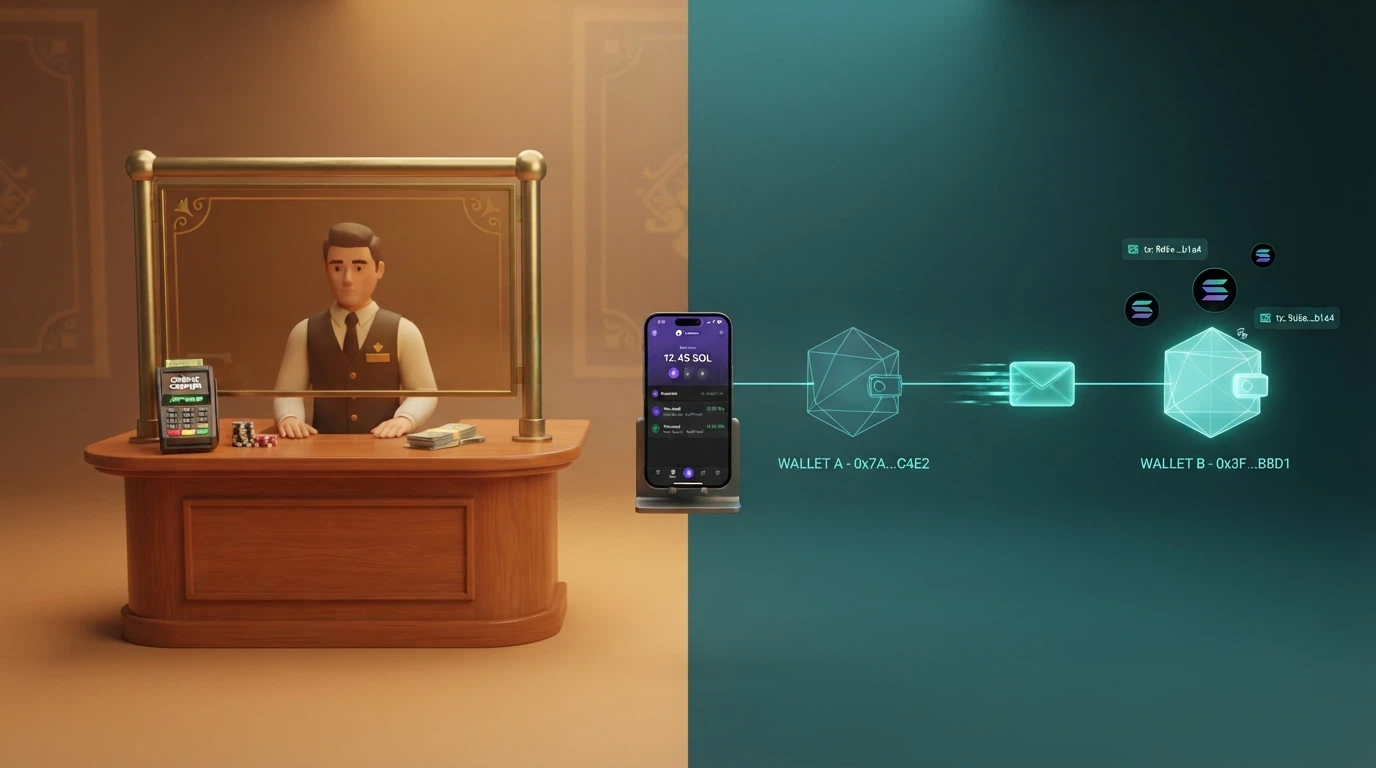
Two technical facts make Solana attractive to casino operators. Transactions finalise in well under a second, and the per-transfer fee is small enough that operators can pass it through without a surcharge. Bitcoin and Ethereum — the chains that dominated the first wave of crypto casinos — move money slowly and charge enough per transaction that small deposits get eaten by the network fee. Solana does not, which is why a generation of new casinos has built their cashier around it rather than around BTC.
So who are these casinos actually for? They are for players who already hold crypto, are comfortable running a self-custody wallet, and have decided they would rather transact peer-to-peer than through a debit card or PayID. A meaningful slice of that audience is Australian. There is no Australian online casino licence — none has ever been issued under the Interactive Gambling Act 2001, and no state or territory has a parallel scheme. Any Australian who wants to play online pokies or live-dealer blackjack for real money is therefore playing offshore, with or without crypto. Solana just changes how that offshore experience feels.
How Solana Deposits and Withdrawals Work in Practice
The flow at a Solana casino is shorter than at a fiat one because there is no payment processor in the middle. You connect a wallet such as Phantom, copy the casino’s deposit address or scan its QR code, and send the SOL you want to play with. The transfer settles in roughly the time it takes to refresh a page. The casino credits your balance when its node sees the on-chain confirmation.
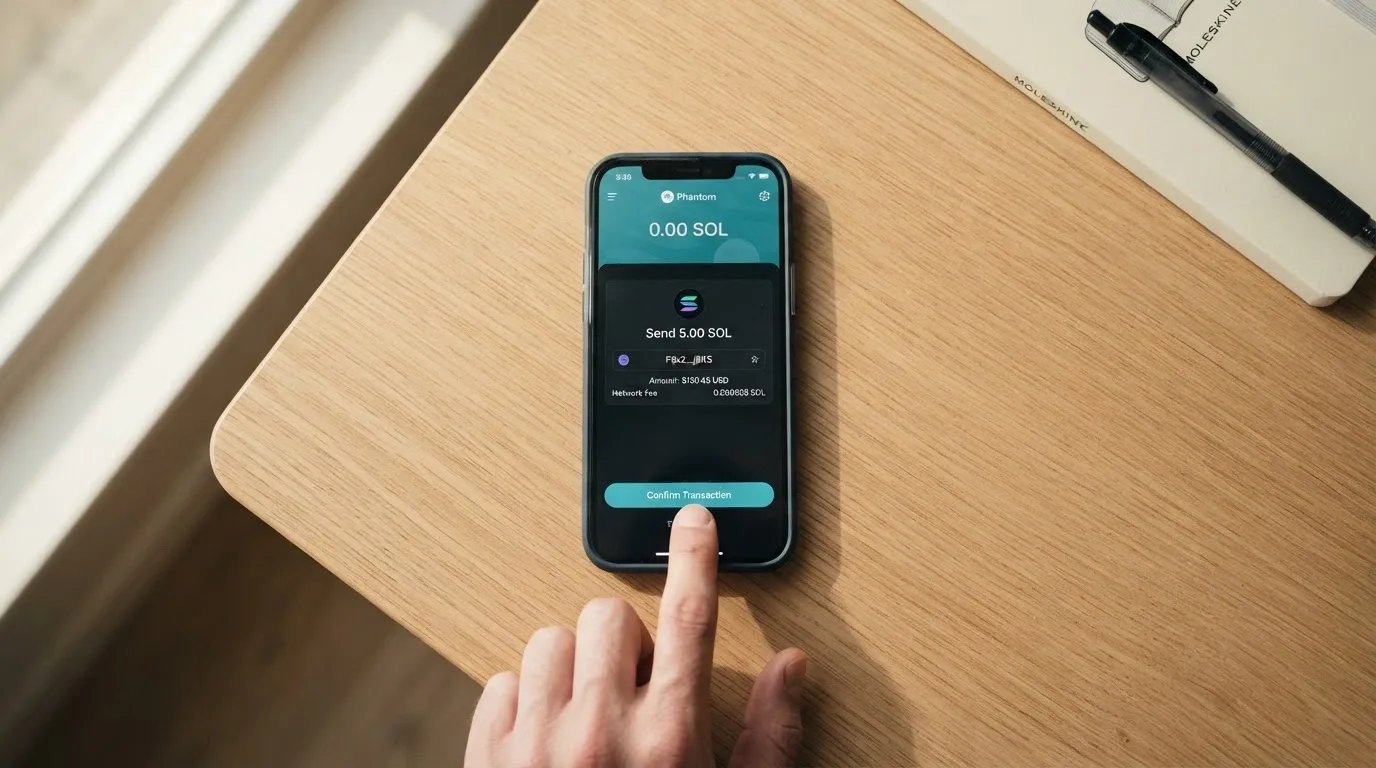
The withdrawal is the same path in reverse. You enter the amount, paste your own wallet address, and confirm. Again, the transfer settles in under a second. The operator then has to credit your casino balance back to your wallet — and that step is the only one that runs on operator time, not blockchain time. The honest operators automate it; the slower ones batch it manually, sometimes once or twice a day. That lag is the difference between a five-minute withdrawal and a twelve-hour one, and it has nothing to do with Solana.
The other thing to understand about the flow is who is on the other side. A casino that takes crypto from an Australian is, by definition, operating outside Australian payment law. Crypto and credit cards have been banned as payment for online wagering in Australia since 11 June 2024 — the prohibition sits in the Interactive Gambling Amendment (Credit and Other Measures) Act 2023. If a gambling site is asking you for SOL, it is not the kind of operator ACMA regulates. That does not make the transfer unsafe in a technical sense, but it does change what happens if the balance goes missing.
What “Comparing” Solana Casinos Means for an Australian Player
Comparing these casinos for an Australian audience is a different exercise from comparing them in a market where the operator is locally licensed. Three things the comparison has to weigh carefully.
The first is what the bonus terms actually demand. A headline-grabbing “200% up to AU$1,000 + 200 free spins” can be ordinary or it can be punishing, depending on the wagering multiple, the game weighting and the maximum cashout rule. A Solana casino has no obligation to publish its full terms in a format an Australian player would recognise, and several of them bury the worst of it in sub-clauses. The comparison has to read those terms the way a sharp punter would.
The second is what recourse the player actually has. An offshore casino is not subject to Australian consumer law, ACMA cannot recover a disputed balance, and BetStop does not reach the operator. If a withdrawal is refused, a win is voided for a “bonus abuse” reason, or the site simply stops answering support emails, there is no Australian complaints body to escalate to. That gap is the price of admission to every operator on this list.
The third is the question of whether the operator is still going to be reachable next week. ACMA has had 1,564 illegal gambling and affiliate websites blocked by Australian ISPs since November 2019, and more than 225 illegal services have withdrawn from the Australian market since 2017. Blocking sits at DNS level rather than at the player, but a site can disappear from Australian connections overnight with balances still on it. A brand with a long offshore track record is a different bet from one that launched six months ago, and the comparison treats that distinction as a real one.
Australia’s Most-Used Solana Casinos in 2026 — Compared Side by Side
The Criteria We Used to Rank These Casinos
The ranking below starts from a specific data point: AU market presence as measured by tracked traffic and estimated revenue, drawn from the operator dataset used to assemble this guide. That measurement answers a narrow question — which offshore casinos are Australians actually using right now — and it is the best objective proxy available for the wider question of which casinos are worth comparing at all.
From that shortlist, four filters do the rest of the work. The first is whether the operator accepts crypto in a form that includes Solana, or is at least structurally a crypto casino where SOL is a plausible cashier asset. The second is the breadth and quality of the game library — how many providers, how many pokies, whether live dealer is on the menu, whether provably fair games are present. The third is the trust profile: licence jurisdiction where one is publicly claimed, longevity in the market, and the absence of serious unresolved complaints. The fourth is bonus shape, described qualitatively rather than as a quoted headline, because the headline is the part of any offer most likely to mislead.
What this comparison does not try to do is declare any of these operators safe. None of them holds an Australian licence because no such licence exists. Each carries a different offshore licence, several of which cannot be independently verified from the public materials available for this guide. The ranking tells you which operators Australians use, not which ones a regulator would bless.
Comparison Table: Top 10 Solana Casinos at a Glance
| Brand | AU Licence Status | Est. AU Market Share | Est. AU Revenue (AU$) |
|---|---|---|---|
| Rocket Play | No AU licence (offshore) | 9.4% | $632.69M |
| Skycrown | No AU licence (offshore) | 8.55% | $436.07M |
| Royal Reels | No AU licence (offshore) | 2.51% | $243.99M |
| Stake | No AU licence (offshore) | 1.28% | $115.67M |
| WinSpirit | No AU licence (offshore) | 1.55% | $110.3M |
| Scream Casino | No AU licence (offshore) | — | $94.87M |
| Rainbet | No AU licence (offshore) | — | $83.13M |
| FairGO | No AU licence (offshore) | 0.8% | $69.11M |
| Bizzo Casino | No AU licence (offshore) | — | $51.38M |
| Rocket Casino | No AU licence (offshore) | — | $43.22M |
The market-share column is accurate for the operators that report one, and the rest show the dataset’s no-data marker. The revenue column is more complete, but it does not mean those operators are bigger overall — it means the dataset covers them differently. Treat both columns as snapshots of AU-facing volume, not as a quality ranking.
Trust Signals: What Separates a Safe Operator from a Risky One
Trust at an offshore casino is reconstructed from signals, not granted by a regulator. The signals that matter, in rough order of weight.
Provably fair is the strongest. A casino that lets you verify each spin or hand against a server seed, a client seed and a nonce — usually by hashing them in your browser before the bet and again after — is operating to a mathematical standard you can check. Solana’s sub-second finality makes that verification feel real-time rather than a forensic exercise. The provably fair label is not marketing when the verification tool is in front of you; it is marketing when it is not.
Longevity is the next signal. A brand that has been paying Australians for three or more years, through at least one round of ACMA enforcement, has cleared a filter that newer brands have not. Five of the operators on this list have been operating offshore long enough that their names appear in community forums going back several years.
The licence jurisdiction matters, but only weakly. Curaçao is the most common issuer for offshore casinos, including the brand that takes the largest share of AU crypto traffic in this dataset. The Curaçao framework is a real regulator with real rules, but its enforcement reputation is mixed and its consumer dispute mechanism is thin. A Curaçao licence is better than no licence and weaker than a Maltese or Isle of Man licence; treat it as a floor, not a ceiling.
The red flags are easier to list. No provably fair tool on a “crypto” casino. A bonus structure that pays a headline number but applies the wagering requirement to deposit plus bonus. A maximum cashout on bonus winnings that contradicts the headline. Withdrawal complaints that recur in community threads over weeks rather than appearing once and being resolved. None of these are dealbreakers in isolation, but stacked together they describe the casinos Australians should avoid.
Stake
Stake sits at the top of the AU crypto-casino traffic dataset among operators whose entire brand is built around cryptocurrency. It accepts Solana alongside Bitcoin, Ethereum, Litecoin and a long tail of other tokens, and its cashier is the clearest example in this comparison of a wallet-to-wallet flow with no card rail to fall back on.
The game library is large and curated. Slots from mainstream studios sit beside a deep catalogue of Dice, Crash, Plinko, Limbo and other provably fair instant games that Stake built in-house. Live dealer is present, the sportsbook is integrated rather than bolted on, and the originals section is the one most crypto-native players actually spend time in. Welcome offers exist but are structured for crypto deposits, with the bonus credited in the same token you funded with.
The trust profile is the strongest in the offshore crypto space. Stake is a long-established brand, has not had a major unresolved payment controversy in recent memory, and publishes provably fair tools that are auditable. The licence is Curaçao (unverified this run). That licence is not Australian, will not give an Australian player any AU recourse, and is the only thing sitting between a player and an offshore operator.
Stake is the comparison’s safest large-scale crypto-native option for a player who already runs a Phantom wallet. No operator in this guide can replace AU consumer protections.
Rocket Play
Rocket Play sits at the top of the AU operator dataset by estimated revenue — $632.69M with a 9.4% AU market share — and that number is doing more work than any single feature. It is a fiat-and-crypto casino with a deep pokies catalogue and the bonus structure of a high-volume operator: a multi-deposit welcome package, regular reloads, and a loyalty ladder that rewards activity rather than tenure.
The game library leans hard into volume. There are several thousand pokies from mainstream and lesser-known studios, plus live dealer, table games and a sportsbook that is functional rather than flagship. Solana support is in the cashier alongside Bitcoin and Ethereum, which makes it a credible comparison point for this guide without being a crypto-native brand.
The trust profile is harder to read. Rocket Play has been operating offshore long enough to appear in community forums over several years, but it does not carry the same name recognition in the crypto-native world that Stake does, and its licence jurisdiction is not publicly listed. That does not mean it is unsafe — the AU revenue figure is the strongest single indicator of an active player base — but it does mean a player is trusting the operator’s track record more than they would be trusting a regulator’s decision.
At $632.69M AU revenue and 9.4% AU market share, Rocket Play is the comparison’s largest-volume option. The verdict reflects that scale: catalogue depth and a credible crypto cashier, not provably fair leadership.
Skycrown
Skycrown holds an estimated 8.55% AU market share on $436.07M revenue, which makes it the second-largest offshore casino in the AU dataset. It is a fiat-first operator with a full crypto cashier layered on top, and it has been a regular name in AU-facing comparison material for several years.
The game catalogue is broad. Pokies from mainstream providers are the centre of gravity, with a live dealer section large enough to cover the major table games and game shows, plus a sportsbook and a small instant-games section. The casino publishes welcome and reload bonuses that are competitive with the other large offshore operators in the dataset, and a loyalty program that runs on comp points rather than tiers.
Solana support is present in the cashier, with Bitcoin, Ethereum and a handful of other tokens accepted alongside it. The withdrawal experience is where Skycrown’s reputation sits: it has historically processed withdrawals inside a working day on crypto rails, though terms can change. The licence is not publicly listed, which is worth flagging.
Skycrown suits the player who wants a fiat-and-crypto casino with a large pokies catalogue and a working crypto cashier, and who does not need the brand to lead on provably fair.
Royal Reels
Royal Reels holds an estimated 2.51% AU market share on $243.99M revenue — a smaller share than the operators above it but a revenue number that still places it firmly in the second tier of offshore casinos Australians use. The brand leans into the Australian market more explicitly than most, with AU-friendly banking, AU dollar balances where supported, and pokies-led marketing.
The game library is what an Australian punter walking into a fiat-leaning offshore casino would expect: a long pokies list from providers familiar from pub and club gaming, plus live dealer, table games and a small sportsbook. Provably fair games are not the centre of the product here; the brand competes on volume and theme.
Solana support status is not publicly verified for this brand. Royal Reels is known as a fiat-accepting operator with a crypto cashier in the standard mix, but whether SOL is on that list specifically is not a fact this guide can carry with confidence. Players should verify at the cashier before assuming.
The welcome offer shape is the kind that needs careful reading: a multi-deposit package with bonus credit and free spins, tied to a wagering requirement that the brand publishes in its terms. The free-spin wins are usually subject to the same wagering multiple as the cash bonus, which is the rule across this segment rather than the exception.
The trade at Royal Reels is AU-facing branding and pokies familiarity over a clearly documented crypto cashier. Players who specifically want SOL on the cashier should verify at the brand’s site before depositing.
WinSpirit
WinSpirit holds an estimated 1.55% AU market share on $110.3M revenue, sitting alongside Stake in the AU dataset’s middle tier. It is a fiat-and-crypto casino with a strong bonus-driven marketing model, and its presence in this guide is as a comparison point for the high-bonus end of the offshore field.
The game catalogue covers the standard pokies-plus-live-dealer mix with a sprinkling of instant games. Providers are the mainstream studios rather than crypto-native ones. The bonus program is aggressive: deposit match offers with high headline percentages, free-spin bundles tied to specific games, and a reload schedule that runs across the week. Terms vary across promotions, which is the norm for offshore casinos at this scale.
Solana support status is not publicly verified for this brand. WinSpirit accepts crypto through standard rails, but the specific token list — including whether SOL is named — was not verifiable from the public materials reviewed for this guide.
The licence jurisdiction is not publicly stated in the materials used for this comparison. WinSpirit has operated offshore long enough to clear a basic longevity filter, but its name does not carry the same recognition as the largest operators in the AU dataset.
WinSpirit vs the comparison’s other operators: it sits at the aggressive end on bonus headline percentages and at the lighter end on transparent terms — and that pattern is the reason it belongs in the ranking.
Rainbet
Rainbet is the most clearly crypto-native brand in this comparison after Stake. It is structured around a crypto cashier, with Bitcoin, Ethereum, Solana and other tokens sitting at the centre of the deposit and withdrawal flow rather than at the edge of a fiat-first product. Its estimated AU revenue is $83.13M, which places it in the middle of the dataset rather than the top.
The game catalogue is a hybrid. There is a pokies catalogue from mainstream studios, but the centre of gravity sits in the instant-games section: dice, crash, plinko, mines and similar provably fair titles that suit a wallet-to-wallet playing style. Live dealer is present but not the focus. The brand’s design and UX signal crypto-native users rather than fiat-first pokies players.
The welcome offer shape, where one exists, is calibrated to crypto deposits. Bonus terms tend to be less aggressive than the high-bonus fiat operators because the audience is more comparison-shopping on wagering requirements than on headline percentages.
The trust profile carries the usual caveats for this segment. Rainbet is a known brand in the crypto casino space with an active community footprint, but its licence jurisdiction is not publicly stated in the materials used for this comparison.
Rainbet suits the crypto-native Australian player who treats instant games as the main event rather than a side show. The trade is a thinner pokies catalogue than the fiat-leaning operators in this comparison.
FairGO
FairGO holds an estimated 0.8% AU market share on $69.11M revenue, with a brand positioning that targets Australian players more explicitly than any other operator in this comparison. It is a fiat-first offshore casino with a crypto cashier in the mix, and it markets in Australian dollars rather than as a global brand.
The game catalogue leans into pokies and the providers Australians recognise from pub and club gaming. Live dealer is present at a smaller scale than the top operators, and the sportsbook is functional rather than the centre of the product. The AU dollar balance and AU-friendly banking make the cashier less of a cognitive load for an Australian player than the global operators in the comparison.
Crypto and Solana support status is not publicly verified for this brand. FairGO accepts fiat through standard methods and crypto at some level, but the specific SOL support was not verifiable from the public materials reviewed for this guide.
The licence jurisdiction is not publicly stated in the materials used for this comparison. FairGO’s longevity in the AU-facing offshore market is its main trust signal — the brand has been visible for several years, which is more than most of its peers can say.
FairGO is an AU-facing offshore casino with AU dollar balances and a pokies-led product. It is the comparison’s most explicit option for an Australian player who wants the offshore experience with AU-facing branding.
Bizzo Casino
Bizzo Casino holds an estimated $51.38M in AU revenue — middle of the dataset, with no published AU market share figure. It is a fiat-and-crypto casino operating offshore, with a product shape closer to the larger operators in this comparison than to the crypto-native end.
The game catalogue follows the standard offshore casino pattern: pokies from mainstream studios, live dealer across the major table games, table games, a small instant-games section, and a sportsbook. The total library is large enough to cover the comparison’s pokies volume benchmark without standing out at the top.
The welcome offer shape is the multi-deposit package that has become standard at offshore casinos at this scale: a first-deposit match with bonus credit and free spins, plus reloads on the second and sometimes the third deposit. Wagering requirements are published in the terms, and the free-spin winnings typically carry the same wagering multiple as the cash bonus.
Crypto support is present, including a cashier that accepts the major tokens. Solana acceptance is unconfirmed here. The licence jurisdiction is not publicly listed.
The trade at Bizzo Casino is the standard offshore product shape over any standout feature. The brand is a defensible inclusion rather than a leader on any single dimension in this comparison.
Rocket Casino
Rocket Casino holds an estimated $43.22M in AU revenue — the smallest in the featured set — with no published AU market share figure. It is a fiat-and-crypto offshore casino operating at a smaller scale than the rest of this guide’s ranked list.
The game catalogue is the standard offshore mix at this scale: pokies from mainstream and lesser-known providers, live dealer at a moderate size, table games and a sportsbook. The total library is smaller than the top operators in the comparison, but it covers the genres the comparison’s reader expects.
The welcome offer shape is competitive with the segment, with multi-deposit packages and reloads calibrated to the same market. Terms are published, though the wagering requirements and max-cashout rules vary across promotions and need the same careful reading as the rest of the segment.
Crypto support is present, though the specific Solana acceptance is unconfirmed. The licence jurisdiction is not disclosed, and the brand’s longevity is shorter than the operators above it in this guide.
At $43.22M AU revenue, Rocket Casino is the smallest figure in the ranked set, and the verdict reflects that scale: the brand competes on standard product shape rather than on any differentiator.
Scream Casino
Scream Casino holds an estimated $94.87M in AU revenue — mid-dataset — with no published AU market share figure. It is a fiat-and-crypto offshore casino in the standard offshore product shape, with a marketing style that leans into theme and entertainment rather than AU-specific positioning.
The game catalogue covers the standard pokies-plus-live-dealer mix, with a reasonable total library and the mainstream providers. The brand competes more on theme and presentation than on catalogue depth, which sets it apart from the largest operators in the comparison without putting it ahead of them on game count.
The welcome offer shape is a multi-deposit package with reloads, calibrated to the same offshore segment as the rest of this guide’s ranked list. Terms are published and need the same careful reading as the rest of the field, particularly on wagering multiple and bonus-win maximum cashout.
Crypto support is present in the cashier, though specific Solana acceptance is unconfirmed. The licence jurisdiction is not publicly listed.
Scream Casino vs the rest of the mid-tier: it competes on themed presentation and entertainment-led marketing rather than on catalogue depth, AU-facing positioning, or crypto-native tooling.
SOL, Tokens and Staying Anonymous — the Crypto Side of the Story
Depositing with SOL — How It Works and What It Costs
The cheapest, fastest way to fund an offshore casino from Australia in 2026 is to send SOL from a self-custody wallet. The network fee on a typical Solana transfer is a small fraction of a cent; the transfer settles in well under a second; and the casino credits your balance when it sees the on-chain confirmation. Compared with Bitcoin or Ethereum, where a single confirmation can take ten minutes and a fee can exceed a small deposit, Solana is a different product.
The practical flow is short. Buy SOL on a major exchange if you do not already hold it, withdraw it to your own Phantom (or compatible) wallet, then send it from the wallet to the casino’s deposit address. Two exchanges can sit between you and the casino: the one where you bought SOL, and the casino itself. Once SOL is in your wallet, neither of them is involved.
The cost picture is the other half of the appeal. Network fees are negligible, and the casino does not usually charge a deposit fee on crypto. The exchange you bought SOL from will charge a spread and a withdrawal fee on the way out, but that is a function of the exchange rather than the blockchain. The point worth keeping in mind: the speed and the cost saving come with a clear trade — there is no Australian consumer protection on the receiving end of that transfer, and no BetStop coverage on the casino you are funding.
Casino Tokens and Coins on the Solana Blockchain
Some Solana casinos issue their own tokens on the Solana blockchain. The pitch from the operator is usually that holding the token unlocks fee discounts, rakeback, loyalty tier boosts or governance rights inside the casino. The pitch from the player’s side is that the token is a second speculative position layered on top of the gambling one.
The risk is straightforward. A casino-issued token carries the same risks as any small-cap cryptocurrency: thin liquidity, concentrated holdings, the possibility that the issuing operator pulls liquidity or abandons the project — a rug pull in the working vocabulary. The casino-gambling risk and the token-speculation risk are then stacked. A punter who holds casino-issued tokens is exposed to both at once, and the only exit on a rug is whatever the secondary market will pay, which on a thin token may be very little.
The honest framing: depositing plain SOL at a casino carries the casino-gambling risk only. Buying the casino’s own token adds a token-speculation risk that the casino has every incentive to minimise in its marketing. Players who are not specifically looking for the perks those tokens unlock are better off depositing in SOL or a stablecoin and skipping the casino-issued layer.
Privacy and Anonymity — What No-KYC Really Delivers
No-KYC is a real pitch at Solana casinos. The flow is email-only sign-up, no ID upload, no proof of address, and a withdrawal back to the same wallet that deposited. For a player who treats identity as a private matter, the appeal is obvious.
What no-KYC delivers, in practice, is faster onboarding and a thinner paper trail. It does not deliver anonymity from the operator, which still knows the wallet addresses that have interacted with it, and it does not deliver anonymity from anyone with a subpoena to the wallet provider. It also does not deliver the protections that KYC is, in the licensed world, paired with: no Australian consumer law, no ACMA complaint mechanism, no recourse if the operator refuses a withdrawal.
The block-and-balance scenario is the one worth holding onto. ACMA can order a site off Australian connections at any time, and any balance sitting on the site at that moment is unrecoverable through Australian channels. The faster onboarding is real; the loss of every AU protection is the price.
From Pokies to Provably Fair — the Games You’ll Find at a Solana Casino
Pokies and Slot Machines on Solana Platforms
Pokies are the centre of gravity at almost every casino on this list, including the ones that market themselves as crypto-native. The mainstream studios — Pragmatic Play, BGaming, Nolimit City, Hacksaw, Push Gaming and others — are present across the comparison set, and the total pokies count at the largest operators runs into the thousands. Live search did not surface per-title RTP data for this run, so this guide cannot quote return-to-player figures for individual games at individual operators. The pattern across the segment is the same: pokies are the bulk of the catalogue, live dealer is a meaningful minority, and the rest is instant games.
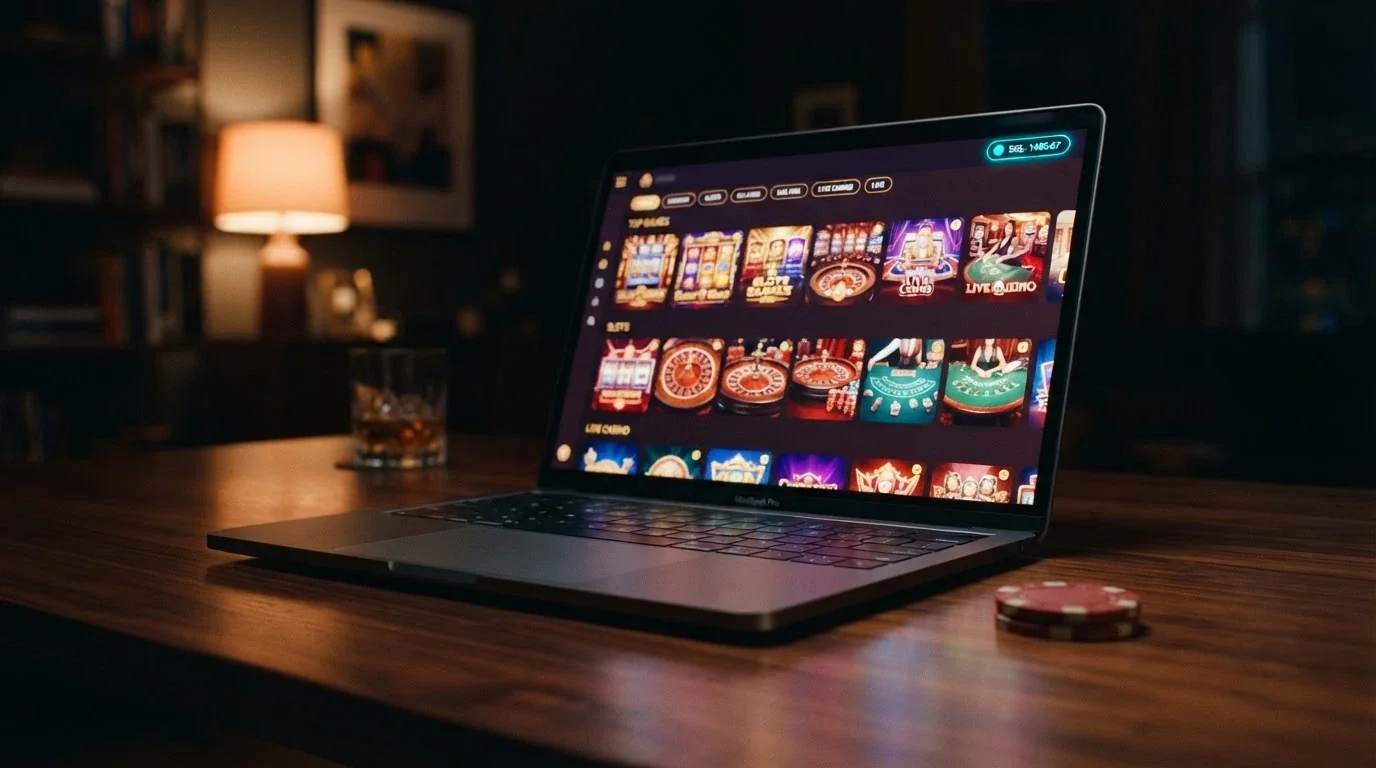
The interesting difference between a licensed AU pub pokie and a Solana-casino pokie is what sits around the math. A pub or club pokie in Australia is governed by state regulations that cap hold percentages and require certain display standards. A Solana-casino pokie is governed by the studio’s own return-to-player setting and the operator’s own payout handling. There is no Australian authority checking that the published RTP is the RTP actually delivered. Players who want that verification rely on independent testing by labs such as iTech Labs, GLI or eCOGRA, where the operator has chosen to publish it.
Solana does not change the maths of a pokie — the random number generator is the same code on any platform — but it changes the verification surface. A provably fair pokie on a Solana casino lets you check each spin against a server seed, a client seed and a nonce in your browser. That check is not the same as a regulator’s audit, but it is more than the licensed AU pub market offers a player.
Provably Fair Games — Dice, Crash and Instant Win
Provably fair is the genre that most clearly belongs to crypto casinos. Dice, Crash, Plinko, Mines, Limbo and Keno variants sit in this category — short-cycle games where each round resolves in seconds and where the outcome can be verified against a server seed, a client seed and a nonce by the player, in the browser, after the round.
The mechanism is simpler than the marketing. Before the bet, the operator commits to a server seed (usually hashed, so it cannot be swapped after the fact) and the player’s browser generates a client seed. The combined seed and a nonce feed into the game’s algorithm, which determines the outcome. After the round, the server seed is revealed, and the player can re-run the algorithm to confirm the result. A casino that swaps outcomes mid-round would have to break its own hash commitment, which is mathematically detectable.
Solana’s sub-second finality makes the verification feel real-time. On slower chains, the verification is still correct but takes longer to settle into the player’s mental model. The instant cycle — bet, see result, verify, repeat — is what makes provably fair instant games the genre crypto-native players spend the most time on.
The trust gap is the same one that runs through this whole comparison. Provably fair is a mathematical standard; it is not a payout guarantee. An operator can publish a verifiable RNG and still refuse a withdrawal. The verification tells you the game was not rigged; it does not tell you the operator is solvent or that the brand will be online next week.
NFT-Based Games and What They Add to the Experience
Some Solana casinos carry NFT-based games — titles where the in-game asset (a card, a piece of armour, a plot of land in a virtual world) is an NFT on the Solana blockchain, owned by the player rather than the operator. The pitch is that the asset can be traded outside the casino, used across compatible games, or held as a speculative position in its own right.
The honest framing adds a risk layer to a risk layer. A punter playing an NFT casino game is exposed to the casino-gambling risk (house edge, bonus terms, withdrawal reliability) and the NFT-speculation risk (token price, liquidity, the possibility that the game or its secondary market goes cold) at the same time. The asset is yours in the sense that you control the wallet, but its resale value depends on a market that the casino does not guarantee.
For an Australian player who already plays crypto games at an offshore casino, NFT-based content is an extension of the same proposition. For an Australian player who is choosing an offshore casino for the first time, the NFT layer is a complication to skip until the basics — terms, withdrawal, licence — are clear.
Is It Legal? What the Interactive Gambling Act Means for Your Play
The IGA Framework — What the Law Actually Prohibits
The Interactive Gambling Act 2001 (Cth) is the federal statute that governs online wagering in Australia. It prohibits the provision of online casino games, online pokies (slots) and in-play sports betting to a person in Australia. There is no licence for online casino anywhere in the country, federally or in any state or territory — the product is banned rather than regulated, which is the distinction that frames every operator on this list.

The 2017 amendment strengthened enforcement. ACMA gained express blocking powers, offshore operator loopholes were tightened, and the post-2017 enforcement record is visible in the numbers: 1,564 illegal gambling and affiliate websites blocked by Australian ISPs since November 2019, and more than 225 illegal services that withdrew from the Australian market since 2017.
The Interactive Gambling Amendment (Gambling Reform) Bill 2026 passed Parliament on 19 August 2026 and its measures commence on 1 January 2027. Two of those measures matter directly to anyone reading this guide. First, banks and payment providers gain express authority to block transactions to illegal gambling operators — a financial enforcement layer on top of the DNS-level blocking already in place. Second, advertising rules tighten materially: a 3-ad-per-hour cap between 6:00 am and 8:30 pm; live-sport blackouts around scheduled games; broadcasting of odds banned; online wagering ads only to logged-in, age-confirmed users who have not opted out; no ads inside sports venues or on player uniforms; and athletes, celebrities and influencers barred from promoting wagering.
What the IGA does not do is criminalise the individual player. The Act targets the provider, not the punter. Playing at an offshore casino from Australia is not, in itself, an offence under the IGA. What the player gives up, by playing offshore, is every Australian consumer protection: no ACMA complaints path, no AU dispute resolution, no BetStop coverage, no AU recourse on a refused withdrawal or a voided win. That asymmetry — provider-targeted prohibition, player-targeted loss of protection — is the spine of this comparison.
No-KYC Play — Faster Onboarding, Zero Recourse
No-KYC is the sales pitch most Solana casinos lead with. The pitch is correct in its narrow sense: signing up takes a minute, depositing takes another minute, and there is no document upload. The pitch is silent on the cost of that speed.
What you lose by skipping identity verification at an offshore casino is the layer of protection that licensed markets treat as basic. There is no Australian consumer law to fall back on if a withdrawal is refused, no AU complaints body to escalate to, and no BetStop registration to bind the operator. ACMA cannot recover a disputed balance, because ACMA’s authority does not extend to offshore operators.
The withdrawal refusal scenario is the one to think through. A licensed AU wagering operator sits under state regulator supervision, and the operator’s terms are read against an enforceable Australian regulatory framework. An offshore operator sits under the licence of whichever jurisdiction issued it — often Curaçao — and the operator’s terms are read against that jurisdiction’s framework. The mechanism for an Australian player to recover a disputed balance is, in practice, the operator’s own customer support and whatever public pressure the operator is exposed to. That is a real mechanism at some operators and a non-existent one at others.
The no-KYC label is also not anonymity from the operator. The operator sees the wallet addresses that have interacted with it, the timestamps and the amounts. The label is anonymity from the player’s Australian bank, and that is what most no-KYC pitches actually mean. A player who treats the offshore reality as a known cost is making a different decision from a player who expects AU-grade protections and is surprised to find them missing.
Licensed AU Wagering vs. Offshore Solana Casino — the Real Difference
| Feature | Licensed AU Wagering | Offshore Solana Casino |
|---|---|---|
| Licence & regulator | Northern Territory Racing and Wagering Commission (NTRWC) | Curaçao or other offshore jurisdiction (varies by operator) |
| Online casino games offered | No — prohibited under the IGA | Yes — pokies, table games, live dealer |
| Solana / crypto deposits | No — crypto banned as payment for online wagering | Yes — SOL and other tokens |
| Identity verification | Mandatory on sign-up | Often none at sign-up |
| Consumer protection | Australian Consumer Law applies | None under Australian law |
| Dispute resolution | State regulator and ACMA complaint mechanisms | Operator-only; no AU complaints body |
| Self-exclusion | BetStop (National Self-Exclusion Register) | Operator-only self-exclusion; BetStop does not bind |
| Deposit methods | Debit card, bank transfer, PayID/Osko, BPAY | Crypto, some card and e-wallet options |
| Site availability in Australia | Yes, under Australian law | Subject to ACMA DNS-level blocking |
The contrast matters because the two products are not the same thing under different branding. They are different products entirely: one is regulated and product-restricted, the other is unregulated and product-complete for the player who wants casino games. The licensed bookmaker that offers sports betting and races does not, by law, offer online pokies or live-dealer roulette. The offshore casino that offers pokies and roulette cannot, by law, advertise to Australians or accept Australian payment rails without breaking the prohibition itself.
When the Fun Stops — the Tools You Actually Have (and the Ones You Don’t)
Deposit Limits, Loss Limits and Self-Exclusion — What’s Available
An offshore Solana casino will, in most cases, offer some form of deposit limit, loss limit, reality check or session timer. These are voluntary, usually configurable in the account settings, and usually revocable on request — a player who has set a weekly deposit ceiling can normally raise it again with a support ticket. The mechanism is operator-side; the operator can change it without notice.

Self-exclusion at an offshore casino is single-operator. A player who self-excludes from Stake is excluded from Stake only; the exclusion does not propagate to Skycrown, Rocket Play or any other brand on this list. The exclusion length varies (six months, one year, permanent at some operators), and the operator’s compliance record varies too.
BetStop is the Australian alternative that does the propagation. One registration excludes a person from every Australian-licensed online and phone wagering service. As at 31 July 2026, BetStop had recorded 67,480 registrations, with 41,290 exclusions still active — more than 60% of everyone who has registered — and 78% of registrants were under 40. Thirty-eight per cent of registrants chose lifetime exclusion.
BetStop’s scope is the limitation. It binds Australian-licensed wagering services only. An offshore casino is not connected to the register, and a person registered with BetStop can still deposit, play and withdraw at every operator on this comparison’s ranked list. That is the clearest single-line summary of the player-protection gap an Australian faces when moving from a licensed product to an offshore one.
Where to Get Help — the Numbers and Services That Actually Work
The free, confidential, 24/7 help line for any Australian experiencing harm from gambling — including harm from offshore play — is the National Gambling Helpline, 1800 858 858. The line is staffed by counsellors and operates in every state and territory. Online chat and counselling are available through Gambling Help Online. The services are funded by the Australian government and are not connected to any operator, licensed or offshore.
The problem-gambling figures worth knowing are these. Approximately 2.1% of Australian adults — roughly 430,000 people — experience problem gambling at any given point. The Australian Institute of Health and Welfare put high-risk gambling at 1.8% in 2022. BetStop’s 78% under-40 figure is consistent with that broader pattern: the cohort most at risk is younger than the population average, which is part of why the 2026 reform bill’s advertising restrictions target digital channels specifically.
The services above are available regardless of where the gambling happens. Whether the harm is from a licensed AU bookmaker, an offshore Solana casino or a poker game at a mate’s place, the help line and the online service are the same. They are the one part of the Australian gambling-harm response that does reach an offshore player.
How We Evaluated These Solana Casinos
The ranked list and the operator write-ups in this guide were built from a specific starting point: the AU operator dataset that records tracked traffic and estimated revenue for gambling brands active in the Australian market. The dataset identified a pool of operators with material AU traffic; from that pool, the ten casinos in this comparison were selected as relevant to a crypto or Solana comparison, after excluding the licensed Australian wagering brands (Sportsbet, Tab, Bet365, Ladbrokes, TABtouch, PointsBet, Neds, Betr, Picklebet, Betfair) on the basis that those brands do not offer casino games. Where two operators had similar AU revenue, the tie-breaker was the depth and clarity of their public-facing material.
The licence and regulatory backbone of the comparison was built from the regulation skill for Australia — the Interactive Gambling Act 2001 (Cth), the 2017 and 2026 amendments, ACMA enforcement record, BetStop registration data, and the National Gambling Helpline. The Solana-specific technical claims (sub-second finality, very low fees) are drawn from general blockchain knowledge, since no live search results were available for this run.
What this guide could not do is verify per-operator bonus terms, wagering multiples, bonus validity windows, max-cashout rules or specific Solana acceptance from the live web. The operator sweep that would normally have confirmed these figures did not complete this run, and the guide has flagged every such case as qualitative or as unverified. Players who want to verify a specific term before depositing should do so at the operator’s own cashier and terms page, and should treat the comparison’s qualitative descriptions as a starting point rather than a substitute.
Sub-Second Speed, Zero Recourse — What the Comparison Really Tells You
The honest summary of this comparison is short. Solana gives Australian players a faster, cheaper cashier than any other crypto chain and any fiat rail. The casino products on the other end of that cashier are offshore, unlicensed in Australia, and unprotectable under Australian law. The player trades every AU protection for that speed and cost saving, and the trade is the same at every operator on the ranked list.

The numbers behind the trade are not equal across the comparison. The largest AU-traction operators — Rocket Play and Skycrown — carry the most visible AU player bases, which is one signal of operational continuity. The crypto-native end of the comparison — Stake and Rainbet — carries the strongest provably fair tooling. The AU-facing brand at the fiat end — FairGO and Royal Reels — carries the most explicit Australian positioning. None of these distinctions change the legal and protective reality, which is the same at every operator on the list.
For a player who has already decided the trade is worth it, the comparison’s job is to make the trade legible — which operators carry which product shape, which have the strongest crypto cashier, which are most explicit about AU positioning. For a player who has not yet decided, the comparison’s job is to make the cost legible — the AU consumer protections that are given up, the BetStop coverage that does not reach, the ACMA blocking record that applies to every brand in this guide. The arithmetic is on the page. The decision is the player’s.
Frequently Asked Questions
Can I use BetStop to self-exclude from a Solana casino?
BetStop binds Australian-licensed wagering services only. An offshore Solana casino is not connected to the register, so a BetStop registrant can still deposit, play and withdraw at any operator on this comparison’s ranked list. Self-exclusion at an offshore casino is single-operator only — it does not propagate to any other brand.
What happens if an offshore Solana casino refuses my withdrawal?
ACMA’s authority does not extend to offshore operators, so there is no Australian complaints body to escalate to. The recovery path is the operator’s own customer support, any community pressure the brand faces, and the offshore licence issuer’s complaints process. None of those paths is a guarantee.
What is the fastest Solana casino withdrawal time?
The Solana transfer itself settles in under a second once the operator releases the funds. The delay is operator-side, and runs from near-instant at the best crypto-native casinos to 12 hours or longer at operators that process withdrawals manually. The fastest documented experience in this comparison sits with Stake and Rainbet.
Do Solana casinos require KYC or identity verification?
Many do not at sign-up, and the no-KYC pitch is common in the segment. No-KYC delivers faster onboarding and a thinner paper trail, not anonymity from the operator. The protections licensed markets pair with KYC — Australian Consumer Law, ACMA dispute resolution, BetStop — are not provided at no-KYC casinos, regardless of whether identity is verified.
Are there any licensed Solana casinos in Australia?
No. The Interactive Gambling Act 2001 prohibits online casino games to a person in Australia, and no state or territory issues an online casino licence. Every Solana casino available to Australians is offshore. Licensed Australian wagering operators hold Northern Territory licences for sports and race wagering only — crypto deposits are banned for those operators.
Are Solana casinos safe and fair for Australian players?
Safe and fair are two different questions. Provably fair is a real mathematical check — players verify each outcome against a server seed, client seed and nonce. Safe in the consumer-protection sense is different: it asks whether the operator pays out, disputes get resolved and the site stays online. Offshore status removes the safety net without changing the math.