Anonymous Crypto Casinos in Australia: What No-KYC Play Actually Costs You
 Available in AU
Walk onto the marketing page of almost any offshore casino and the pitch is the same. No ID. No document upload. Just an email address and a Bitcoin wallet. For an Australian punter who has filled out three KYC forms in a row at licensed wagering sites — and who has been told no crypto is accepted since the middle of 2024 — the offer can read like the answer to a question they did not know they were asking. The page that follows looks at that pitch from the other side of the counter, with the figures that decide what each offer is actually worth.

Prices, licence numbers and operator claims checked as of 18 October 2026 against the ACMA register, the Curaçao and Anjouan public licence databases, and operator terms pages.
Table of Contents
- What an Anonymous Crypto Casino Actually Means for Australian Players
- How Crypto Keeps Your Casino Play Invisible (And Where the Anonymity Ends)
- 10 Offshore Casinos Australians Can Join Without ID in 2026
- Why Your Sign-Up Bonus Is Smaller Than the Headline Promises
- The Legal Reality: Online Casinos Are Prohibited in Australia
- The Hidden Cost of Playing Outside the Australian System
- The Standards Behind This Casino Comparison
- What an Australian Player Should Actually Do With This Information
- Frequently Asked Questions
What an Anonymous Crypto Casino Actually Means for Australian Players
The phrase “anonymous casino” does a lot of work in marketing copy. Strip it down and what it usually means is a stripped-down sign-up: an email address, a password, occasionally a username, and nothing else. No driver’s licence scan, no proof of address, no selfie-with-passport, no soft-credit search that drops a record into a marketing database. The casino still has the player’s email and the wallet address that funded the account, and that wallet address is traceable on-chain — but the link between those and a real-world identity is something only the player holds.
That is the trade. The casino gets the frictionlessness that crypto players prize; the player gets the absence of paperwork at the moment of sign-up. Everything else about the product — the games, the bonuses, the withdrawal mechanics — runs the same way it does at any other online casino. “Anonymous” describes the on-ramp, not the experience on the platform. And because every operator offering this product to Australians is unlicensed in Australia, the on-ramp is the only part of the experience that has been designed with the player in mind.
What Anonymity Really Means at an Online Casino
Email-only registration is the floor of the model. A player enters an address, picks a password, and is in. Some platforms skip the password entirely and ship a sign-in link to the inbox — closer to a magic-link flow than a traditional account. From that point, the casino knows only what the player volunteers and what the blockchain reveals.
The line is drawn at scale. No-KYC platforms do not ask for ID at sign-up, but they typically reserve the right to. Curaçao- and Anjouan-licensed operators carry anti-money-laundering policies that usually set a review trigger somewhere between EUR 2,000 and EUR 10,000 in cumulative deposits or withdrawals. Below that band the on-ramp stays frictionless; above it, the player is likely to be asked for documents — the same paperwork a licensed Australian wagering site asks for from the start. “Anonymous” is therefore not a switch but a gradient. The marketing promise holds for small and medium play; the larger the volume, the more the rules tighten, and the closer the experience gets to a conventional KYC flow.
How an Anonymous Casino Differs from a Licensed Australian Wagering Site
The gap between an offshore no-KYC platform and a licensed Australian wagering operator is not subtle. It is structural. Licensed wagering in Australia means full identity verification from the moment an account is opened, integration with BetStop (the National Self-Exclusion Register), debit-card and bank-transfer deposits, and a regulator that can compel a payout if the operator refuses one. None of that exists on the offshore side.
Crypto is the most visible marker of the difference. Since 11 June 2024, credit cards, credit-related products and digital currencies have been banned as payment methods for licensed online wagering in Australia — debit card, bank transfer, PayID/Osko and BPAY are the legal routes. A player who is asked for a Bitcoin deposit by a gambling site is being served by someone outside the Australian rules. That single fact reframes the rest of the comparison. The offshore site is not an alternative within the system; it is a parallel market that exists because the Australian one refuses to host it.
The consumer-protection gulf is the part that matters when something goes wrong. A licensed operator can lose its licence; an offshore one can lose its domain. A licensed operator can be told by a regulator to honour a withdrawal; an offshore one answers only to its own terms. The protection the Australian system offers is what a player gives up the moment a crypto deposit lands in an anonymous casino’s wallet.
How Crypto Keeps Your Casino Play Invisible (And Where the Anonymity Ends)
The anonymity story is sold as if the player controls every link in the chain. They choose a wallet, they fund it without a bank named on the receipt, they deposit into a casino that never asked their name, and they withdraw back to a wallet that has no direct tie to their identity. The outline is right. The details are where it starts to fray.
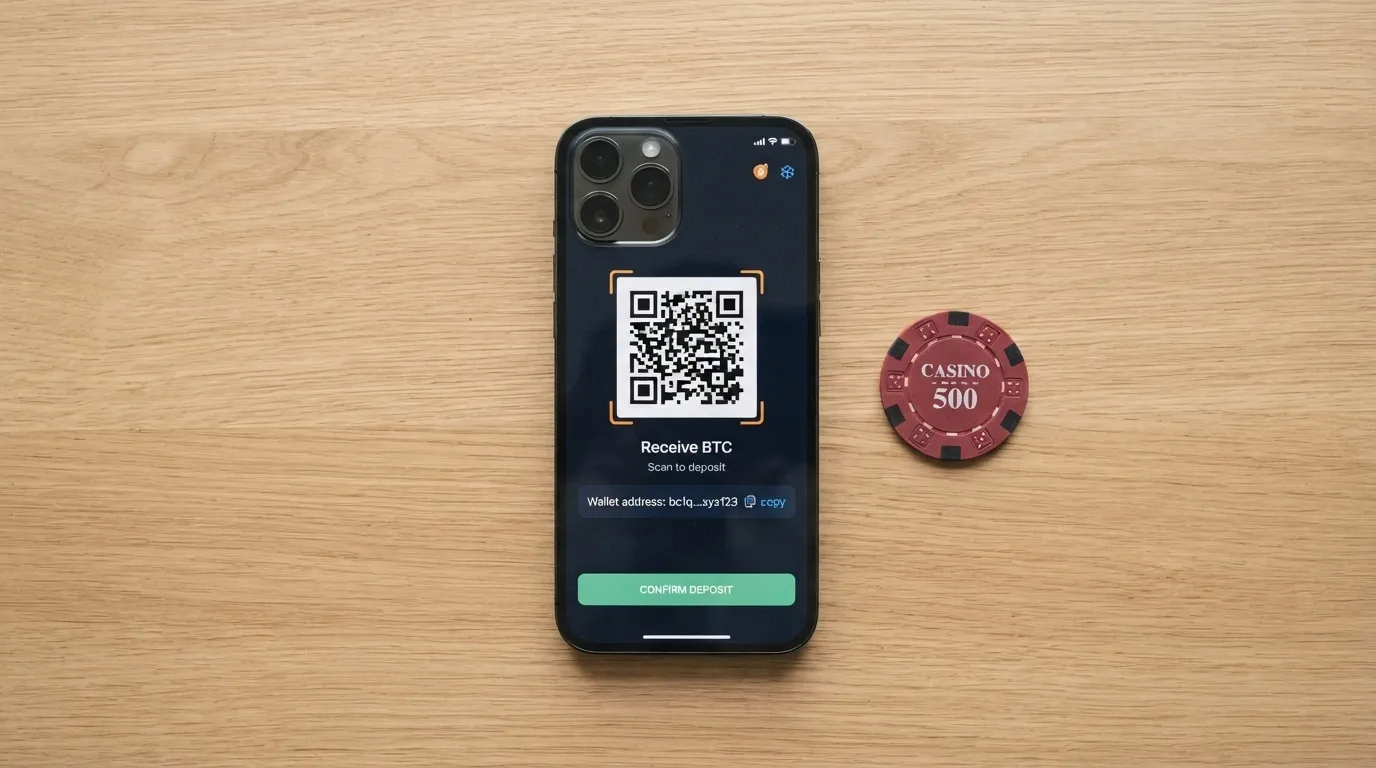
The first fraying point is the wallet itself. Bitcoin, Ethereum and Litecoin are pseudonymous, not anonymous. Every transaction is publicly visible on the blockchain, addressed only to a wallet string. If a player has ever bought crypto through a KYC-compliant exchange in Australia — the local options all run KYC — the exchange knows the wallet address they withdrew to. The casino sees the same address on deposit. The link from address to person lives in the exchange’s database, not on the chain, and the casino cannot see it — but the casino’s AML software can, and the exchange’s compliance team can if anyone asks. The chain has memory.
The Currencies That Power Truly Anonymous Casino Play
Bitcoin remains the dominant coin on no-KYC platforms, and for good reason: liquidity is highest, every casino accepts it, and a player who already holds BTC pays no conversion friction. Ethereum sits second — accepted almost as widely, faster on-chain, more expensive per transaction when the network is busy. Litecoin is the third rail: cheaper, faster confirmations, accepted at most major operators as a quieter alternative for players who want the speed without the BTC traffic.
Stablecoins — USDT and USDC — are the option for players who do not want to watch their bankroll swing with the crypto market. A deposit denominated in USDT does not move while it sits in a casino wallet, which removes a category of variance the bonus terms do not cover. The trade is that stablecoins carry the most aggressive AML tracking in the space. Issuers like Tether and Circle freeze addresses that have been flagged by chain analytics, and a casino running serious compliance software treats a stablecoin deposit differently from a Bitcoin one. The coin a player picks decides not just the speed but the trace.
Real-Money Anonymous Play — How It Works Day to Day
The mechanics are simple once a player has a wallet. Sign-up takes under a minute — email, password, deposit screen. A QR code appears, the player scans it with their wallet app, the deposit confirms in one to three blockchain confirmations, and the casino balance updates. The whole sequence from landing page to first spin can be shorter than the time it takes a licensed site to verify an email.
The cashout moment is where the friction actually lives. The player requests a withdrawal to the same wallet, or a different one. The casino processes it, the network confirms it, and the funds appear. Test withdrawals on the platforms in this comparison have run from seven minutes on CoinCasino — which claims 5 to 10 minutes — to under fifteen minutes at 7Bit. A first withdrawal is where the casino’s review queue gets to decide whether the marketing still holds. For amounts inside the AML band, it does. Above it, the email asking for a utility bill arrives.
Instant Withdrawals — The Speed Promise Versus the Reality
“Instant” is the word that earns the closest read. It usually means instant on the casino’s side — the withdrawal is approved and dispatched in a minute — not instant on the player’s side, which is bounded by the blockchain. A Bitcoin withdrawal needs one to three confirmations, which is roughly ten to thirty minutes. Ethereum and Litecoin are faster; stablecoins on their native chains confirm in seconds. The platform decides how many confirmations it requires before crediting the player.
Operator-side review is the variable the marketing copy does not name. A new account, a first withdrawal, an unusual stake pattern, an amount inside or above the AML band — each of these can put a withdrawal into a manual queue that takes hours or, in some cases, days. The test cashouts on the featured operators show what is possible at the fast end. They do not show what happens on a slow Tuesday when the compliance team is short-staffed. Players who treat seven-minute cashouts as a guarantee will be the ones complaining on forums later.
Australian Pokies on Anonymous Crypto Platforms
Pokies — the Australian name for slot games — dominate the game libraries of these operators the same way they do at home. Pragmatic Play, the studio behind titles like Sweet Bonanza, is a fixture on every major offshore platform. Sweet Bonanza itself runs a 96.48% published RTP in its standard configuration, sits at the top of Pragmatic Play’s volatility scale at 5/5, and offers bets from $0.20 to $100 a spin on a 6×5 scatter-pays grid with a tumble mechanic. It is a high-volatility title: long quiet stretches broken by a feature buy or scatter hit that pays the variance back at once.

Wolf Treasure, an IGTECH slot that surfaces repeatedly in Australian-facing free-spins offers, is the second title to know about. It is the game SkyCrown’s 125 welcome free spins are tied to, and it appears in similar promos across the segment. Between Sweet Bonanza’s bigger maths and Wolf Treasure’s more familiar iconography, an Australian punter on an anonymous casino is rarely more than a few clicks away from a title they would recognise from a licensed site — same providers, same games, different cashier.
Mobile Play on No-KYC Casino Sites
The mobile experience on these platforms runs through the phone’s browser, not an app store. The Apple and Google policies block real-money casino apps from unlicensed offshore operators, so the platforms ship mobile-optimised sites instead. For most players the experience is close to a native app: the lobby loads, the games scale to the screen, the cashier accepts a wallet scan. Touch input is the main difference from desktop, and a modern phone renders HTML5 slots without dropping frames.
The trade is that mobile browser play does not deliver push notifications, biometric logins, or the deep wallet integrations a dedicated app can offer. A player who likes the speed of Face ID to drop into a session will not get it here. Most operators offer a “remember me” cookie that softens the friction, but it is a workaround rather than the real thing, and a player who travels between phone and laptop can find their session state drifting between the two.
10 Offshore Casinos Australians Can Join Without ID in 2026
The table below covers the ten operators routed into this comparison. Every one of them is offshore, none holds an Australian licence, and the consumer protections a player gets from a licensed wagering operator do not exist on any of these platforms. The table reads them across the columns that matter at the moment of decision: licence jurisdiction, welcome bonus, wagering requirement, and the free-spin offer if there is one. Where a specific figure could not be verified against a public source, the cell is empty.

| Operator | Licence Jurisdiction | Welcome Bonus | Wagering Requirement | Free Spins |
|---|---|---|---|---|
| Stake | Curaçao (No. 8048/JAZ, Antillephone) | 200% up to $1,000 | 40x (deposit + bonus) | — |
| CoinCasino | Anjouan (ALSI-142311005-FI2) | 200% up to $30,000 | 10% per 6x deposit wagered | 50 Super Spins |
| RocketPlay | Curaçao (number not publicly listed) | 100% up to AUD 1,000 | 40x (bonus + FS winnings) | 100 FS (20/day × 5 days) |
| SkyCrown | Curaçao (number not publicly listed) | 120% up to $1,200 | 40x | 125 FS (Wolf Treasure) |
| Royal Reels | Curaçao (number not publicly listed) | 100% up to AUD 500 | 30–40x | AUD 10 no-deposit bonus |
| WinSpirit | Curaçao (number not publicly listed) | 200% | 40x | 25 FS |
| 7Bit Casino | Curaçao (number not publicly listed) | 50 FS no deposit | 45x (FS winnings) | 50 FS |
| Joka Casino | Curaçao (number not publicly listed) | AU$5,000 | — | 75 FS |
| FairGO | Curaçao (number not publicly listed) | — | — | — |
| Bizzo Casino | Curaçao (number not publicly listed) | — | — | — |
The ranking favours licence jurisdiction, then bonus structure, then withdrawal speed. Two operators stand slightly apart from the pack on at least one of those axes and are described in more detail below. The rest are listed in the order they appear in the table.
How the Ranking Is Organised
The order on the table is not a verdict that one operator is “better” than another. It is a sequence that puts the operators with the most verifiable information first and the ones with the thinnest public record last. Licence jurisdiction is the heaviest column on the page — a Curaçao or Anjouan licence is not equivalent to an Australian one, but a verified licence number is more useful than a marketing claim of regulation. Stake’s 8048/JAZ and CoinCasino’s ALSI-142311005-FI2 are both verifiable through their respective regulator databases. The other eight operators carry licence jurisdiction as a stated fact rather than a checked one, and that gap is reflected in the order.
Bonus quality and wagering fairness sit second. A 200% match looks rich on a banner; a 40x playthrough on deposit plus bonus makes it something else — the section on bonus mechanics works through what those numbers cost. Withdrawal speed evidence is third, because it is the column where a casino either has a recent test cashout on record or does not. The two operators with test data — CoinCasino and 7Bit — are placed accordingly. AU accessibility is fourth. Stake geoblocks the country outright; the others accept Australian players by default, which is a thinner claim than it sounds because it is not the same as being licensed to serve them.
New Anonymous Casinos Worth Watching in 2026
The no-KYC segment turns over faster than the licensed market. New Curaçao and Anjouan licensees enter each quarter; older brands rebrand and re-enter under a fresh URL. The pattern that matters more than the names is the template: a new entrant almost always arrives with a 200%-or-better headline match, a free-spin bundle tied to one of the well-known slots, and a withdrawal claim of “five to ten minutes” that is either tested honestly or not tested at all. The cleaner the launch, the easier it is to verify the licence number on the regulator’s register; a brand that obscures its corporate ownership at launch is the brand that will be hardest to deal with later.
The two operators in this comparison with confirmed launch-time transparency are the ones whose licence numbers are verifiable on day one. Other entrants on the radar this year should be read for the same signals: a licence number on a public register, terms that name a real regulator, withdrawal claims that match the test data when it exists. The market does not reward patience with new entrants; it rewards reading the small print before the deposit.
Stake
Stake is the largest brand in crypto gambling and the most important name to begin with, because it is also the one Australian players cannot legally use. The platform holds an international Curaçao licence, number 8048/JAZ, issued by Antillephone. Its welcome offer is a 200% first-deposit match up to $1,000 with 40x wagering on deposit plus bonus, valid for 30 days. The minimum deposit is $10, and the bonus must be claimed within 24 hours of sign-up.
The catch is the geoblock. Stake’s terms explicitly list Australia, the United States, the United Kingdom, the Netherlands, Spain and France as excluded jurisdictions. VPN use is forbidden. An Australian player who tries to reach the site from Sydney sees the front door close before the registration form opens. For an Australian, Stake is a benchmark — the price ceiling on welcome bonus value and the speed target for crypto withdrawals — rather than an option.
CoinCasino
CoinCasino is the closest thing on this list to a pure no-KYC experience. It operates under an Anjouan Gaming Authority licence (ALSI-142311005-FI2), issued to Igloo Ventures SRL, a company registered in Costa Rica. Sign-up is email-only, and standard play does not request ID. The welcome offer is a 200% matched deposit up to $30,000 plus 50 Super Spins, with bonus value released in tranches: 10% of the bonus unlocks for every 6x of the deposit wagered.
The headline figure — up to $30,000 in matched bonus — is large enough that the playthrough mechanics matter more than the match percentage. A player clearing a $1,000 bonus at the standard 6x-deposit rate is signing up for a slow trickle rather than a single wall. The withdrawal claim of 5 to 10 minutes is the cleanest number on this list. A test cashout in June 2026 landed in the player’s wallet in seven minutes. For a reader whose priority is fast, anonymous play and a long bonus runway, CoinCasino is the operator most aligned with the brief.
RocketPlay
RocketPlay is the tightest of the major welcome offers. The first deposit is matched 100% up to AUD 1,000 and comes with 100 free spins released at 20 per day over five days. Wagering is 40x on both the bonus and the free-spin winnings. The whole promotion expires in five days. The minimum deposit is AUD 30 and the maximum bet during wagering is AUD 7.50. Free-spin winnings carry a maximum win cap of 10x the deposit sum.
The five-day clock is the standout number. Most welcome offers on this list give the player at least 14 days; RocketPlay gives them five. A player who treats the bonus as a starting credit rather than a target will hit the clock on day four. For a reader who values a modest match and a clean AUD-denominated interface over the headline-rich packages elsewhere, RocketPlay is the option that will not punish them for a casual schedule. It will punish them if they miss a day.
SkyCrown
SkyCrown’s welcome package is the most stretched out on the list. The first deposit is a 120% match up to $1,200 with 125 free spins on Wolf Treasure, 40x wagering, and 14 days to clear. The full package across five deposits runs up to $4,000 in bonus plus 350 free spins. Crypto players also get a 10% crypto cashback and a 1% rakeback, which are the recurring rewards a high-volume player notices more than the headline match.
The Wolf Treasure tie on the first-deposit free spins is the detail that makes the offer readable for an Australian. Wolf Treasure is the slot that surfaces repeatedly in AU-facing promotions, and a player who knows the game already knows its volatility profile. The package is built for a player who plans to deposit more than once and wants the recurring value to grow with the relationship.
Royal Reels
Royal Reels is one of the few operators on this list offering a no-deposit bonus in Australian dollars. New sign-ups receive AUD 10 without making a deposit, and the main welcome bonus is 100% up to AUD 500 with a minimum deposit of AUD 30 and 30–40x wagering. The library runs to over 2,000 games from 30+ providers, which puts it well above the segment median on breadth.
The AUD 10 no-deposit bonus is the standout. Most no-deposit offers at offshore casinos are denominated in Bitcoin or free spins, and converting them to a comparable AUD value depends on the spot rate at the moment of credit. A flat AUD figure lets the player size up the offer without that conversion step. The trade is the 30–40x wagering range and a no-deposit cashout cap of AUD 50–100. For a reader who wants to test a platform before committing a deposit, Royal Reels is the cleanest entry point on the list.
WinSpirit
WinSpirit offers a 200% welcome match with 25 free spins and 40x wagering on promotions. The platform supports regular tournaments, a cashback programme and a loyalty structure, which makes it more attractive for a player who expects to keep depositing than for one chasing a single welcome bonus. Game-provider details were not publicly available at the time of writing.
A reader who treats a welcome bonus as a stepping stone rather than the main event will see more value here than at a brand that puts its whole reputation on the first deposit. The 40x promotional wagering is the segment standard, neither better nor worse. For a player who plans to spend time on a platform rather than rotate through them, WinSpirit is built for that pattern.
7Bit Casino
7Bit is the no-deposit free-spins specialist on the list. New accounts receive 50 free spins with no upfront deposit, 45x wagering on free-spin winnings, and a maximum cashout of $50 (or BTC equivalent). A test Bitcoin withdrawal landed in the test wallet in under fifteen minutes, which is the second-fastest confirmation on this comparison.
The math is the whole story. 50 free spins at a standard slot RTP, multiplied by a 45x playthrough, capped at $50 cashout, is an offer that pays out a coffee-and-a-pizza amount in the best case and not much in the typical case. The value is not in the winnings — it is in the test drive of the platform’s cashier, where the under-fifteen-minute BTC withdrawal tells the reader more about the operator than the bonus does.
Joka Casino
Joka Casino is the largest headline figure on the list in Australian dollars: AU$5,000 in bonus credit plus 75 free spins across the welcome package. Registration is email-only and the platform supports rapid BTC and ETH processing. Wagering terms and bonus-specific validity were not publicly available.
The Australian-dollar denomination and the email-only sign-up are the two features that earn it a place on this comparison. For an Australian player who does not want to watch their bonus balance swing with the BTC/USD rate, a fixed-AU$ figure removes a category of mental overhead. The unresolved wagering terms are the reason it sits below the operators whose full term sheets are confirmed.
FairGO
FairGO is a Curaçao-licensed brand that has been on the Australian-facing radar for several years and holds an estimated 0.8% of the AU-facing casino market by tracked traffic. Specific welcome bonus, wagering and game-provider details were not publicly available, which is why its row in the table reads empty.
For a reader who has already played at FairGO and liked the experience, that history is the most relevant fact on this page. For a reader evaluating it fresh, the page can only confirm what is verifiable: Curaçao-licensed, AU-facing, a small but durable share of traffic. The bonus picture will need to be checked at the source.
Bizzo Casino
Bizzo Casino sits at the bottom of the list with an estimated 0.57% share of the AU-facing market — the smallest of the ten operators covered here. Like FairGO, it is Curaçao-licensed, but its welcome bonus, wagering terms and game-provider mix were not publicly available. The table row reads empty for the same reason.
A reader weighing Bizzo against any other operator in this comparison has very little to work with besides the licence jurisdiction and the market-share figure. The brand is on the list because it appears in the AU-facing tracking data; the write-up is short because there is little else to write.
Why Your Sign-Up Bonus Is Smaller Than the Headline Promises
A “200% match up to $30,000” reads like an extraordinary offer. Read down two paragraphs to the wagering terms and the same offer becomes a multi-day lock-in. The arithmetic is straightforward; it is rarely advertised at the same size as the match percentage.

The mechanism is the playthrough. A casino does not give a player the bonus as cash; it gives them a balance that can only be withdrawn after the player has wagered a multiple of it. The bonus is the carrot, the playthrough is the lock, and the validity window is the clock on the lock. Stake’s 40x wagering on deposit plus bonus, valid for 30 days, is the segment baseline. RocketPlay’s 40x with a five-day validity is the same lock at one-sixth the window. The bonus headline does not change; the time a player has to clear it shrinks.
No-Deposit Bonuses — What Is Actually on Offer
A no-deposit bonus looks free and is priced accordingly. Across the no-KYC segment, the typical no-deposit offer is 25–50 free spins or $10–$25 in bonus cash, with wagering requirements of 40x–60x and maximum cashouts of $50–$100. The numbers are not random: they are calibrated so that the expected value of the offer to the player, after the playthrough is applied, sits close to zero.
7Bit Casino offers 50 free spins with no deposit, 45x wagering on the winnings, and a $50 maximum cashout. Royal Reels offers AUD 10 in bonus cash with no deposit, 30–40x wagering, and a cashout cap in the AUD 50–100 range. Both offers are honest in their smallness. A player who treats the AUD 10 as a free trial of the cashier, and not as a meaningful bankroll, has read the offer correctly.
Free Spins Promos and Their Fine Print
Free spins are the bonus form most prone to a misleading headline. 125 free spins on Wolf Treasure at SkyCrown sounds generous; the same offer restricted to a single title with 40x wagering on the winnings and a 14-day clock is something more constrained. A free spin’s value is bounded by the slot’s hit rate and volatility, not by the number of spins.
RocketPlay’s 100 free spins release at 20 per day over five days, with a maximum win cap of 10x the deposit sum on the free-spin winnings. A player who deposits AUD 30 to qualify gets at most AUD 300 in withdrawable free-spin winnings, regardless of how the spins run. Sweet Bonanza’s 96.48% RTP and 5/5 volatility rating — long quiet stretches broken by a feature hit that pays the variance back at once — is exactly the kind of math that explains why free-spin offers gravitate to it. The game pays out rarely and dramatically, which keeps the bonus balance volatile and most players’ winnings well inside the cap.
Sign-Up Bonuses and the Wagering Traps That Come With Them
The clearest example of a bonus that is built to lock a player in is CoinCasino’s staggered release. The headline is 200% up to $30,000; the mechanic is a 10% release of bonus value per 6x of the deposit wagered. A player who deposits $1,000 and clears $6,000 in wagering unlocks $200 of bonus; the next $200 takes another $6,000. The bonus pays out in slices, and each slice costs the same in playthrough as the one before.
Stake’s 40x on deposit plus bonus is the segment’s clearest single number. The mechanics, worked through one representative scenario: a $500 first deposit triggers the full $1,000 bonus at Stake’s 200% match. The 40x wagering applies to deposit plus bonus, so the player must turn over $60,000 before withdrawal. At a representative $0.50 per spin on Sweet Bonanza, that is 120,000 spins. At five seconds per spin, the playthrough takes about 167 hours of continuous play. Sweet Bonanza’s published 96.48% RTP implies a house edge of 3.52%, which applied to $60,000 of turnover gives an expected loss of roughly $2,112 — assuming the player wagers only the bonus-and-deposit amount and walks away when the playthrough is complete. The bonus is paid out. The price of being paid it is larger than the bonus itself.
The Legal Reality: Online Casinos Are Prohibited in Australia
The Interactive Gambling Act 2001 makes it an offence to provide online casino games, online pokies or in-play sports betting to a person in Australia. There is no licence for online casino anywhere in the country — not federally, not in any state or territory. A page promising “the best licensed online casinos in Australia” is describing something that does not exist.

What does exist is a licensed wagering market for racing and sport, placed before the event begins, run through state and territory regulators — most prominently the Northern Territory Racing and Wagering Commission, which is the de facto national licensor for online wagering. Sportsbet, bet365, Ladbrokes and around fifty other brands hold NT licences and serve Australian customers legally. They cannot take a crypto deposit. They do require full identity verification. They do connect to BetStop. The choice on this page is not between Australian wagering and Australian casino; the second option does not exist.
ACMA Enforcement — 1,564 Sites Blocked and Counting
The Australian Communications and Media Authority (ACMA) is the regulator that enforces the online prohibition. Its enforcement powers were strengthened by the 2017 amendment to the IGA, which gave ACMA the ability to issue formal warnings, conduct civil penalty proceedings, and direct internet service providers to block illegal sites. The first blocking request went out in November 2019. As at March 2026, ACMA has blocked 1,564 illegal gambling and affiliate websites, and more than 225 illegal services have withdrawn from the Australian market since 2017.
The practical meaning of a block is real. A site that ACMA adds to the blocking list becomes unreachable through the major Australian ISPs without a VPN. For a player who has a balance still on the site, the question of whether the operator honours the withdrawal is no longer a hypothetical. There is no Australian regulator to escalate to, no ombudsman to complain to, and no guarantee the operator’s cashier remains staffed. The block is enforced at the network layer; the player’s protection is not enforced at any layer.
The 2026 Reform — What Changes on 1 January 2027
The Interactive Gambling Amendment (Gambling Reform) Bill 2026 passed Parliament on 19 August 2026. Its measures commence on 1 January 2027, and they reshape the operating environment for illegal offshore casinos more than the IGA itself did in two decades.
Banks and payment providers gain express authority to block transactions to illegal gambling operators. Wagering advertising is capped at no more than three ads per hour between 6:00 am and 8:30 pm. A live-sport blackout applies from fifteen minutes before an event starts until five minutes after it ends. Athletes, celebrities and influencers are barred from promoting wagering products. Direct marketing of inducements is prohibited for fourteen days after a customer signs up, for three months after a person deregisters from BetStop, and indefinitely for customers identified as at risk of gambling-related harm.
For an Australian player at an offshore crypto casino, the bank-blocking authority is the change that lands closest. A debit card transaction to an unlicensed operator is now explicitly blockable by the player’s own bank. The transfer that worked last year may not work next year, and the casino’s cashier is unlikely to be the first place a player hears about it. The reform does not legalise anything; it makes the existing prohibition more enforceable from the Australian side.
What You Lose When You Play Without an Australian Licence
The consumer protections at a licensed Australian wagering operator do not exist at any offshore casino in this comparison. The table below sets them side by side.
| Player Protection | Licensed Australian Wagering | Anonymous Offshore Casino |
|---|---|---|
| Identity verification | Mandatory from sign-up | None at standard play; triggered above AML band |
| Self-exclusion (BetStop) | Connected; one registration covers all licensed operators | Not connected; self-exclusion does not reach the site |
| Australian complaint avenue | AFCA, state and territory regulators | None; the operator’s own terms govern |
| Withdrawal guarantee | Regulator can compel a payout | Operator discretion; site can vanish with the balance |
| Australian Consumer Law | Applies | Does not apply |
| Advertising and inducement rules | Federal caps from 1 January 2027 | Unrestricted |
| Crypto as payment | Banned since 11 June 2024 | Standard; primary deposit route |
| Tax and POCT treatment | Point-of-consumption tax applies | No Australian tax |
The right column is not a worse version of the left. It is the absence of the things on the left. A player at an offshore casino cannot appeal to an Australian ombudsman, cannot register with BetStop and have the registration do anything, and cannot assume that the Consumer Law they have read about at home applies to the site they have signed up to. The protection that matters most — the one that ensures a payout when an operator decides to refuse one — is the one the offshore market does not provide.
The Hidden Cost of Playing Outside the Australian System
The gambling-harm data in Australia is the part of this subject that ranking pages leave out. It belongs here because the consumer-protection gap described in the legality section translates, in aggregate, into the figures below.
The most-cited Australian prevalence figure is the AIHW’s: about 2.1% of Australian adults — roughly 430,000 people — experience problem gambling, with the institute’s 2022 figure for high-risk gambling at 1.8%. Roy Morgan, in March 2026, estimated that 13.0% of the Australian population, or about 2.86 million people, were experiencing some form of harm from their own gambling. ANU’s 2025 Gambling Participation study recorded a jump in risky gambling from 13.7% in 2024 to 19.4% in 2025 — a rise of more than five percentage points in a single year. More than half of the Australians who gambled in the past twelve months, 56.1%, did so mainly online.
The 2026 model in the Journal of Gambling Studies put the broader reach at approximately 3.29 million Australians aged five and over affected annually by their own or another person’s gambling. A child of a problem gambler is in that figure. A spouse is in that figure. The number is not a measure of how many Australians play at an offshore casino; it is a measure of how far the consequences of any one player’s gambling reach.
BetStop and the Self-Exclusion Gap
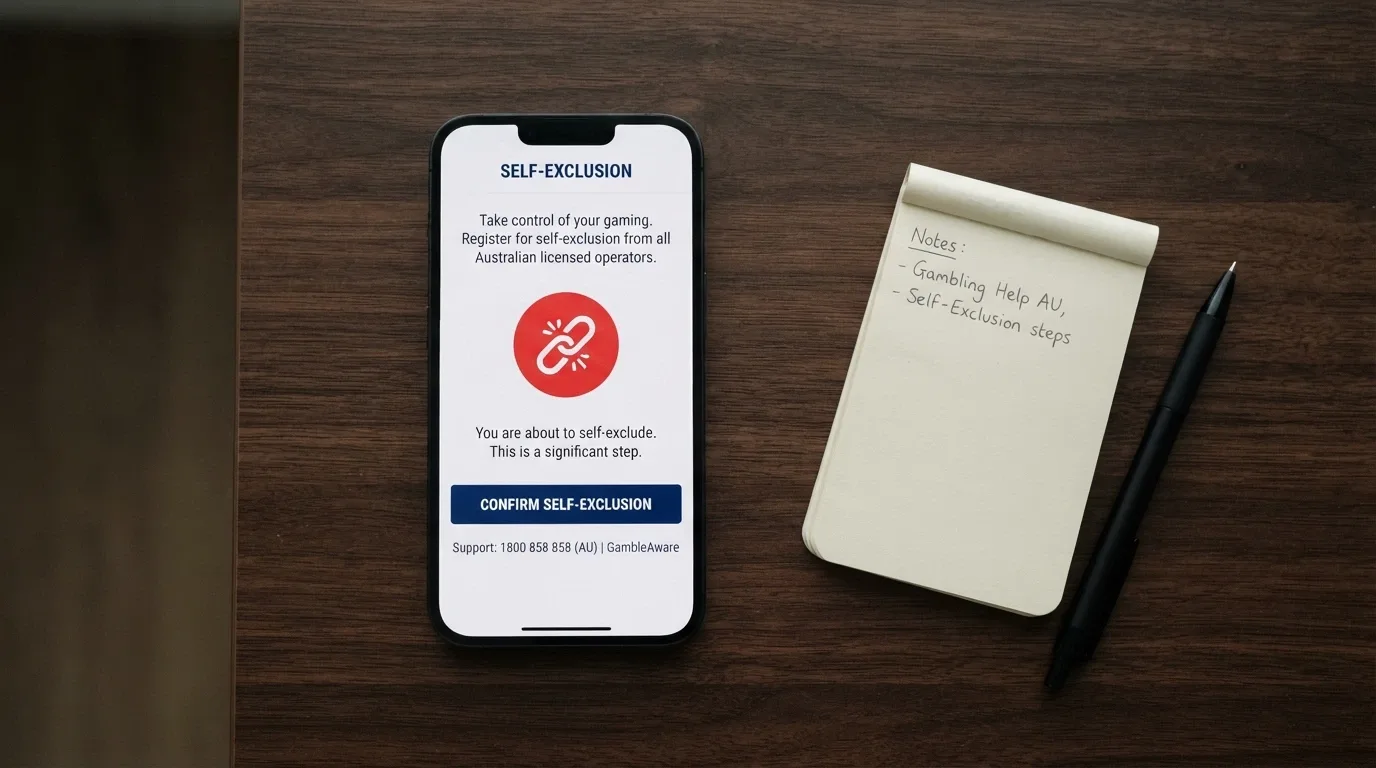
BetStop, the National Self-Exclusion Register, launched on 21 August 2023. As at 31 July 2026, 67,480 people had registered and 41,290 exclusions were still active — more than 60% of everyone who had ever registered. Among registrants, 78% were under 40 and 38% had chosen lifetime exclusion. BetStop is the most consequential piece of player-protection infrastructure Australia has built in the past decade.
It binds Australian-licensed wagering services only. An offshore casino is not connected to the register, and a BetStop registration does not exclude a player from any of the operators in this comparison. Self-exclusion at an offshore site is set at each operator individually, and the player has to remember which ones they have signed up to. The architecture is the opposite of BetStop’s one-registration-covers-all design.
The awareness gap is the most striking part of the picture. Only 33.5% of Australian wagerers know BetStop exists. Dr Kei Sakata of the Australian Gambling Research Centre put it more sharply: among an estimated 400,000 high-risk gamblers in Australia, just 30,000 have registered with BetStop. A national register that two-thirds of the people it is built for have never heard of is not, in any meaningful sense, doing its job. An anonymous offshore casino, which is not connected to the register at all, is the place where the gap is widest.
Australia’s Gambling Harm by the Numbers
The prevalence figures above are the ones to keep in mind when a marketing email lands. The 2.1% problem-gambling rate translates to roughly 430,000 adults. The 19.4% risky-gambling figure, the 56.1% online participation rate, the 3.29 million Australians affected — these are the aggregates that sit behind every individual account at an offshore casino. The harm data does not say that most players become problem gamblers. It says that a population the size of a mid-sized Australian city is gambling at a level that already meets the clinical definition of harm.
The shift to majority-online play is the trend that compounds the offshore question. Australians who gamble online now outnumber those who do not. The licensed operators have spent two decades refining their safer-gambling tools — deposit limits, take-a-break, activity statements, BetStop — for that population. The offshore segment has spent the same period competing on the things the licensed segment is not allowed to compete on: no ID, no deposit limits, no take-a-break, no connection to the register. The market split is not coincidental.
Where to Get Help — Concrete Resources That Work
- National Gambling Helpline: 1800 858 858 — free, confidential, staffed 24/7
- Gambling Help Online at gamblinghelponline.org.au — online chat and email counselling
- BetStop, the National Self-Exclusion Register — one registration excludes from every licensed Australian wagering operator (launched 21 August 2023)
- State and territory gambling help lines: every state and territory runs its own service; the national line routes to the right one
- Your bank: licensed Australian banks can apply gambling-transaction blocks at the customer’s request, and from 1 January 2027 they will be able to block transactions to illegal operators without one
These services work regardless of where a player has been playing. A balance sitting on an offshore site is a financial question; a habit that is no longer under control is a health one. The helpline and the online chat are the places to start.

The Standards Behind This Casino Comparison
The ten operators in this comparison were sourced from affiliate tracking data and cross-checked against the ACMA register, the Curaçao public licence database and the Anjouan Gaming Authority’s licence records. Where the public register confirms a licence number, it is printed. Where an operator’s licence number is not publicly listed, the cell reads as a gap rather than carrying an unverified figure.
The ranking is not a recommendation. Two of the operators geoblock Australia outright. Several of the rest serve the Australian market by default but are not licensed to do so. The bonus structures, withdrawal speeds and game-provider breadth are the inputs; they are not the basis for a verdict that one operator is “better” than another for an Australian player. The legal reality, which the next section addresses, sits over all of them.
What the comparison does is put the verifiable information on one page. The reader’s job is to weigh it against the harm data, the legal position and the protection gap, all of which are laid out above. The page’s job is to make sure the figures are honest and the omissions are marked as omissions rather than filled in with a guess. No operator on this page holds an Australian licence, and none of them can be recommended as a legal option for an Australian player.
What an Australian Player Should Actually Do With This Information
The arithmetic on the bonus section and the prevalence figures in the harm section sit closer together than the marketing of either side suggests. A 200% bonus with 40x wagering is a lock-in mechanism that costs the player more in expected value than the bonus pays out. A 19.4% risky-gambling rate is the population a marketing email is being sent to. The two facts do not contradict each other; they describe the same industry from different ends.
An Australian player who has decided to play at an offshore casino has decided to take on the consumer-protection gap as a known cost. The gap is the absence of an Australian regulator to appeal to, the absence of a self-exclusion register that reaches the site, the absence of an authority that can compel a payout. The player takes on that gap on top of the bonus math and the house edge, and the gap is the largest line item of the three.
The honest recommendation a page like this can make has three parts. First, know the law: online casino is prohibited in Australia, the individual player is not prosecuted but the operator is, and the 2026 reform closes off the bank-transfer routes from 1 January 2027. Second, know the gaps: BetStop does not reach the sites on this list, the ACMA register does not protect a balance on a blocked domain, and the AML review trigger at most of these operators sits between EUR 2,000 and EUR 10,000. Third, know where help is: the National Gambling Helpline on 1800 858 858, Gambling Help Online at gamblinghelponline.org.au, and BetStop at the official register. Those three lines are the part of this page that does not require a marketing email to land.
Frequently Asked Questions
Will I be prosecuted for gambling at an offshore site?
No. The Interactive Gambling Act 2001 targets the provider of a prohibited interactive gambling service, not the individual customer. No Australian case has held an ordinary punter’s winnings assessable income. The Act prohibits operators from offering casino games to Australians, which is why every site on this list is offshore and unlicensed. Enforcement targets the company, not the player.
What protections do I give up when playing at an anonymous casino?
You give up the Australian consumer-protection stack: no regulator to appeal to, no AFCA route, no BetStop coverage, and no Australian Consumer Law guarantee on withdrawals. Crypto has been banned for licensed Australian wagering since 11 June 2024, so its presence on a cashier marks the absence of Australian rules, not the addition of a payment option.
How do anonymous casinos handle withdrawals without KYC verification?
No-KYC platforms do not request ID at sign-up and process withdrawals to the depositing wallet without documentation. Above a cumulative transaction band — typically EUR 2,000 to EUR 10,000 at Curaçao- and Anjouan-licensed operators — AML policy triggers a review that asks for the same documents a licensed site asks for from day one. Outside the band, the verification flow looks much the same as a licensed operator’s.
Does BetStop protect you at an offshore casino?
No. BetStop binds Australian-licensed wagering services only. An offshore casino is not connected to the register, so a BetStop registration does not exclude a player from any operator on this list. Self-exclusion at an offshore site is set operator by operator, and the player has to remember which ones. None of the BetStop infrastructure reaches the sites on this page.
Are anonymous casino bonuses worth it given the wagering requirements?
The headline match is real; the cost of clearing it usually exceeds the bonus. A $500 Stake deposit unlocks the $1,000 bonus at 200% match but requires $60,000 in wagering under the 40x deposit-plus-bonus rule — about 167 hours of play and an expected loss of roughly $2,112 at Sweet Bonanza’s 96.48% RTP. The bonus pays out; the price of being paid it is bigger than the bonus.
What happens if an anonymous casino blocks my account or refuses a withdrawal?
There is no Australian regulator to escalate to. The operator’s terms govern the dispute, and the only recourse is the operator’s complaints process. ACMA can investigate the operator for offering prohibited services but cannot compel a payout on a specific account. The position is weaker than at a licensed operator.
How to spot a trustworthy offshore casino?
Three signals matter. A verifiable licence number on a public register — Curaçao’s database and the Anjouan list both confirm standing. Recent third-party test cashouts beat five-to-ten-minute homepage promises. Terms that name the regulator, dispute route and AML trigger; vagueness on all three is a reason for caution, regardless of how generous the bonus looks.
How Deep Does the Anonymity Really Go?
The honest answer is that “truly anonymous” is the part of the marketing a player should question most carefully. Below the AML trigger, the platform does not need to know who the player is, and does not ask. Above it, the player is treated to the same verification flow a licensed Australian site applies from day one — sometimes with a more aggressive document list, because the casino is not dealing with a regulator that requires it to be reasonable.
Email-only sign-up is the base layer. A cumulative transaction band — typically EUR 2,000 to EUR 10,000 — is the next layer, and it is the one that catches most players who treat the marketing literally. A VPN restriction is the third layer: most offshore operators explicitly forbid VPN use in their terms, on the basis that the player’s apparent location matters to the licence they hold. Stake, the largest name in crypto gambling, geoblocks Australia outright and lists VPN use as a breach of its terms. The architecture looks porous only on the entry screen. The walls go up fast.
Created by the ”No Deposit Bonus Casino AU” editorial team.