Casino Bonus Codes in Australia: The Offshore Reality Behind Every Offer
Australian players who search for a casino bonus code land on a list of offers from brands none of them have ever heard of, each one promising free chips, free spins and matched deposits in Australian dollars. The offers look Australian. The brands feel like Australian-friendly casinos. The dollar signs are right. None of it is what it appears. Online casino is prohibited in Australia under the Interactive Gambling Act 2001, and no licence exists for it — not federally, not in any state or territory. Every bonus code that an Australian player can actually redeem comes from an offshore operator holding a Curacao licence or something close to it. The code works. The wagering applies. The cashout cap bites. The site can be blocked by an Australian ISP at any time, and ACMA cannot recover your money if the operator refuses a withdrawal. This page walks through the bonus-code types, the terms that decide whether any of them is worth claiming, the ten operators Australian-facing pages most often list, the legal framework that makes the whole category an offshore promise, and the harm-minimisation tools that do and do not reach these sites.
Australian-market data current as of 16 October 2026 and verified against the Australian Communications and Media Authority register.
Table of Contents
- Why Every Casino Bonus Code Available in Australia Is an Offshore Promise
- The Bonus-Code Types Australian Players Actually Get in 2026
- 10 Offshore Casinos With Bonus Codes for Australian Players in 2026
- No Australian Licence Exists for Online Casino — Here’s What That Means for Your Bonus Code
- Playing Safely When Every Operator Is Offshore — Limits, BetStop and Help
- How We Selected and Evaluated These Bonus-Code Casinos
- What Your Bonus Code Is Really Worth Once the Wagering Is Done
- Frequently Asked Questions
Why Every Casino Bonus Code Available in Australia Is an Offshore Promise
A casino bonus code is a short string of letters and numbers — sometimes a word, sometimes a jumble — that unlocks a promotional offer at an online casino. The “casino bonus code” part of the search is the part every affiliate page answers; the “Australia” part is the part none of them do. The disconnect is structural, not editorial. The offers exist because offshore operators issue them. The offers work because Australian players type them in. The offers are illegal to provide to a person in Australia because the Interactive Gambling Act says so. None of those three facts contradicts the others. They all hold at the same time, and every bonus-code casino an Australian player can find operates inside all three.
What a Bonus Code Actually Is — and Where You Enter It
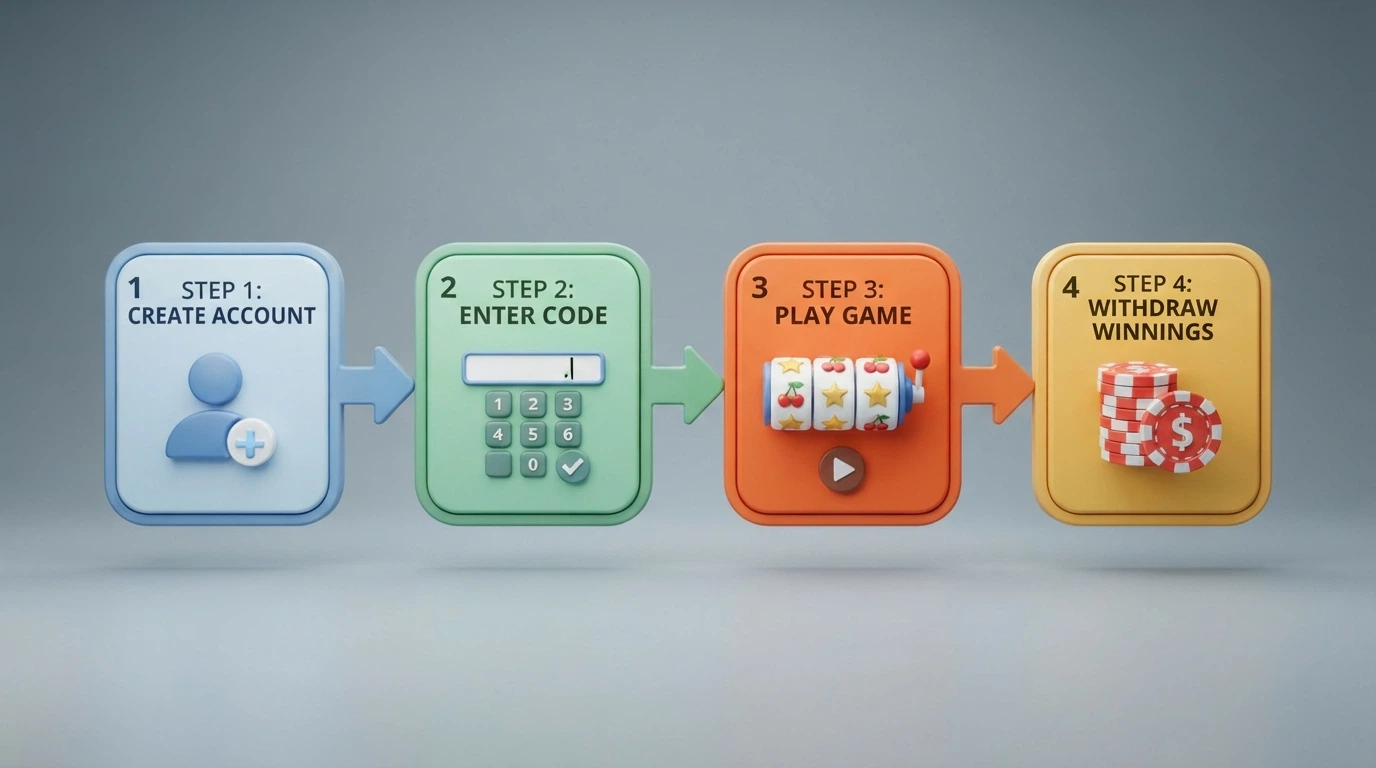
A casino bonus code is a token a player enters during the redemption flow to unlock an offer the operator has attached to it. The flow itself is identical across the entire category of AU-facing offshore casinos: register an account, verify the email address, open the cashier, paste or type the code into the promo-code field, deposit if the offer requires one, and play eligible games until the wagering requirement clears. The KYC verification gate sits before any withdrawal — passport or driver’s licence, proof of address, sometimes a selfie. The withdrawal itself only unlocks once the wagering is complete, the maximum cashout cap is respected, and the maximum-bet rule has not been breached anywhere along the way.
There are two flavours of bonus code in practice, even though the marketing blurs them. One unlocks bonus cash — a credit that behaves like real money for betting purposes but cannot be withdrawn directly. The other unlocks free spins — a fixed number of plays on a specific pokie at a fixed stake per spin, with the resulting winnings treated as bonus cash subject to its own wagering. Free chip codes look identical to deposit-match codes from the player’s side of the cashier, but the cost of claiming them is paid in turnover rather than in deposited cash.
Game contribution weightings decide which bets count toward the wagering requirement. Pokies contribute 100% — every dollar bet on a pokie counts as a dollar toward the turnover target. Table games typically contribute 0–10%, and live dealer games frequently contribute 0%. That weighting matters because the wagering requirement is denominated in dollars of eligible bets, and a player who fires up blackjack with bonus credit can grind through hundreds of dollars of bets that count for almost nothing toward the requirement. The maximum-bet-while-wagering rule — most often set at AU$5 to AU$7 per spin — sits on top of this, voiding bonus winnings if a single spin breaches it. It is the rule players trip on most often without realising, and the rule operators enforce most strictly.
The Online-Casino Variant — Why AU Players Only See Offshore Codes
The Australian player’s bonus-code landscape is entirely offshore, and it has to be. No Australian-licensed online casino exists. The Interactive Gambling Act 2001 makes it an offence to provide an online casino to a person in Australia, and no licence is available to provide one under any state or territory regime either. What is licensed — pre-event sports and race wagering through operators holding Northern Territory or state licences, lotteries, keno — is a different product from a casino. A casino bonus code, by definition, targets the casino product.
The practical consequence is exactly the situation an Australian player faces today. The bonus code works at the cashier. The wagering requirement applies. The cashout cap holds. Australian consumer law does not back any of it, because the operator is not within Australian jurisdiction. Competitor pages do not mention this because mentioning it would shrink the funnel. The licensed domestic interactive options are narrow, and the flashy slot lobbies ranking for bonus-code queries are almost entirely offshore. A reader who notices the gap is a reader who walks away from the bonus-code market altogether, which is the one outcome affiliate pages are not designed to deliver.
The Bonus-Code Types Australian Players Actually Get in 2026
Four distinct bonus-code shapes dominate Australian-facing offshore lobbies. They are not interchangeable: each carries a different combination of headline value, wagering requirement, cashout cap, validity window and eligibility gate. The type decides the real cost of claiming an offer more decisively than the headline number does, because the headline is what the marketing wants the player to remember and the wagering is what the player has to clear.
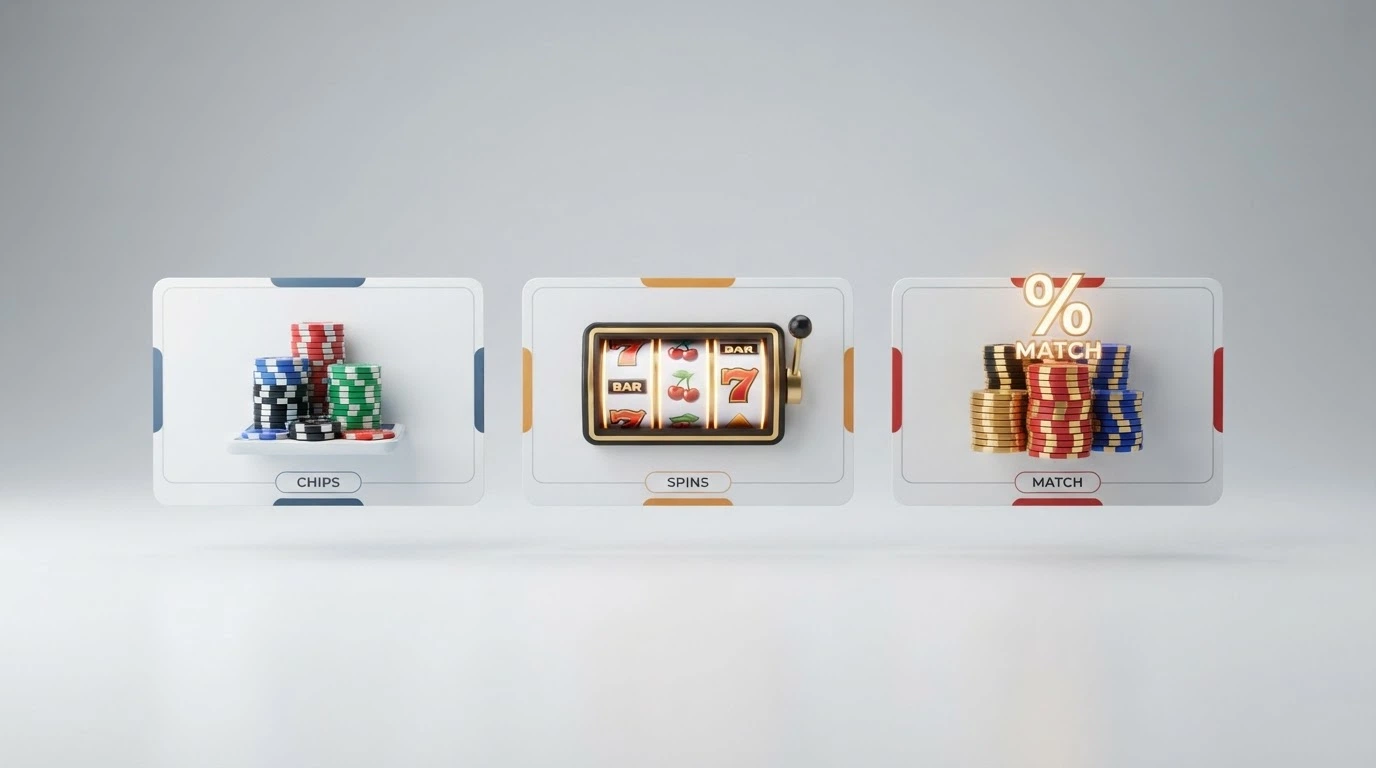
The table below compares the three categories research could quantify — no-deposit free chips, no-deposit free spins, and deposit matches — on typical value, wagering, cashout cap and validity.
| Bonus Type | Typical Value | Wagering Range | Max Cashout Cap | Typical Validity |
|---|---|---|---|---|
| No-deposit free chip | A$10–A$50 bonus cash | 30x–50x on bonus amount | A$50–A$180 | 1–7 days to meet wagering |
| No-deposit free spins | 20–50 spins at A$0.10–A$1.00 per spin | 30x–40x on free-spin winnings | A$50–A$150 | 24–72 hours to use, then 1–7 days to meet wagering |
| Deposit match | 100%–300% match up to A$500–A$30,000+ | 30x–40x on bonus (sometimes bonus + deposit) | Often uncapped, sometimes capped at 10x–20x the bonus | 14–30 days per deposit tier |
The fourth category — mobile-only codes — sits as a separate redemption path with its own expiry pressure rather than as a different bonus structure. The four are described below in the order a player is most likely to meet them.
No-Deposit Bonus Codes — the Free Chip With Strings Attached
The no-deposit bonus code is the offer that brings players in. It delivers bonus cash without requiring a deposit — register, enter the code, and a small amount of credit lands in the account. The standard range across AU-facing offshore sites is A$10 to A$50 in free-chip value. The marketing writes this as “free money”. The terms rewrite it as a play-through obligation with a withdrawal ceiling.
The cashout cap is the binding constraint. Where the free chip is A$10 to A$25, the cap is most often set at A$50 to A$150; for the larger free-chip codes the cap can run higher — Fair Go’s A$50 free chip, for instance, caps cashout at A$180. The cap exists because the bonus is being offered without a deposit, and the operator’s exposure is the difference between what the player wins and what the player took in free. Without a cap, a single lucky spin on a free A$25 chip could withdraw a five-figure jackpot that the operator never took a dollar of risk on.
The wagering multiple on a free chip often costs more in play-through than the cap lets the player withdraw. Take a representative A$25 free chip with a 35x wagering requirement: the player must turn over A$875 before any of the bonus balance becomes withdrawable. At a 96% RTP pokie, the expected loss on that turnover is A$35 — already exceeding the bonus itself. The maximum cashout cap limits how much of the resulting balance the player can actually withdraw; in the common A$50–A$150 range, the player is betting the bonus amount several times over for the chance to keep less than the wagering alone costs on average. The offer is real, the cost is real, and the arithmetic does not flatter the marketing.
Free-Spins Bonus Codes — Small Spins, Tight Windows
Free-spin codes deliver 20 to 50 spins on a single pokie at a fixed stake per spin — most often A$0.10, A$0.20 or A$1.00 per spin — and apply separate wagering to the winnings generated, not to the spin value itself. The headline counts the spins; the cost of clearing sits on the winnings, and the typical range is 30x to 40x on the resulting win amount. The titles free-spin codes target — Book of Dead, Zeus the Thunderer, 3×5 Hold The Spin — are recognisable, high-volatility pokies where a single spin can pay out hundreds or thousands of times the bet, which is exactly why they are the targets.
The expiry clock is the tightest in the bonus-code category. Free spins often expire within 24 to 72 hours of issuance; RocketPlay’s 50 free spins on Gamzix’s 3×5 Hold The Spin, for instance, give the player a one-day activation window. The wagering window then runs another 1 to 7 days. A player who claims a free-spin code on a Tuesday and returns from work on Thursday finds the spins already burned and the bonus forfeited. The 24-to-72-hour fuse is the single most common reason a player loses a free-spin code without ever placing a bet.
Wagering on free-spin winnings — usually 30x to 40x — applies to the win amount, not the face value of the spins. Slots Gallery’s 20 free spins on Zeus the Thunderer carry 30x wagering on winnings and a A$150 maximum cashout. If the spins return A$20 in winnings, the player must turn over A$600 before any of that balance withdraws, capped at A$150. The expected loss on A$600 of pokie turnover at 96% RTP is A$24 — meaning the average outcome of claiming this offer is to lose more than the entire win amount of the spins. The headline is “20 free spins”. The actual economics are not on the player’s side.
Deposit-Match Bonus Codes — the Big-Number Trap
Deposit-match codes attach a percentage match to the player’s deposit — commonly 100% to 300% — up to a stated cap. Fair Go’s headline is 300% up to A$3,000 plus 50 free spins on Cash Bandits 2. Skycrown’s multi-deposit package runs to A$8,000 plus 400 free spins across four tiers. OzzyBet’s published welcome package reaches A$30,000 plus 500 free spins. These numbers are deliberately large because they are designed to look like the player is being given money, and the player often feels they are being given money until the wagering starts.
The wagering multiple on a deposit-match bonus typically applies to the bonus amount and sometimes to the bonus plus the deposit. Fair Go runs 30x on the bonus alone; Skycrown runs 40x on the bonus and 30x on the free-spin winnings. At 40x on the bonus, a A$500 first-deposit bonus requires A$20,000 of turnover before any withdrawal. The expected loss on A$20,000 of pokie turnover at 96% RTP is A$800 — sixty percent more than the bonus itself. The player deposited A$500, received A$500 in bonus credit, and faces an A$800 expected cost to clear it. The bonus is not free; it is a loan with an interest rate that compounds with the size of the match.
Multi-deposit welcome packages spread the match across four tiers, each with its own wagering and validity window. Skycrown’s package gives 14 days per tier. The compounding effect is that the player is locked into clearing wagering on four separate bonus tranches within roughly two months, and any failure to clear one tranche forfeits that tranche’s bonus and any winnings tied to it. The big numbers in the headline depend on the player completing every tier in sequence, on schedule, without missing the contribution rules or the max-bet ceiling. Few do.
Mobile and App-Specific Bonus Codes
Mobile-only bonus codes sit as a separate redemption path rather than a fundamentally different offer type. The redemption path runs through the operator’s mobile site or downloaded app — enter the code in the mobile cashier field, and the offer unlocks on the same account. The headline value, the wagering, the cashout cap and the eligible games typically match the desktop equivalent, with the variation most often in the validity window. Mobile codes carry shorter validity windows than their desktop counterparts, partly because mobile users redeem and play faster, and partly because the operator is testing whether a tighter fuse improves conversion on the smaller screens.
The terms do not usually differ between desktop and mobile. The same game-contribution weightings apply; the same maximum-bet rule applies; the same maximum cashout cap applies. What differs is the cadence: a mobile code pressed into service on a Friday evening tends to be claimed by a player who plans to play that night, which is exactly the time horizon the short expiry window is calibrated to. The claim that a mobile offer is “exclusive” is rarely anything more than a tighter clock wrapped around the same offer available through the desktop cashier.
Wagering Requirements — What 30x–50x Really Costs
The wagering requirement is the single number that decides whether a bonus code is worth claiming, because it is the only number that scales with both the bonus amount and the house edge of the eligible games. A wagering requirement of 30x on a A$25 free chip requires A$750 of eligible bets before withdrawal. A wagering requirement of 50x on a A$25 free chip requires A$1,250. The bonus amount has not changed; the cost of clearing it has nearly doubled. The Australian-facing market has its dense middle at 35x to 50x, and that is where most no-deposit codes sit.
The distinction between wagering on the bonus alone and wagering on the bonus plus deposit is where the cost really moves. Royal Reels’ 100% match up to A$500 carries 35x on the bonus alone — A$17,500 of turnover on a A$500 bonus. If the same bonus carried 35x on bonus plus deposit, the turnover requirement would rise to A$35,000. The two figures look interchangeable at the headline level; they are not. A lower multiple on the bonus alone is cheaper to clear than a higher multiple on the combined amount, even when the multiple looks more generous in the marketing.
A useful rule of thumb holds that a code is worth claiming when wagering sits near or under 35x, the maximum cashout is at least five times the expected spin value, the maximum-bet rules are stated explicitly, KYC is achievable with normal Australian documents, and the eligible game list is published. Outside those conditions, the player is paying full price for the chance to withdraw less than the bonus was worth.
Game Contributions, Max-Bet Limits and Expiry Windows
Three fine-print terms decide whether a player clears a bonus or loses everything to a technicality. Game contribution — pokies 100%, table games 0–10%, live dealer 0% — is the first. A player who bets a bonus on blackjack contributes almost nothing toward the wagering requirement and burns through the bonus balance without ticking the turnover counter. The second is the maximum-bet rule, most often set at A$5 to A$7 per spin while a bonus is active. Exceed it on a single spin and the bonus is voided, along with any winnings tied to it. The third is the expiry window: 24 to 72 hours for free spins, 1 to 7 days for no-deposit wagering, 14 to 30 days for deposit-match packages. Miss any one of them and the bonus evaporates.
The combination is what catches players out. The contribution weighting steers play toward pokies; the max-bet rule stops the player from chasing a single big win on a high-volatility title; the expiry window stops the player from playing conservatively and clearing slowly. A player who respects all three can theoretically clear the bonus; a player who respects two out of three forfeits the whole thing. Operators know this, and the audit trail on bonus-code disputes always shows a player who tripped on the third rule while believing they were playing carefully.
10 Offshore Casinos With Bonus Codes for Australian Players in 2026
The table below lists the ten AU-facing operators Australian players most commonly encounter when searching for a casino bonus code. Every one of them is offshore; none holds an Australian licence, and none can, because the product they offer is prohibited under the IGA. The comparison is between bonus-code terms, not between brands as though they competed on equal regulatory footing. They do not.

| Operator | Licence | Welcome Bonus | No-Deposit Offer | Wagering | Deposit-Free? |
|---|---|---|---|---|---|
| Fair Go Casino | Curacao (offshore) | 300% up to A$3,000 + 50 FS on Cash Bandits 2 | A$50 free chip (no deposit) | 30x on bonus | Yes |
| Royal Reels | Curacao eGaming (offshore) | 100% up to A$500 | A$10 free chip (no deposit) | 35x on bonus | Yes |
| Skycrown | Curacao (offshore) | A$8,000 + 400 FS across 4 deposits (1st: 100% up to A$500 + 100 FS on Book of Dead) | 100 FS (phone verification required) | 40x bonus / 30x FS winnings | Yes (phone verification) |
| RocketPlay | Curacao (offshore) | 100% up to AU$200 + 50 FS; tiered to AU$6,000 + 300 FS | 50 FS on Gamzix 3×5 Hold The Spin at A$0.10/spin | 35x on FS winnings | Yes |
| Bizzo Casino | Curacao (offshore) | — | 30 FS (no deposit) | 40x | — |
| WinSpirit | Curacao (offshore) | — | — | — | — |
| Stake | Curacao (offshore) | — | — | — | — |
| Rainbet | Curacao (offshore) | — | — | — | — |
| Scream Casino | Curacao (offshore) | — | — | — | — |
| OzzyBet | Curacao (offshore) | Up to A$30,000 + 500 FS (A$20 min deposit) | — | 30x on bonus | — |
The last six rows carry gaps where research did not confirm terms. That is the honest state of the data; filling those cells with plausible values would invent facts a reader could act on. The operator write-ups below carry the same discipline.
Fair Go Casino
Fair Go runs on RealTime Gaming software end-to-end, which means the pokie catalogue is narrow by international standards but consistent in mechanics and RTP. The headline welcome offer is 300% up to A$3,000 plus 50 free spins on Cash Bandits 2, with 30x wagering on the bonus and no stated maximum cashout. The minimum deposit is A$20. For an Australian player who is set on a RealTime Gaming pokie catalogue and accepts the offshore status, the welcome package is among the more generous in the set, and the absence of a stated cashout cap is a meaningful difference from the no-deposit side.
The no-deposit offer is the standout: an A$50 free chip with no deposit required, capped at A$180 cashout, with 30x wagering on the bonus amount. That is the largest confirmed free chip in the comparison set. The cost of clearing it, at 30x on A$50, is A$1,500 of eligible turnover — and at a 96% RTP pokie the expected loss on that turnover is A$60, which exceeds the bonus itself. The A$180 cap then bounds the upside. Fair Go is a reasonable pick for an Australian player who wants the largest confirmed no-deposit free chip in the category and is comfortable playing a RealTime Gaming-only catalogue; the cashout cap on the no-deposit side limits the upside even when the wagering is cleared.
Royal Reels
Royal Reels carries a Curacao eGaming licence and a small, straightforward welcome structure: 100% first-deposit match up to A$500, minimum deposit A$10, 35x wagering on the bonus. The minimum deposit is among the lowest in the set, which makes the entry cheap to test. The no-deposit offer is an A$10 free chip with 30x wagering on the bonus, with pokies contributing 100% and table and live games contributing 3%.
The 3% contribution rate on table and live games is unusually explicit. Most operators either exclude table and live entirely or apply a weighting between 5% and 10%; Royal Reels spells out 3% in writing. The A$10 no-deposit chip is small and clears A$300 of turnover, with a cashout cap that is not confirmed in this run and a 30x wagering that costs roughly A$12 in expected loss on a 96% RTP pokie. The headline is modest. The terms are transparent. Royal Reels suits an Australian player who wants a low-cost entry to test the cashier and the game lobby without committing a large deposit, and who values the explicit game-contribution disclosure over the marketing noise a larger brand carries.
Skycrown
Skycrown runs the largest multi-deposit welcome package in the comparison set: A$8,000 plus 400 free spins across four deposit tiers, with the first tier at 100% up to A$500 plus 100 free spins on Book of Dead. The wagering is 40x on bonus cash and 30x on free-spin winnings, with 14-day validity per tier. Play’n GO and Pragmatic Play are among the confirmed providers, which gives Skycrown a deeper pokie catalogue than the RealTime Gaming-only brands in the set. The 14-day-per-tier clock is tighter than a single-package 30-day window, because the player has to clear four tranches in sequence rather than one larger one in parallel.
The no-deposit entry is 100 free spins with phone verification required before the spins are credited. Phone verification at the no-deposit stage is uncommon; most operators defer KYC until withdrawal. The reason to require it earlier is to bind the no-deposit bonus to a single phone number, which limits multi-account abuse. The 100 free spins on the no-deposit side are attractive in absolute terms, but the cashout cap on the no-deposit offer was not confirmed in this run and should be checked against the operator’s terms page before claiming. Skycrown is the pick for a player who wants the largest multi-deposit package in the set and a pokie catalogue beyond RealTime Gaming, with the understanding that the 40x wagering on the bonus carries a higher expected cost than the 30x brands below it.
RocketPlay
RocketPlay opens with 50 no-deposit free spins on Gamzix’s 3×5 Hold The Spin at A$0.10 per spin, with a one-day activation window and 35x wagering on the resulting winnings. Gamzix is a smaller studio than Play’n GO or Pragmatic Play, and 3×5 Hold The Spin is a classic-style pokie rather than a feature-heavy title. The total value of the 50 free spins at the stated stake is A$5 — small in absolute terms but free, and the 35x wagering on winnings is reasonable against the 40x to 50x at the dense middle of the NDB market.
The welcome package on the deposit side is a 100% first-deposit match up to AU$200 plus 50 free spins, with a tiered extension reaching AU$6,000 plus 300 free spins across subsequent deposits. The first-tier cap of AU$200 is modest against Skycrown’s AU$500 and Fair Go’s AU$3,000, but the smaller cap also means a smaller wagering target. At 35x on the FS winnings, the entry cost is comparable to Royal Reels and lighter than Skycrown. RocketPlay suits a player who values the smaller free-spin entry and a tiered package they can stop after one or two deposits rather than complete, with the one-day activation window as the only hard constraint to plan around.
Bizzo Casino
Bizzo Casino carries a Curacao offshore licence and a 30-free-spin no-deposit offer with 40x wagering. The validity period on the bonus runs to 31 December 2026, after which the offer as written lapses. The wagering sits at the upper end of the dense middle of the market and applies to whatever the free spins return. Game providers and the full welcome package were not confirmed in this run, which means the deposit side of the Bizzo offer cannot be described from the data on hand.
The 40x wagering is the salient figure: at a 96% RTP pokie, the expected loss on a typical free-spin win of A$20 to A$40 is A$16 to A$32. The cashout cap on the no-deposit offer was not confirmed. Bizzo Casino is a reasonable pick for an Australian player who wants to claim a small free-spin offer at a Curacao-licensed offshore brand, with the understanding that the deposit-side terms and the no-deposit cashout cap both need to be checked against the operator’s own terms page before committing any cash beyond what the no-deposit spins cost.
WinSpirit
WinSpirit holds a Curacao offshore licence and appears among AU-facing bonus-code brands, but the bonus-code terms were not confirmed at the time of review. The operator’s positioning in the Australian-facing market is the only honest thing that can be said about it without inventing values. No welcome bonus, no no-deposit offer, no wagering multiple, no cashout cap and no expiry window can be quoted here without fabricating data.
For an Australian player who arrives at WinSpirit through a bonus-code listing, the right move is the same as for any operator in this category: read the terms on the operator’s own site before depositing, and treat every figure on a third-party review page as a starting point rather than a confirmation. The brand’s presence in the comparison set is a statement that Australian-facing affiliate pages list it, not a statement about what it offers.
Stake
Stake is one of the larger offshore brands by recognition and scale, holding a Curacao licence and operating a sportsbook and casino combination that Australian players reach through VPN and crypto routes. Bonus-code terms were not confirmed at the time of review; Stake’s historical marketing has leaned on rakeback and reload mechanics rather than the deposit-match and no-deposit bonus codes that dominate the rest of this set, which is part of why no specific code or terms can be quoted here without invention.
For a player who knows Stake and wants to play there, the question of whether a specific bonus code applies is one the operator’s own terms page answers. For a player comparing bonus codes, Stake is in this list because Australian-facing pages rank it, not because a confirmed code and confirmed terms are on file.
Rainbet
Rainbet holds a Curacao offshore licence and is listed among AU-facing bonus-code casinos. Bonus-code specifics — welcome offer, no-deposit offer, wagering, cashout cap, expiry — were not confirmed at the time of review. The operator is in this list for completeness because the affiliate pages Australian players most often see mention it; no other claim about its offer is honest without the data behind it.
An Australian player who arrives at Rainbet through a bonus-code link should treat the terms page on the operator’s site as the only authoritative source. Any figure on a third-party review should be checked against that page before committing a deposit.
Scream Casino
Scream Casino holds a Curacao offshore licence and appears among AU-facing bonus-code brands at the smaller end of the market. Bonus-code specifics were not confirmed at the time of review, and the operator is included here for completeness rather than on the strength of any confirmed offer. The brand’s Australian-facing presence is the only data point that can be stated without invention.
The same caveat applies as for the other operators in the second half of this list: an Australian player should verify welcome terms, no-deposit terms, wagering, cashout caps and expiry windows against the operator’s own site before claiming any bonus code or making any deposit.
OzzyBet
OzzyBet runs the largest headline welcome package in the comparison set: up to A$30,000 plus 500 free spins, with a A$20 minimum deposit and 30x wagering on the bonus. No maximum cashout is stated. The no-deposit offer was not confirmed at the time of review. The headline number is the kind of figure that gets screenshotted and circulated, and it is real as far as research confirms it, but the absolute size of the package is also the absolute size of the wagering obligation. At 30x on the full A$30,000 bonus, the player is committing to A$900,000 of eligible turnover across the lifetime of the package, which is a workload measured in months of full-time play rather than weekends.
OzzyBet is a pick for a player who is comfortable with a Curacao offshore brand and willing to commit to a long, structured wagering run across the full deposit package, with the explicit understanding that no no-deposit code was confirmed and that the cashout cap on each tier should be verified before claiming.
No Australian Licence Exists for Online Casino — Here’s What That Means for Your Bonus Code
The legal framework that surrounds every bonus code in this article is short enough to state plainly, and the consequences for an Australian player are sharp enough to deserve stating plainly too. Online casino is prohibited in Australia. The Interactive Gambling Act 2001 makes providing one an offence. ACMA enforces the prohibition through ISP blocking. The 2026 reform tightens the rules further. The payment ban already in force signals when an operator is breaking them.
The IGA 2001 — Why Online Casino Is Banned Outright in Australia
The Interactive Gambling Act 2001 makes it an offence to provide an online casino, online pokies or in-play sports betting to a person physically in Australia. There is no licence available for online casino anywhere in the country — not federally, not in any state or territory. The product is prohibited at the federal level, and the prohibition is not a grey area waiting for a regulator to license its way around.
What is licensed is pre-event wagering on sports and races through state and territory licensees — the Northern Territory Racing and Wagering Commission, through Licensing NT, is the de facto national licensor for online bookmakers — plus lotteries and keno. Sportsbet, bet365, Ladbrokes and around fifty other online bookmakers hold NT licences for the licensed side of their business; none of those licences covers an online casino. The minimum age for any licensed wagering is 18.
The individual player is not prosecuted under the IGA. The Act targets the provider. An Australian player who claims an offshore bonus code does not face criminal charges for doing so. The Act was written and amended to make the supply of the product illegal, not the demand for it. That asymmetry is real, but it is also the source of the gap the rest of this section describes: the player is unprotected, not unprosecuted.
ACMA Enforcement — 1,564 Sites Blocked and Counting
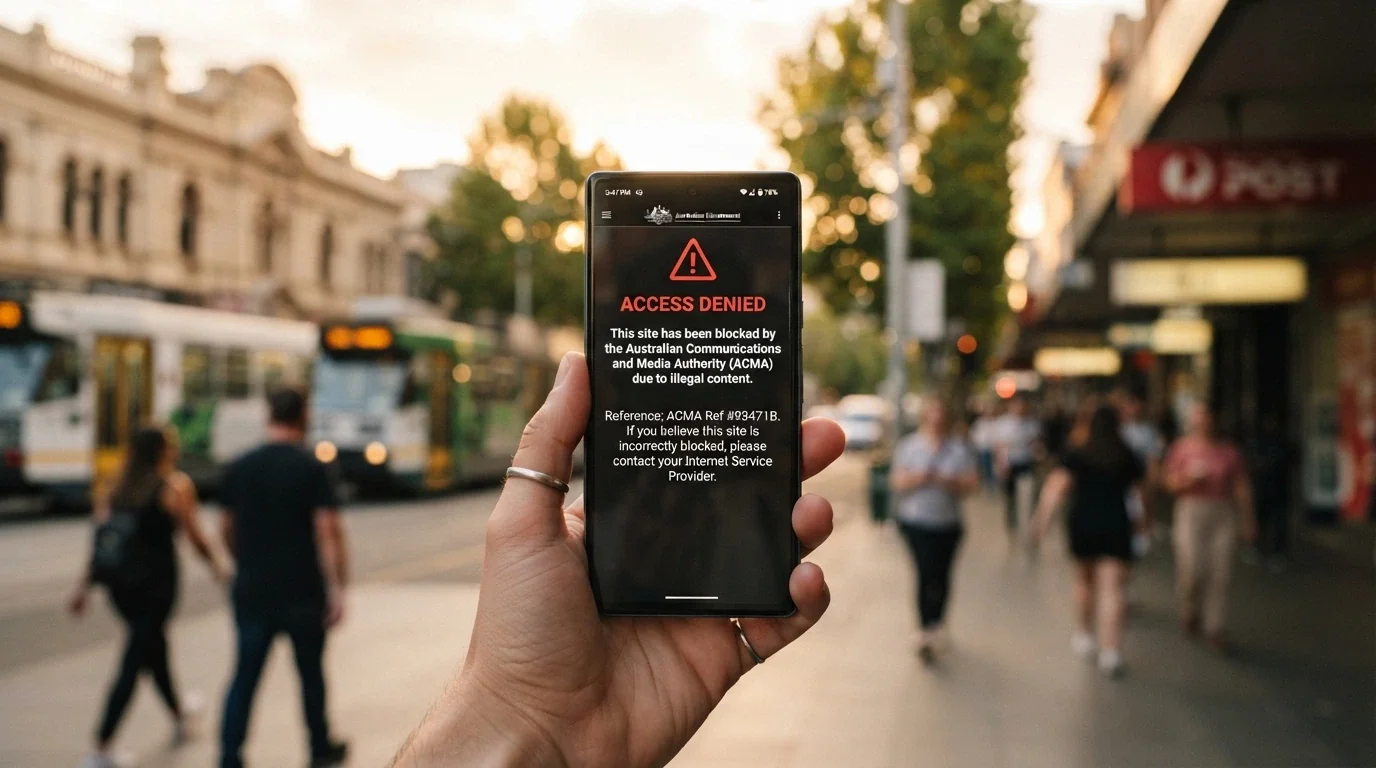
The Australian Communications and Media Authority is the federal regulator enforcing the online prohibition. ACMA investigates complaints, issues formal warnings, runs civil penalty proceedings and, most visibly, directs Australian ISPs to block illegal gambling services. Since its first blocking request in November 2019, ACMA has had 1,564 illegal gambling and affiliate websites blocked by Australian ISPs as at March 2026. More than 225 illegal services have withdrawn from the Australian market since enforcement was strengthened by the 2017 amendments to the IGA.
The blocking power is the primary enforcement tool because the operators themselves sit outside Australian jurisdiction. ACMA cannot compel an offshore operator to refund a player, cannot compel it to honour a withdrawal, and cannot compel it to surrender data. What ACMA can do is make the operator’s site inaccessible from most Australian IP addresses. The site can be blocked with a balance still on it, and the player has no Australian complaints body with jurisdiction to recover it.
What Playing Offshore Actually Costs You — No BetStop, No Recourse, No Consumer Protection
The asymmetry the IGA creates is the one that costs Australian players the most. The Act does not prosecute the player. It also does not protect the player. An offshore casino offering bonus codes to Australian players sits outside Australian consumer law, outside the Australian complaints bodies, and outside the Australian self-exclusion register. ACMA cannot recover money if the operator refuses a withdrawal or closes the account. The site can be blocked at any time, with a balance still on it, and the player has no recourse within Australian law.
BetStop does not cover offshore casinos. A player who has registered with BetStop and excluded themselves from every Australian-licensed wagering service can still open an account at an offshore casino and claim a bonus code there. The protection does not extend across jurisdictions. The offshore site has no Australian KYC obligation against the BetStop register, and it does not check the register even if it could.
The practical consequence is that every protection a licensed Australian wagering environment provides — consumer guarantees, dispute resolution, self-exclusion binding the operator, activity statements, take-a-break functionality — is absent at the moment an Australian player claims an offshore bonus code. What remains is the terms page on the operator’s own site, the operator’s own discretion, and the player’s own willingness to walk away if the terms are not honoured. The leverage in that arrangement sits entirely with the operator.
The 2026 Reform — What Changes on 1 January 2027
The Interactive Gambling Amendment (Gambling Reform) Bill 2026 passed Parliament on 19 August 2026 and its measures commence on 1 January 2027. The reform is the largest gambling-advertising overhaul in a generation, and it tightens the rules bonus codes have historically relied on. The hourly advertising cap limits wagering ads to three per hour between 6:00 am and 8:30 pm. A live-sport blackout runs from 15 minutes before a live sporting event to 5 minutes after it ends. Radio advertising is barred during school times. Broadcasting of odds is banned. Online wagering advertising can only target logged-in, age-confirmed users who have not opted out. No wagering advertising is permitted in sports venues or on uniforms. Athletes, celebrities and influencers are barred from promoting wagering.
Direct marketing of inducements is prohibited for 14 days after a customer signs up, for three months after a person deregisters from BetStop, and indefinitely for customers identified as at risk of gambling-related harm. The 14-day post-signup window is the one that bites hardest on bonus-code mechanics: the welcome offer, the deposit match, the free-spin package — the categories this article has been describing — become harder to market under the new rules, and the inducement language the affiliate pages rely on is constrained from 1 January 2027.
These rules apply to licensed wagering. The offshore operators this page describes are already operating outside every Australian rule, and the reform does not extend to them. What the reform does is close some of the licensed-side advertising and inducement channels that have driven players to those offshore offers in the first place. The offshore product is unaffected; the licensed product loses some of its louder sales tools.
The Payment Ban — Credit Cards and Crypto Are Illegal for Wagering
Credit cards, credit-related products and digital currency are banned as payment for online wagering in Australia, with the prohibition commencing on 11 June 2024 under the Interactive Gambling Amendment (Credit and Other Measures) Act 2023. An operator that fails to enforce the ban faces penalties of up to A$247,500. The practical signal for an Australian player is sharp: a casino bonus-code site that accepts credit cards or cryptocurrency from Australian players is operating outside Australian law, because it cannot enforce the credit-card and crypto ban and still accept the payment.
Legal payment methods for licensed wagering are debit card, bank transfer, PayID and Osko, and BPAY. Identity verification is required at deposit. From 1 January 2027, banks and payment providers gain express authority to block transactions to illegal gambling operators, which adds a further layer of friction between an Australian player and an offshore casino cashier. The deposit rail is closing. The bonus code on the other side of it is no less illegal for being there.
Playing Safely When Every Operator Is Offshore — Limits, BetStop and Help
The Australian harm-prevention system is built for licensed wagering. BetStop, the National Gambling Helpline, Gambling Help Online, deposit-limit tools, take-a-break functionality and activity statements all work on the licensed side of the market. None of them reaches offshore casinos. The gap between what is offered and what is enforced is the gap that puts Australian players at the most risk.

Deposit Limits, Session Tools and Self-Exclusion — What Actually Works for Offshore Players
BetStop — the National Self-Exclusion Register — launched on 21 August 2023 and is the centrepiece of Australia’s licensed-side self-exclusion framework. One registration excludes a person from every Australian-licensed online and phone wagering service. To the end of Q3 of FY 2025–2026 (31 March 2026), 59,830 people had registered to self-exclude via BetStop, of whom 37,247 had active exclusions. The system works as intended for licensed wagering.
It does not work for offshore casinos. An offshore casino is not connected to BetStop. A self-excluded person using an offshore casino gets no protection from the register, and the offshore casino has no obligation to check it even if it could. Deposit-limit and session-timer tools that licensed platforms provide are inconsistent on offshore sites: some offer them, most do not enforce them, and none of them is audited by an Australian regulator. The awareness gap compounds the coverage gap: only one in three Australian wagerers (33.5%) knows BetStop exists, and around one in four Australian adults (26.5%) is aware of it. Despite an estimated five million wagerers nationwide, including 400,000 high-risk gamblers, just 30,000 have active BetStop exclusions. The protection exists. The reach does not.
The Harm Numbers — What Gambling Harm Looks Like in Australia Right Now
As of March 2026, 13.0% of the Australian population — an estimated 2,857,000 people — were experiencing some form of gambling harm from their own gambling behaviour; 5.4% (1,177,000 people) reported harm from other people’s gambling; in total, 15.1% of the population (3,320,000 people) reported harm from gambling of some kind. Overall gambling participation has declined to 58.8% in 2025, continuing a long-term downward trend, but risky gambling rose from 13.7% in 2024 to 19.4% in 2025 — a sharp rise concentrated among the players most likely to be drawn to high-intensity offshore offers.
Problem gambling at the most severe end sits at 0.7% to 1.0% of the adult population across multiple studies. The dollar figure attached to this is A$36.0 billion lost between March and March 2026, taking total losses since the Murphy Review past A$104 billion. The health-system figure is heavier still: the annual health loss associated with gambling-related harm in Australian adults is estimated at more than 400,000 years lived with disability. Among gamblers themselves, 14.7% report harm on the Gambling Harms Scale-10, including 1.9% reporting high-level harm. The numbers are not warnings; they are descriptions of what gambling harm already looks like in Australia, and the offshore bonus-code market is part of the picture.
Where to Get Help — 1800 858 858, Gambling Help Online and BetStop
The National Gambling Helpline at 1800 858 858 is free, confidential and staffed 24 hours a day, seven days a week. The line takes calls from any Australian regardless of where they have been playing — licensed, offshore, online or in person — and there is no intake form that asks which operator the player has been using. Online chat and counselling are available through Gambling Help Online at gamblinghelponline.org.au. BetStop is at betstop.gov.au for self-exclusion from every Australian-licensed wagering service, with the coverage caveat already noted.
The sensible starting point for any Australian who is concerned about their own gambling or someone else’s is the helpline. The sensible starting point for any Australian who has decided they want to stop playing at licensed Australian wagering services is BetStop. The two services are different in scope and different in mechanism, and the gap between them is the offshore gap already described. A GP or a counsellor can also start the conversation about gambling harm, and the helpline will refer into local face-to-face services in any Australian state or territory.
How We Selected and Evaluated These Bonus-Code Casinos
The featured set was drawn from the operators most commonly listed across Australian-facing affiliate and aggregator pages, weighted toward those whose bonus-code terms could be verified against the operators’ own published conditions pages. The evaluation criteria were licence status (verified against the available registers, with the structural point that no Australian licence exists for any of them), bonus-code terms (compared on wagering multiple, cashout cap, eligibility window and deposit-free status), and game-provider mix (where the operator’s terms page disclosed it). Independent testing data from Wizard of Odds, which listed 49 Australia-specific no-deposit bonus codes in 2026, was used as a cross-reference for the no-deposit side of the market.

The ranking principle is straightforward: operators with confirmed bonus-code terms are described in detail; operators whose terms could not be verified are described qualitatively with the gap disclosed rather than filled with plausible values. The criteria for a code being worth claiming — wagering near or under 35x, maximum cashout at least five times the expected spin value, maximum-bet rules stated explicitly, KYC achievable with normal Australian documents, and the eligible game list published — come from the working thresholds that emerged from cross-referencing terms across the comparison set.
The limitation to state plainly: five operators in the second half of the comparison set — WinSpirit, Stake, Rainbet, Scream Casino and OzzyBet’s no-deposit side — had bonus-code specifics that were not confirmed at review time, and are included for completeness with that gap disclosed. The data is honest where it is honest and silent where it is silent, and an Australian player should treat any third-party page that fills the silent cells with confident figures as evidence the page is not the one to trust.
What Your Bonus Code Is Really Worth Once the Wagering Is Done
The expected-loss arithmetic is what turns a headline bonus figure into its real dollar cost, and it is the figure that decides whether claiming a bonus code is worth doing. Take a representative no-deposit bonus: a A$25 free chip with 40x wagering, played on a 96% RTP pokie. The required turnover is A$25 multiplied by 40, which is A$1,000. At a 96% RTP, the house edge is 4%, and the expected loss on A$1,000 of turnover is A$1,000 multiplied by 4%, which is A$40. The maximum cashout cap on a free chip of this size typically sits at A$50 to A$150. So the player claims an A$25 free chip, runs through A$1,000 of turnover to clear it, and on average loses A$40 in the process — A$15 more than the bonus itself was worth. The upside is bounded by the cashout cap; the expected cost is paid in full.
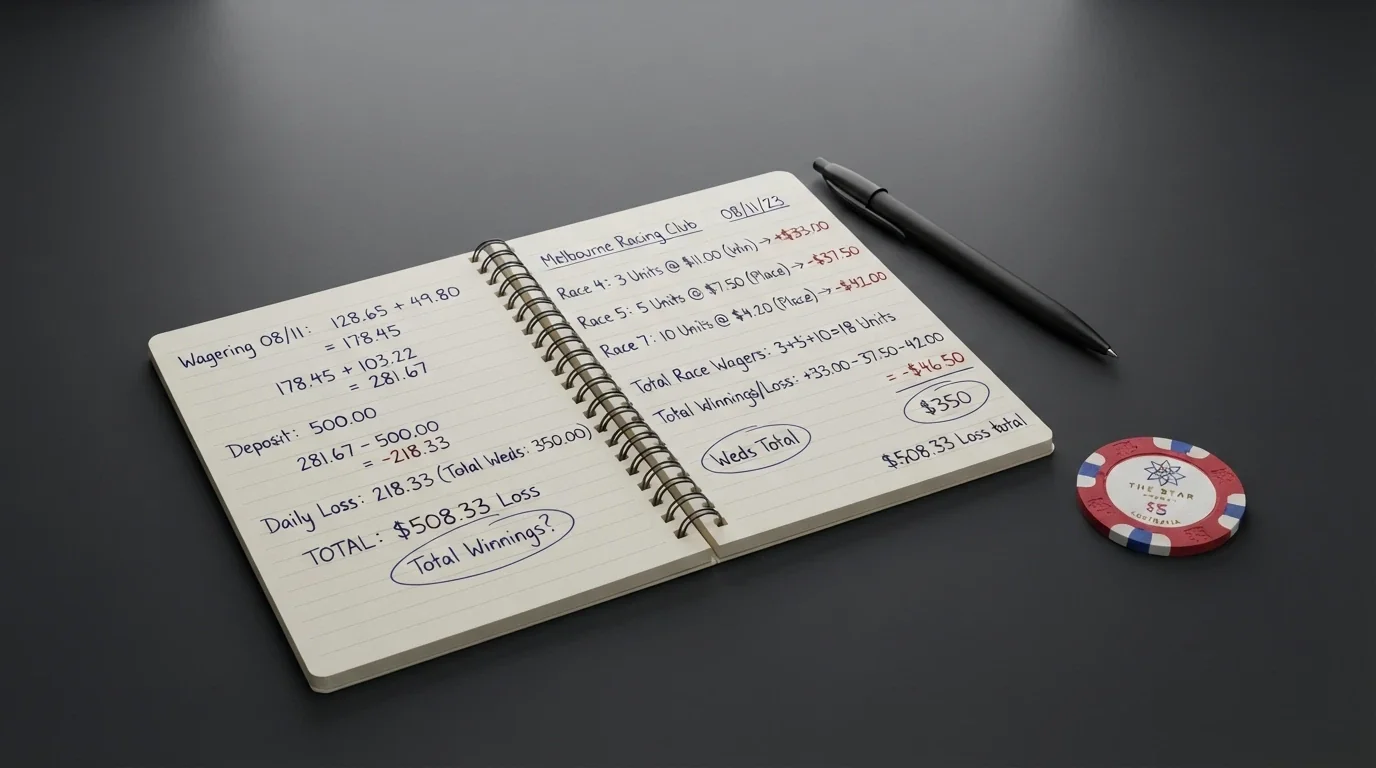
The cashout cap is the binding constraint because it limits the win the player can keep even after clearing the wagering. A player who finishes a wagering run with A$300 in the account on a A$25 chip with a A$100 cap cannot withdraw the A$300. The bonus is surrendered; A$100 leaves the site; A$200 stays. The expected loss has already been paid; the cap then limits how much of what remains actually converts to withdrawable cash. The arithmetic favours the operator on both ends of the transaction.
The deposit-match case is harsher in absolute terms. Take a A$500 first-deposit bonus at 100% match with 40x wagering on the bonus amount. Required turnover is A$500 multiplied by 40, which is A$20,000. At a 96% RTP pokie, expected loss is A$800. The player deposited A$500 and received A$500 in bonus credit, then paid an expected A$800 to clear the bonus. The bonus is not free; it is a loan with a 160% interest cost in expected value, paid in turnover rather than in fees. Provider RTP averages back this picture: NetEnt averages 97.1% across its catalogue, Playtech 96.8%, Thunderkick 96.5%, Pragmatic Play 96.2%. The house edge runs from under 3% to just over 4% across the providers the Australian-facing market leans on, and the cost of clearing a bonus scales linearly with the wagering multiple.
The conclusion the arithmetic supports: bonus codes are paid for in play-through, and the wagering multiple and the cashout cap decide whether the player keeps anything. A player who reads the wagering multiple and the cashout cap before the headline number reads the only two figures the operator actually cares about. The sensible course for an Australian player who understands the legal position and the arithmetic is to treat a bonus code as a paid feature of an offshore product they have decided to use anyway, not as a free gift that improves the deal. The “free” in “free chip” describes the deposit, not the cost of clearing the bonus.
Frequently Asked Questions
What is the maximum I can cash out from a casino free-chip offer?
The maximum cashout on a no-deposit free-chip offer in the Australian-facing offshore market typically sits between A$50 and A$180, with the dense middle at A$50 to A$150. The cap applies to withdrawable winnings after the wagering requirement is cleared, not to the in-account balance. A A$25 free chip with a 35x wagering requirement must run through roughly A$875 in eligible turnover before the resulting balance becomes eligible for withdrawal, and the cap then limits what leaves the site.
What happens if I exceed the maximum bet while using a bonus code?
The maximum-bet rule on the Australian-facing offshore market is most commonly set at A$5 to A$7 per spin while a bonus is active. Exceeding the limit on a single spin voids the bonus and any winnings tied to it, including winnings already accumulated from previous spins. The rule is enforced strictly by operators and is the most common reason a player loses a bonus despite completing most of the wagering requirement.
Which payment methods can I use to deposit at Australian online casinos?
For licensed Australian wagering, the legal payment methods are debit card, bank transfer, PayID and Osko, and BPAY. Credit cards, credit-related products and cryptocurrency are banned as payment for online wagering from 11 June 2024 under federal law, with penalties of up to A$247,500 for operators that fail to enforce the ban. From 1 January 2027, banks and payment providers gain express authority to block transactions to illegal gambling operators. An offshore casino accepting credit cards or crypto from Australian players is breaking Australian law by accepting the payment.
Which games actually count toward clearing a casino bonus code?
Pokies contribute 100% toward wagering requirements on Australian-facing offshore bonus codes. Table games typically contribute 0% to 10%, and live dealer games frequently contribute 0%. The contribution rate is set by the operator and is in the terms page; a player who bets bonus funds on blackjack or roulette can grind through hundreds of dollars of bets that count for almost nothing toward the wagering target, while the clock on the expiry window keeps running.
Do I have to pay tax on casino bonus-code winnings in Australia?
Casino bonus-code winnings are not assessable income for an Australian player under section 6-5 of the ITAA 1997, and gambling losses are not deductible under section 8-1, unless the person is carrying on a business of betting or gambling. The Australian Taxation Office’s published position in Taxation Determination IT 2655 confirms this. The operator side of the wagering tax applies to licensed wagering operators only — the Northern Territory levies a 5% wagering tax on wagers minus payouts plus a 0.05% racing levy, and each state sets its own point-of-consumption tax, typically 10% to 15% of net wagering revenue. None of those taxes is paid by the player.